Rings & Jewelry
East-West Settings: Which Diamond Shapes Work Sideways
By the Vanora Diamond team
Published Last reviewed 5 min read

Quick answer
An east-west setting turns an elongated diamond sideways, so its length runs across the finger instead of along it. Shapes with a clear length-to-width ratio work best: ovals, emerald cuts, marquises, pears and elongated radiants and cushions, ideally toward the upper end of their ratio range so the sideways orientation is obvious. Check the stone’s length in millimeters against the width of the finger before you choose.
What east-west means
Think of the finger as pointing north. A traditional ring sets an elongated stone north-south, with its length running along the finger toward the fingertip. An east-west setting rotates the same stone by 90 degrees, so its length runs across the finger from side to side.
Nothing about the diamond itself changes: the same stone, with the same report, can be set either way. What changes is the look. North-south tends to make the finger look longer and slimmer; east-west draws the eye across the hand and gives a more horizontal, often more modern look. Many east-west designs also sit fairly low, which keeps the profile neat.
With us you choose the loose lab-grown diamond, and a jeweler of your choice sets it in the orientation you want.
Shapes that work sideways
The stone needs to be clearly longer than it is wide, or turning it sideways makes no visible difference. The ratio ranges below are common guidelines from our shape guides, not lab rules:
| Shape | Common ratio range | How it reads east-west |
|---|---|---|
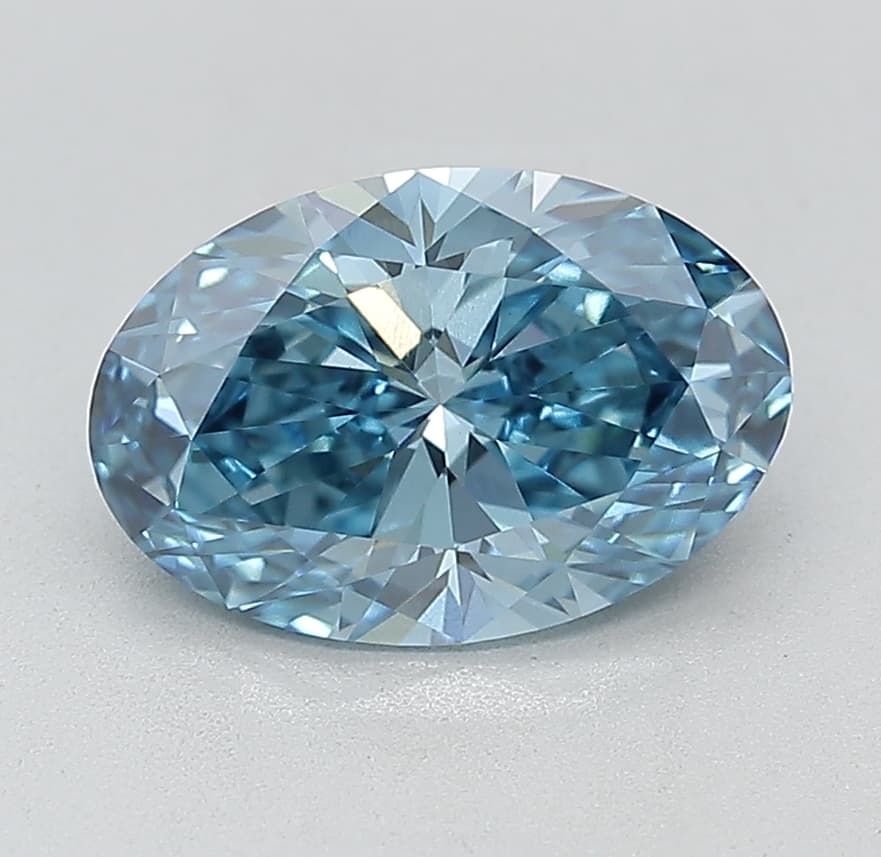
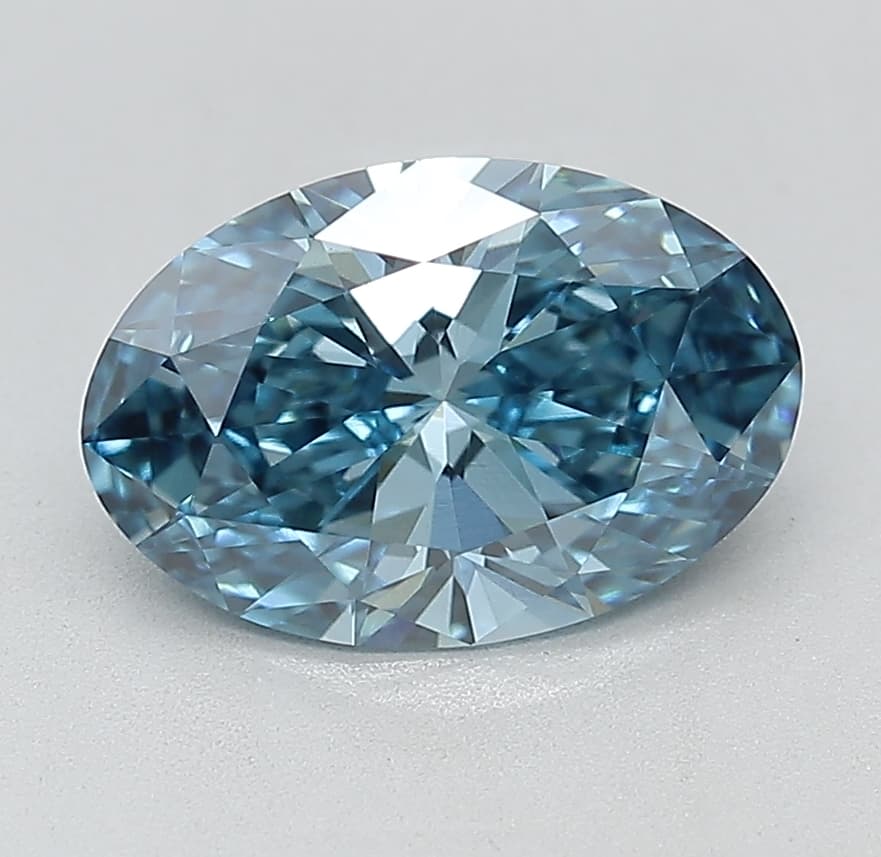
| Oval | About 1.30 to 1.50 | Soft and modern; higher ratios read more clearly sideways |
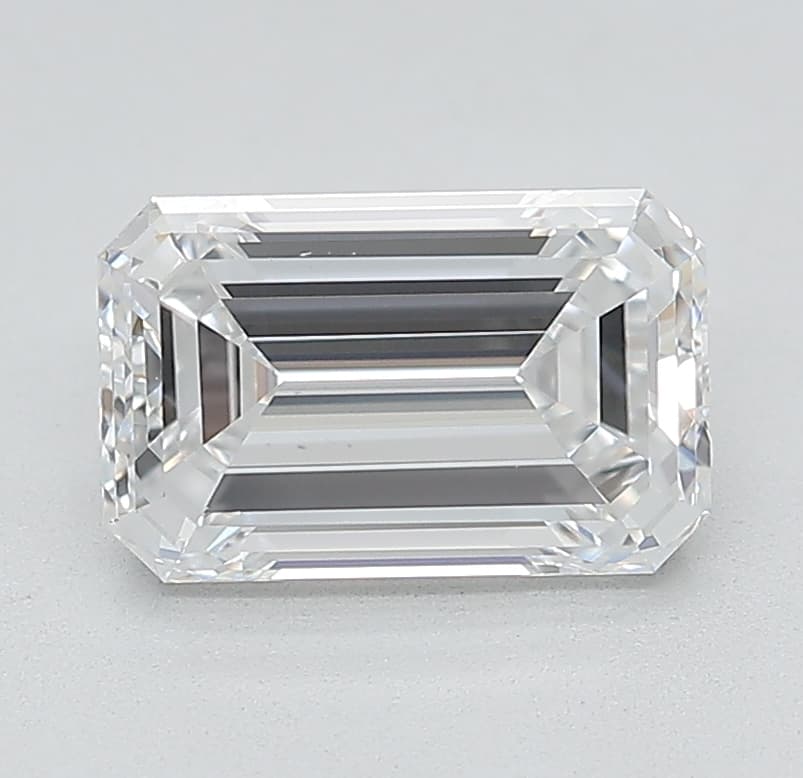
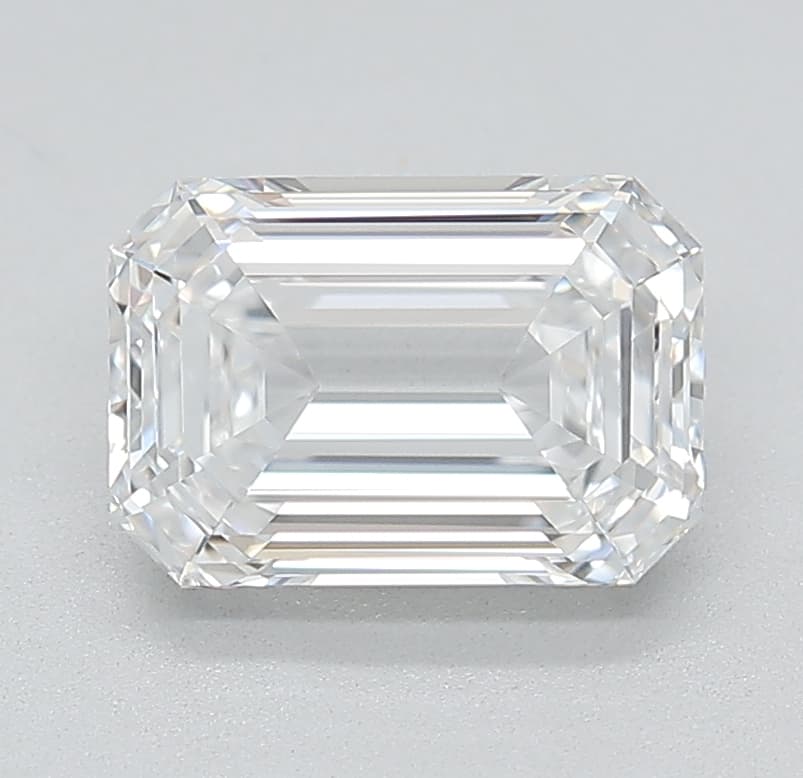
| Emerald | About 1.30 to 1.50 | Architectural, like a small bar of light across the finger |
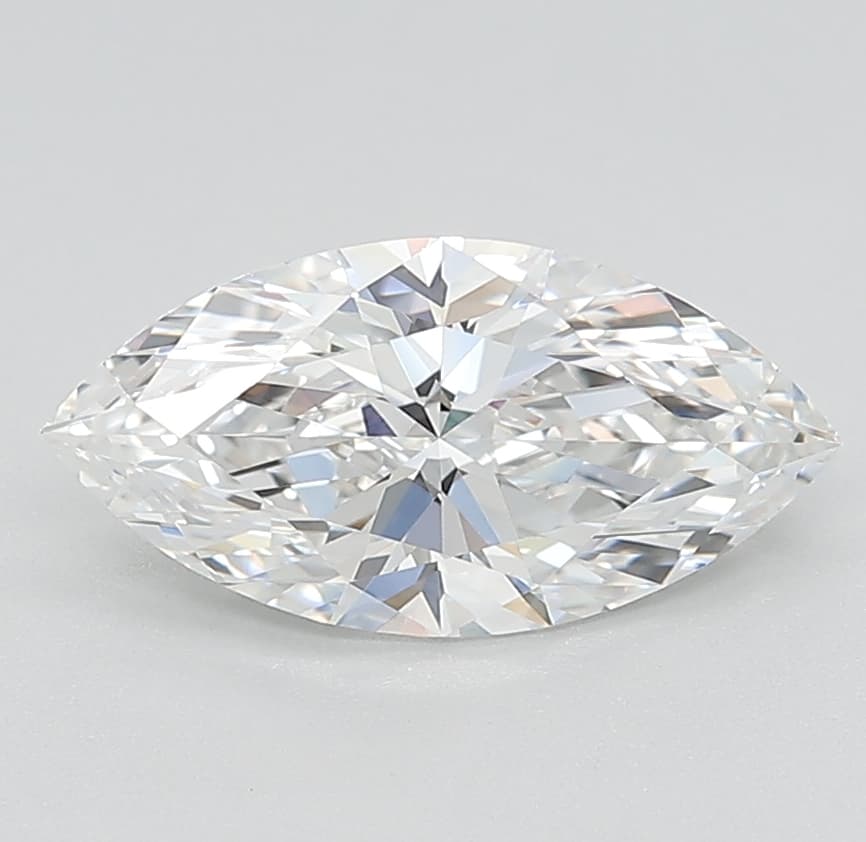
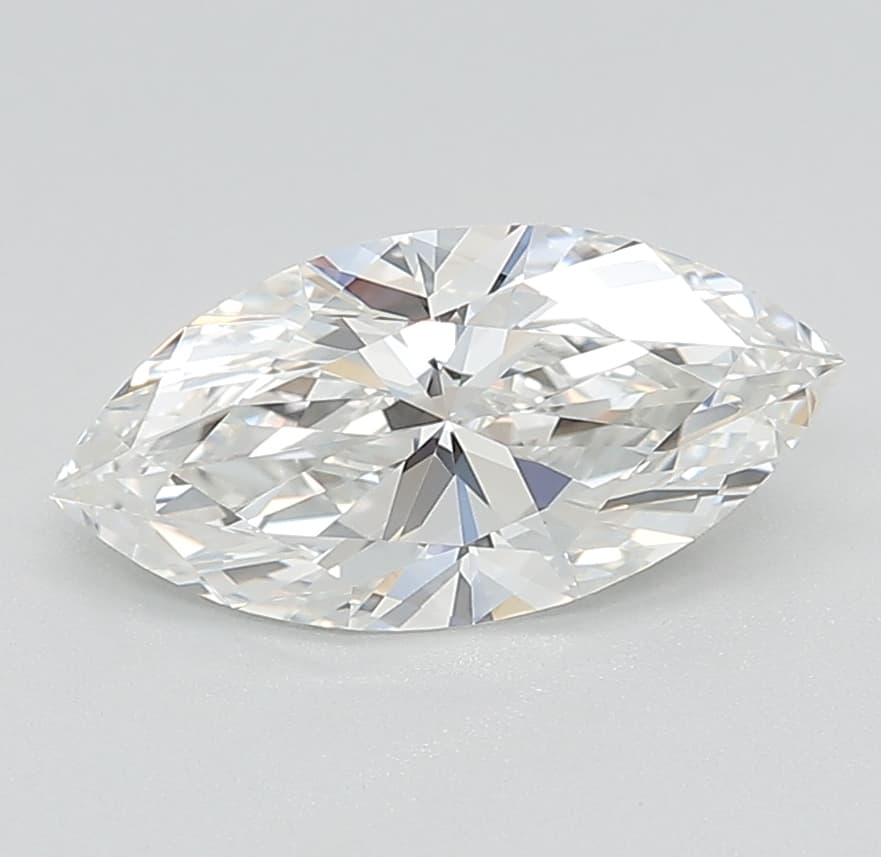
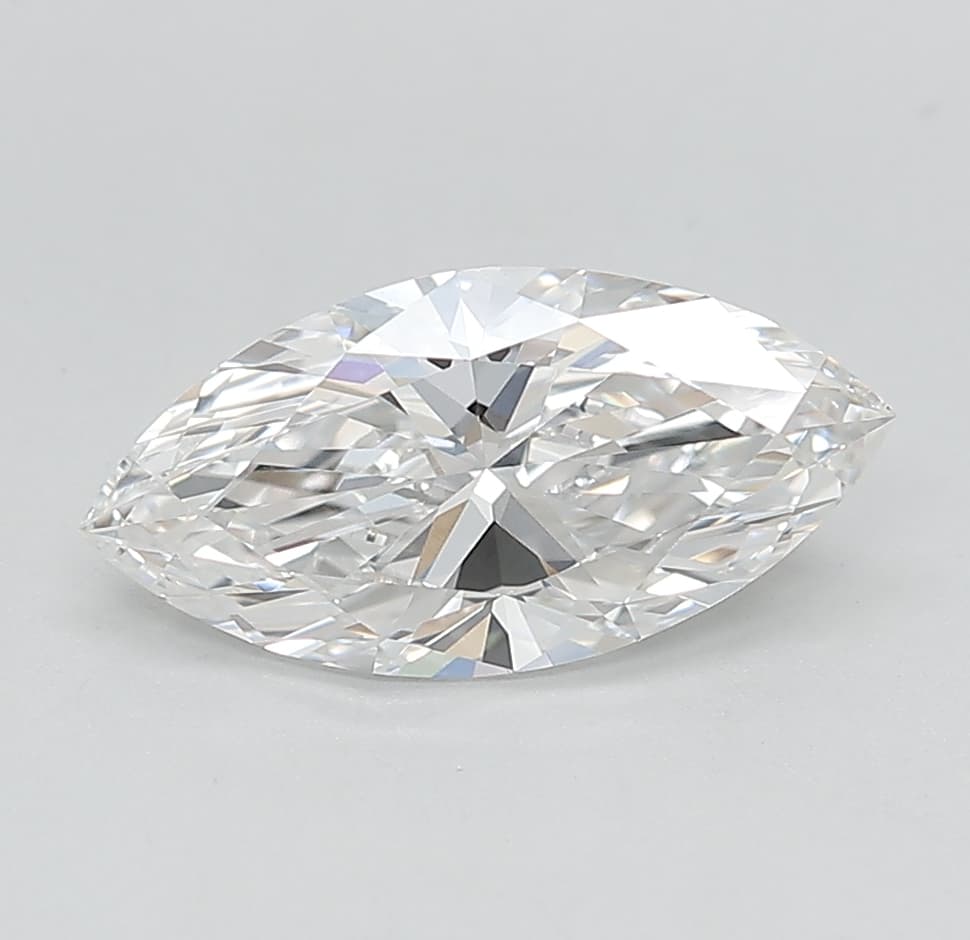
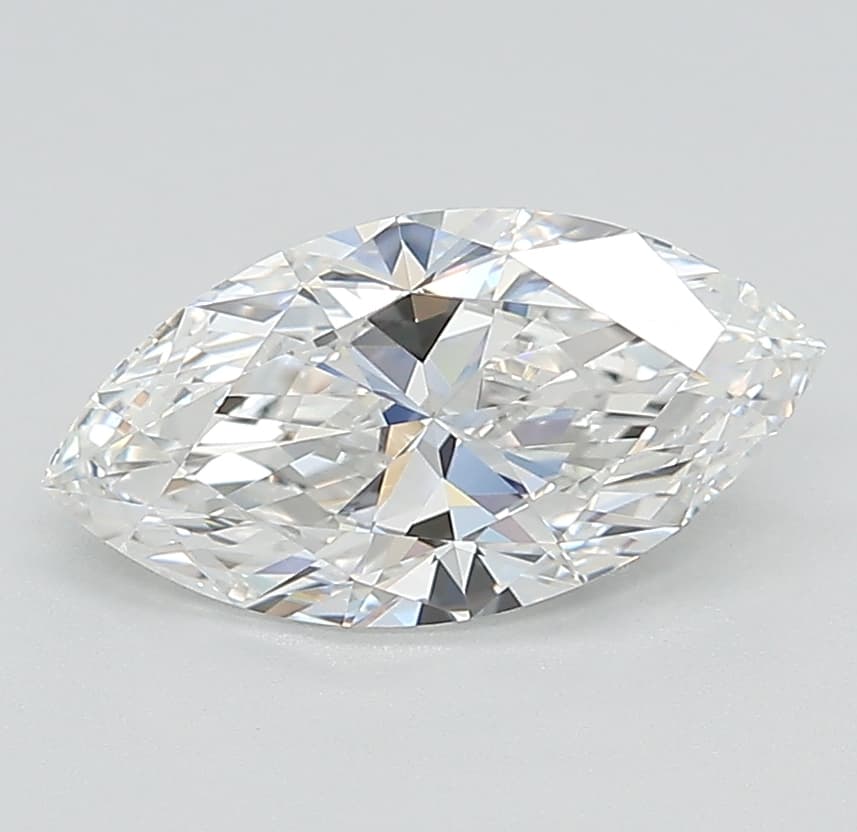
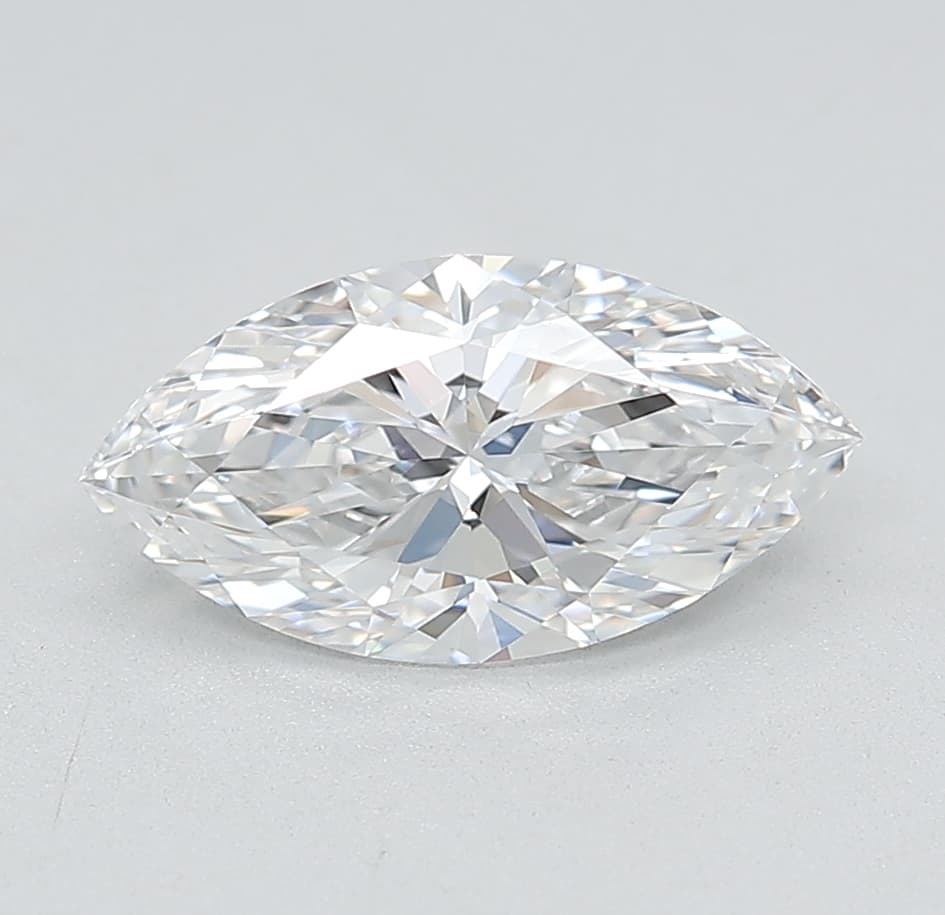
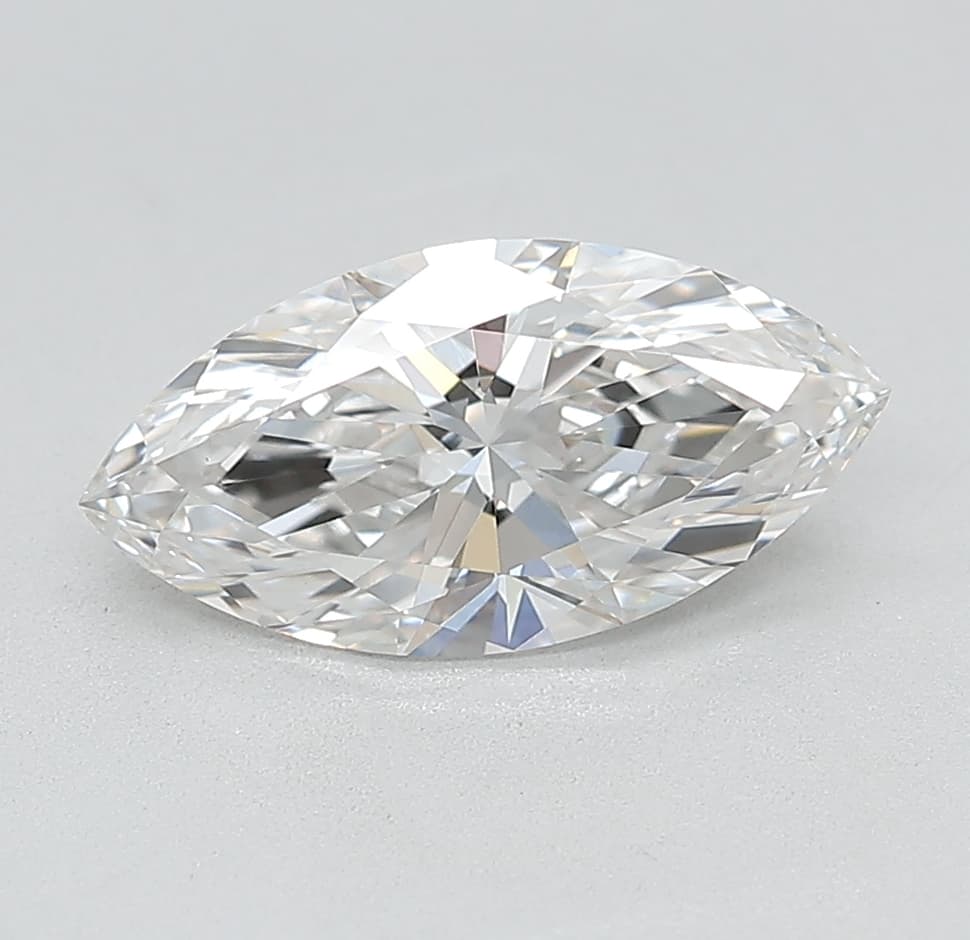
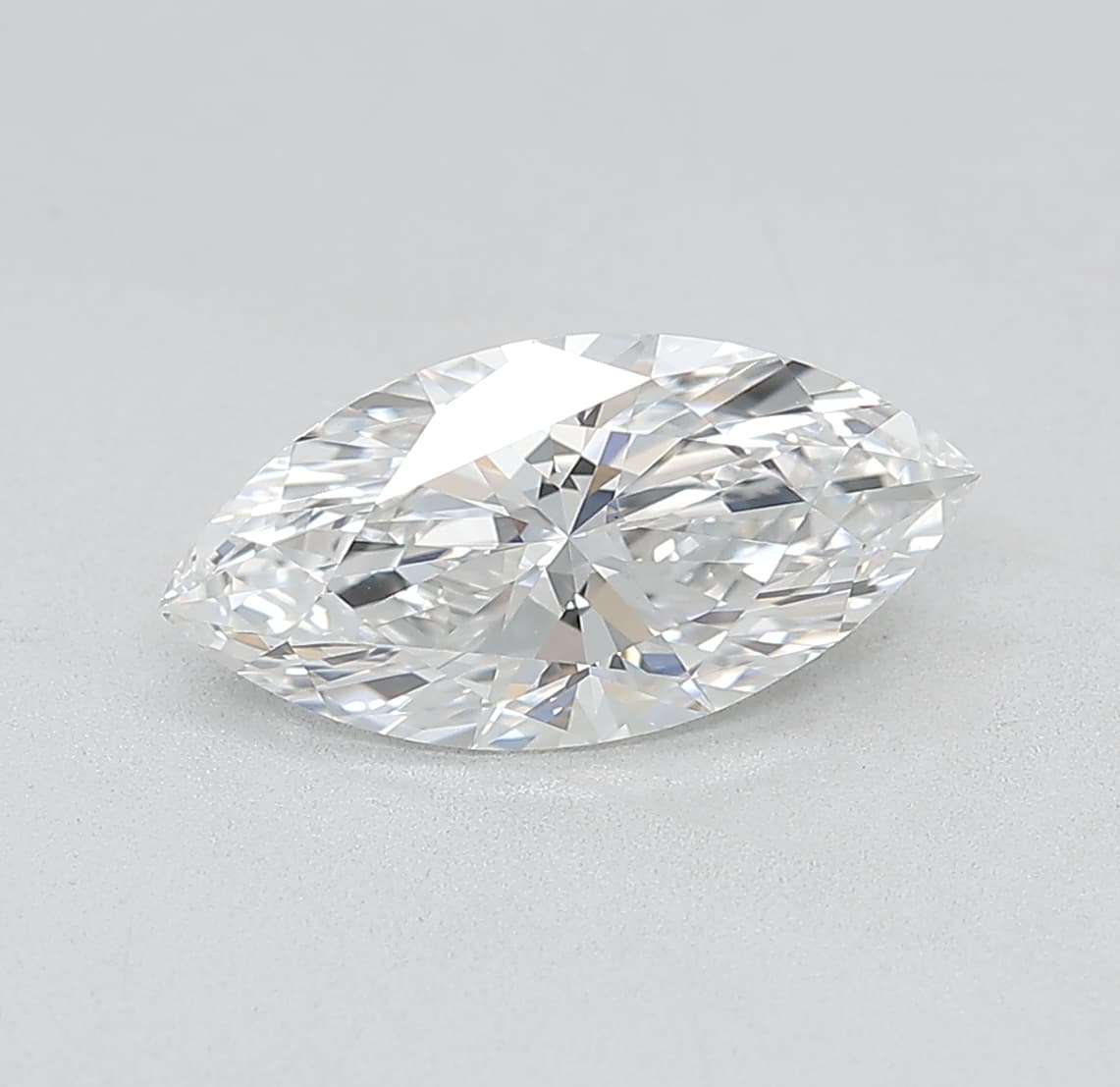
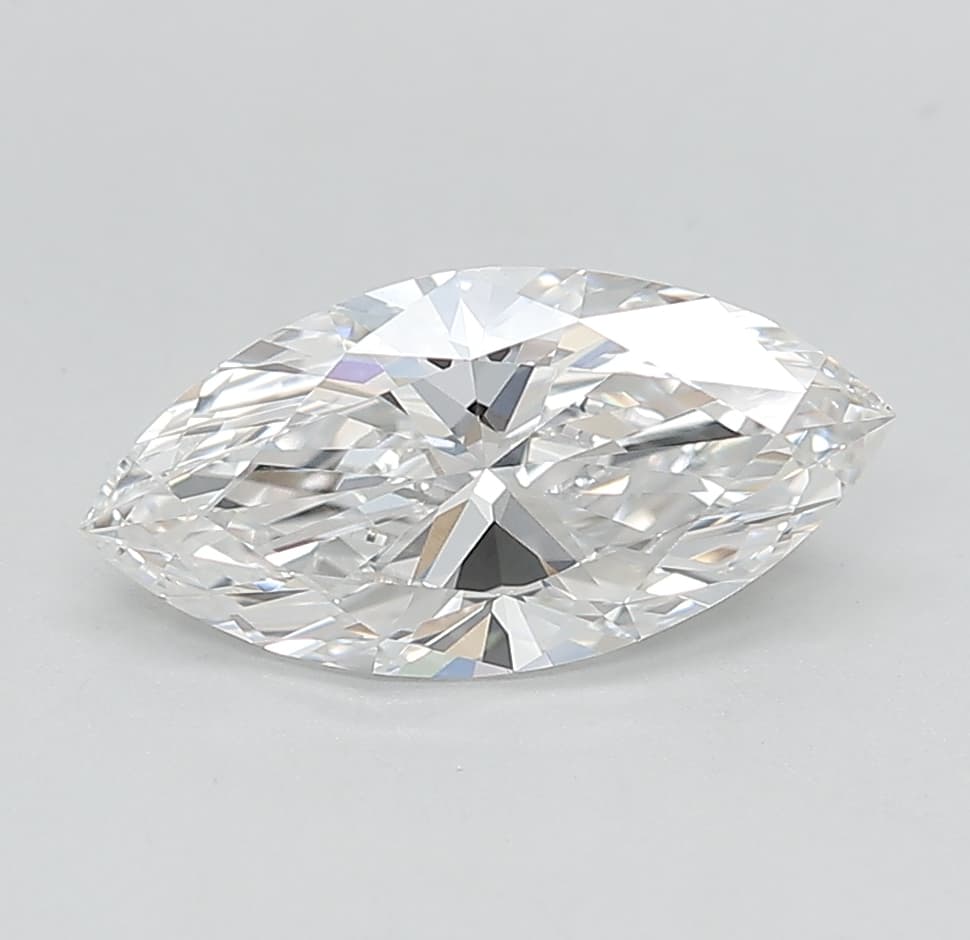
| Marquise | About 1.75 to 2.25 | The most dramatic; the points face the neighboring fingers |
| Pear | About 1.45 to 1.75 | Directional and asymmetric, with the point to one side |
| Radiant, rectangular | About 1.20 to 1.40 | Crisp lines with brilliant sparkle |
| Cushion, elongated | About 1.10 to 1.30 | Soft; needs the upper end of the range to read sideways |
A Dutch marquise, a more angular take on the marquise outline, is another option. Shapes that are close to square or round, such as rounds, princess cuts, Asscher cuts and square cushions, look the same either way, so there is no east-west version of them.
- Typical L/W1.30–1.50
- Typical L/W1.30–1.50
- Typical L/W1.75–2.25
- Typical L/W1.45–1.75
- Typical L/W1.00–1.05 square1.20–1.40 rectangular
- Typical L/W1.00–1.05 square1.10–1.30 elongated
- Dutch MarquiseL/WVaries by cutter
How elongated is elongated enough?
The length-to-width ratio decides how obvious the sideways orientation is. As a tendency rather than a rule:
- Around 1.30: an oval or emerald cut set sideways can look almost round or square from a little distance. Some people like that subtlety.
- Around 1.40 to 1.50: the orientation is clear without the stone looking narrow, a good middle ground for ovals and emerald cuts.
- Above 1.50: a bold horizontal line. Marquises and slim pears usually fall in this range.
Pick the ratio by looking, not by number alone: the 360° view on a stone page, where available, shows the outline clearly, and searching by ratio range lets you see only the outlines you want.
Check the length against the finger
Set sideways, the stone’s length now spans the finger, so compare it with the finger’s width. The inner diameter of the ring is a fair stand-in for that width:
| US ring size | Approximate inner diameter |
|---|---|
| 5 | 15.7 mm |
| 6 | 16.5 mm |
| 7 | 17.3 mm |
| 8 | 18.1 mm |
These figures are approximate; the full chart is in our ring size to mm guide. A stone whose length is close to the finger’s width, or wider, makes a bold statement but can rub against neighboring fingers and catch more easily. Ask your jeweler how much metal the setting adds at each end.
Weight is a poor guide here. Two ovals of the same weight can differ in length by a noticeable amount depending on ratio and depth, so read the length and width on each stone page or IGI report.
| US size | Inner diameter (mm) | Inner circumference (mm) | UK / AU | EU / ISO |
|---|---|---|---|---|
| 4 | 14.9 | 46.8 | H½ | 47 |
| 5 | 15.7 | 49.3 | J½ | 49 |
| 6 | 16.5 | 51.9 | L½ | 52 |
| 7 | 17.3 | 54.4 | N½ | 54 |
| 8 | 18.1 | 57.0 | P½ | 57 |
| 9 | 18.9 | 59.5 | R½ | 60 |
| 10 | 19.8 | 62.1 | T½ | 62 |
| 11 | 20.6 | 64.6 | V½ | 65 |
| 12 | 21.4 | 67.2 | X½ | 67 |
Setting points to raise with your jeweler
- Points face sideways: in an east-west marquise or pear, the points now face the neighboring fingers, where knocks happen. V-prongs or a bezel over each point are worth it.
- Bezels and half bezels: a bezel setting suits the low, clean look of many east-west designs, and a half bezel that covers only the two ends protects them while leaving the sides open.
- Height and band fit: east-west stones can often be set low. How a wedding band sits beside it depends on the height and shape of the setting, so ask for a profile view.
- Color and bow-tie do not change: elongated brilliants still show color a little more at the ends, and an oval, pear or marquise still shows its bow-tie. Judge both in the 360° view as you would for a north-south setting.
Which way should an east-west pear point?
A pear set sideways has to point either toward the thumb or toward the little finger. Neither is correct or incorrect; it is purely a matter of taste. Remember that the same ring points the other way if it is worn on the other hand, and that the point is the part most exposed to knocks, so its protection matters whichever side it faces.
Beyond rings
The same idea works in other pieces: an elongated stone set horizontally on a pendant gives a similar clean, sideways line. Ask your jeweler how the stone will be balanced so it sits level.
In an east-west marquise or pear, the points face the neighboring fingers, where knocks happen. V-prongs or a bezel over each point are worth it.
Choosing an east-west diamond with us
- Choose the shape, then filter by ratio so only clearly elongated stones appear.
- Read the length on the stone page or IGI report and compare it with the finger width.
- Check the outline in the 360° view: a crisp, symmetrical outline matters even more when it lies across the finger.
- Send your jeweler the measurements before you buy.
East-west stones also work in toi et moi rings and in men’s rings. The suggestions below are elongated stones that read clearly sideways, and if you would like help comparing them, ask a specialist.
Frequently asked questions
What is an east-west ring?
An east-west ring sets an elongated diamond sideways, so its length runs across the finger rather than along it. The stone is the same as in a traditional north-south setting; only its orientation changes.
Which diamond shapes work best east-west?
Shapes that are clearly longer than they are wide: ovals, emerald cuts, marquises, pears and elongated radiants and cushions. A ratio toward the upper end of the shape’s range, such as 1.40 or more for an oval or emerald cut, or about 1.30 for an elongated cushion, makes the sideways orientation easy to see. Round and square shapes look the same either way.
Does an east-west diamond look smaller than one set north-south?
The stone’s face-up area is the same either way. What changes is which dimension spans the finger: set east-west, the length runs across it, which can make the stone look wide on the hand, while north-south tends to make the finger look longer.
Can a diamond be reset from north-south to east-west later?
A jeweler can usually reset a loose stone in a new head or setting made for the other orientation. The diamond itself is not changed, but the setting is made for one orientation, so it is easier to decide before the ring is made.
Glossary terms in this article
More on Rings & Jewelry in the journal.