Shapes & Cuts
Oval Diamond Ratio: How Length-to-Width Changes the Look on Your Hand
By the Vanora Diamond team
Published Last reviewed 5 min read

Quick answer
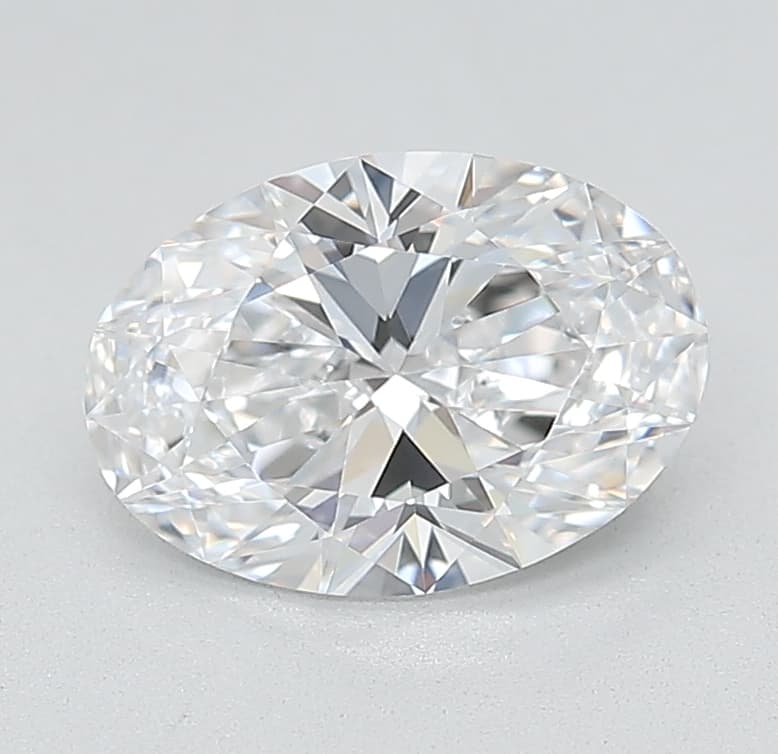
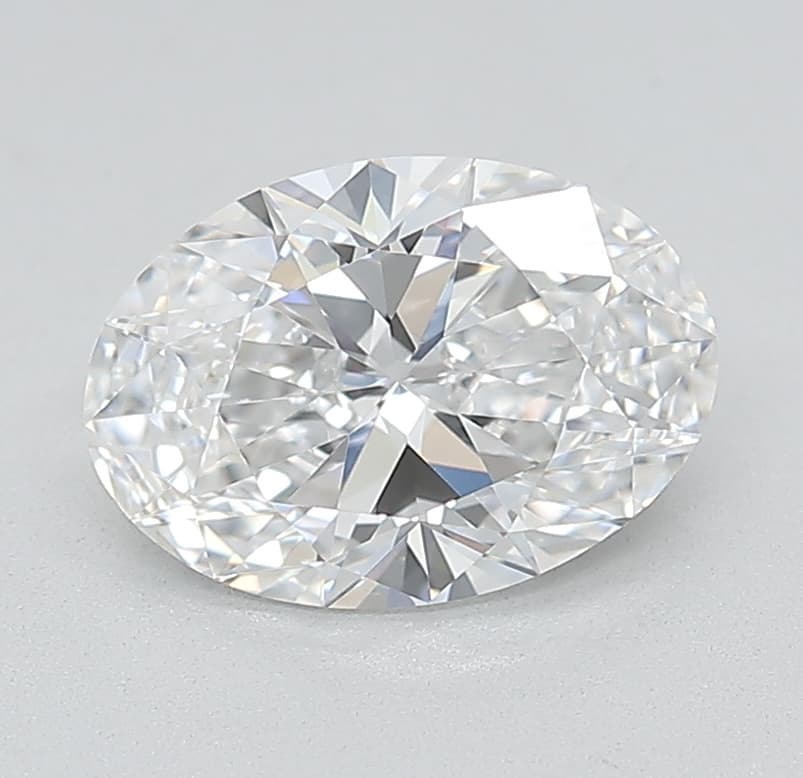
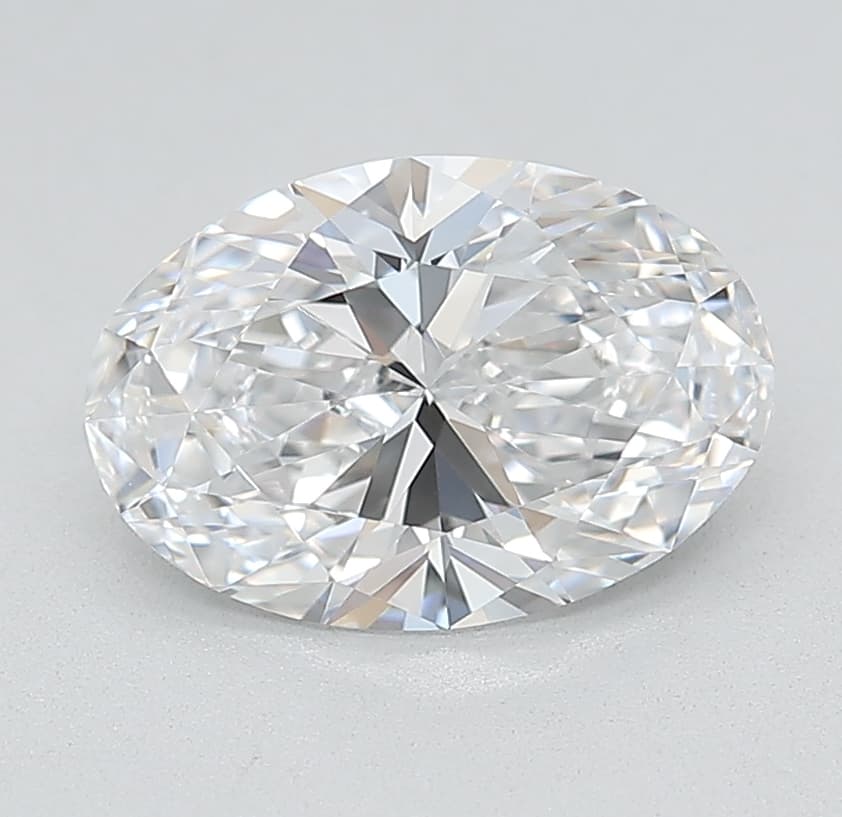
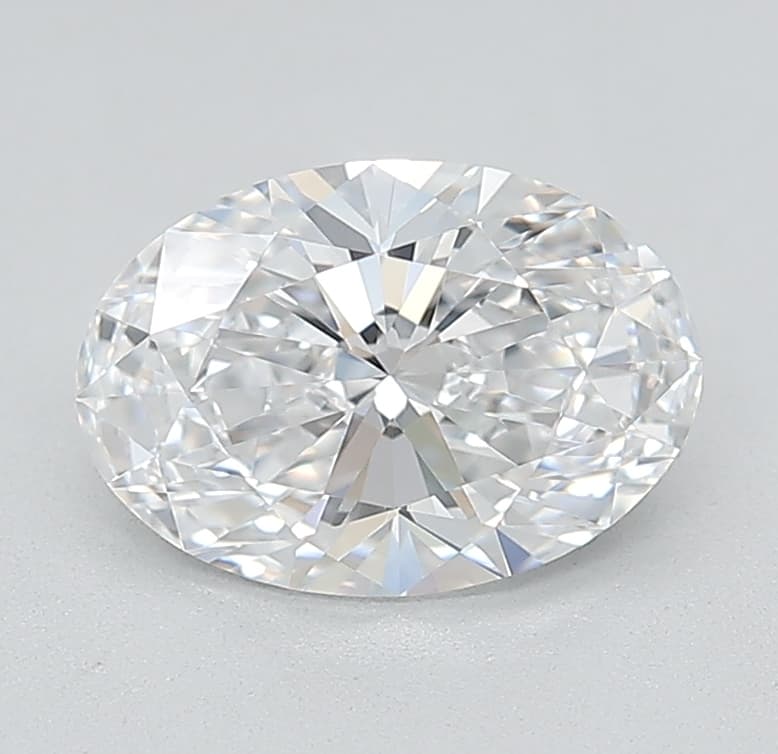
The length-to-width ratio decides how long and slim an oval looks: around 1.25 to 1.35 is fuller and softer, about 1.35 to 1.45 is the balanced look many people choose, and 1.45 and above is longer and more slender. The ratio does not decide the bow-tie on its own, so judge that in the video at any ratio. Pick the ratio by how the stone’s width covers your finger and how much length you want, then compare stones within it.
What does an oval’s ratio actually change?
The length-to-width ratio is the length divided by the width, both taken from the stone’s measurements in millimeters. An oval measuring 10.50 × 7.20 mm has a ratio of about 1.46.
At the same carat weight, a higher ratio moves the outline from width into length. Take two hypothetical 2 carat ovals with similar depth:
| Measurements | Ratio | Look |
|---|---|---|
| 10.2 × 7.2 mm | 1.42 | Balanced, gently elongated |
| 10.8 × 7.0 mm | 1.54 | Longer and slimmer |
The difference is well under a millimeter in each direction, small on paper but easy to see on a hand, because the eye reads the outline rather than the numbers. This is why it pays to choose your ratio before you narrow down on color and clarity: two ovals with identical grades can look like different shapes.
Depth matters too. An oval cut much deeper than the common depth range carries hidden weight, so it shows less length and width for its carat weight whatever its ratio.
How does each ratio range look?
| Ratio | How it tends to look | Often chosen for |
|---|---|---|
| About 1.25 to 1.35 | Full, soft, close to round | A gentle oval that reads almost round from a distance |
| About 1.35 to 1.45 | Balanced and classic | An all-round choice for solitaires and halos |
| About 1.45 to 1.55 | Long and elegant | More length on the finger and a slimmer outline |
| Above about 1.55 | Very slender | A dramatic, narrow look, sometimes set east-west |
These are common impressions and guidelines, not lab rules, and the boundaries are soft. They are compiled from widely published trade guidelines, and sources vary. A 1.44 and a 1.46 look almost the same; a 1.35 and a 1.55 do not. If you can, compare photos of stones at both ends of the range you are considering, ideally on a hand or in a setting, before you settle on a number.
How much of your finger will the oval cover?
Coverage depends mostly on the stone’s width, because that is what spans the finger. The inner diameter of a ring is a good stand-in for the width of the finger where the ring sits. The table below divides a stone’s width by that diameter for three common US ring sizes:
| US ring size | Inner diameter | 6.5 mm wide oval | 7.2 mm wide oval | 8.0 mm wide oval |
|---|---|---|---|---|
| 4 | 14.9 mm | 44% | 48% | 54% |
| 6 | 16.5 mm | 39% | 44% | 48% |
| 8 | 18.1 mm | 36% | 40% | 44% |
This is simple arithmetic, not a rule about what looks best, but it is useful. On a smaller finger, the same oval covers more of the width and looks larger. At a given carat weight, a slimmer oval covers a little less width and runs further along the finger, while a fuller one covers more width and less length. If you want the stone to look as wide as possible across the finger, a lower ratio helps; if you want the finger to look longer, a higher one does. Our ring size to mm guide lists the diameters for every size.
| US size | Inner diameter (mm) | Inner circumference (mm) | UK / AU | EU / ISO |
|---|---|---|---|---|
| 4 | 14.9 | 46.8 | H½ | 47 |
| 5 | 15.7 | 49.3 | J½ | 49 |
| 6 | 16.5 | 51.9 | L½ | 52 |
| 7 | 17.3 | 54.4 | N½ | 54 |
| 8 | 18.1 | 57.0 | P½ | 57 |
| 9 | 18.9 | 59.5 | R½ | 60 |
| 10 | 19.8 | 62.1 | T½ | 62 |
| 11 | 20.6 | 64.6 | V½ | 65 |
| 12 | 21.4 | 67.2 | X½ | 67 |
Does the ratio affect the bow-tie?
The bow-tie is a darker band across the width of an oval, where the pavilion facets reflect less light back to your eye. Almost every oval shows some. Many people assume that longer ovals always have stronger bow-ties, but the ratio is only part of the story: the pavilion angles, the depth and the facet layout matter at least as much. A well-cut 1.50 can show a softer bow-tie than a poorly cut 1.38.
So judge the bow-tie stone by stone, not by ratio:
- Watch the video as the stone rocks: a bow-tie that flickers and breaks up is normal contrast; a wide band that stays dark from every angle is the one to avoid.
- Prefer even, diffused lighting in videos, which shows the bow-tie honestly. Bright spotlights can hide it.
- Use the ASET image where available: on our stone pages many stones have one alongside the photo and 360° view. An even, symmetrical pattern suggests well-balanced light return.
Pavilion angles, depth and the facet layout shape the bow-tie at least as much as the ratio does. A well-cut 1.50 can show a softer bow-tie than a poorly cut 1.38, so judge each stone in its video.
How does the ratio work with the setting?
North-south (lengthwise along the finger) is the classic orientation and shows off a higher ratio best. East-west turns the oval across the finger; here a slimmer oval makes a bold horizontal line, so check that its length sits comfortably within the width of your finger.
Prongs: four prongs show the most of the outline, while six prongs, or double prongs at each end, give longer ovals extra security. Halos add apparent size and can soften a long, slim outline. Bands: a straight band sits neatly beside most ovals; very long ovals sometimes look best with a slim band so the stone stays the focus.
Whatever you choose, keep the stone’s millimeter measurements in mind when picking a setting, since mountings are made for a particular length and width, not a carat weight.
Mountings are made for a particular length and width, not a carat weight, so keep the stone’s measurements to hand when you choose a setting.
How to shortlist ovals by ratio
- Pick a ratio range from the table above, for example 1.38 to 1.45 for a balanced oval or 1.46 to 1.55 for a slimmer one.
- Set a carat range, then compare widths across stones, using the coverage table to picture them on your finger.
- Check depth and the outline: the ends should be evenly rounded, without flat shoulders or a pointed look.
- Watch the video for the bow-tie and for windowing, a pale, see-through center.
- Verify the report and read our oval guide for the common depth and table ranges.
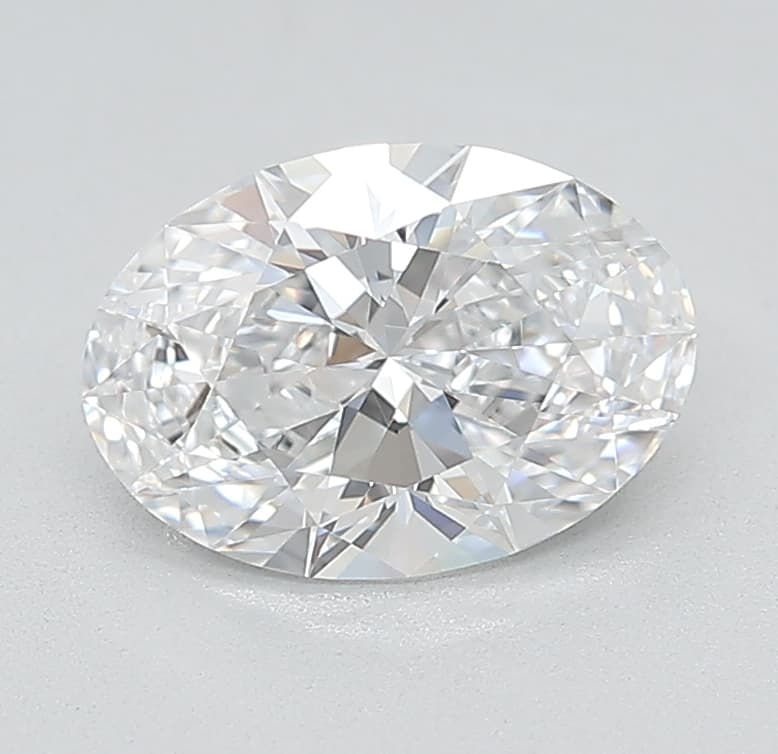
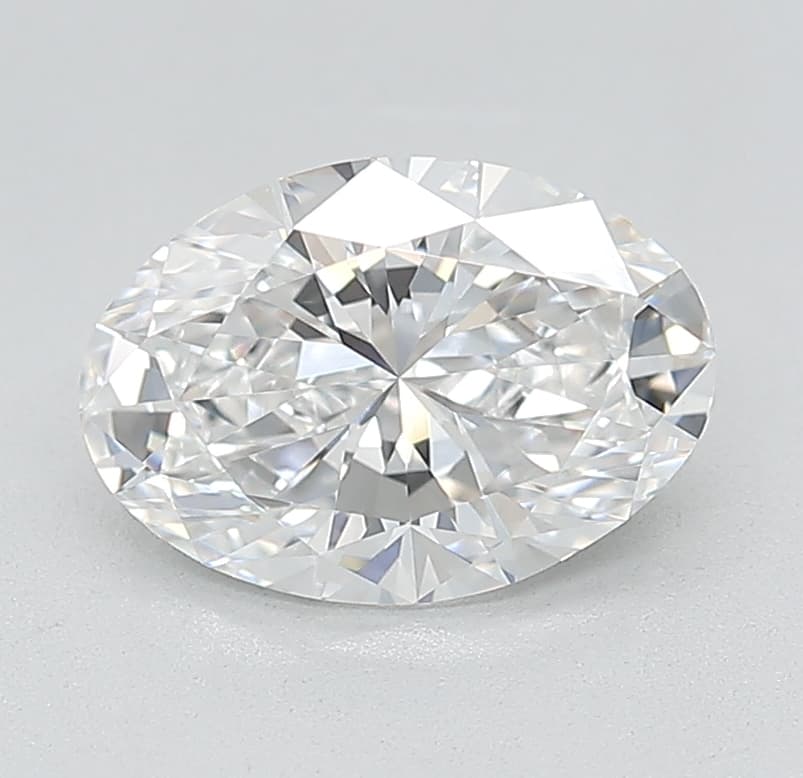
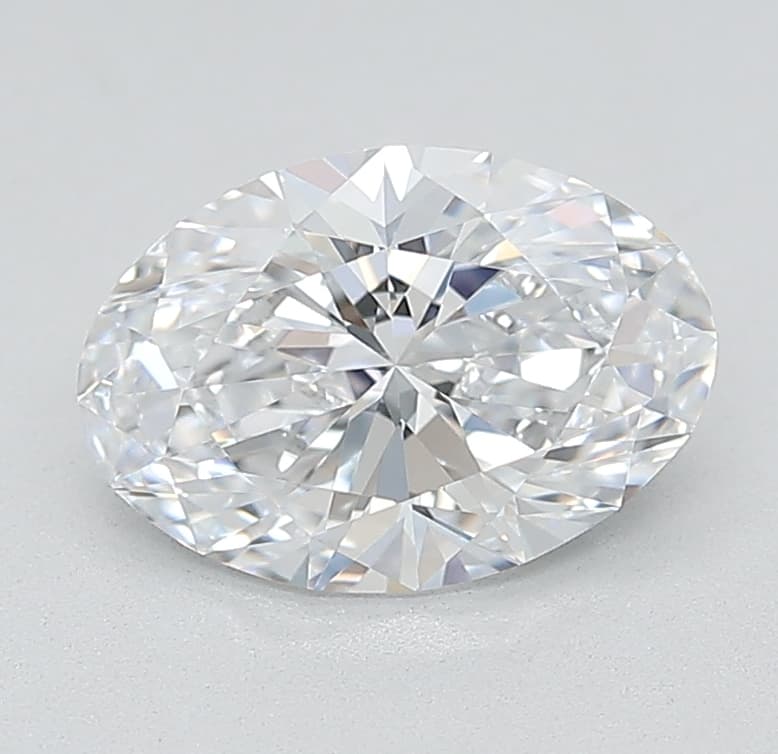
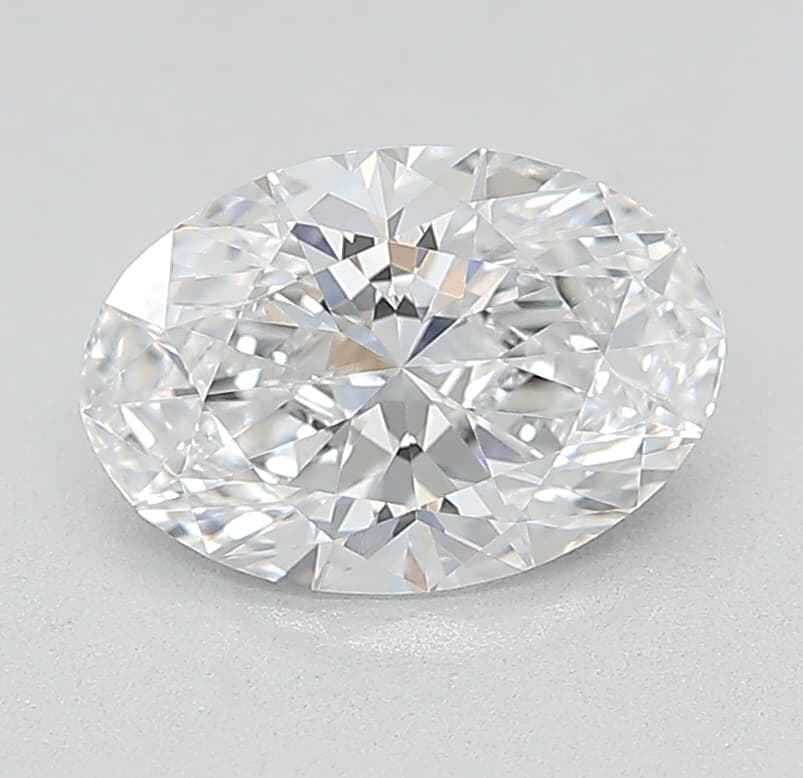
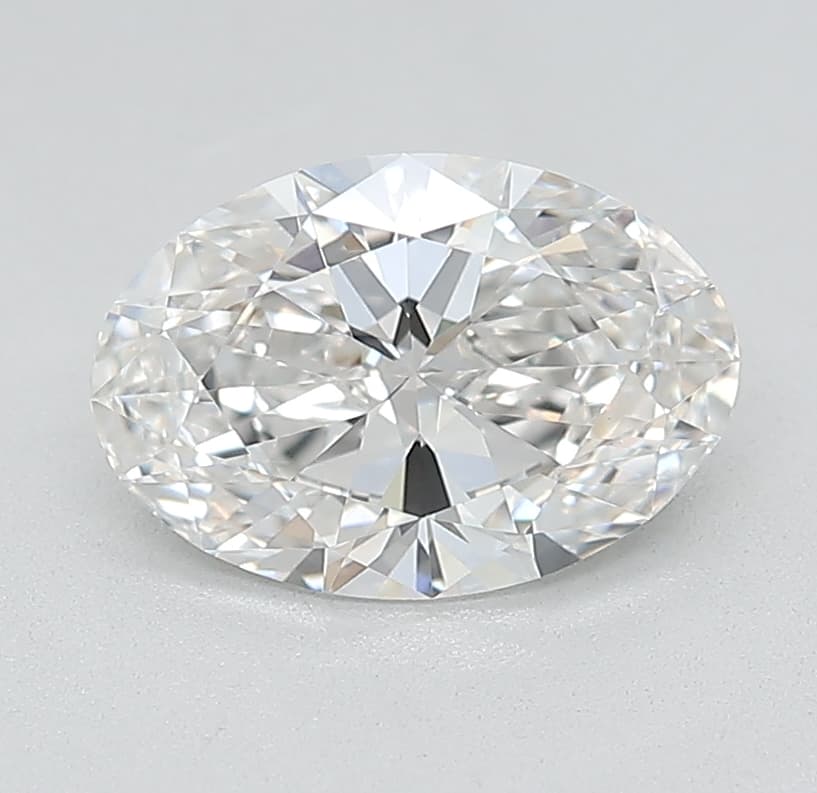
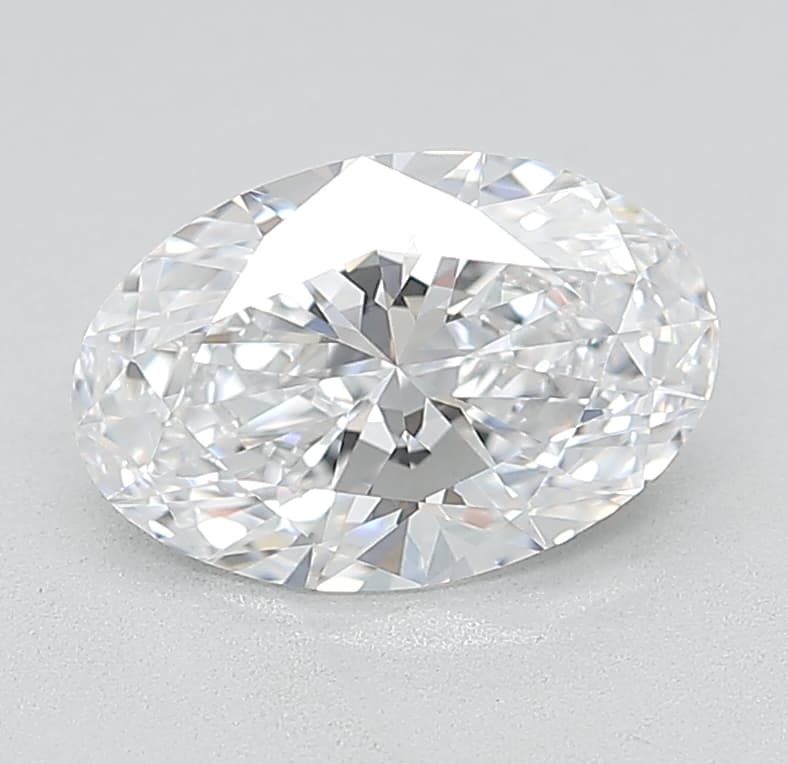
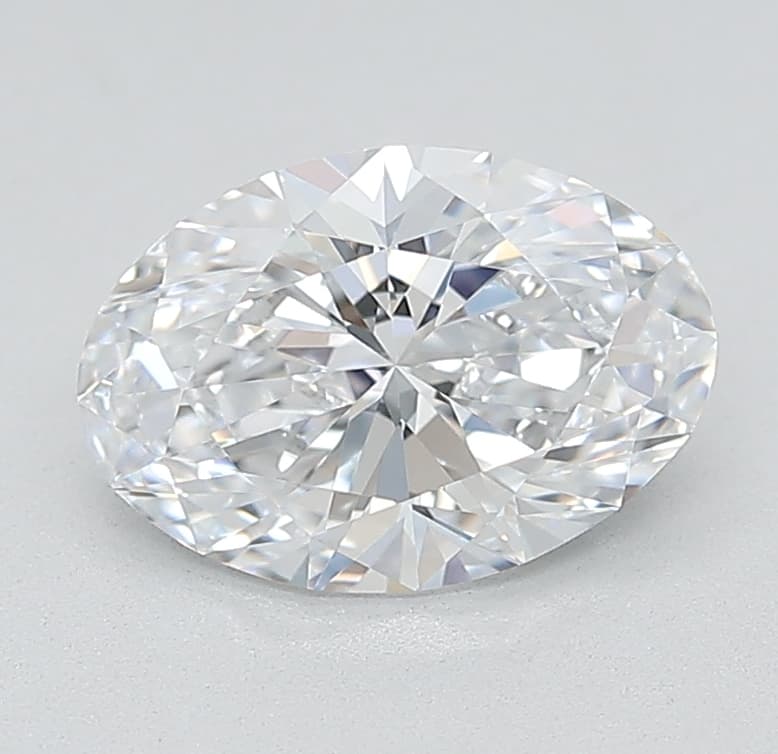
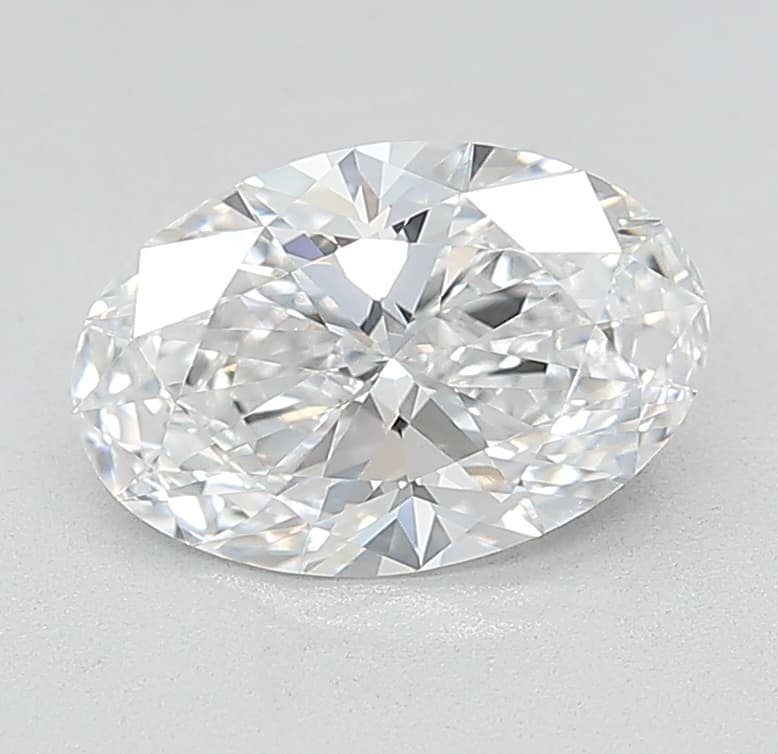
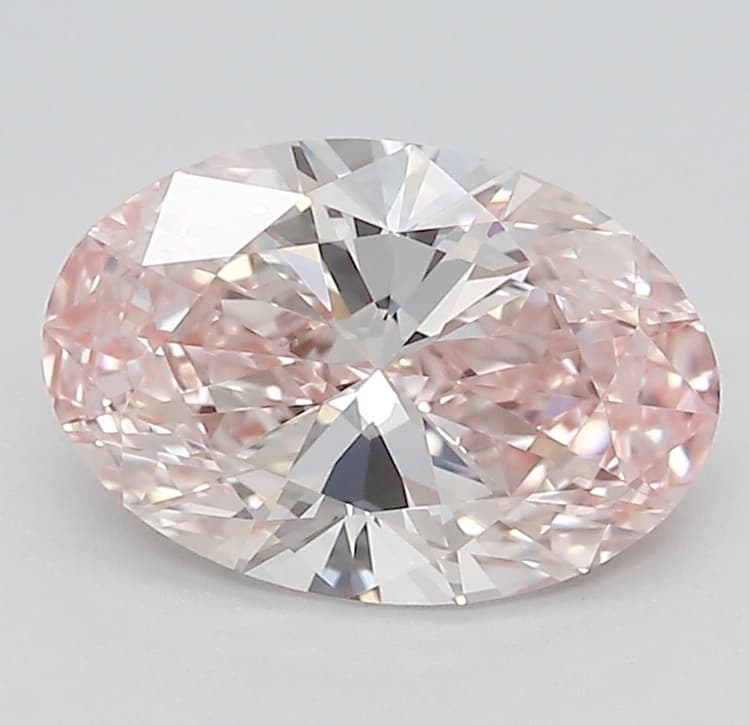
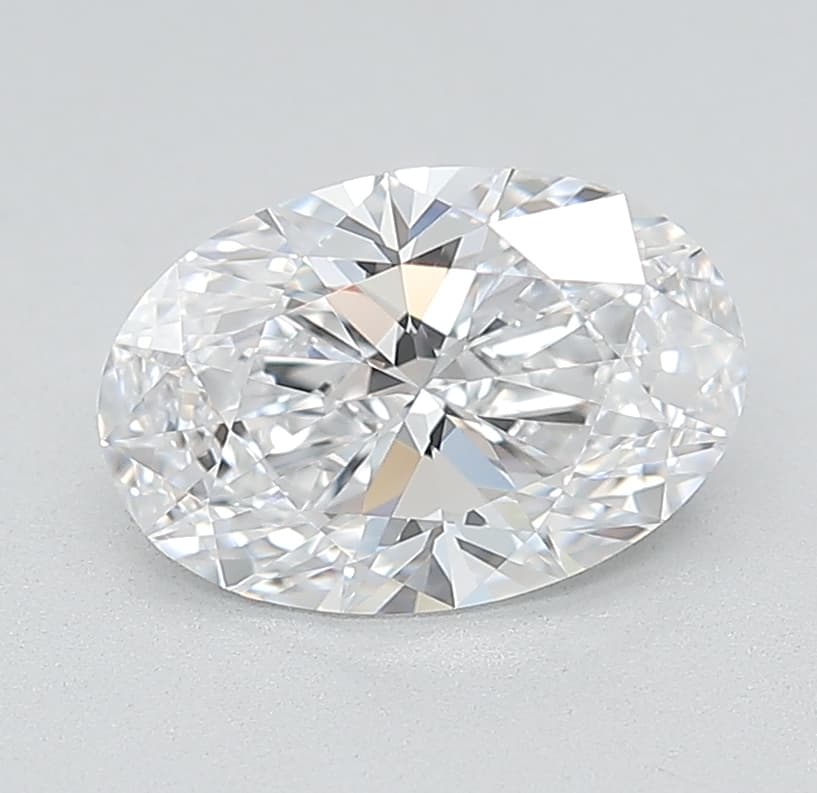
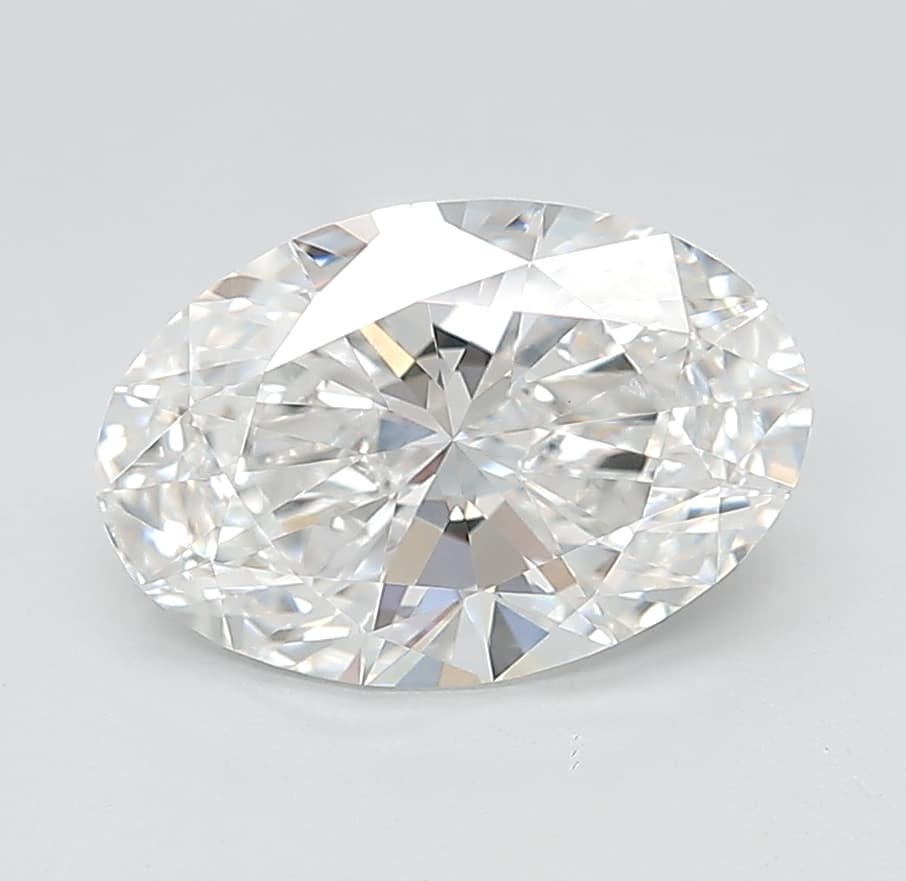
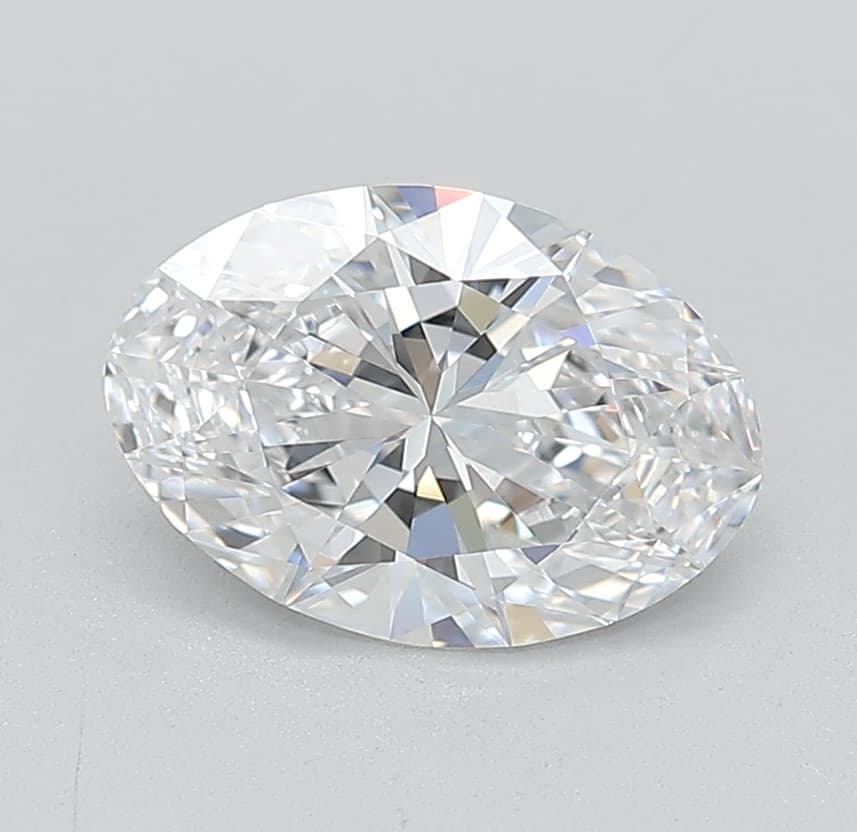
The suggestions below are live oval lab-grown diamonds in two ratio bands, so you can compare a balanced oval with a slimmer one. You can also browse 2 carat ovals, or ask one of our diamond specialists to shortlist stones for your ring size and the look you want.
Frequently asked questions
Is a 1.50 ratio oval too long?
Not if you like a slender look. A ratio around 1.50 sits at the longer end of the commonly cited 1.30 to 1.50 range and gives an elegant, elongated outline. If you want something that reads closer to classic, look at 1.38 to 1.45.
Does a higher ratio make an oval look bigger?
It makes the stone look longer, which many people read as larger, while the width narrows slightly at the same carat weight. Compare the length and width in millimeters on the reports to see the real difference between two stones.
Do lower ratio ovals have less bow-tie?
Not necessarily. The bow-tie depends on the pavilion angles, depth and facet layout as much as the ratio, so a well-cut long oval can show less bow-tie than a poorly cut fuller one. Judge each stone in a video.
What ratio works best for an east-west oval?
It is a matter of taste. Fuller ovals sit compactly across the finger, while slimmer ones make a bolder horizontal line. Check that the stone’s length sits comfortably within the width of your finger.
Glossary terms in this article
More on Shapes & Cuts in the journal.