Shape guide
Cushion Cut Lab-Grown Diamonds: Styles, Ratios and Proportions
Last reviewed
Quick answer
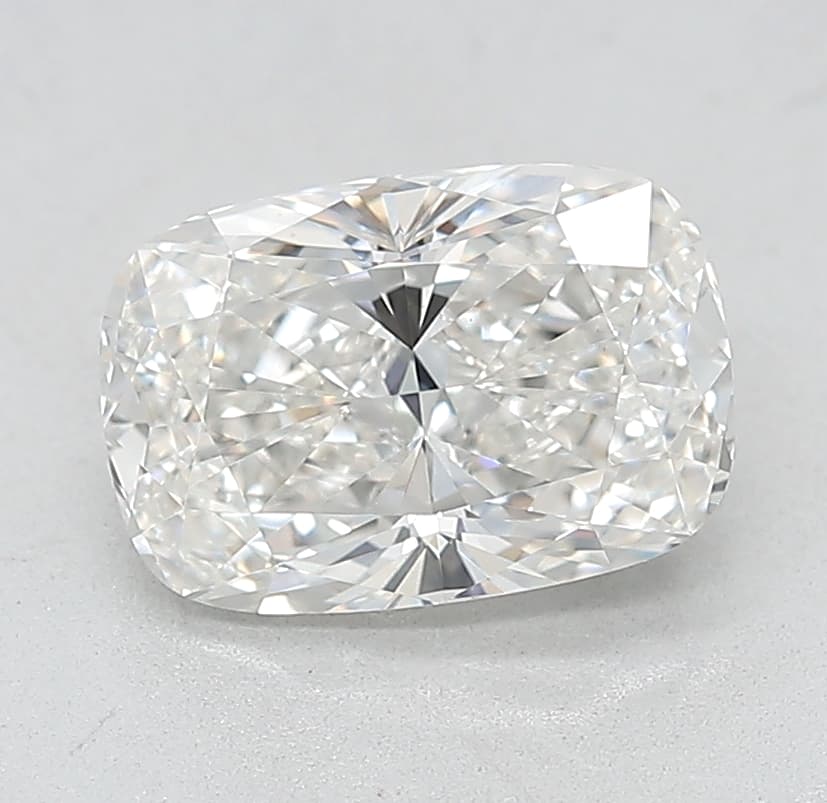
A cushion is a square or rectangular diamond with rounded corners and gently curved sides, faceted as a brilliant. Reports may describe it as a cushion brilliant, usually with larger, more distinct facets, or a cushion modified brilliant, which often has a busier "crushed ice" look. Common guidelines put square cushions at a length-to-width ratio of about 1.00 to 1.05 and elongated ones at about 1.10 to 1.30, with depth around 61% to 68% and table around 58% to 68%.
What is a cushion cut diamond?
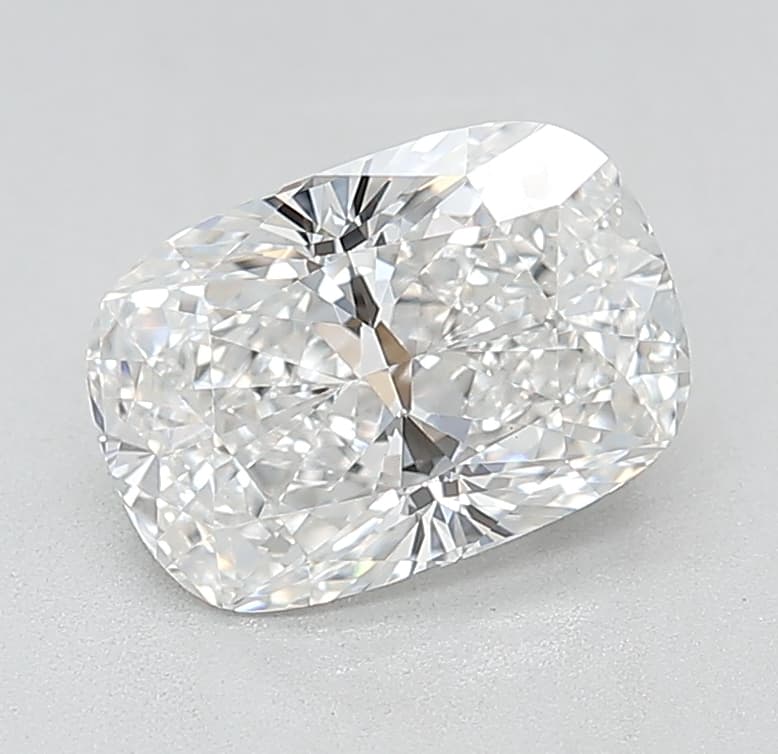
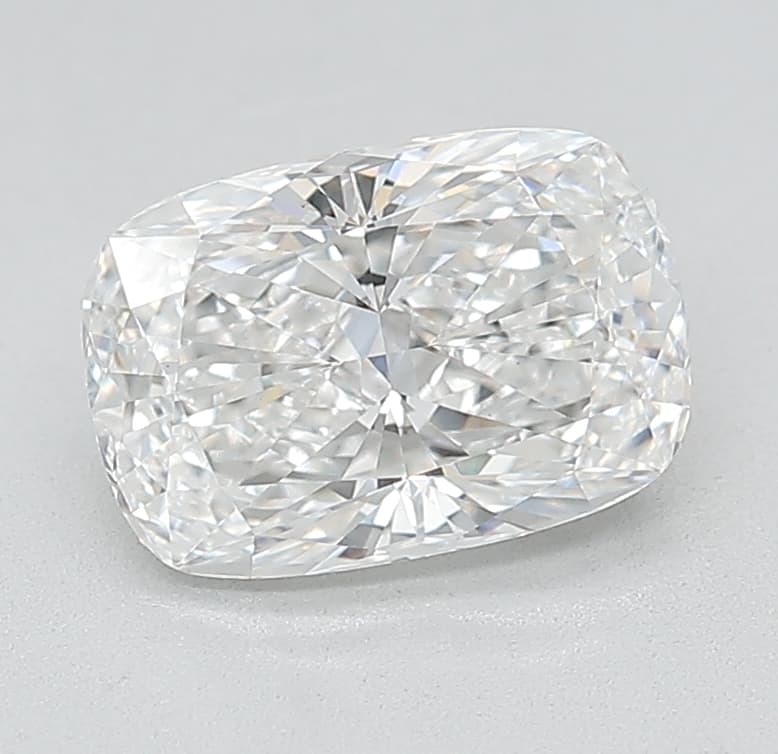
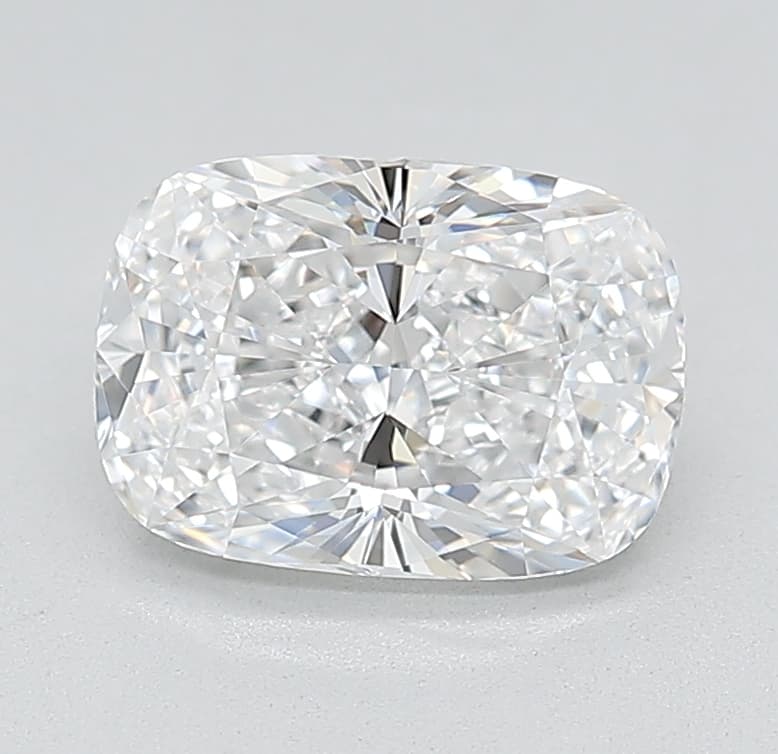
A cushion is a square or rectangular diamond with rounded corners and gently curved sides, a shape often likened to a pillow. It is faceted in the brilliant style, so it sparkles with many flashes rather than the broad planes of a step cut.
The outline is an old one. Its antique relative is the old miner, which has a similar outline with a small table, a high crown and a large open culet. Modern cushions use a wider variety of facet patterns, and their outlines range from nearly square with crisp corners to softly rounded and pillowy.
IGI has graded the cut of fancy shapes, from Excellent to Poor, since September 2022; GIA does not. Because so many facet patterns share the name, the video matters a great deal: two cushions with similar measurements can look quite different.
Cushion brilliant or cushion modified brilliant: what is the difference?
Reports usually describe the shape in one of two ways, and the names point to two different looks:
- Cushion brilliant: a facet pattern with larger facets that produce bigger, more distinct flashes of light, sometimes described as a chunky look.
- Cushion modified brilliant: usually has extra facets on the pavilion, which break the light into smaller reflections and often give a busier "crushed ice" appearance.
Neither is better; it is a matter of taste. Larger, defined facets show a bolder pattern, while crushed ice gives a softer, glittery look. Report wording and cutting styles are not perfectly consistent between labs and cutters, so a stone described one way can sometimes look closer to the other. Judge the pattern in the video, not just the name on the report.
What proportions are commonly used for cushions?
| Measurement | Common guideline range |
|---|---|
| Length-to-width ratio, square | 1.00 to 1.05 |
| Length-to-width ratio, elongated | 1.10 to 1.30 |
| Total depth | 61% to 68% |
| Table | 58% to 68% |
| Polish and symmetry | Excellent or Very Good |
These are common guidelines and vary slightly by source; they are not lab rules. The ratio is mostly a matter of taste. Square cushions give a soft, compact look, while elongated cushions are longer and slimmer on the finger. Cushions are cut across a wide range of depths, so compare the measurements carefully, and look closely at any stone that sits well outside the depth range before you go further.
- CushionTypical L/W1.00–1.05 square1.10–1.30 elongated
- Typical L/W1.00–1.05 square1.20–1.40 rectangular
- Typical L/WAbout 1.00–1.10
- Typical L/W1.00–1.05
What should you check before choosing a cushion?
- The facet pattern: decide whether you want larger flashes or crushed ice, then check that the video shows an even pattern you like across the whole stone.
- Bow-tie: elongated cushions, and some square ones, can show a darker band across the middle. A faint one that moves with the stone is normal; a wide, dark one is not.
- Windowing and dark areas: a washed-out, see-through center usually means a shallow pavilion, and dark areas that stay dark as the stone moves (extinction) are worth avoiding.
- Outline: the corners should be evenly rounded and the sides should mirror each other. Some cushions are cut almost square with crisp corners, others soft and round; pick the look you like and make sure it is even.
- Spread: compare length and width in millimeters across stones of similar weight. Deep cushions carry weight you cannot see from the top.
One of our specialists can review the report and video with you before you buy.
How do color and clarity show in a cushion?
Cushions tend to show body color a little more than rounds do, so a near-colorless cushion can look slightly warmer than a round of the same grade. If a white look matters to you, view the stone face-up in neutral light, and see the diamond color guide for how the grades step down.
On clarity, the busy pattern of a crushed-ice cushion tends to hide small inclusions. The larger facets of a cushion brilliant give a clearer view into the stone, so inclusions can be a little easier to spot. Either way, the goal for most buyers is an eye-clean stone, and a video is the best way to check.
How big does a cushion look, and how should it be set?
Cushions are commonly cut deeper than rounds (compare the ranges above with our round guide), and weight below the girdle does not add face-up size. As a result, a cushion can face up smaller than a round of the same carat weight. Compare the millimeter measurements rather than the carat weight alone.
The rounded corners are less exposed than the sharp corners of a princess cut, but they are still the parts most likely to take a knock. Cushions are usually set with a prong at each corner, sometimes doubled, or in a bezel. A halo of small stones around the center stone is another common design choice for this shape.
| Weight | Stones | Median length (mm) | Median width (mm) |
|---|---|---|---|
| 1.50–1.64 ct | 4 | 8.67 | 6.07 |
| 2.00–2.19 ct | 5 | 9.56 | 6.69 |
| 3.00–3.29 ct | 16 | 10.85 | 7.64 |
Frequently asked questions
What is the difference between a cushion brilliant and a cushion modified brilliant?
A cushion brilliant usually has larger facets that give bigger, more distinct flashes. A cushion modified brilliant usually has extra pavilion facets that create a busier crushed ice look. Report names are not perfectly consistent, so judge the pattern in a video.
What is a good length-to-width ratio for a cushion cut?
Common guidelines are about 1.00 to 1.05 for a square cushion and about 1.10 to 1.30 for an elongated one. Sources vary slightly, and the right ratio is simply the outline you prefer.
Does a cushion cut look smaller than a round diamond?
It can. Cushions are commonly cut deeper than rounds, and weight below the girdle does not show from the top, so a cushion may face up smaller than a round of the same carat weight. Compare the length and width in millimeters.
Is a cushion cut the same as an old miner?
No. The old miner is an antique cutting style with a cushion-like outline, a small table, a high crown and a large open culet. Modern cushions use different facet patterns, although lab-grown diamonds are also cut in the old miner style today.
Do cushion cut diamonds hide inclusions well?
Brilliant faceting tends to hide small inclusions, and crushed-ice cushions are especially busy, so many cushions are forgiving on clarity. Cushions with larger facets show more of the interior. Either way, check in a video that the stone is eye-clean.