Guide
Diamond Clarity: Grades and Inclusions in Lab-Grown Diamonds
Last reviewed
Quick answer
Clarity grades the inclusions inside a diamond and the blemishes on its surface, as seen at 10x magnification, on a scale from Flawless (FL) to Included (I3). Lab-grown diamonds are graded on the same scale as mined diamonds. In practice, what matters most is whether you can see anything without magnification, which depends on the grade, the shape and where the inclusions sit.
The diamond clarity scale
Clarity grades are set by what a trained grader sees at 10x magnification. The scale used by IGI and GIA runs from Flawless to Included:
| Grade | Name | At 10x magnification |
|---|---|---|
| FL | Flawless | No inclusions or blemishes |
| IF | Internally Flawless | No inclusions; only minor surface blemishes |
| VVS1, VVS2 | Very, Very Slightly Included | Inclusions so slight they are very hard to find |
| VS1, VS2 | Very Slightly Included | Minor inclusions, difficult to somewhat easy to find |
| SI1, SI2 | Slightly Included | Noticeable inclusions |
| I1, I2, I3 | Included | Obvious inclusions that may affect transparency and brilliance |
Within each group, the lower number is the better grade. "SI3" appears in some trade listings but is not on the IGI or GIA scale.
Since October 1, 2025, GIA no longer gives a separate clarity grade to colorless and near-colorless lab-grown diamonds. Its Laboratory-Grown Diamond Quality Assessment requires VVS clarity or higher for Premium and at least VS for Standard, and a stone below Standard receives no assessment. IGI reports, and GIA lab-grown reports issued from October 13, 2020 to September 30, 2025, show the full grade; earlier GIA lab-grown reports gave ranges such as "VS".
| Grade | Name | At 10× magnification | To the unaided eye |
|---|---|---|---|
| FL | Flawless | No inclusions or blemishes | Clean |
| IF | Internally Flawless | No inclusions; only minor surface blemishes | Clean |
| VVS1 | Very, Very Slightly Included 1 | Inclusions so slight they are very hard to find | Eye-clean |
| VVS2 | Very, Very Slightly Included 2 | Inclusions so slight they are very hard to find | Eye-clean |
| VS1 | Very Slightly Included 1 | Minor inclusions, difficult to somewhat easy to find | Usually eye-clean in brilliant shapes |
| VS2 | Very Slightly Included 2 | Minor inclusions, difficult to somewhat easy to find | Usually eye-clean in brilliant shapes |
| SI1 | Slightly Included 1 | Noticeable inclusions | Varies: some are eye-clean, some show an inclusion |
| SI2 | Slightly Included 2 | Noticeable inclusions | Varies: inclusions are more often visible |
| I1 | Included 1 | Obvious inclusions that may affect transparency and brilliance | Often visible |
| I2 | Included 2 | Obvious inclusions that may affect transparency and brilliance | Often visible |
| I3 | Included 3 | Obvious inclusions that may affect transparency and brilliance | Often visible |
How clarity is graded
A grader examines the diamond at 10x magnification, with a loupe or microscope, from the top and from other angles. The grade rests on five factors:
- Size: larger inclusions lower the grade more.
- Number: how many inclusions there are.
- Position: an inclusion under the table is easier to see than one near the girdle.
- Nature: what kind of inclusion it is and whether it reaches the surface.
- Relief: how much it contrasts with the surrounding diamond. Dark inclusions usually stand out more than white or transparent ones of the same size.
Many reports, IGI’s among them, include a plot, a diagram that marks the main inclusions with symbols, and a list of key clarity characteristics; GIA’s lab-grown assessment since October 2025 has no plot. Use the plot together with a video: the plot shows where things are, and the video shows whether you will notice them.
Inclusions vs blemishes
Inclusions are features inside the diamond. Common ones include:
- Pinpoints: tiny crystals that look like dots at 10x.
- Clouds: groups of pinpoints, which can look like a faint haze when they are dense.
- Feathers: small breaks inside the stone, which can look white or transparent.
- Crystals: larger included crystals, which can look light or dark.
Blemishes are on the surface: polish lines, small scratches, nicks, abraded facet edges and extra facets. They usually affect the grade less than inclusions do, but they are what separates Flawless from Internally Flawless. The quality of the surface finish is graded separately as polish.
| Compared | Inclusions | Blemishes |
|---|---|---|
| Where | Inside the diamond | On the surface |
| Examples | Pinpoints, clouds, feathers and crystals | Polish lines, small scratches, nicks, abraded facet edges and extra facets |
| Effect on the grade | Weighed by size, number, position, nature and relief | Usually less than inclusions; they separate Flawless from Internally Flawless |
Inclusions in lab-grown diamonds
Lab-grown diamonds have inclusions too. Each growth method leaves its own typical features:
- CVD diamonds can include pinpoints and dark inclusions of non-diamond carbon that formed during growth.
- HPHT diamonds can include metallic flux inclusions, small pieces of the molten metal solvent (such as iron, nickel or cobalt) used to grow them, as well as pinpoints. Flux inclusions can look opaque and metallic.
Both can also show feathers and other features familiar from mined diamonds. Labs grade all of them on the same five factors, so an inclusion lowers the grade according to its size, position and contrast, whatever caused it. The type of inclusion can hint at the growth method, but labs identify lab-grown diamonds with instruments, and IGI reports state the growth process in the comments (GIA’s lab-grown assessment since October 2025 does not). See CVD vs HPHT for more on the two methods.
What does eye-clean mean?
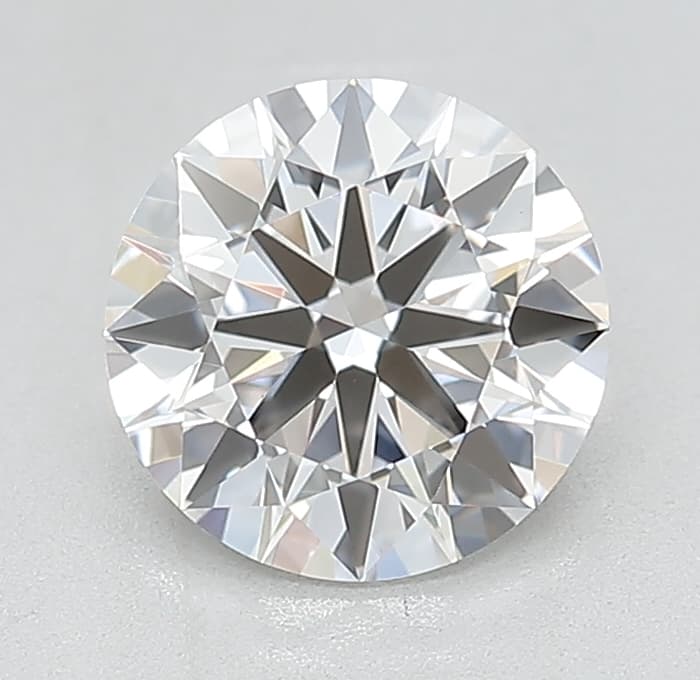
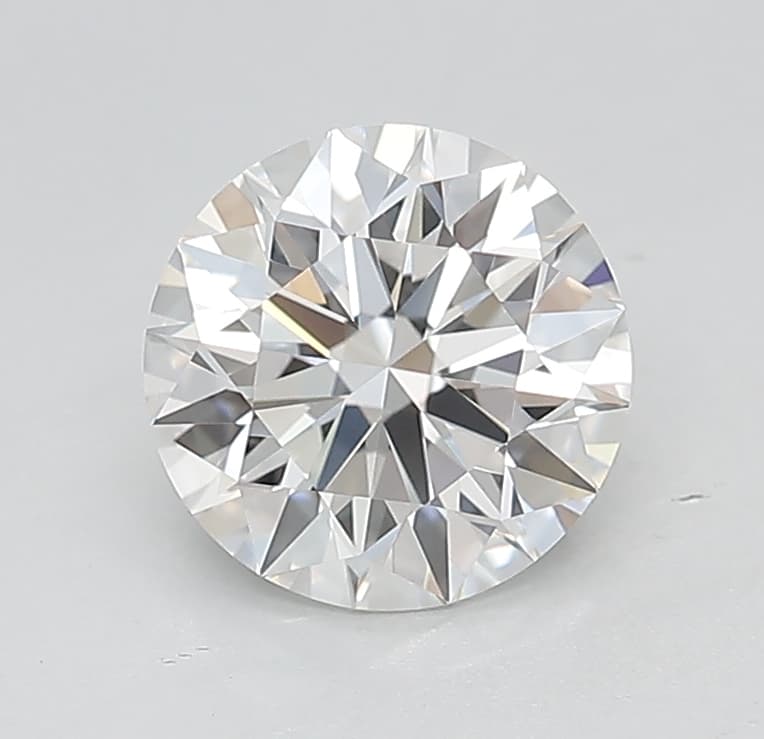
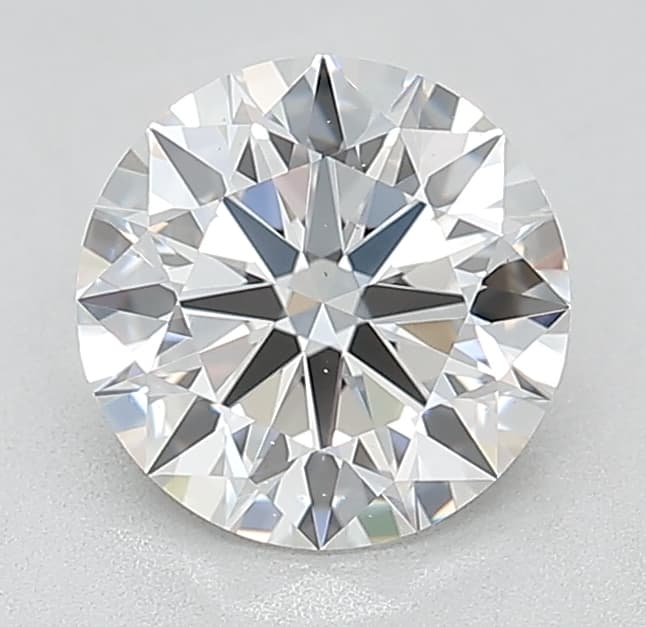
Eye-clean is not a lab grade. It means no inclusions are visible to the unaided eye when the diamond is viewed face-up at a normal distance, about 25 to 30 cm (10 to 12 in). For many buyers it is the practical goal, rather than a particular grade.
As a general guide, VVS stones are eye-clean, since their inclusions are hard to find even at 10x. VS1 and VS2 stones are usually eye-clean in brilliant shapes. SI1 and SI2 stones vary widely: some are eye-clean, and some show an inclusion you will notice. For VS2 and below, judge each stone from a video rather than from the grade alone.
Keep the viewing conditions in mind. Close-up videos and loupe photos are magnified, so a stone can look more included on screen than it does at arm’s length. If you are unsure what you are seeing, a specialist can review the video with you.
How shape and position affect what you see
The same grade can look different from one stone to another:
- Shape. Brilliant cuts such as round, oval, cushion, radiant and pear break light into many small reflections that help hide small inclusions. Step cuts such as emerald and asscher have a large, open table and long parallel facets, which show inclusions more readily. Many buyers choose a higher clarity grade for step cuts.
- Size. In larger stones the table and facets are larger, so inclusions are easier to see without magnification.
- Position. An inclusion under the table is the most visible. One near the girdle is harder to see and may sit under a prong. In brilliant cuts, an inclusion near the pavilion can be reflected by the facets and appear more than once.
- Durability. A large feather that reaches the surface near the girdle, or at a point or corner of a pear, marquise, heart or princess, can make the stone more vulnerable to chipping. Settings that protect points and corners help.
One of our specialists can go through the plot and video with you before you buy.
Frequently asked questions
What clarity grade should I choose for a lab-grown diamond?
Many buyers aim for an eye-clean stone rather than a top grade. VS1 and VS2 are a common choice for brilliant shapes such as round and oval, while step cuts such as emerald and asscher often call for VVS or VS1. Check a video for any stone graded VS2 or lower.
Do lab-grown diamonds have inclusions?
Yes, they can. CVD diamonds can include pinpoints and dark non-diamond carbon inclusions, and HPHT diamonds can include metallic flux inclusions and pinpoints. They are graded on the same clarity scale as inclusions in mined diamonds.
Is a VS2 diamond eye-clean?
Usually, in brilliant shapes, but not always. It depends on the size, type and position of the inclusions, the size of the stone and its shape, and step cuts show more. A clear video is the best way to check a specific stone.
What is the difference between FL and IF clarity?
A Flawless diamond shows no inclusions or blemishes at 10x magnification. An Internally Flawless diamond has no inclusions but may have minor surface blemishes. The difference cannot be seen with the unaided eye.
Is SI3 a real clarity grade?
SI3 appears in some trade listings, but it is not on the IGI or GIA clarity scale, which goes from SI2 directly to I1. Rely on the grade printed on the lab report.