Shapes & Cuts
Pear Diamonds: Point Up or Point Down, Symmetry and Ratio
By the Vanora Diamond team
Published Last reviewed 5 min read

Quick answer
Traditionally a pear-shaped diamond is set with the point toward the fingertip, which tends to make the finger look longer, but pointing it toward the wrist is equally valid and purely a matter of taste. Either way, a pear looks its best when the point lines up with the center of the rounded head, the shoulders are even and the ratio suits your hand, commonly about 1.55 to 1.70. Decide the direction together with the wedding band, because the band will sit against one end of the stone.
Point up or point down: what do the terms mean?
The terms come from looking at a hand with the fingers pointing upward:
- Point up (sometimes called north) means the point faces the fingertip and the rounded head sits toward the hand.
- Point down (south) means the point faces the wrist and the head sits toward the fingertip.
Because "up" and "down" depend on how you hold your hand, it is clearer to say "point toward the fingertip" or "point toward the wrist" when you talk to a jeweler. A pear can also be set east-west, across the finger, or at a slight angle, which is often seen in two-stone designs.
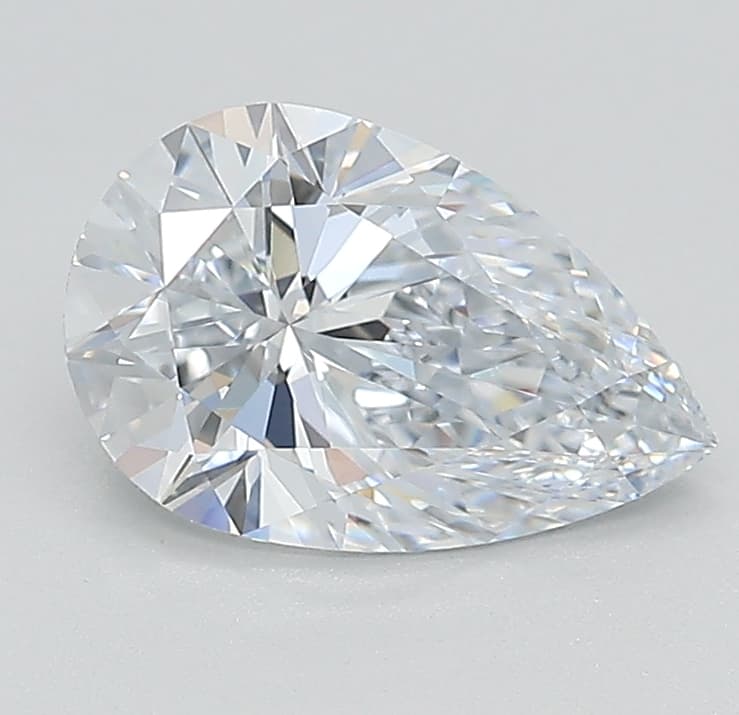
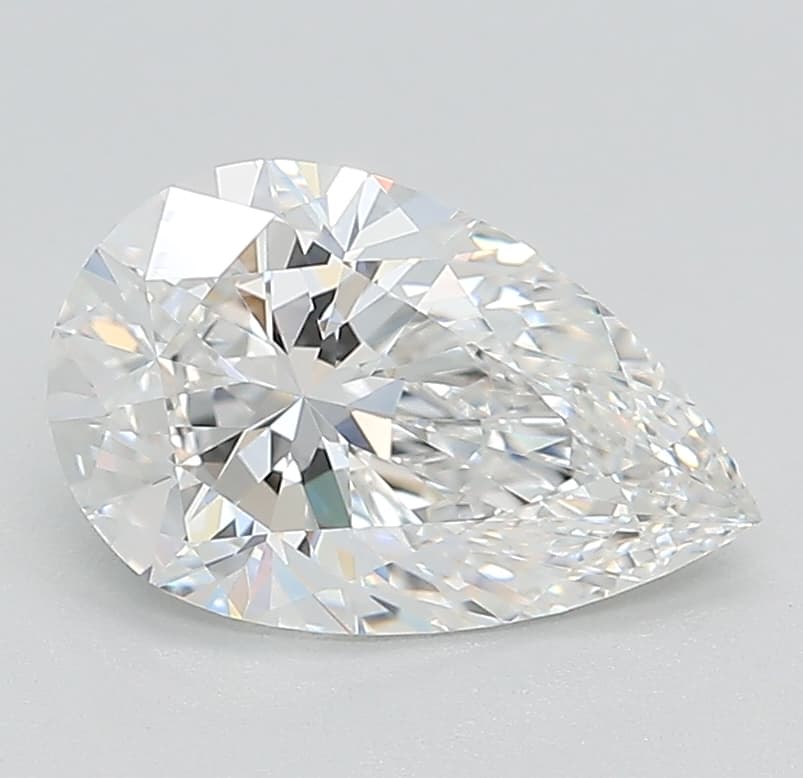
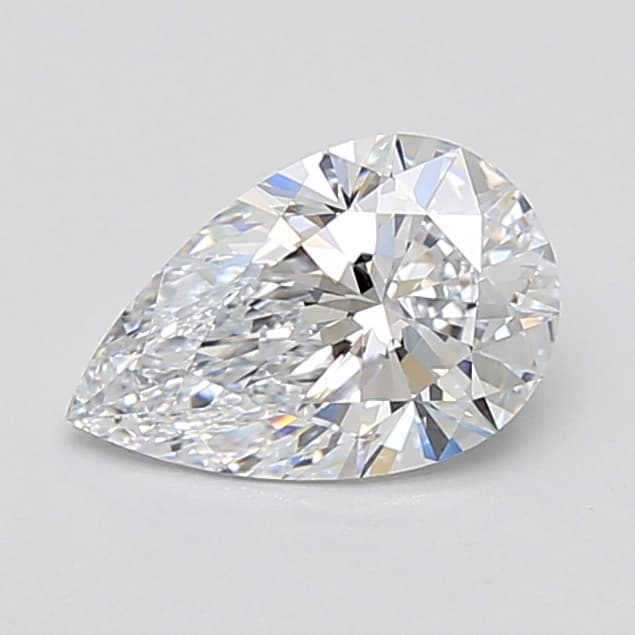
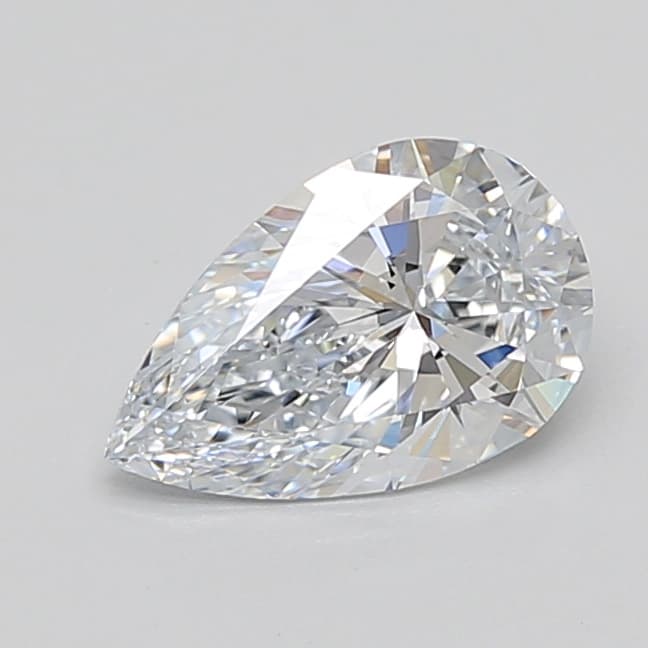
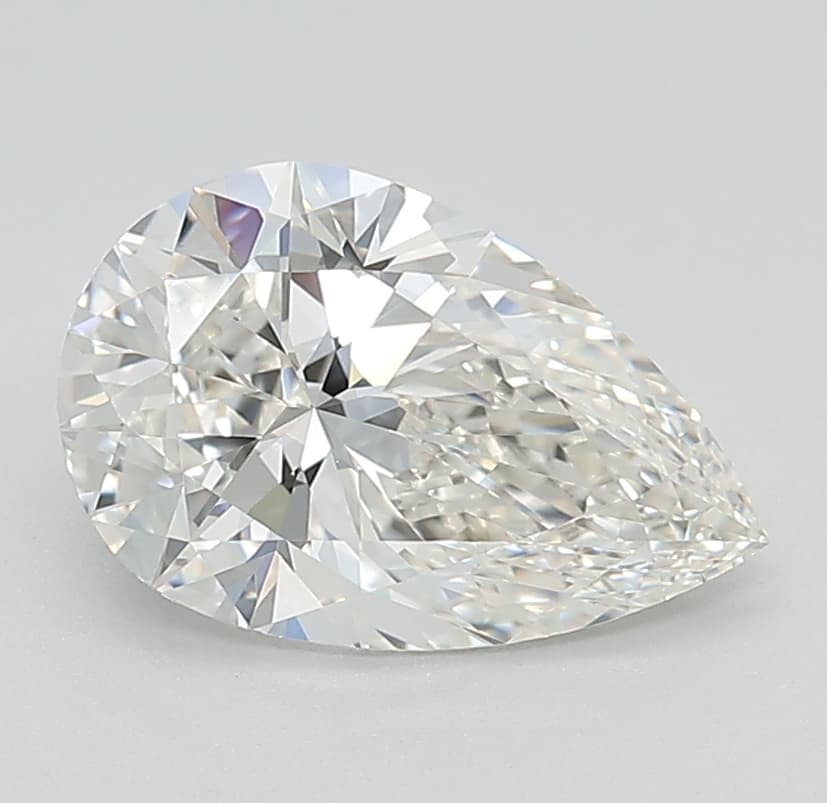
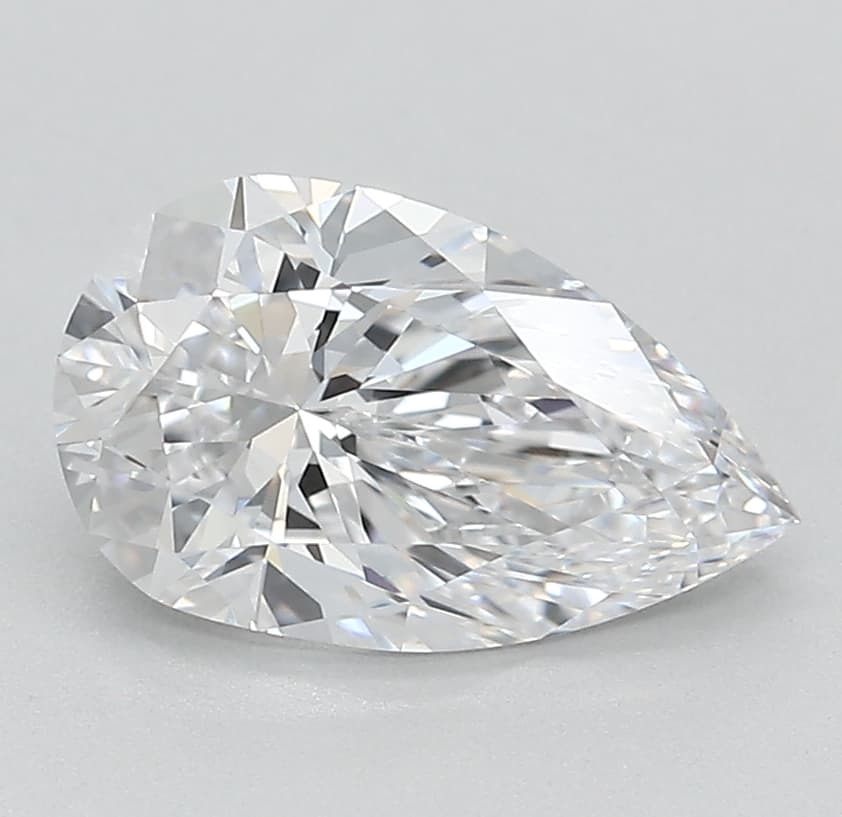
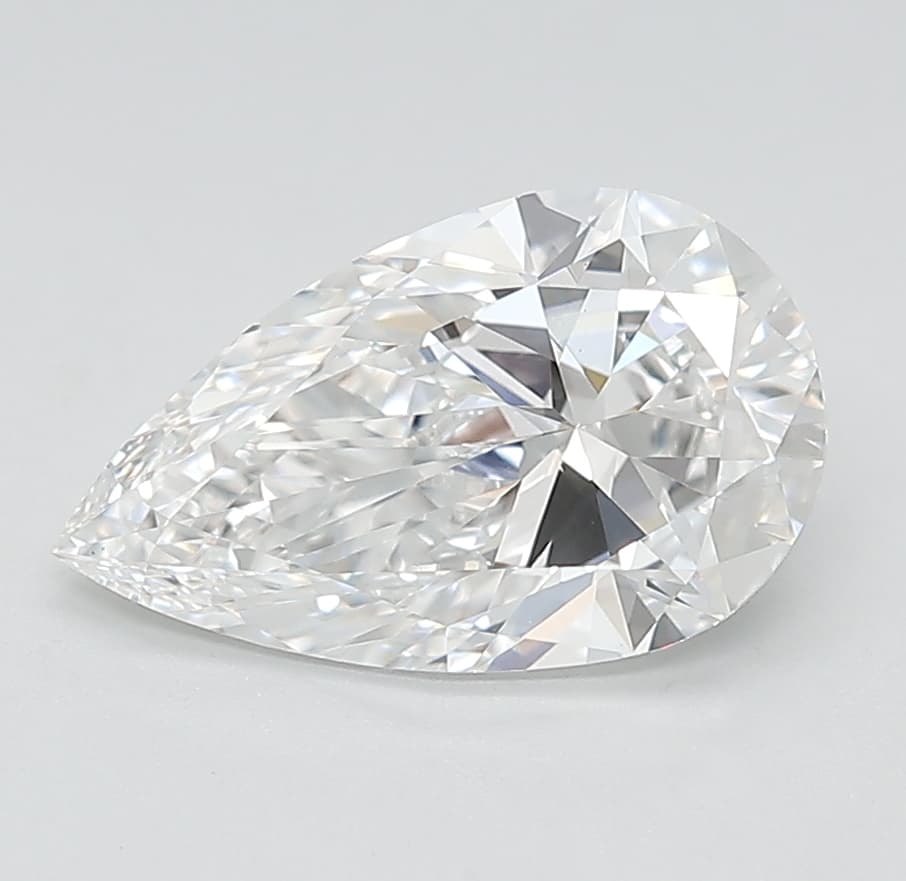
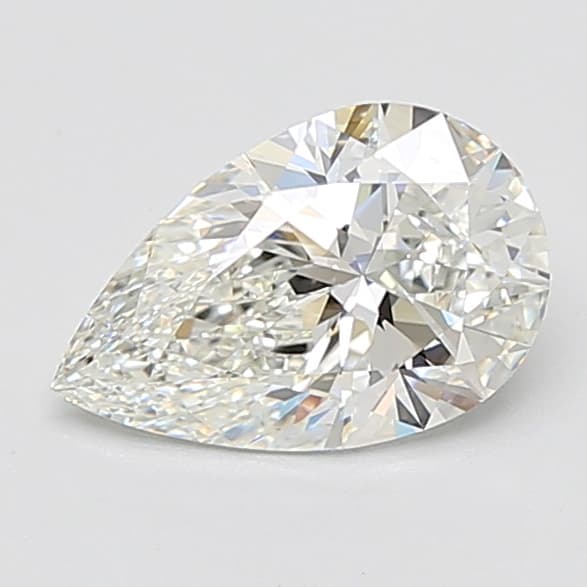
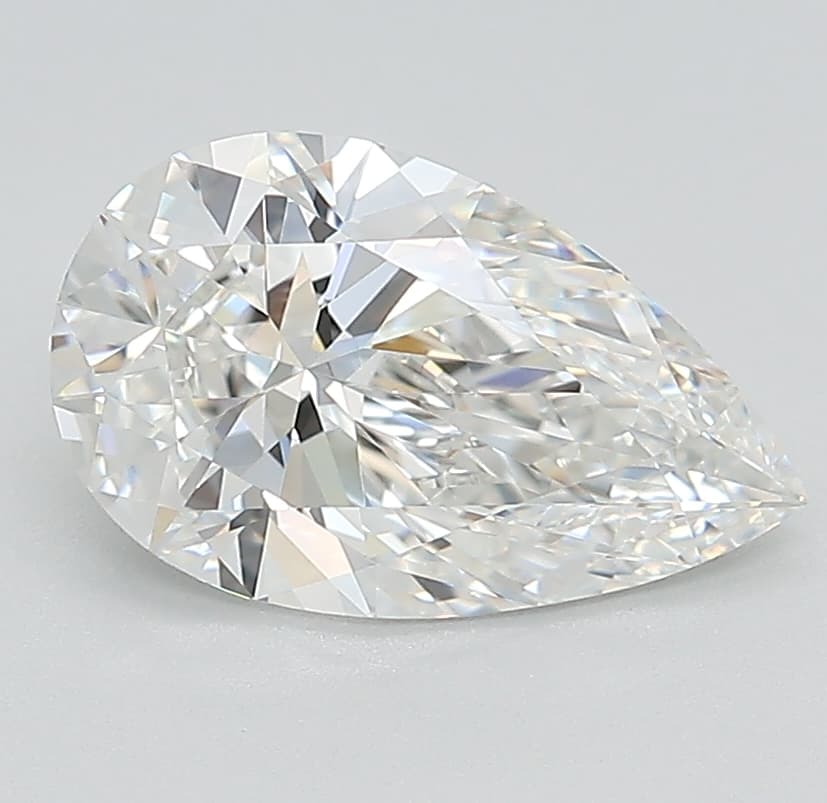
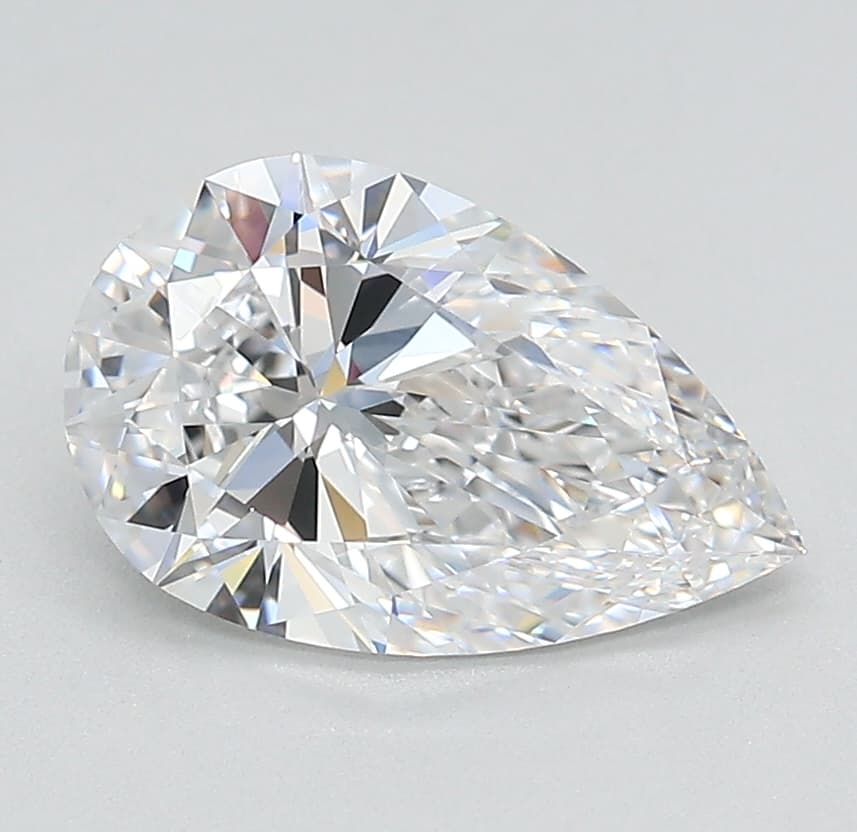
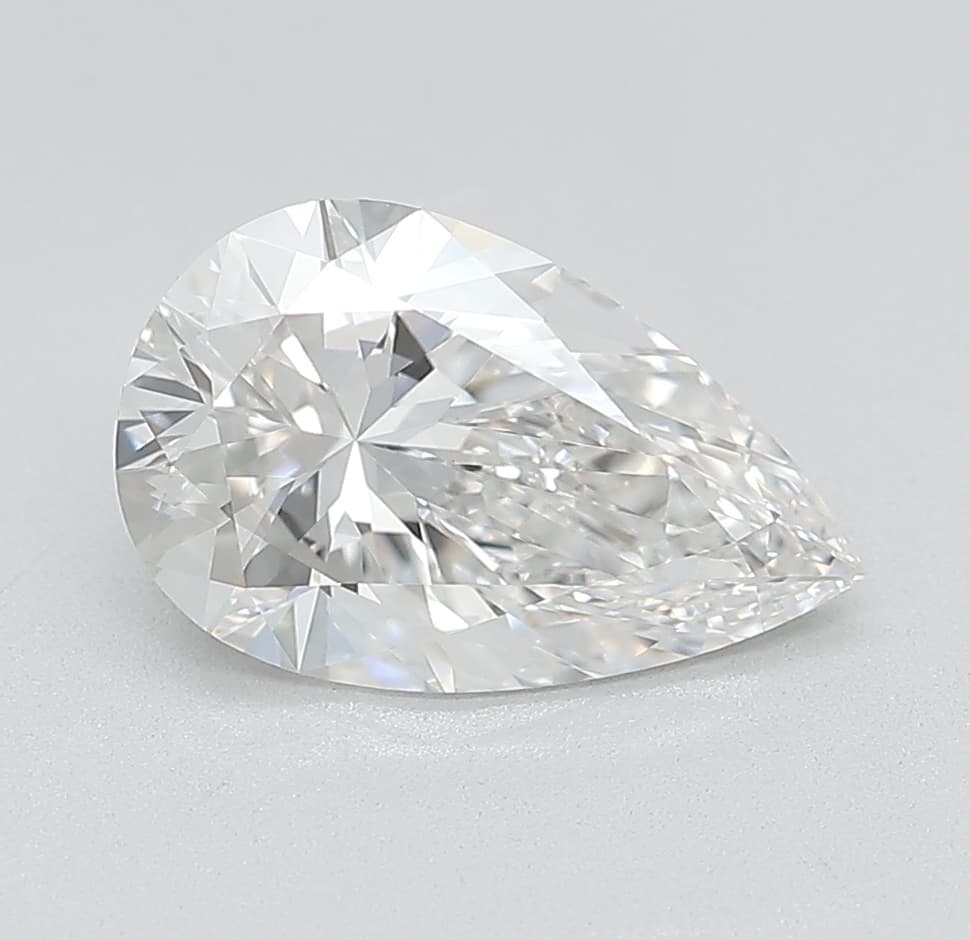
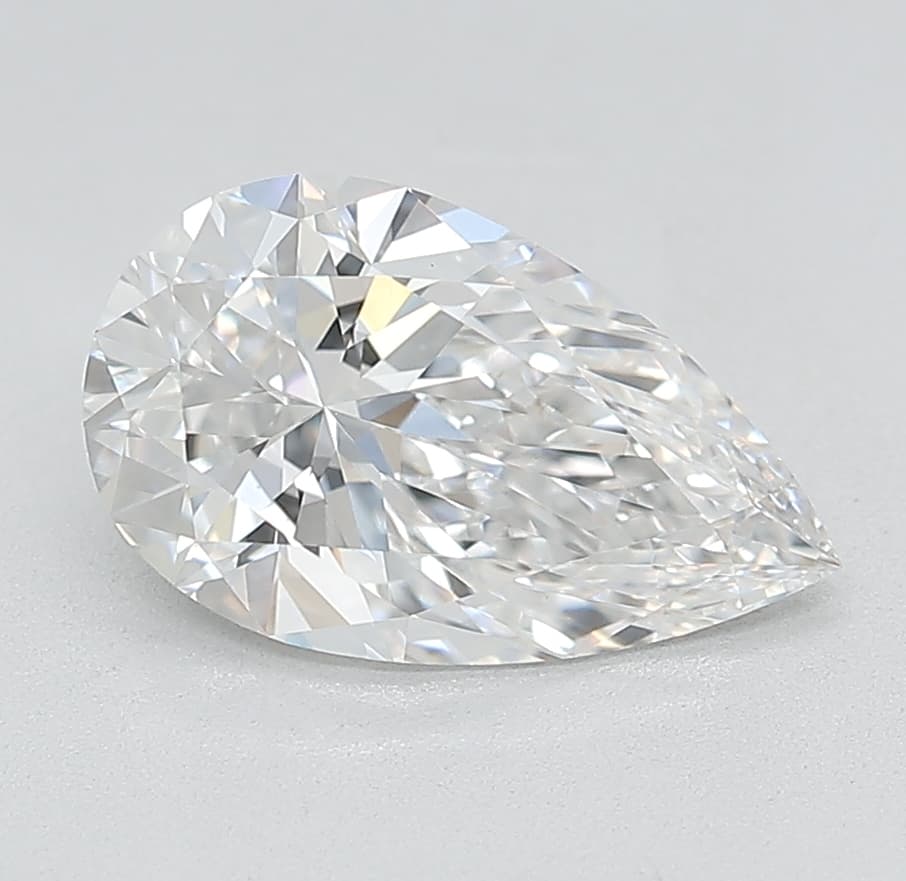
A pear is a modified brilliant with one rounded end and one point. Our pear guide covers its proportions; this article is about orientation and the details that make it work.
How does each direction look?
| Point toward the fingertip | Point toward the wrist | |
|---|---|---|
| Overall effect | Classic; draws the eye along the finger | Softer and less expected |
| Finger | Tends to make it look longer | Makes the head the visual focus |
| From your own view | The point faces away from you | The point faces toward you |
| Next to a wedding band | The rounded head meets the band | The point meets the band |
Neither direction changes the size of the stone or how much it sparkles; it changes the impression. Pointing toward the fingertip follows the line of the finger, which is why it is the traditional choice for engagement rings. Pointing toward the wrist puts the full, rounded head at the top of the ring, which some people find gentler and more personal, since the point then faces the wearer.
If you cannot decide, hold a ring (or a paper cut-out of the stone’s outline at its real millimeter size) both ways on your finger and take photos. The right answer is usually the one you keep looking at.
Hold a ring, or a paper cut-out of the stone’s outline at its real millimeter size, both ways on your finger and take photos. The right answer is usually the one you keep looking at.
What about the wedding band?
This is the practical question that often settles the decision. Many people wear the wedding band below the engagement ring, nearer the hand, so the band sits beside the end of the pear that faces the wrist.
- Point toward the fingertip: the rounded head sits next to the band. A straight band usually sits close, with a small gap shaped by the curve of the head.
- Point toward the wrist: the point sits next to the band. A straight band leaves a gap or presses against the point, so many people choose a contoured or notched band that curves around it.
Avoid a band that rubs against the point all day: the point is the most exposed part of the stone, and constant contact also wears the metal. If you plan to stack several bands, think about this before choosing the direction, or ask your jeweler to design the engagement ring and band together.
Avoid a band that rubs against the point all day: the point is the most exposed part of the stone, and constant contact also wears the metal. A contoured or notched band can curve around it.
Symmetry: what makes a pear look right either way?
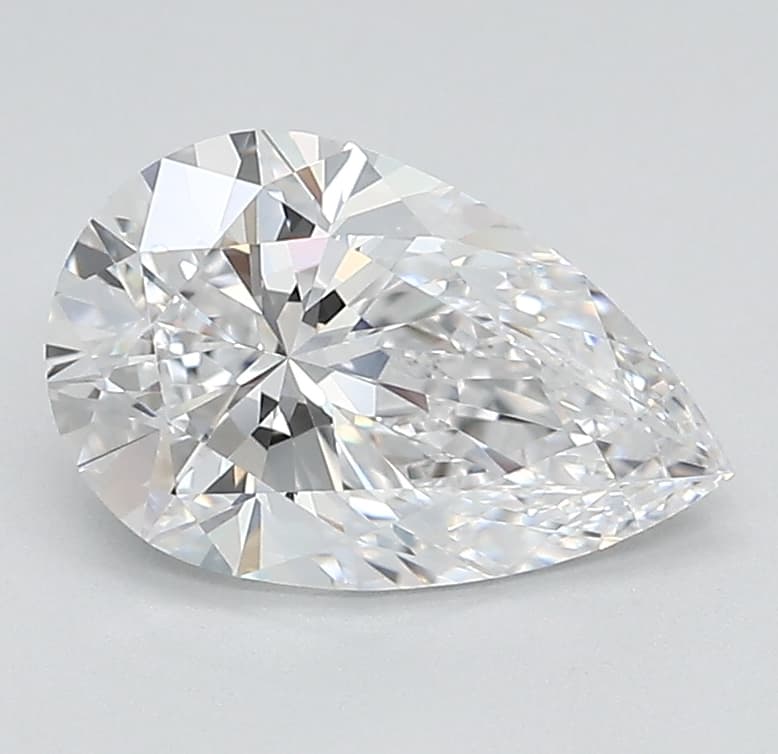
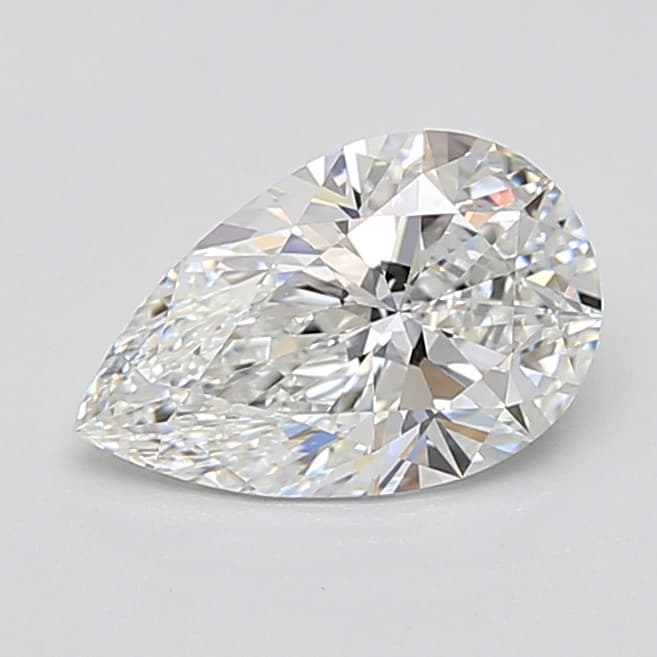
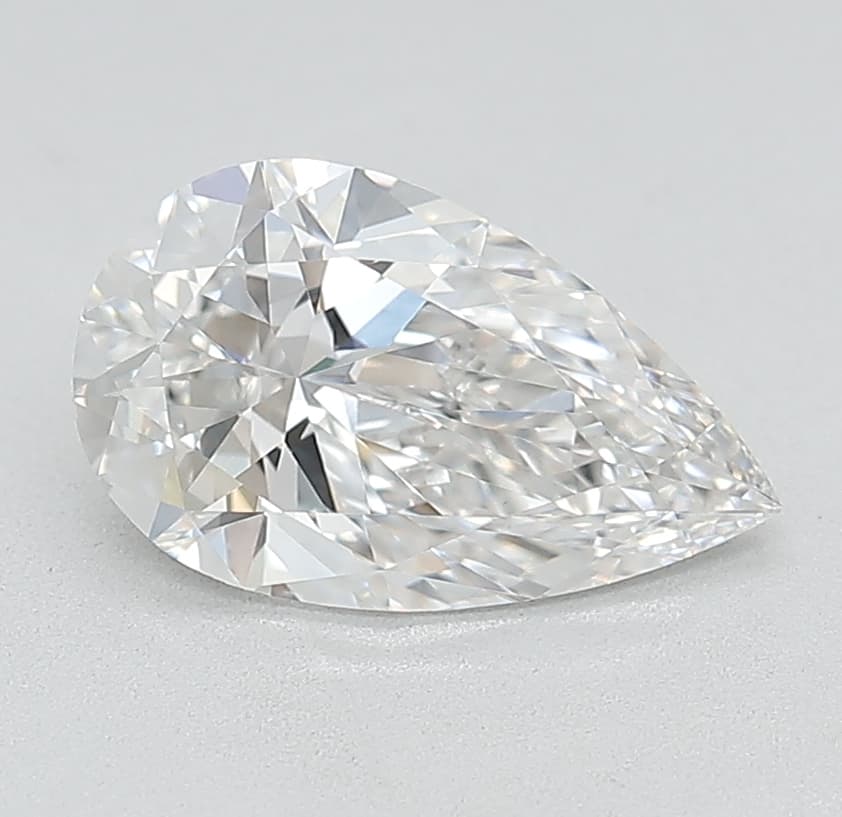
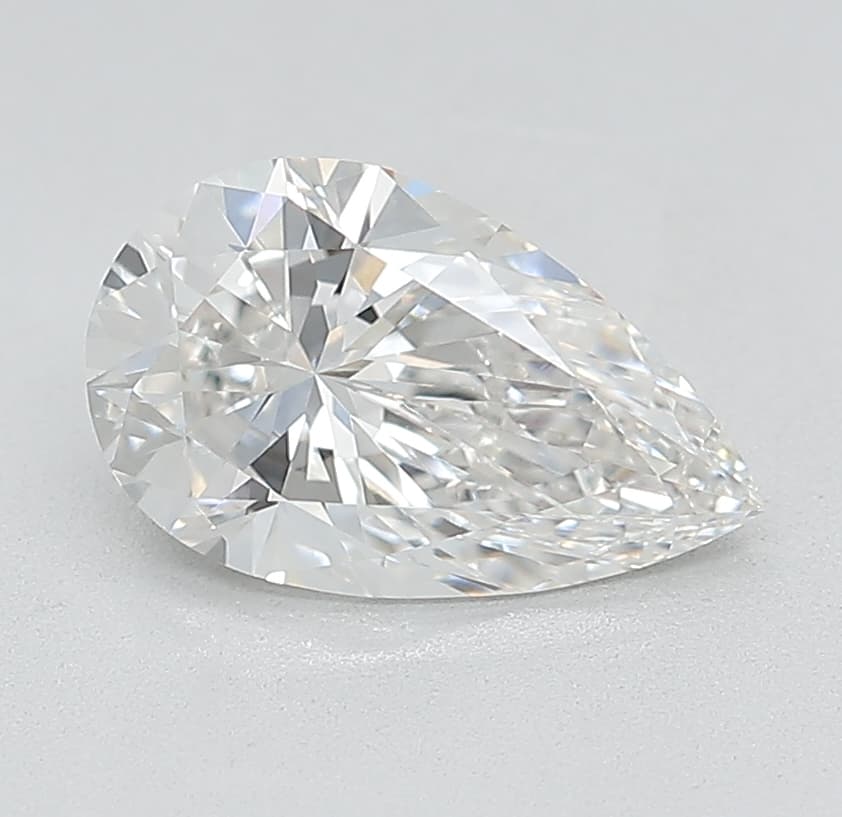
A pear has a single axis of symmetry, from the tip of the point through the center of the head, so any imbalance is easy to see, whichever way the stone faces. Check these in the photo and video:
- Alignment: the point should sit exactly on the line through the center of the head. An off-center point makes the whole ring look crooked.
- The head: a smooth, full curve, not flattened across the top and not narrow.
- Shoulders: where the head starts curving toward the point, both sides should sit at the same height and look evenly rounded, not squared off.
- Wings: the sides running to the point should curve gently outward. Bulging wings look chubby; flat ones look thin and angular.
- Bow-tie: a darker band across the widest part is normal if it moves with the stone; a broad band that stays dark is not.
The symmetry grade on the report is a useful filter, but your own eye on the outline matters more for this shape. On our stone pages, the photo and 360° view make the outline easy to judge, and many stones also have an ASET image.
Which ratio suits your hand?
Commonly cited guidelines put a pear’s length-to-width ratio at about 1.45 to 1.75, and many people like 1.55 to 1.70. These are common preferences, not lab rules.
| Ratio | How it tends to look |
|---|---|
| About 1.45 to 1.55 | Fuller head, softer teardrop |
| About 1.55 to 1.65 | Balanced, classic pear |
| About 1.65 to 1.75 | Long and slender, strongest elongating effect |
Ratio and direction work together. A slender pear pointing toward the fingertip gives the strongest lengthening effect. A fuller pear pointing toward the wrist shows off the head and reads as a softer, rounder shape. The stone’s width decides how much of your finger it covers; our article on oval ratios shows how to work that out from your ring size.
| US size | Inner diameter (mm) | Inner circumference (mm) | UK / AU | EU / ISO |
|---|---|---|---|---|
| 4 | 14.9 | 46.8 | H½ | 47 |
| 5 | 15.7 | 49.3 | J½ | 49 |
| 6 | 16.5 | 51.9 | L½ | 52 |
| 7 | 17.3 | 54.4 | N½ | 54 |
| 8 | 18.1 | 57.0 | P½ | 57 |
| 9 | 18.9 | 59.5 | R½ | 60 |
| 10 | 19.8 | 62.1 | T½ | 62 |
| 11 | 20.6 | 64.6 | V½ | 65 |
| 12 | 21.4 | 67.2 | X½ | 67 |
How do you protect the point?
The point is the thinnest part of a pear and the most likely to chip if it is knocked. Most settings cover it with a V-prong (or chevron prong) that wraps the tip, with two or three prongs around the head. A bezel around the whole stone protects every edge.
Whichever way it faces, the point needs the same care. Check it for chips or inclusions in the video before you choose, make sure a wedding band will not press against it, and have the prongs checked from time to time, especially on a ring you wear every day.
Shortlisting a pear for your ring
- Choose the direction and the band style together.
- Pick a ratio from the table above and filter on it.
- Judge the outline: alignment, head, shoulders and wings.
- Check the point and the bow-tie in the video.
- Compare millimeters, not just carats; our pear category lists the measurements for every stone.
The live suggestions below include pears in the balanced 1.55 to 1.70 ratio range and colorless pears from 2 carats. If you would like help judging symmetry on a shortlist, one of our diamond specialists can go through the stones with you.
Frequently asked questions
Which way should a pear diamond face on an engagement ring?
Traditionally the point faces the fingertip, which tends to make the finger look longer. Pointing it toward the wrist is equally valid. Choose the direction you prefer and plan the wedding band at the same time, since the band sits against one end of the stone.
Does a pear look smaller if it points toward the wrist?
No. The direction does not change the stone’s size or sparkle, only the impression it gives. Pointing toward the fingertip emphasizes length; pointing toward the wrist puts the rounded head at the top of the ring.
What wedding band works with a pear diamond?
If the point faces the fingertip, a straight band usually sits close to the rounded head. If the point faces the wrist, a contoured or notched band that curves around the point is a common choice, because a straight band would press against it or leave a gap.
Can a pear diamond be set sideways?
Yes. An east-west pear sits across the finger, and pears are also set at a slight angle in two-stone designs. The same symmetry checks apply, and the point still needs a V-prong or bezel.
Glossary terms in this article
More on Shapes & Cuts in the journal.