Guide
Carat Weight: How Weight Relates to Size in Lab-Grown Diamonds
Last reviewed
Quick answer
Carat is a unit of weight, not size: one carat is 0.2 grams and is divided into 100 points. How large a diamond looks depends on its face-up measurements, which vary with cut, depth and shape, so two stones of the same weight can look noticeably different. As a rough guide, a well-cut 1 carat round measures about 6.4 to 6.5 mm across.
What is a carat?
A carat is a unit of mass used for gemstones:
- 1 carat (ct) = 0.2 grams = 200 milligrams.
- 1 carat = 100 points, so a 0.75 ct diamond is a "75-pointer".
IGI and GIA reports state the weight to two decimal places, for example 1.02 ct. On jewelry with several stones, "ctw" or "total carat weight" is the combined weight of all of them, not the weight of the center stone.
A lab-grown diamond is the same material as a mined one, with the same chemistry and crystal structure, so carat weight means exactly the same thing for both. A lab-grown and a mined diamond with the same weight and proportions are the same size.
- One carat
- 0.2 g
- 200 milligrams
- Points in a carat
- 100
- A 0.75 ct diamond is a 75-pointer
- Reports state weight to
- 0.01 ct
- Two decimal places, such as 1.02 ct
Carat weight vs face-up size
When you look at a diamond in a ring, you see its outline from above: the diameter of a round, or the length and width of a fancy shape. This is often called the spread. Weight that sits below the outline adds to the carat number without adding to what you see.
A few things decide how much of the weight shows face-up:
- Deep cutting: a stone cut deeper than usual (see depth percentage) holds more weight in the pavilion and faces up smaller for its weight.
- A thick girdle: a very thick girdle adds weight around the edge without adding diameter.
- Shallow cutting: a stone cut too shallow can face up larger for its weight, but it can lose brightness and show a washed-out center, known as windowing.
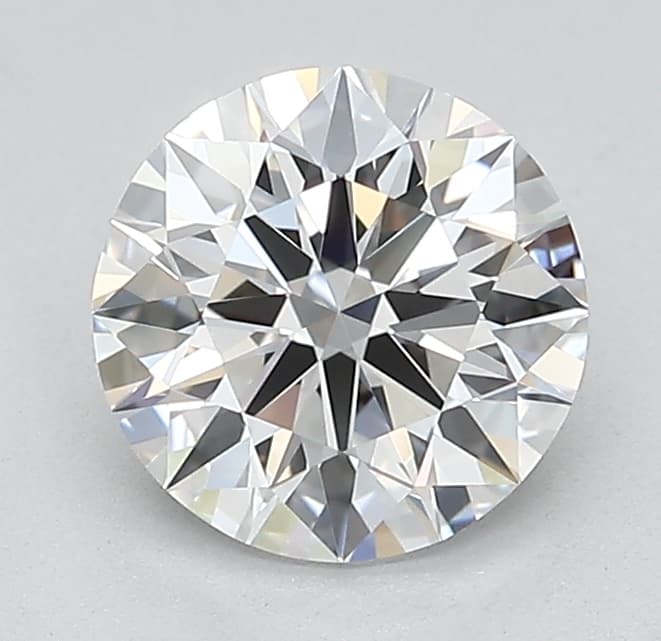
IGI reports print the measurements (GIA’s lab-grown assessment since October 2025 does not). For a round they typically read as minimum diameter, maximum diameter and depth, for example 6.45 - 6.48 x 3.98 mm. A large gap between the minimum and maximum diameter means the outline is slightly out of round. Comparing these numbers between stones of similar weight tells you which will look larger. See diamond cut for the proportions behind a good spread.
Approximate round diamond sizes by carat
For round brilliants, a commonly used estimate links weight to size:
carat ≈ average diameter × average diameter × depth × 0.0061 (all in millimeters)
The figures below are typical for well-cut rounds and in line with that estimate at a total depth of about 61%. Treat every figure as approximate: actual stones of the same weight measure a little more or less depending on how they are cut.
| Carat weight | Approximate diameter (round) |
|---|---|
| 0.25 ct | 4.1 mm |
| 0.50 ct | 5.1 to 5.2 mm |
| 0.75 ct | 5.9 mm |
| 1.00 ct | 6.4 to 6.5 mm |
| 1.50 ct | 7.4 mm |
| 2.00 ct | 8.0 to 8.1 mm |
| 2.50 ct | 8.8 mm |
| 3.00 ct | 9.2 to 9.3 mm |
| 4.00 ct | 10.2 mm |
| 5.00 ct | 11.0 mm |
Size does not grow in step with weight. Doubling the weight from 1 to 2 carats increases the diameter by only about a quarter, from roughly 6.5 mm to 8.1 mm. For more sizes, see the ring size and mm-to-carat chart.
| Weight | Stones | Median length (mm) | Median width (mm) |
|---|---|---|---|
| 1.00–1.09 ct | 19 | 6.46 | 6.48 |
| 1.50–1.64 ct | 8 | 7.51 | 7.56 |
| 2.00–2.19 ct | 17 | 8.20 | 8.26 |
| 3.00–3.29 ct | 51 | 9.38 | 9.42 |
Why prices step at round carat weights
Diamond prices are often set by weight bracket, and the price can step up noticeably when a stone reaches a round weight such as 0.50, 1.00, 1.50 or 2.00 carats. These are sometimes called "magic sizes" in the trade.
Size changes far more gradually. By the estimate above, a well-cut 0.95 ct round is only about 0.1 mm smaller in diameter than a 1.00 ct round, a difference that is hard to see once set. A stone just below a round weight can therefore look almost the same as one at it, often for less.
| Weight | Stones | Median price per carat |
|---|---|---|
| Under 1 ct | 12 | $123 |
| 1–1.49 ct | 48 | $114 |
| 1.5–1.99 ct | 23 | $118 |
| 2–2.49 ct | 25 | $191 |
| 2.5–2.99 ct | 46 | $207 |
| 3–3.49 ct | 76 | $208 |
| 3.5–3.99 ct | 64 | $259 |
| 4–4.99 ct | 80 | $438 |
| 5–5.99 ct | 75 | $662 |
| 6–6.99 ct | 16 | $1,385 |
| 7–7.99 ct | 12 | $144 |
How shape changes face-up size
Carat for carat, shapes face up at different sizes, because each one carries its weight differently. These are tendencies that individual stones can break:
- Elongated shapes such as oval, pear and marquise spread their weight along their length and tend to look larger from above than a round of the same weight.
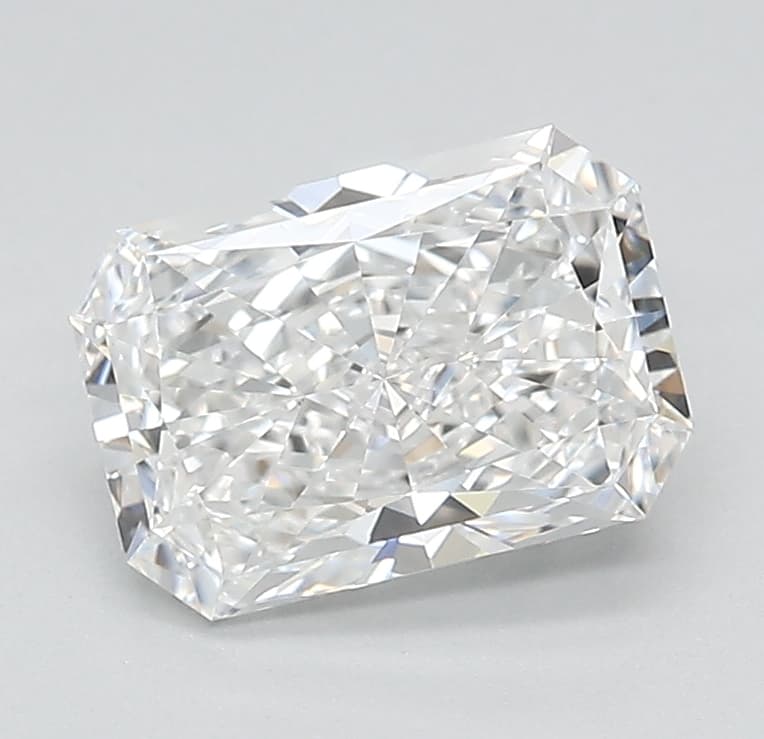
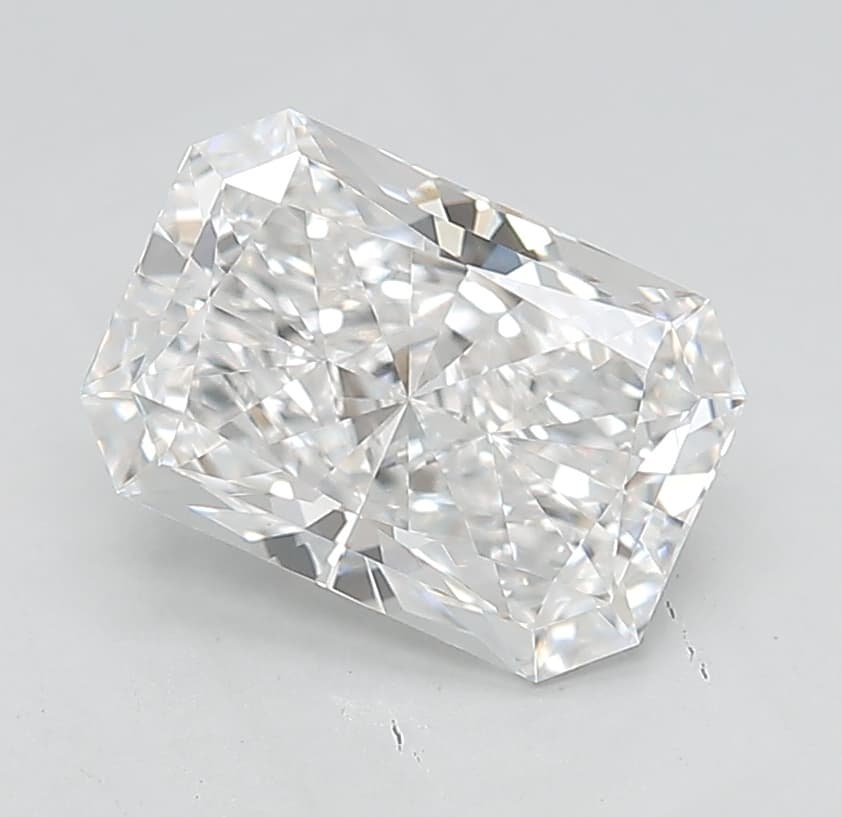
- Shapes commonly cut deeper, such as princess, asscher, cushion and radiant, carry more of their weight below the girdle and tend to face up smaller per carat.
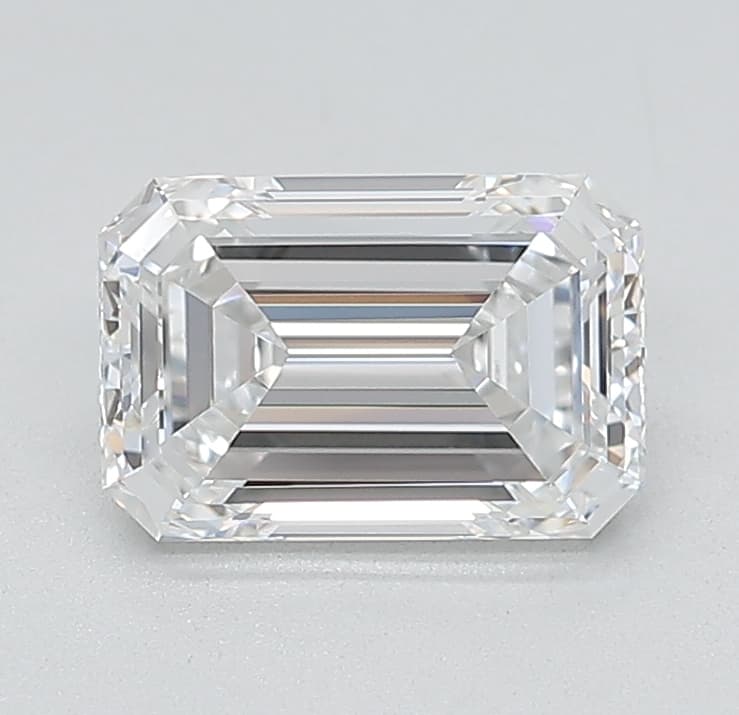
For fancy shapes, compare length and width in millimeters rather than carat weight, and check the length-to-width ratio, which sets how slender or chunky the outline is. Between two stones of the same shape and similar weight, multiplying length by width gives a quick way to compare how much surface each shows from above. Our shape guides list the common ranges for each shape.
| Shape | Stones | Median length (mm) | Median width (mm) |
|---|---|---|---|
| Round | 19 | 6.46 | 6.48 |
| Pear | 8 | 9.11 | 5.66 |
| Marquise | 8 | 10.43 | 5.37 |
| Radiant | 3 | 7.38 | 5.03 |
How to choose a carat weight
- Start from size, not weight. Decide how large you want the stone to look, in millimeters, and work back to weight. The ring size to mm guide helps you picture it.
- Compare spread. Among stones of similar weight, the larger measurements usually look larger, as long as the proportions stay within common ranges.
- Consider weights just under a round number. A 0.90 to 0.99 ct stone often costs less than a 1.00 ct stone and looks very similar.
- Allow for color and clarity. Larger stones tend to show color and inclusions more, so you may want a slightly higher grade as the weight goes up. See diamond color and diamond clarity.
- Ask for a second look. One of our specialists can go through the measurements and video with you.
Frequently asked questions
How big is a 1 carat lab-grown diamond?
A well-cut 1 carat round brilliant measures about 6.4 to 6.5 mm across. The exact size depends on the cut: a deep stone looks smaller and a shallow one larger. Fancy shapes of the same weight have different dimensions, so compare their length and width.
Is a lab-grown diamond the same size as a natural diamond of the same carat weight?
Yes, if the proportions are the same. Lab-grown and mined diamonds are the same material, so the same weight of diamond takes up the same volume. Any difference in face-up size comes from how each stone is cut.
Does a 2 carat diamond look twice as big as a 1 carat diamond?
No. A well-cut 2 carat round is about 8.0 to 8.1 mm across, compared with about 6.4 to 6.5 mm for 1 carat. Weight follows volume, which grows in all three dimensions, so doubling the weight increases the diameter by only about a quarter.
What do points mean in diamond weight?
One carat is divided into 100 points, so a 0.50 ct diamond is a 50-point stone and a 0.25 ct diamond is a 25-point stone. Points are simply another way of stating weight to two decimal places.
What does ctw mean on jewelry?
Ctw, or total carat weight, is the combined weight of all the diamonds in a piece of jewelry. A ring described as 1.50 ctw may have a smaller center stone with several side stones. For the main stone, check the weight on its own grading report.