Shape guide
Oval Lab-Grown Diamonds: Ratio, Proportions and What to Check
Last reviewed
Quick answer
An oval is an elongated modified brilliant: it has much of the sparkle of a round in a longer outline with no points or corners. Most buyers choose a length-to-width ratio of about 1.30 to 1.50, and common guidelines put depth around 58% to 63% and table around 53% to 63%. IGI grades an oval’s cut, GIA does not; check polish, symmetry and a video for bow-tie, windowing and an even outline.
What is an oval diamond?
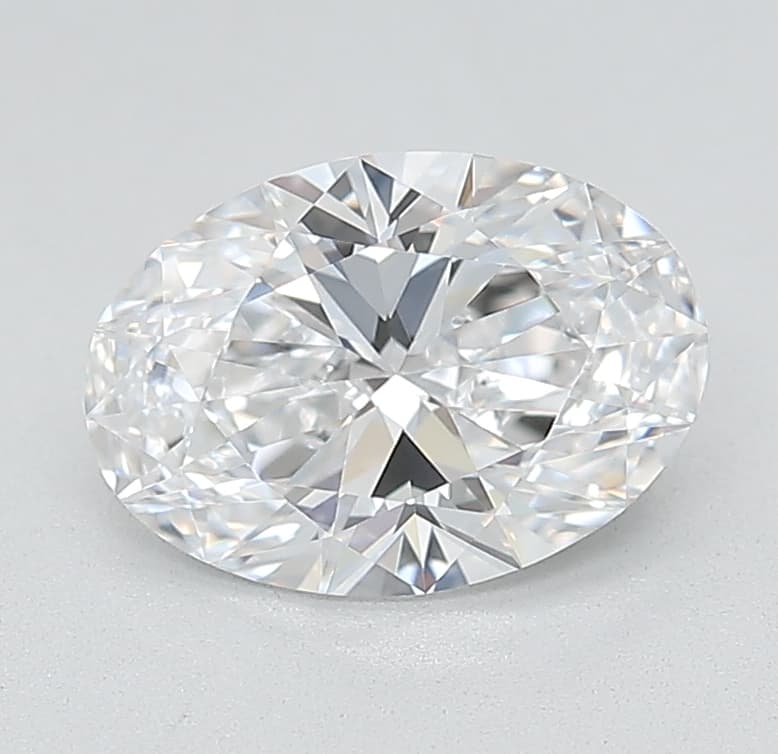
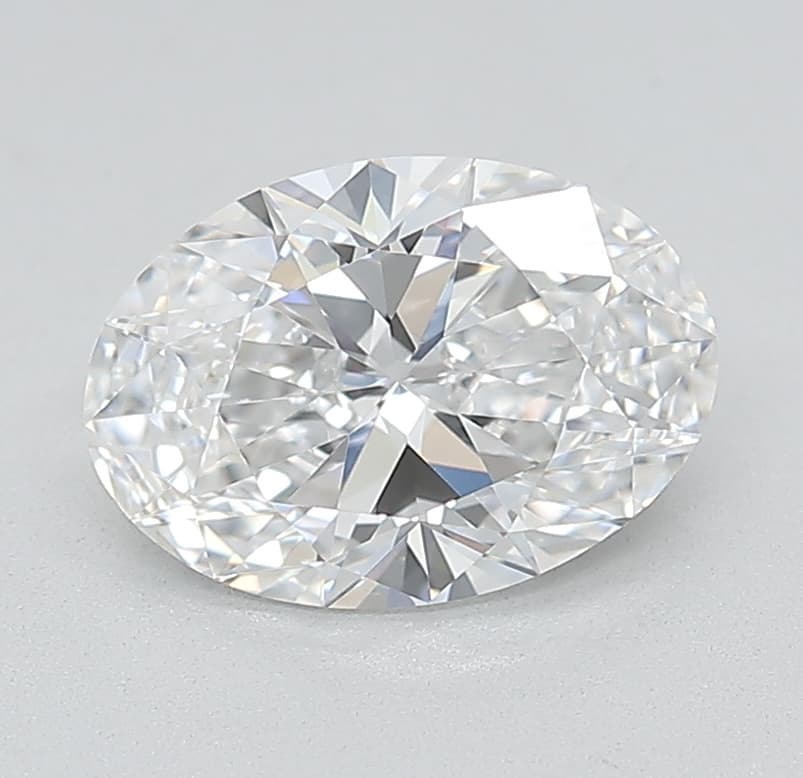
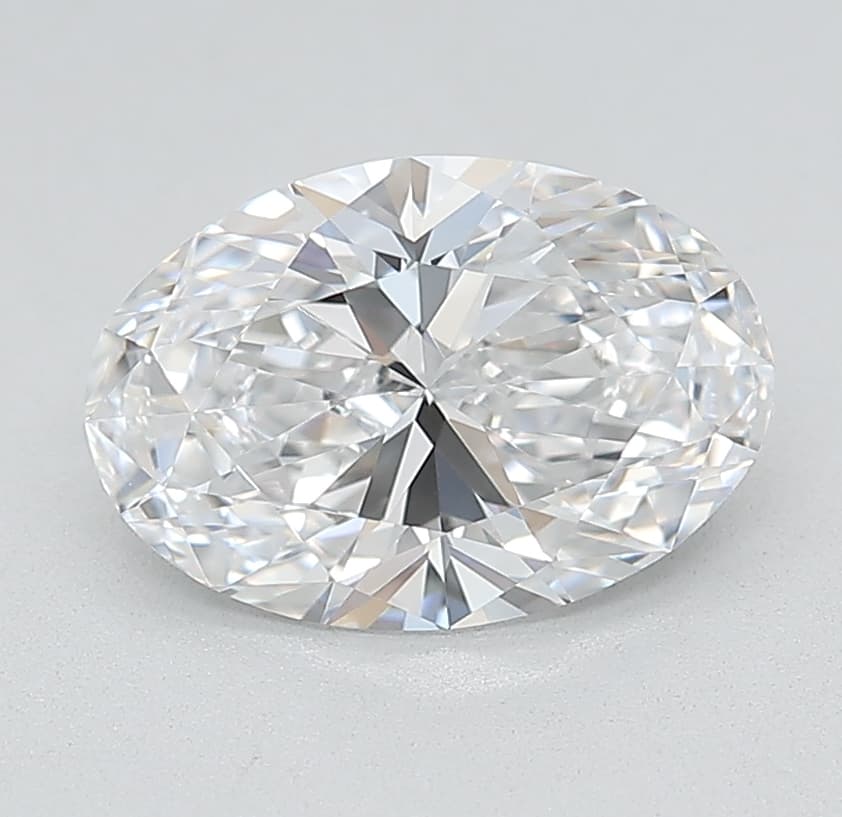
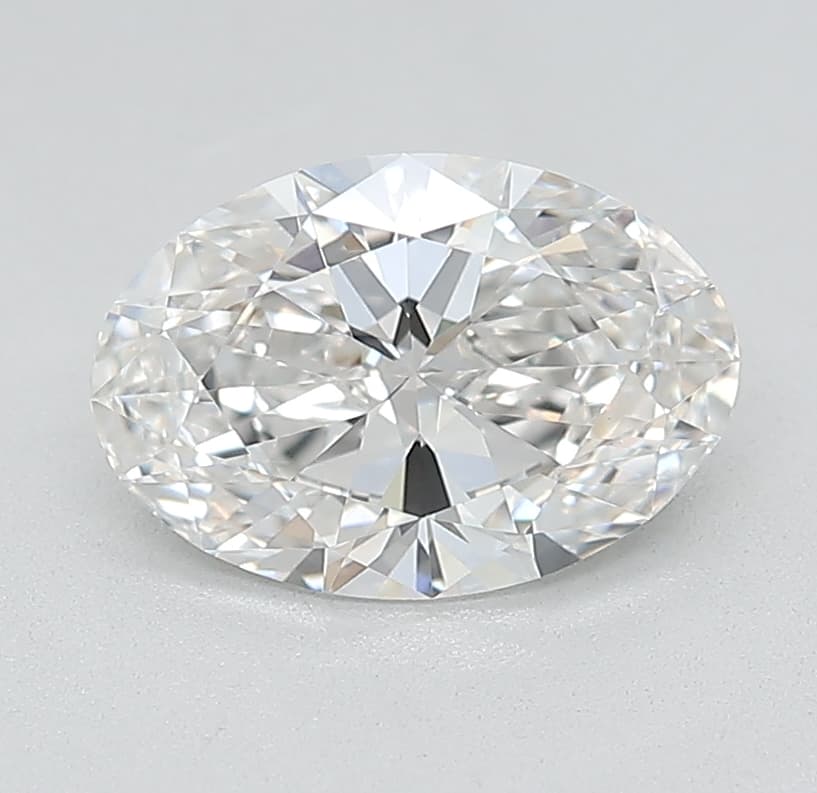
An oval is an elongated diamond with smoothly curved sides and two rounded ends. It is a modified brilliant: its facet pattern is adapted from the round brilliant, so it has a similar bright, scattered sparkle in a longer outline. It has no points or sharp corners.
Because an oval is longer than it is wide, it tends to look larger face-up than a round of the same carat weight, and set lengthwise on a ring it can make the finger look longer and slimmer. Ovals can also be set sideways (east-west) for a different look.
IGI has graded the cut of fancy shapes, from Excellent to Poor, since September 2022; GIA does not. A cut grade does not replace the proportions and how the stone looks in a video, which the sections below cover.
What length-to-width ratio should an oval have?
The length-to-width ratio is the length divided by the width, both taken from the stone’s measurements. An oval measuring 9.00 × 6.50 mm has a ratio of about 1.38.
The ratio sets the outline, and the right one is a matter of taste:
| Ratio | How it tends to look |
|---|---|
| Under about 1.30 | Fuller, closer to round |
| About 1.30 to 1.35 | Slightly elongated, soft outline |
| About 1.35 to 1.45 | The balanced look many people choose |
| About 1.45 to 1.50 and above | Longer and more slender |
Two ovals of the same carat weight with very different ratios look quite different on the hand, so pick the ratio you like before you narrow down on color and clarity. Searching by a ratio range is the quickest way to see only the outlines you want.
- Typical L/WAbout 1.00
- OvalTypical L/W1.30–1.50
- Typical L/W1.45–1.75
- Typical L/W1.75–2.25
What proportions are commonly used for oval diamonds?
These are common guidelines for well-proportioned ovals. Sources vary slightly, and they are not lab rules; use them to screen stones, then judge the video.
| Measurement | Common guideline range |
|---|---|
| Length-to-width ratio | 1.30 to 1.50 (many people like 1.35 to 1.45) |
| Total depth | 58% to 63% |
| Table | 53% to 63% |
| Polish and symmetry | Excellent or Very Good |
| Girdle | Avoid extremely thin or extremely thick |
Depth affects both looks and size. A deep oval carries weight below the girdle that does not show face-up, so it looks small for its weight. A very shallow one is prone to windowing, a washed-out look in the middle. Neither number on its own tells you whether a stone is attractive, which is why the video matters so much for this shape.
What should you check before choosing an oval?
- Bow-tie: a dark band across the width of the stone, where light is not returned to your eye as strongly. Almost every oval shows some. A faint bow-tie that shifts and flashes as the stone moves is normal; a wide, dark one that stays dark is the thing to avoid.
- Windowing: a washed-out, see-through patch in the middle, usually from a pavilion that is too shallow.
- Outline symmetry: the two halves should mirror each other along both axes. Watch for flat or squared-off "shoulders" near the ends, sides that bulge unevenly, or ends that look more pointed than the rest of the curve.
- Polish and symmetry grades: Excellent or Very Good on the report.
- Extinction: dark areas, beyond the bow-tie, that stay dark as the stone moves.
Videos taken face-up under even, diffused light show bow-tie and windowing more honestly than bright spotlights, which can make almost any stone sparkle. One of our specialists can review the video with you if you are unsure what you are seeing.
How do color and clarity show in an oval?
Elongated shapes tend to show body color a little more toward the ends than in the center, so an oval can look slightly warmer than a round of the same color grade. If you are sensitive to warmth, look at the ends in the video, or consider a slightly higher color grade than you would choose for a round. In the colorless range (D to F) this is rarely an issue.
Brilliant faceting hides small inclusions well, so ovals are fairly forgiving on clarity. As with any shape, inclusions under the table are the easiest to see, while those near the ends can sometimes sit under a prong. Aim for an eye-clean stone rather than a particular grade, and check the video. The diamond color and diamond clarity guides cover the scales in more detail.
Does an oval look bigger than a round, and how is it set?
Ovals tend to look larger face-up than round diamonds of the same carat weight, because the weight is spread over a longer outline, and a higher ratio makes the stone look longer still. The exact difference depends on the cut, so compare the length and width in millimeters rather than relying on carat weight. A stone cut deeper than the common range will look smaller than its weight suggests.
An oval has no points or corners to protect, so it is relatively easy to set. Four or six prongs are common, with prongs at each end helping to hold it securely, and a bezel works too. If you are picturing the stone on a hand, the ring size to mm guide helps you compare stone and finger sizes.
| Weight | Stones | Median length (mm) | Median width (mm) |
|---|---|---|---|
| 1.50–1.64 ct | 13 | 9.54 | 6.55 |
| 2.00–2.19 ct | 14 | 10.68 | 7.21 |
| 3.00–3.29 ct | 73 | 12.11 | 8.25 |
Frequently asked questions
What is the best length-to-width ratio for an oval diamond?
There is no single best ratio. Commonly cited guidelines run from about 1.30 to 1.50, and many people like 1.35 to 1.45 for a balanced look. Lower ratios look fuller and closer to round; higher ratios look longer and more slender.
Do all oval diamonds have a bow-tie?
Almost all ovals show some bow-tie, a darker band across the width of the stone. A faint bow-tie that changes as the stone moves is normal. A wide, dark band that stays dark is what to avoid, and a video shows it far better than a report.
Does an oval diamond look bigger than a round one?
Ovals tend to look larger face-up than rounds of the same carat weight, because the weight is spread over a longer outline. How much larger depends on the ratio and depth, so compare the millimeter measurements.
Do oval lab-grown diamonds get a cut grade?
On an IGI report, it can: IGI has graded the cut of fancy shapes, from Excellent to Poor, since September 2022. GIA gives ovals no cut grade. Either way, judge the cut from the ratio, the depth and table percentages, and a video of the stone.
What color grade should I choose for an oval?
Elongated shapes can show body color a little more at the ends than rounds do, so some buyers choose a slightly higher color grade for an oval than they would for a round. The best check is a video of the stone face-up in neutral light.