Shape guide
Asscher Cut Lab-Grown Diamonds: Windmill, Ratio and Clarity
Last reviewed
Quick answer
An asscher is a square step cut with cropped corners, giving a nearly octagonal outline and a pattern of concentric squares often called a windmill. Commonly cited guidelines put its length-to-width ratio at 1.00 to 1.05, depth at 60% to 70% and table at 55% to 68%, though sources vary. Because step cuts show inclusions and body color more openly than brilliant cuts, give clarity and color extra attention.
What is an asscher cut diamond?
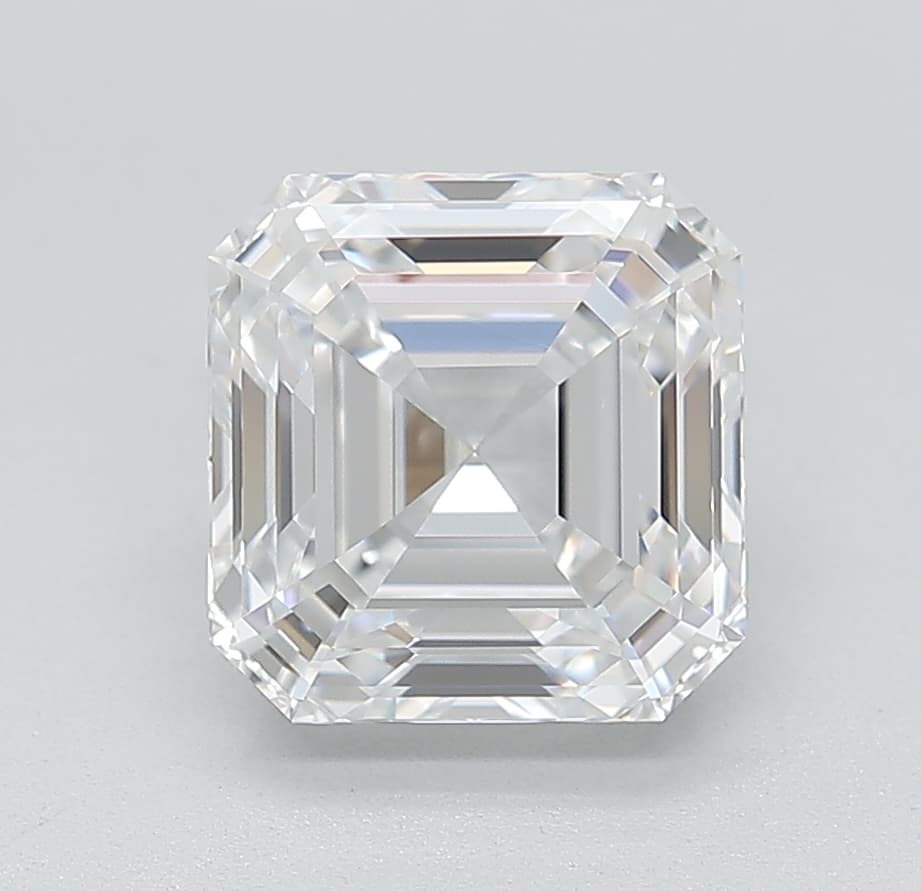
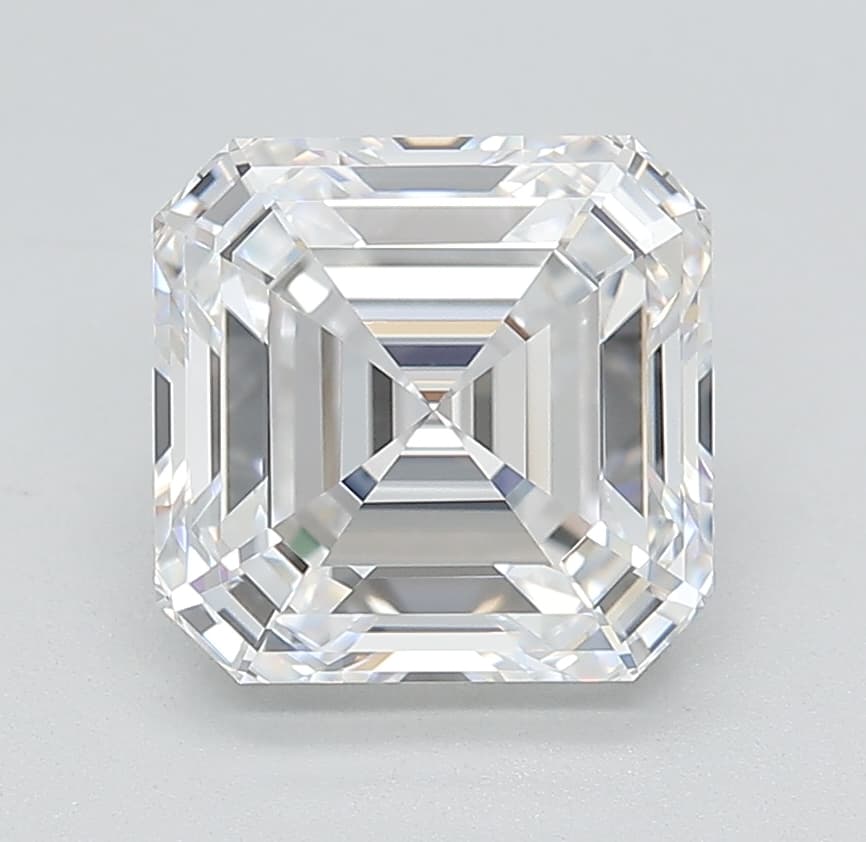
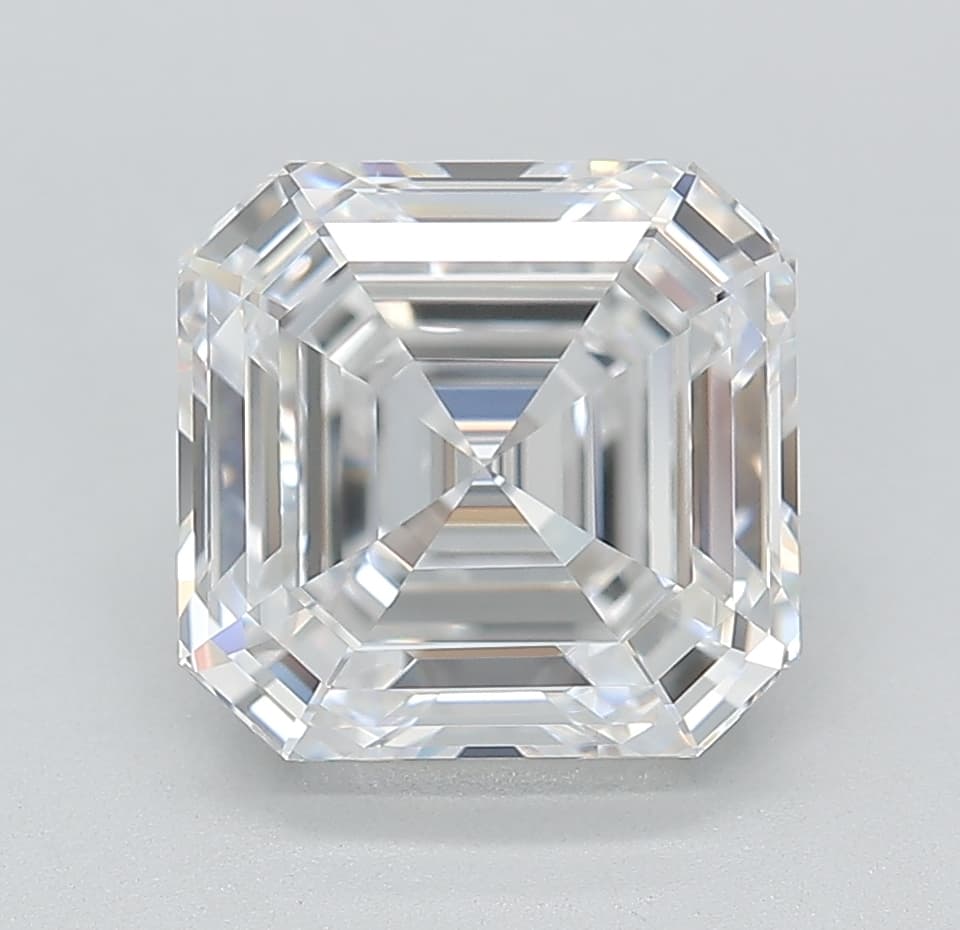
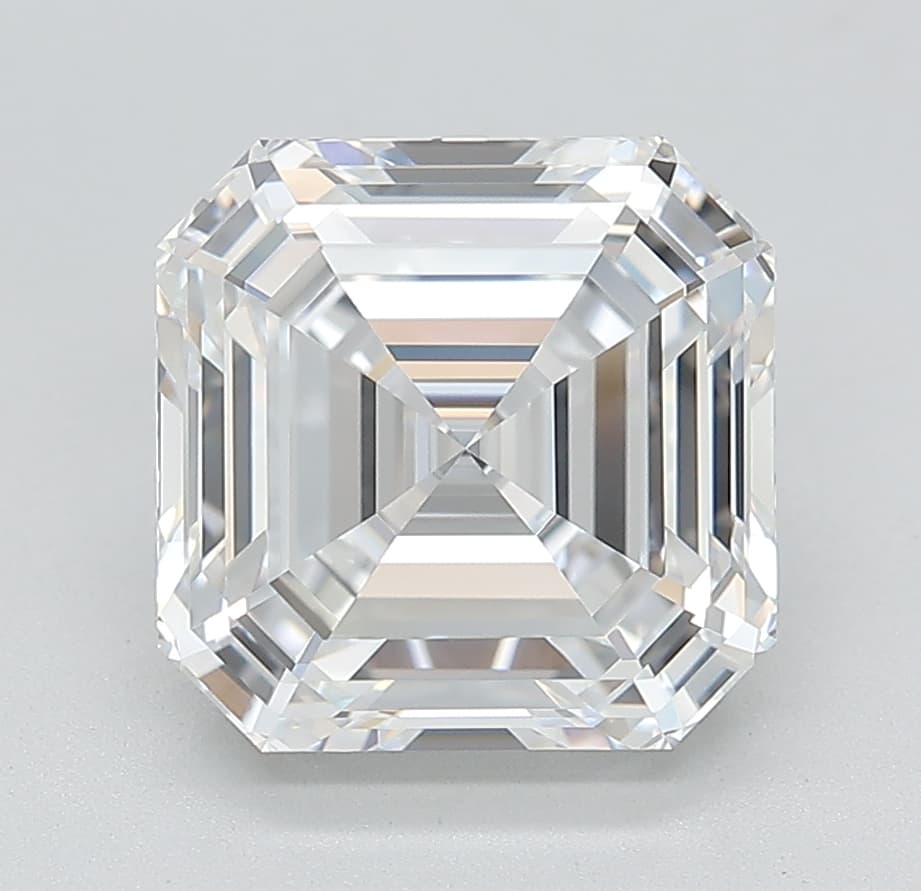
An asscher is a step cut. Instead of many small triangular and kite-shaped facets, it has long, flat facets arranged in parallel rows, like steps, around a central table. The outline is square with the four corners cut off, so it looks nearly octagonal.
Step cuts do not scatter light into small pinpoints the way brilliants do. They show broad flashes of light and dark that move across the stone as it tilts, often described as a "hall of mirrors". In a well-cut asscher, the corner facets line up to form concentric squares with lines running from the corners toward the center, which many people call the windmill.
An asscher is closely related to the square emerald cut. Both are step cuts; the asscher usually has larger cropped corners, which gives it a more octagonal look. Sellers do not always use the names consistently, so judge the stone by its outline and pattern rather than by the label.
Lab-grown asscher cuts have the same optical properties as mined ones and are cut the same way. IGI has graded the cut of fancy shapes, from Excellent to Poor, since September 2022; GIA does not.
- AsscherTypical L/W1.00–1.05
- Typical L/W1.30–1.50
- Typical L/W1.00–1.05
What proportions are common for an asscher?
| Measurement | Common guideline range |
|---|---|
| Length-to-width ratio | 1.00 to 1.05 |
| Depth | 60% to 70% |
| Table | 55% to 68% |
These are common guidelines that vary slightly by source, not lab rules. A ratio above about 1.05 starts to look rectangular, and the stone begins to resemble an emerald cut.
Depth matters for both brightness and size. A shallow asscher can show windowing: a washed-out, see-through area in the center, which is easy to notice through the large, open facets of a step cut. A very deep one carries weight that does not show from the top, so it faces up smaller than its carat weight suggests. Compare the millimeter measurements of stones of similar weight.
What should you check before choosing an asscher?
The windmill pattern
The lines running from the corners should meet near the center, and the concentric squares should look even and centered. A twisted or off-center pattern means the facets are not well aligned. This is where the symmetry grade matters most: Excellent or Very Good is a sensible starting point, but the video tells you more than the grade.
Step-cut clarity
The table and broad facets act like windows into the stone. Inclusions that a brilliant cut would hide among its sparkle can be easy to see in an asscher. Look at where the inclusions sit in the video, not just at the clarity grade.
Even corners
The four cropped corners should be about the same size, with straight, even sides between them. Uneven corners make the outline look lopsided.
Windowing and dark areas
Tilt the stone in the video. Look for a washed-out center that stays see-through, or dark areas that stay dark as it moves.
How do color and clarity show in an asscher?
Step cuts tend to show both inclusions and body color more than brilliant cuts of the same size, because their broad facets do less to break up and mask what is inside the stone.
For clarity, a common approach is to start at VS and confirm in the video that the stone is eye-clean. An SI stone can still look clean, but you need to see where its inclusions sit: one under the middle of the table is far more visible than one tucked near a corner. Our clarity guide explains the grades.
For color, a faint warm tint is easier to see in a step cut, so buyers who want a very white look often choose higher on the color scale than they would for a brilliant shape. In yellow or rose gold, a slightly warmer grade can look fine. Check the video for a brown, gray or milky tinge, which large, open facets make easier to notice.
| Grade | Name | At 10× magnification | To the unaided eye |
|---|---|---|---|
| FL | Flawless | No inclusions or blemishes | Clean |
| IF | Internally Flawless | No inclusions; only minor surface blemishes | Clean |
| VVS1 | Very, Very Slightly Included 1 | Inclusions so slight they are very hard to find | Eye-clean |
| VVS2 | Very, Very Slightly Included 2 | Inclusions so slight they are very hard to find | Eye-clean |
| VS1 | Very Slightly Included 1 | Minor inclusions, difficult to somewhat easy to find | Usually eye-clean in brilliant shapes |
| VS2 | Very Slightly Included 2 | Minor inclusions, difficult to somewhat easy to find | Usually eye-clean in brilliant shapes |
| SI1 | Slightly Included 1 | Noticeable inclusions | Varies: some are eye-clean, some show an inclusion |
| SI2 | Slightly Included 2 | Noticeable inclusions | Varies: inclusions are more often visible |
| I1 | Included 1 | Obvious inclusions that may affect transparency and brilliance | Often visible |
| I2 | Included 2 | Obvious inclusions that may affect transparency and brilliance | Often visible |
| I3 | Included 3 | Obvious inclusions that may affect transparency and brilliance | Often visible |
How should an asscher be set?
The cropped corners make an asscher less fragile than a princess cut, which has sharp, pointed corners, but the corners are still the most exposed part of the stone. A four-prong setting with a prong over each corner is a common choice, and V-prongs or claw prongs give the corners extra cover. A bezel protects the whole edge.
The windmill pattern is the main feature of the shape, so keep the prongs neat enough that they do not hide too much of the corner facets that form it.
How to choose an asscher lab-grown diamond
- Start with clarity and color: step cuts are less forgiving, so set your minimums with that in mind and let the video confirm them.
- Check the ratio: 1.00 to 1.05 for a square outline.
- Judge the windmill: an even, centered pattern is the clearest sign of a well-cut asscher.
- Verify and ask: look up the report number on igi.org or gia.edu, and ask a specialist to review the report and video with you.
Frequently asked questions
What is the difference between an asscher cut and a square emerald cut?
Both are square step cuts with cropped corners. An asscher usually has larger cropped corners, which give it a more octagonal outline and the windmill pattern it is known for. Sellers do not always use the two names consistently, so judge the stone by its outline and pattern.
What clarity should I choose for an asscher cut?
Step cuts show inclusions more openly than brilliant cuts, so a common approach is to start at VS clarity and confirm in a video that the stone is eye-clean. A lower grade can work if the inclusions are small and away from the center of the table.
What is the windmill pattern in an asscher?
It is the pattern formed when the step facets and cropped corners line up: concentric squares with lines running from the corners toward the center. An even, centered windmill is a sign of good symmetry. A twisted or off-center pattern suggests the facets are not well aligned.
What ratio should an asscher cut have?
Commonly cited guidelines put it at 1.00 to 1.05, which gives a square outline. Above that, the stone starts to look rectangular and closer to an emerald cut. These are common guidelines that vary by source, not lab rules.
Does an asscher cut sparkle?
It sparkles differently from a brilliant cut. Instead of many small flashes, it shows broad flashes of light and dark that move across the stone as it tilts. Whether you prefer that look is a matter of taste, so compare videos of both styles.