Shape guide
Princess Cut Lab-Grown Diamonds: Depth, Corners and What to Check
Last reviewed
Quick answer
A princess cut is a square, brilliant-style diamond with four sharp corners, combining a crisp outline with lively sparkle. Commonly cited guidelines put its length-to-width ratio at 1.00 to 1.05 for a square look, depth at 64% to 75% (often 68% to 74%) and table at 64% to 75%, though sources vary. Check the corners for chips, compare the spread for the weight and protect each corner in the setting.
What is a princess cut diamond?
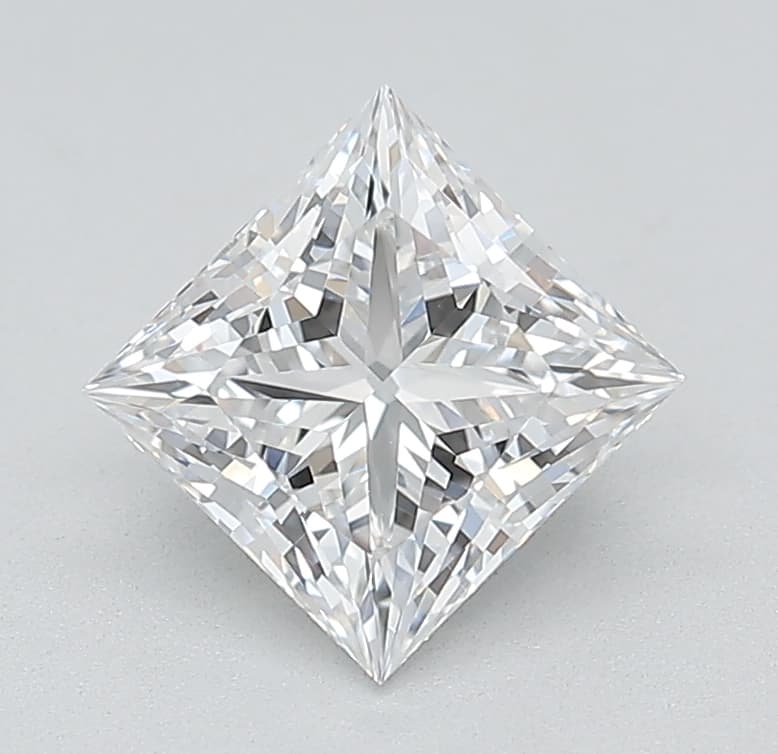
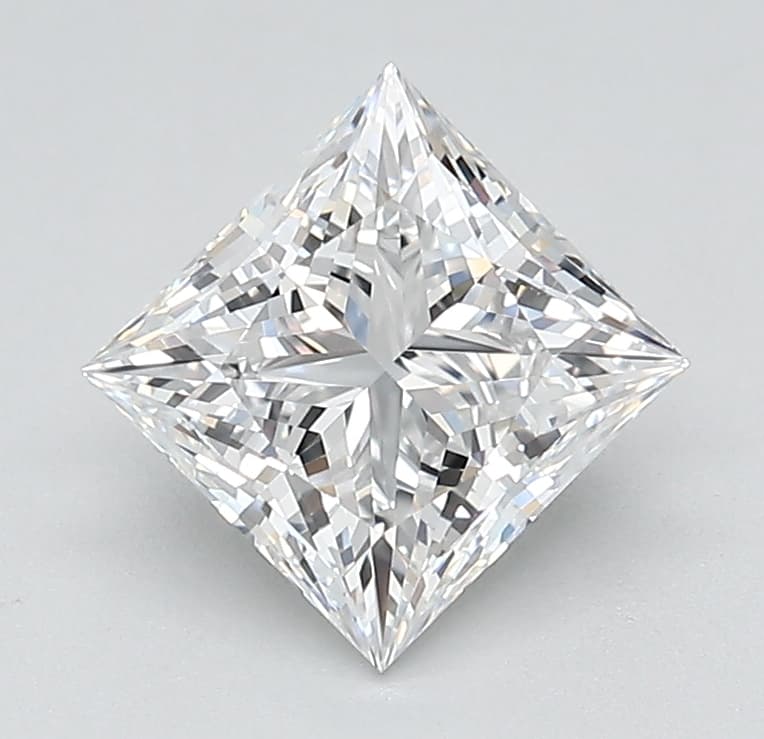
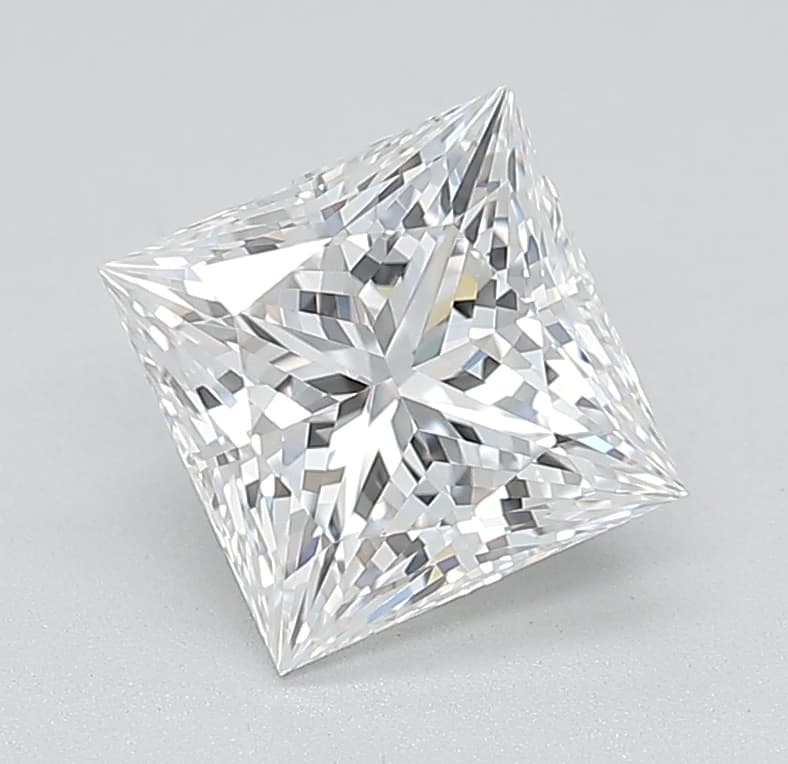
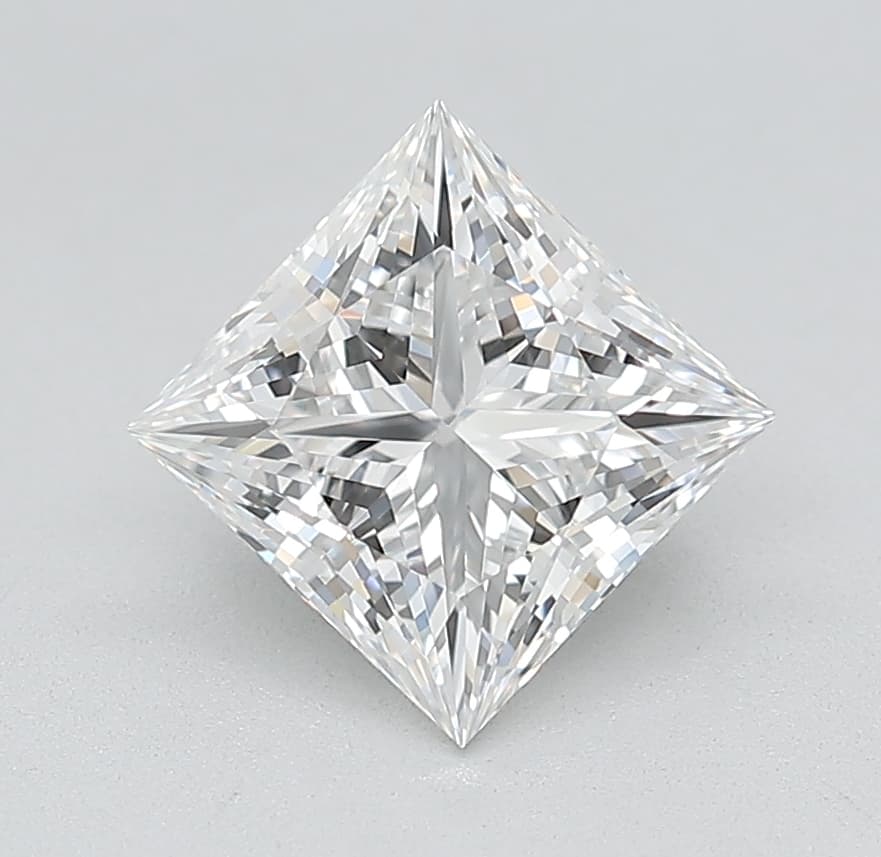
A princess cut has a square outline, or a slightly rectangular one, with four pointed corners. Seen from the top, its facets often form an X or cross pattern running from corner to corner. It is a modified brilliant: the facets are arranged to scatter light into sparkle, unlike the long, parallel facets of step cuts such as the emerald or asscher. Some reports describe the shape by its cutting style, for example as a square modified brilliant, rather than as "princess".
Three square shapes are easy to confuse:
| Shape | Corners | Faceting |
|---|---|---|
| Princess | Sharp, pointed | Brilliant style |
| Radiant | Cropped | Brilliant style |
| Asscher | Cropped | Step cut |
Lab-grown princess cuts have the same optical properties as mined ones and are cut the same way. IGI has graded the cut of fancy shapes, from Excellent to Poor, since September 2022; GIA does not. With or without a cut grade, you judge a princess from its measurements, polish and symmetry grades and a video.
- PrincessTypical L/W1.00–1.05
- Typical L/W1.00–1.05 square1.20–1.40 rectangular
- Typical L/W1.00–1.05
What proportions are common for a princess cut?
| Measurement | Common guideline range |
|---|---|
| Length-to-width ratio | 1.00 to 1.05 for a square look |
| Depth | 64% to 75% (often 68% to 74%) |
| Table | 64% to 75% |
These are common guidelines that vary slightly by source, not lab rules. They are much higher than the ranges for a round brilliant, so compare a princess with other princess cuts, not with rounds.
A ratio above about 1.05 starts to look visibly rectangular. That is a valid choice if you like it, but if you want a true square, filter on 1.00 to 1.05.
Depth needs particular care. Princess cuts are cut relatively deep, and a stone at the deep end of the range, or beyond it, faces up smaller than its carat weight suggests. One that is too shallow can look glassy in the center. Compare the millimeter measurements of stones of similar weight before you decide.
| Weight | Stones | Median length (mm) | Median width (mm) |
|---|---|---|---|
| 2.00–2.19 ct | 3 | 7.03 | 6.91 |
| 3.00–3.29 ct | 5 | 8.02 | 7.91 |
What should you check before choosing a princess cut?
The corners
Look at all four corners in the video and photos for chips, nicks or inclusions. The corners are the thinnest, most exposed part of a princess cut. Check the girdle description on the report too: an extremely thin girdle is more fragile at the corners.
The outline
The sides should be straight and even and the corners crisp. The ratio on the report tells you how close to square the stone is.
The light pattern
In a video, a well-cut princess shows lively sparkle spread across the stone. Watch for dark areas that stay dark as it moves, or a washed-out center that suggests the stone is too shallow.
Polish and symmetry
Excellent or Very Good polish and symmetry are a sensible starting point. Our diamond cut guide explains how to judge cut when there is no overall grade.
How do color and clarity show in a princess cut?
Brilliant faceting does a good job of masking small inclusions and a hint of body color, so a princess tends to hide both better than a step cut of similar size. Some buyers notice slightly more color in the corners than in the center. If you want a very white look, check the video against a white background, and look for a brown, gray or milky tinge that the color grade does not capture.
For clarity, where an inclusion sits matters as much as the grade. An inclusion at or near a corner is worth a closer look, because it sits in the most exposed part of the stone. Elsewhere, small inclusions are often hard to see, so confirm in the video that the stone is eye-clean rather than paying for a higher grade than you need.
How do you protect the corners of a princess cut?
The pointed corners are the part of a princess cut most likely to chip from a knock against a hard surface. The usual protection is a V-prong (or chevron prong) at each corner, which covers the tip instead of gripping it from the side. A bezel, or a setting that encloses the corners, is another option.
Settings that leave the corners bare can look clean and minimal, but they give the corners no protection. For a ring worn every day, covered corners are the safer choice.
How to choose a princess cut lab-grown diamond
- Set the ratio: 1.00 to 1.05 for a square, higher if you prefer a rectangle.
- Watch the depth: compare millimeter measurements so a very deep stone does not face up smaller than you expect.
- Inspect the corners: check the video and photos for chips and inclusions at each one.
- Verify the report: look up the report number on igi.org or gia.edu.
- Ask for a second look: a specialist can review the report and video with you before you buy.
Frequently asked questions
What is the best length-to-width ratio for a princess cut?
For a square look, commonly cited guidelines put the ratio at 1.00 to 1.05. Above that the outline starts to look rectangular, which some people prefer. These ranges are common guidelines that vary by source, not lab rules.
Is a deep princess cut a problem?
Princess cuts are normally deeper than round brilliants, with commonly cited depths of about 64% to 75%. A stone at or beyond the deep end carries weight that does not show from the top, so it can face up smaller than you expect. Compare the millimeter measurements of stones of similar weight.
Do princess cut diamonds chip easily?
Diamond is very hard, but the sharp corners of a princess cut are thin and exposed, so a hard knock can chip them. V-prongs or a setting that covers the corners protect them. Check the corners for existing chips in the video before you choose.
What is the difference between a princess cut and a radiant cut?
Both are square or rectangular brilliant-style shapes. A princess has sharp, pointed corners, while a radiant has its corners cropped, which makes them less exposed. The facet patterns also differ, so the two sparkle in slightly different ways.
Do princess cut diamonds have a cut grade?
On an IGI report, they can: IGI has graded the cut of fancy shapes, from Excellent to Poor, since September 2022. GIA gives princess cuts no cut grade. Either way, judge the cut from the ratio, depth and table percentages and from a video.