Shapes & Cuts
Elongated vs Square Cushion Diamonds: Which Outline Suits You?
By the Vanora Diamond team
Published Last reviewed 5 min read

Quick answer
A square cushion, with a length-to-width ratio of about 1.00 to 1.05, gives a soft, compact, pillow-like look, while an elongated cushion, from about 1.10 upward, is longer and slimmer on the finger and usually shows more length for its weight. Elongated cushions are more likely to show a bow-tie; square ones suit halos and classic designs. Pick the outline first, then compare the facet pattern, depth and video within it.
What separates a square cushion from an elongated one?
Every cushion has rounded corners and gently curved sides. What sets the outline is the length-to-width ratio: the length on the report divided by the width. A cushion measuring 9.10 × 7.00 mm has a ratio of 1.30.
| Ratio | Outline | How it reads |
|---|---|---|
| About 1.00 to 1.05 | Square | Compact, even, pillow-like |
| About 1.05 to 1.10 | Nearly square | Square at a glance, slightly long up close |
| About 1.10 to 1.30 | Elongated | Clearly rectangular but still soft |
| Above about 1.30 | Long | Slender, closer to an oval or radiant in proportion |
These are common guidelines and impressions, not lab rules. They are compiled from widely published trade guidelines, and sources vary. Our cushion guide lists the depth and table ranges that apply to both outlines; this article is about choosing between them.
How do they look on the hand?
Square cushions
A square cushion has a soft, romantic, slightly vintage feel. It looks the same whichever way you turn the ring, which makes it easy to set and easy to wear. It covers more of the finger’s width for its length, so it reads as a substantial, rounded shape rather than a long one.
Elongated cushions
An elongated cushion carries its weight along its length, so it tends to make the finger look longer and slimmer. Compared with a square cushion of the same weight and similar depth, it usually shows more face-up length, and length tends to read as size on a hand. It sits between the softness of a square cushion and the length of an oval, with rounded corners instead of a continuous curve.
Size for the weight
Cushions are cut across a wide range of depths, and depth matters as much as the ratio. A deep cushion, square or elongated, carries weight below the girdle that does not show from the top. Compare the length and width in millimeters on the reports, and check the depth percentage against the common range before you compare anything else.
Sparkle, bow-tie and facet pattern
Both outlines come in the same facet styles. A cushion brilliant usually has larger facets and bolder flashes; a cushion modified brilliant usually has extra pavilion facets and a busier, glittering "crushed ice" look. Neither is better; decide which you like from the video, because report wording is not perfectly consistent.
The bow-tie is where the outlines differ. A bow-tie is a darker band across the middle of an elongated brilliant, and elongated cushions are more likely to show one than square cushions. A faint bow-tie that flickers as the stone moves is normal; a wide band that stays dark is worth avoiding. Square cushions are less prone to it, but some do show one, so check the video for dark areas that stay dark as the stone moves, whatever the outline.
On our stone pages you can see each stone in a photo and a 360° view, and many stones also have an ASET image, which shows how evenly the stone returns light across its outline.
Elongated cushions are more likely to show a bow-tie than square ones. A faint one that flickers as the stone moves is normal; a wide band that stays dark is worth avoiding, whatever the outline.
Does the outline change color or clarity?
Cushions tend to show body color a little more than rounds do. In an elongated cushion, color can gather slightly toward the ends, much as it does in an oval or pear; in a square cushion it tends to spread more evenly. In the colorless range this rarely matters. In the near-colorless range, look at the ends of an elongated stone in the video, or choose a slightly higher color grade.
Clarity behaves much the same in both outlines. Crushed-ice patterns hide small inclusions well; larger facets give a clearer view into the stone. Either way, aim for an eye-clean stone and check the center of the table in the video.
Which settings suit each outline?
Square cushions are a classic match for a halo, which frames the soft square and adds apparent size, and for four-prong or double-prong solitaires that leave the corners visible. They also suit three-stone rings, where an even, square center balances the side stones.
Elongated cushions suit solitaires with a prong at each corner, often doubled, and look striking east-west, set across the finger. A hidden halo under the stone adds sparkle from the side without changing the outline. In three-stone designs, the length of the center stone gives the ring a longer, more graceful line.
For both, the corners are the most exposed points, so keep a prong or bezel over each one.
| Compared | Square cushion | Elongated cushion |
|---|---|---|
| Classic choice | A halo, or a four-prong or double-prong solitaire | A solitaire with a prong at each corner, often doubled |
| Also suits | Three-stone rings with an even, square center | East-west settings, and a hidden halo under the stone |
What about the cushions in between?
Stones between about 1.05 and 1.15 look neither clearly square nor clearly elongated. Some people love that softly rectangular outline, which reads as square from a distance and gently long up close. Others find it looks undecided. Look at the photo at full size before you commit, and if you are set on a true square, filter at 1.05 or below.
If you like a cushion outline with antique character, an elongated old mine cut has a taller crown, an open culet and broad flashes, and is worth a look alongside modern cushions.
How to choose your cushion
- Decide the outline: square for a soft, compact look; elongated for length on the finger.
- Choose the facet style: bold flashes or crushed ice, judged on video.
- Check depth and spread: compare millimeters for stones of similar weight.
- Watch for the bow-tie, especially in elongated stones.
- Match the setting to the outline: halo for square, east-west or a hidden halo for elongated.
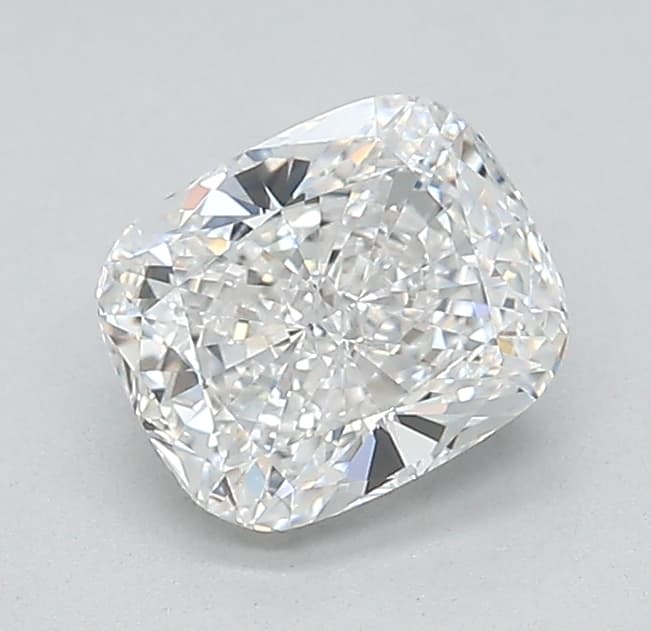
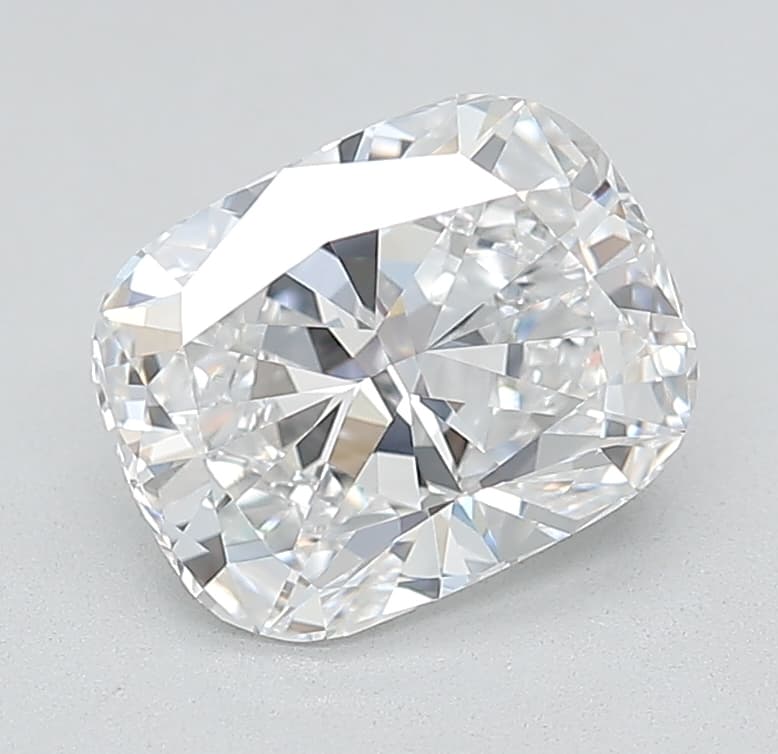
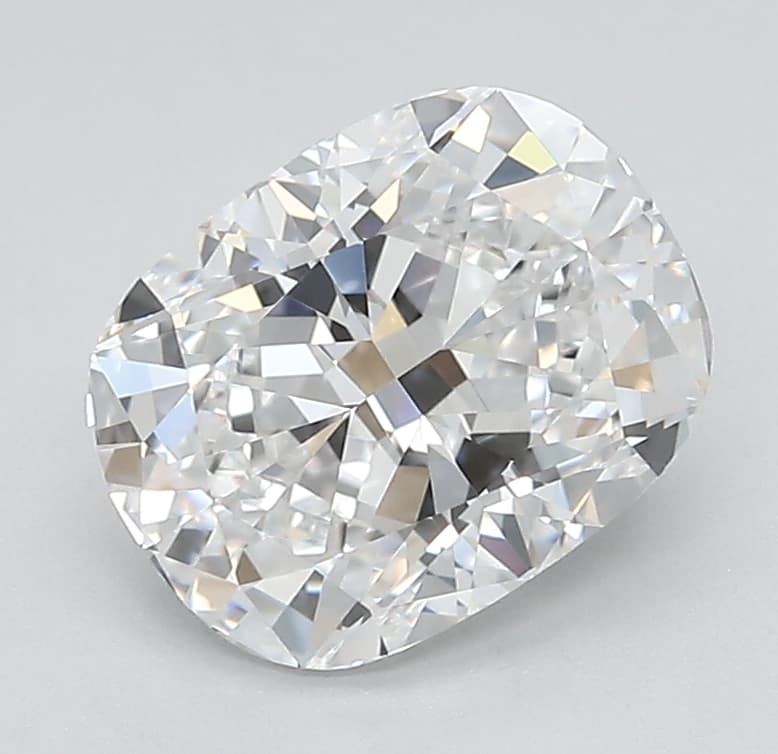
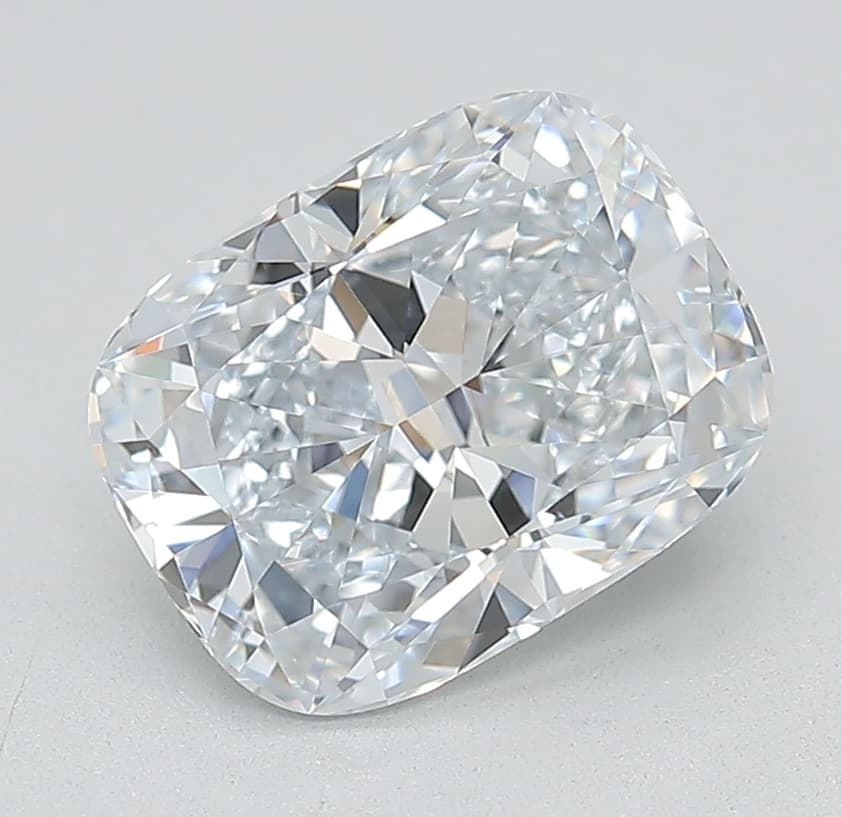
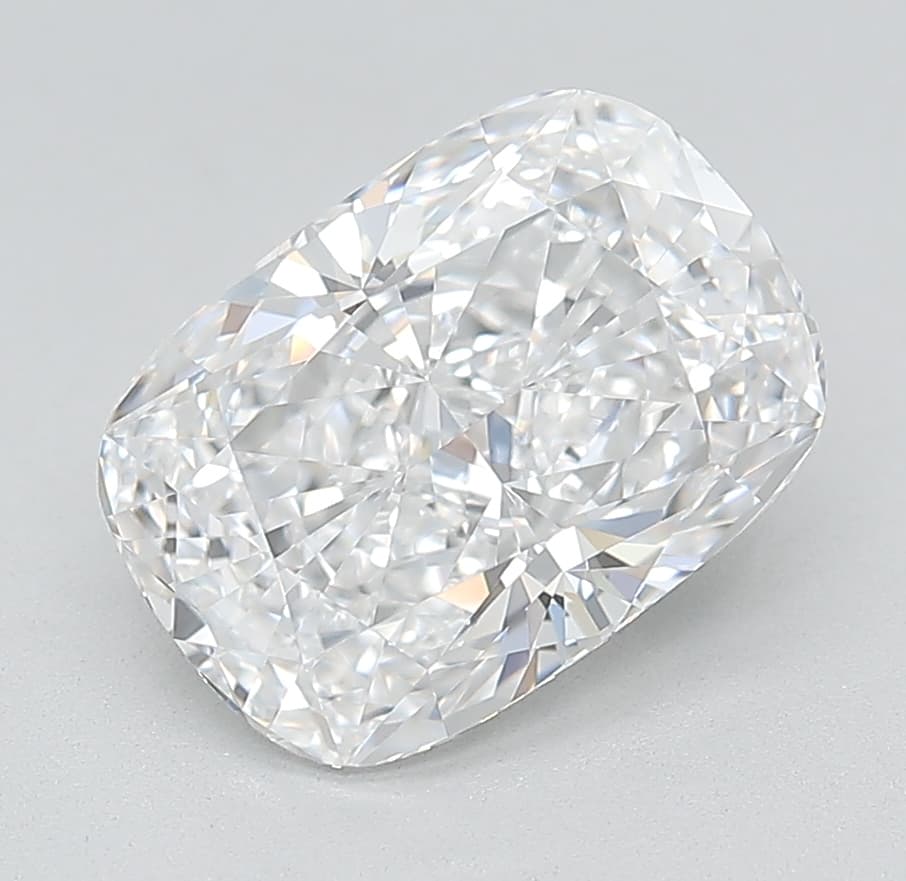
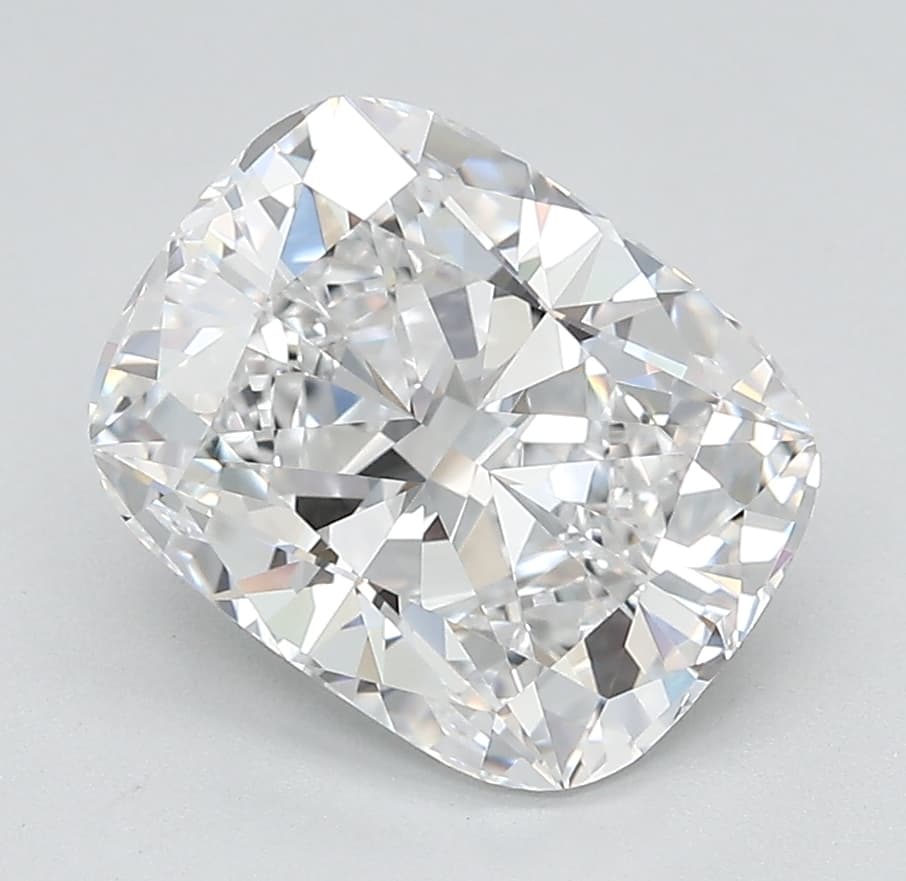
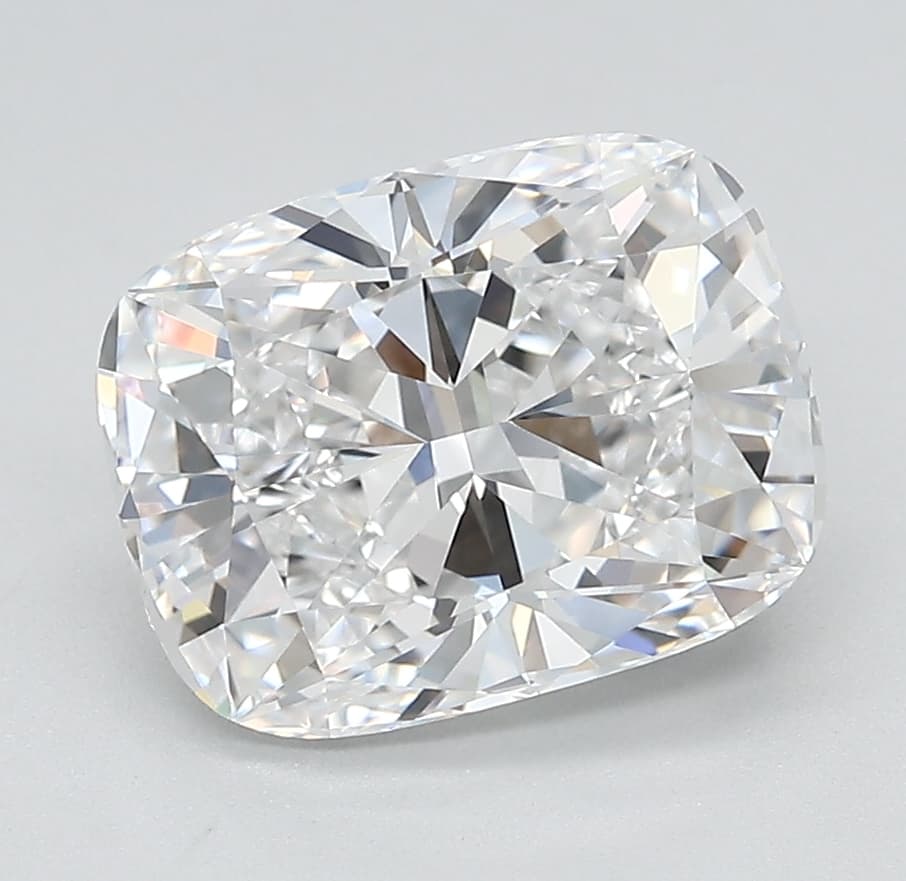
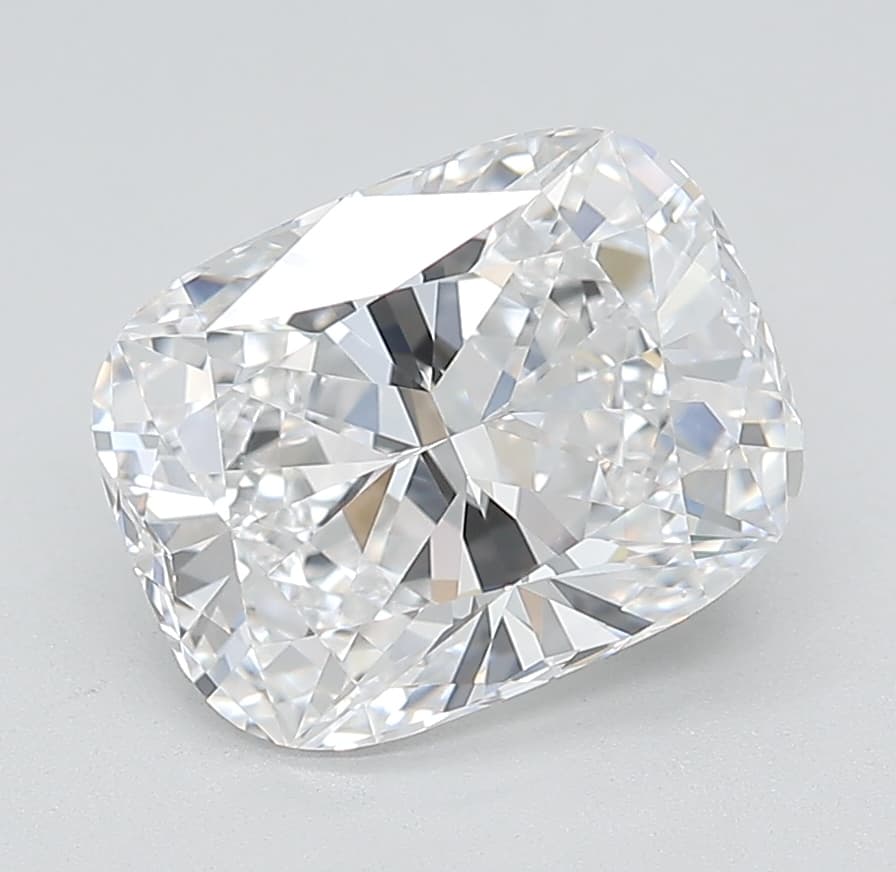
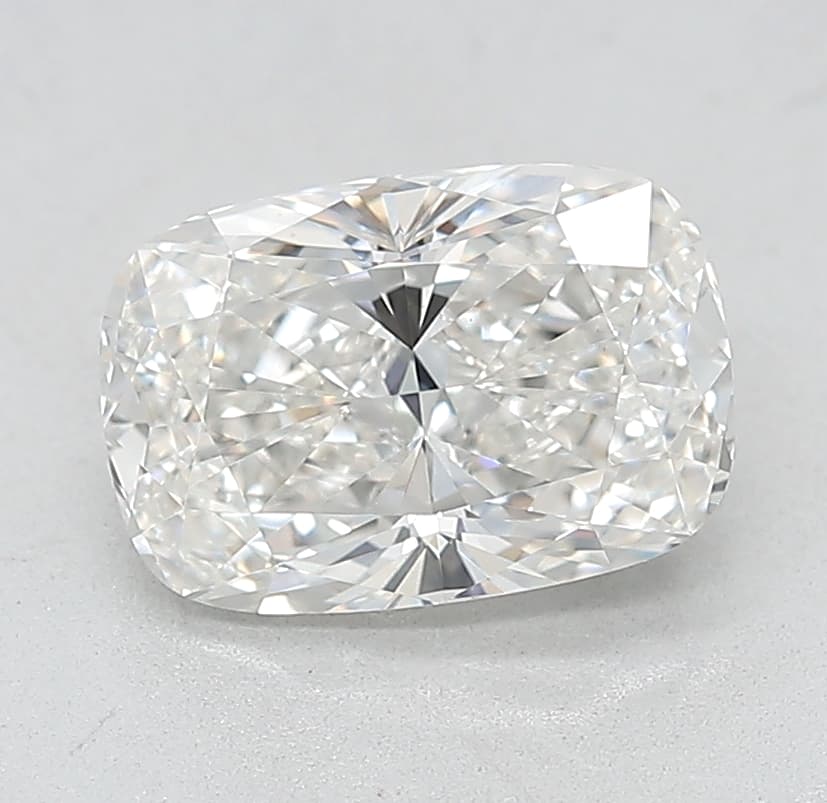
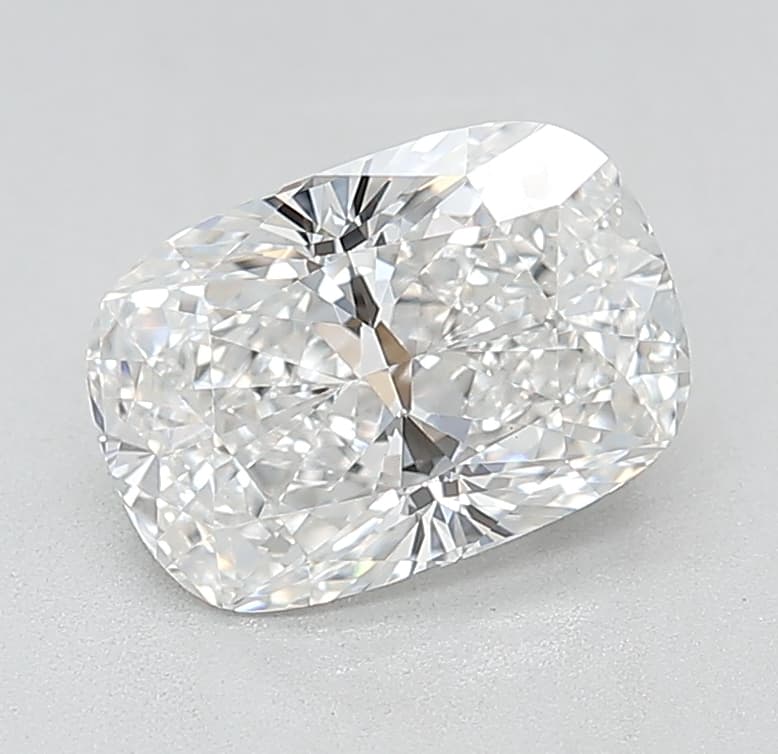
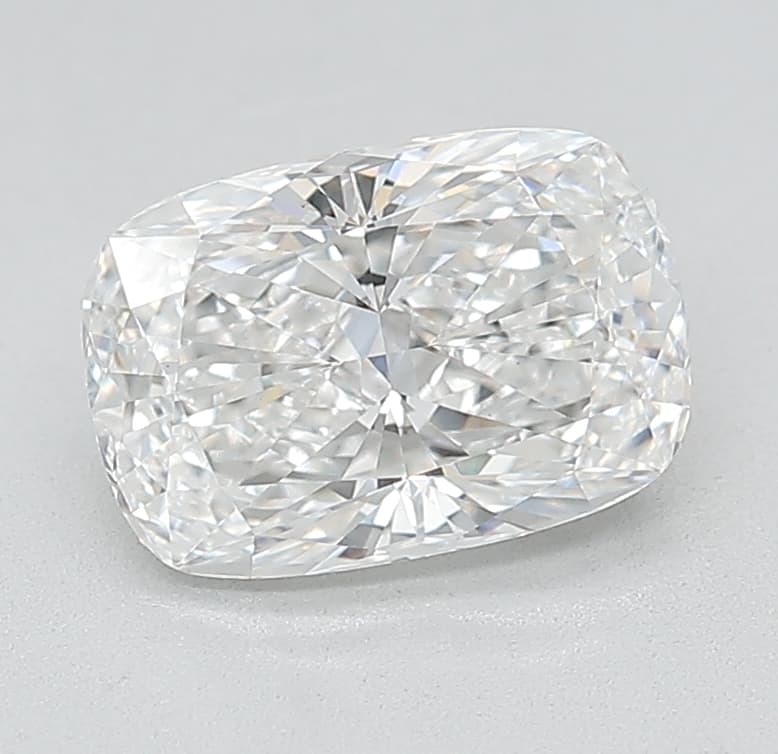
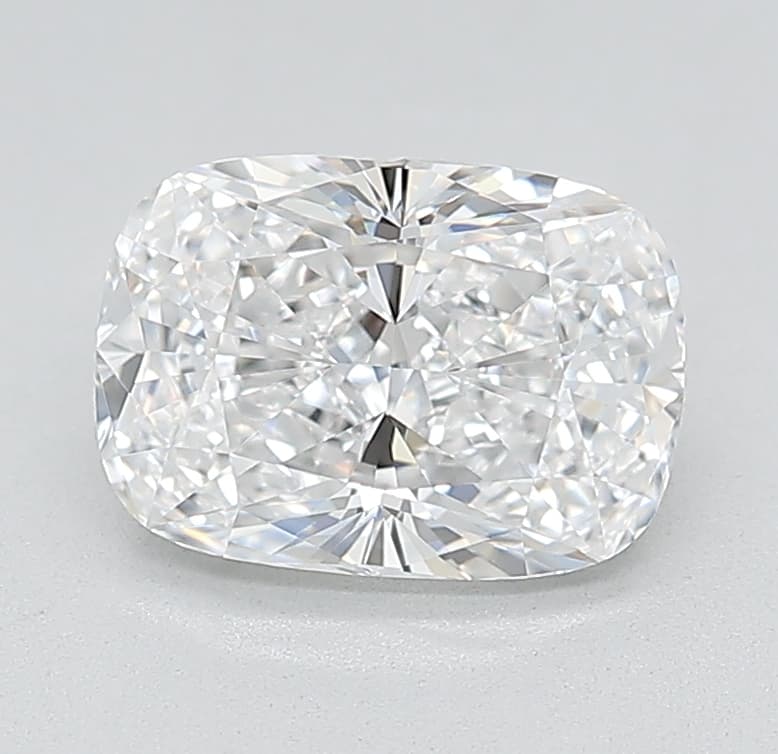
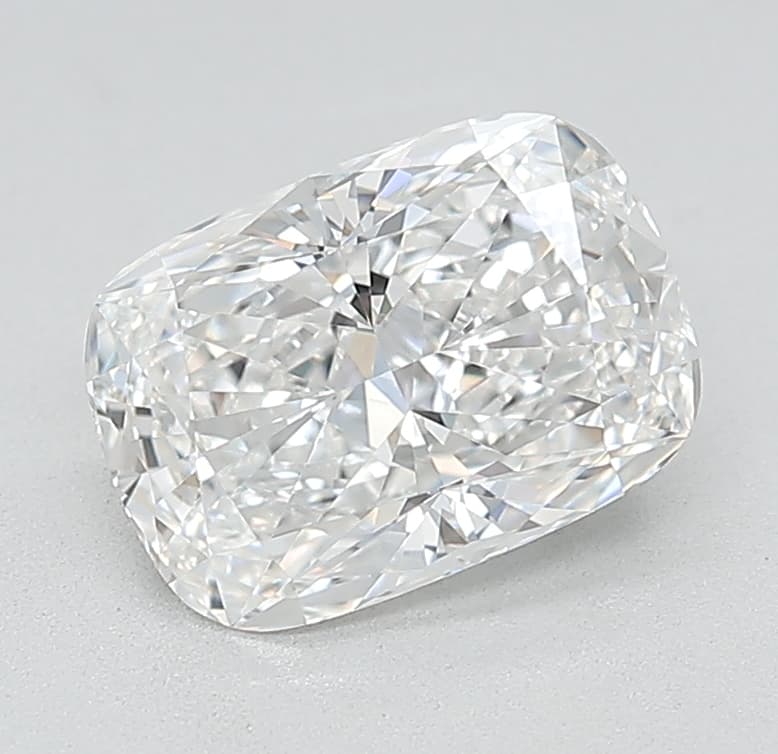
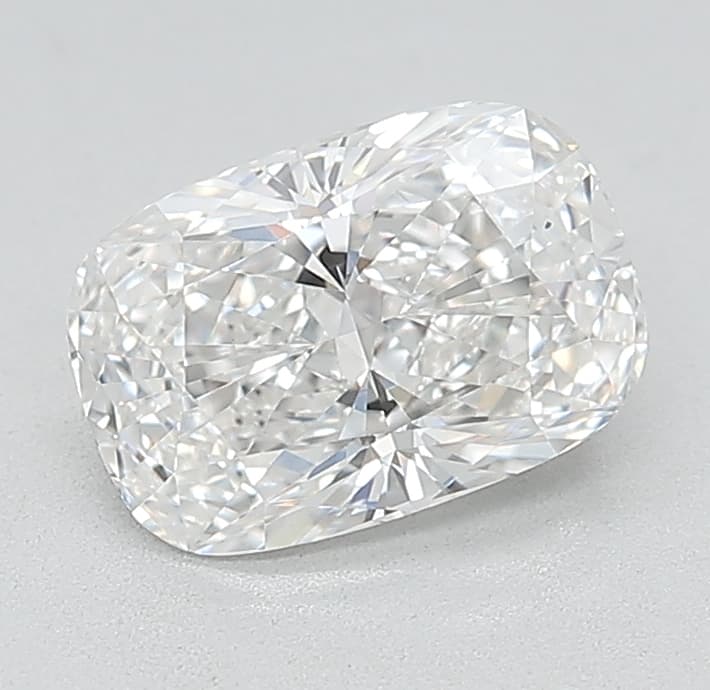
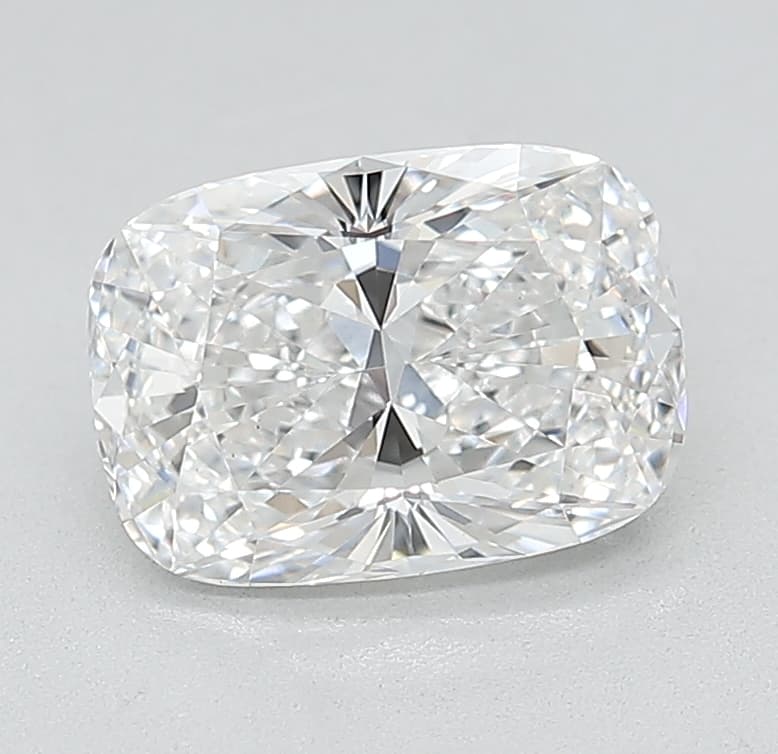
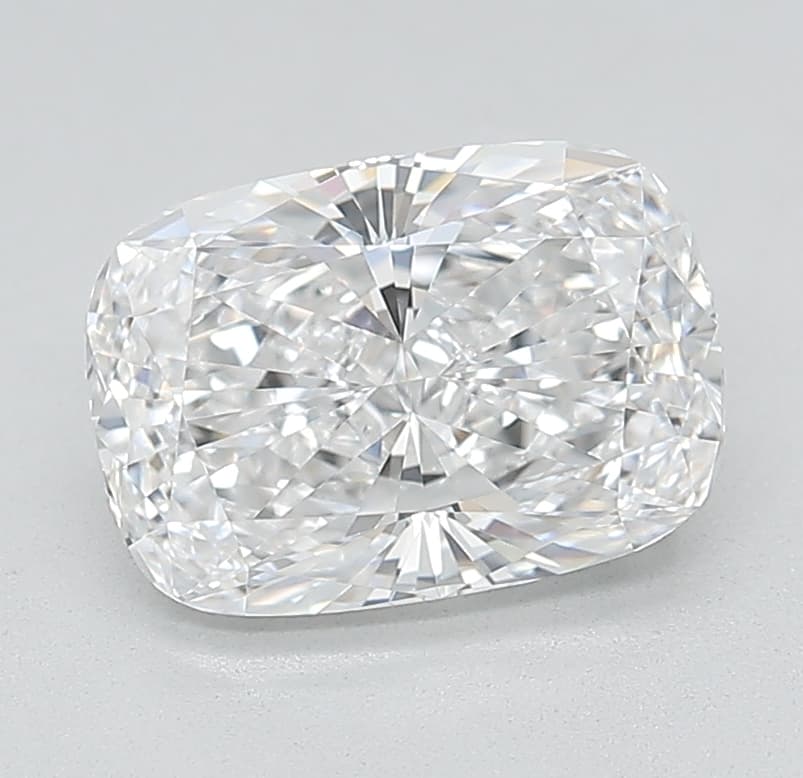
The suggestions below show live cushion lab-grown diamonds in two elongated bands, from gently rectangular to long. If you have your heart set on a square cushion, one of our diamond specialists can help you find one in our stock.
Frequently asked questions
What ratio makes a cushion diamond square?
Commonly cited guidelines put a square cushion at a length-to-width ratio of about 1.00 to 1.05. Between about 1.05 and 1.10 the stone looks nearly square, and from about 1.10 upward it reads as elongated.
Does an elongated cushion look bigger than a square one?
At the same weight and similar depth, an elongated cushion usually shows more length, which many people read as a larger stone, while a square cushion covers more of the finger’s width. Compare the millimeter measurements on the reports to see the real difference.
Do elongated cushion diamonds have a bow-tie?
They can. Like ovals and pears, elongated cushions may show a darker band across the middle. A faint one that moves with the stone is normal; a wide band that stays dark is worth avoiding, so check the video.
Is an elongated cushion the same as a radiant?
No. Both can be rectangular with brilliant-style faceting, but a cushion has rounded corners and gently curved sides, while a radiant has straight sides and cropped, angular corners.
Glossary terms in this article
More on Shapes & Cuts in the journal.