Shapes & Cuts
Asscher vs Emerald Cut: Square or Rectangular Step Cut?
By the Vanora Diamond team
Published Last reviewed 5 min read

Quick answer
An asscher and an emerald cut are the same kind of diamond, a step cut with long, straight facets and cropped corners, in two outlines: the asscher is square and the emerald is a rectangle about 1.30 to 1.50 times as long as it is wide. The asscher looks compact and geometric, with a pattern of nested squares; the emerald looks longer and more open on the hand. Both show inclusions and body color more than brilliant cuts, so many buyers choose higher clarity and color for either.
Two outlines, one cutting style
Most diamond shapes sparkle with many small, triangular facets. The asscher and the emerald cut do something different. They are step cuts: their facets are long and straight, running parallel to the edges in rows that step down toward the center, like stairs. Instead of glitter, a step cut shows broad flashes of light and dark that slide across the stone as it moves, often called a hall of mirrors. Our post on brilliant vs step cuts explains the two families in detail.
Both shapes also have cropped corners: the four corners are cut off at an angle. That softens the outline and, usefully, removes the sharp points that chip most easily.
The real difference is the outline:
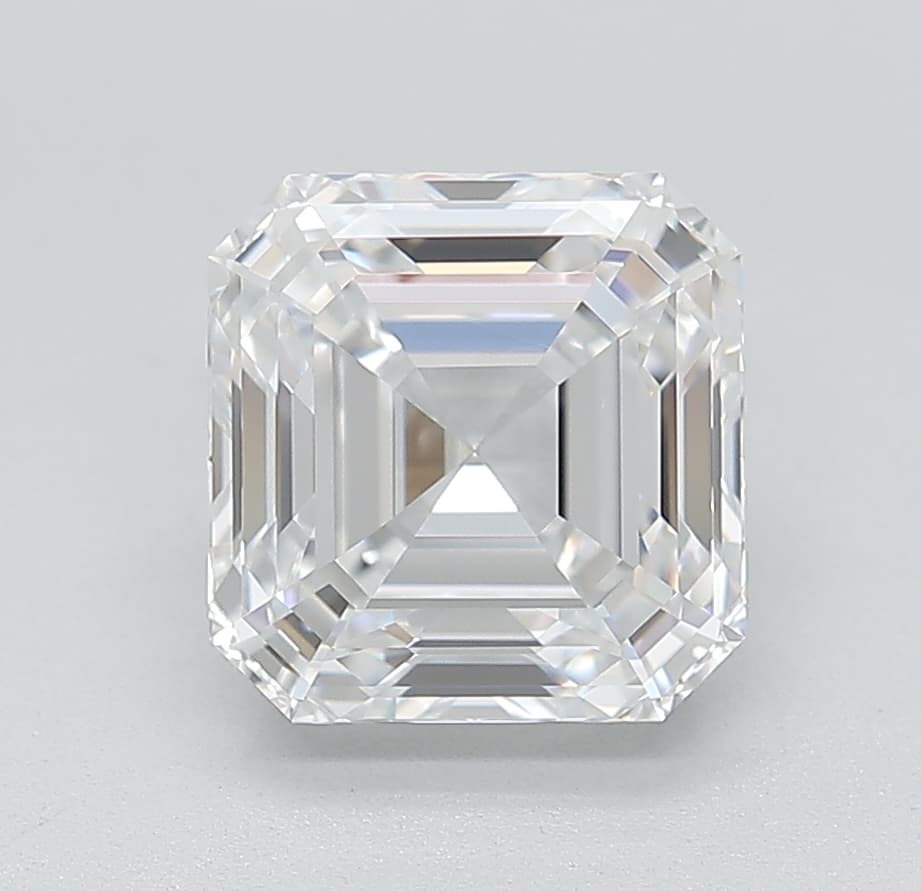
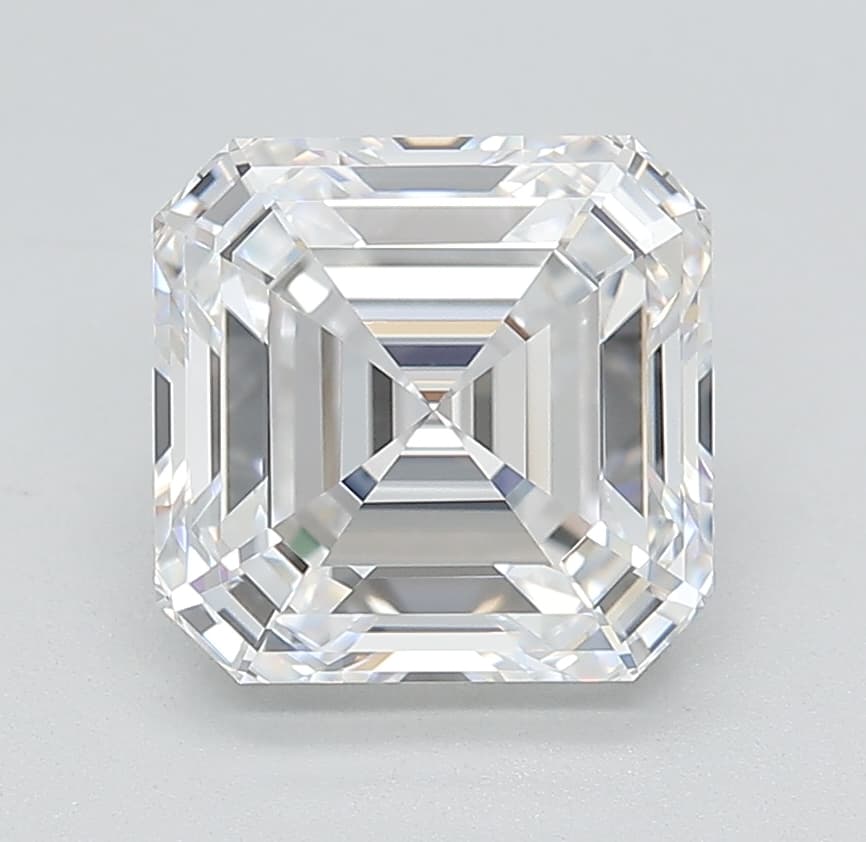
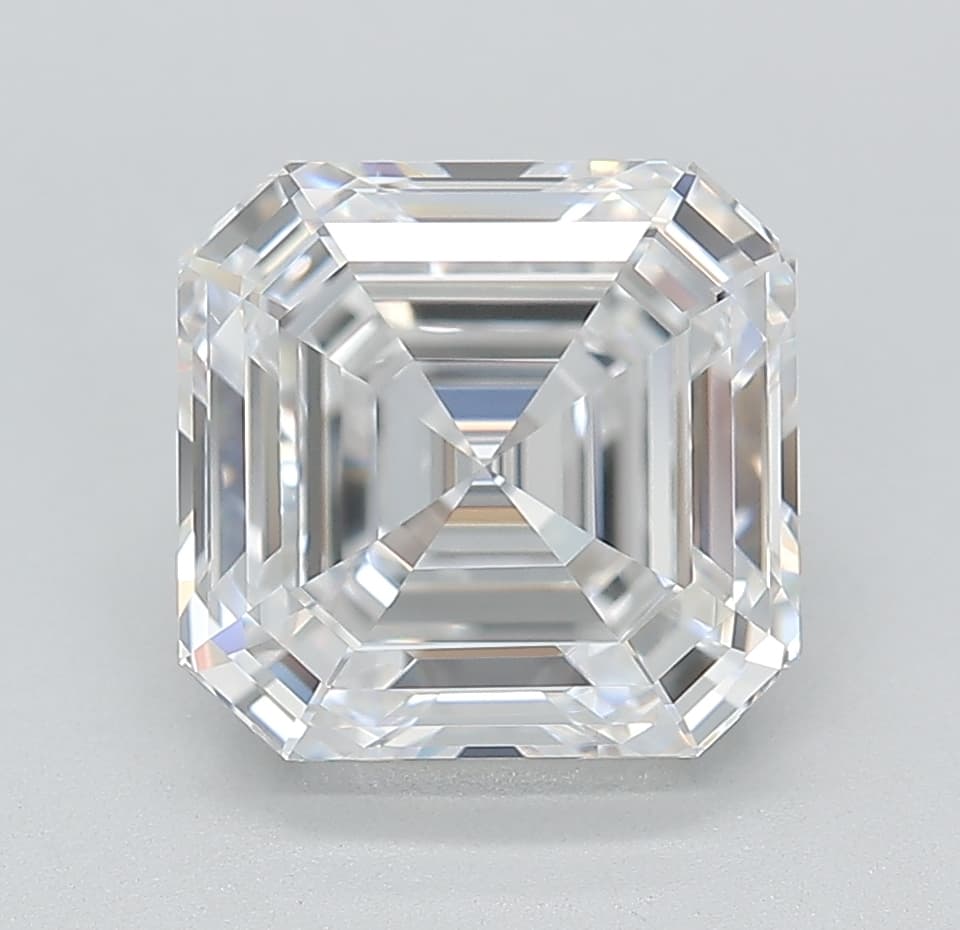
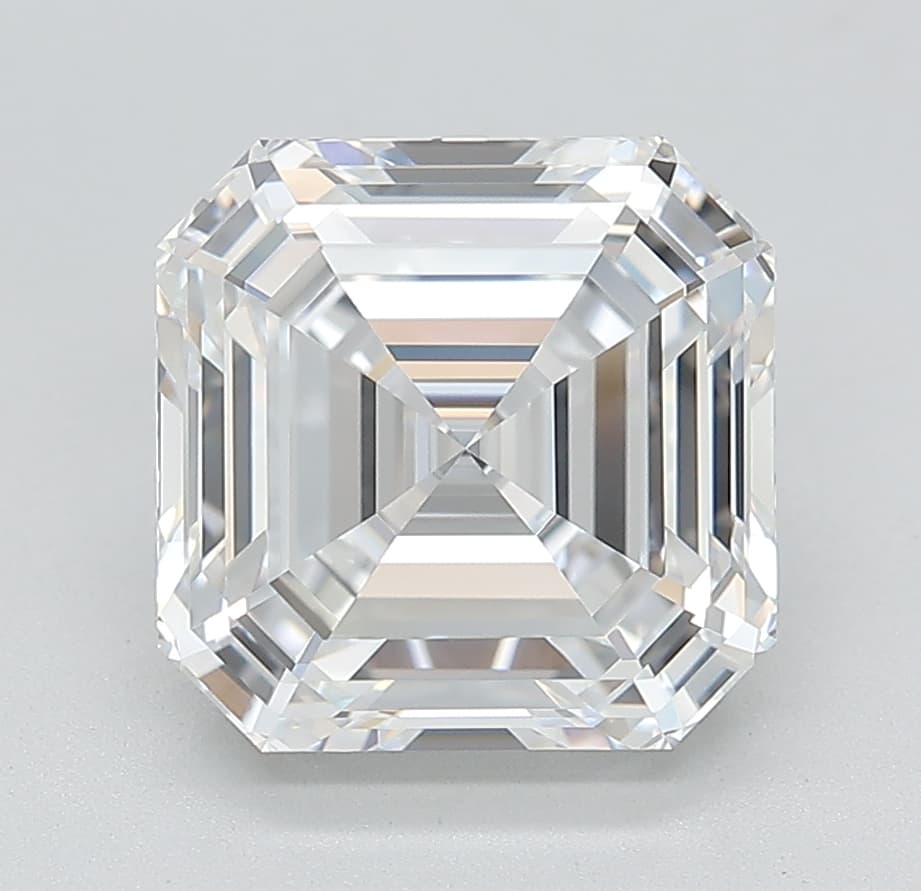
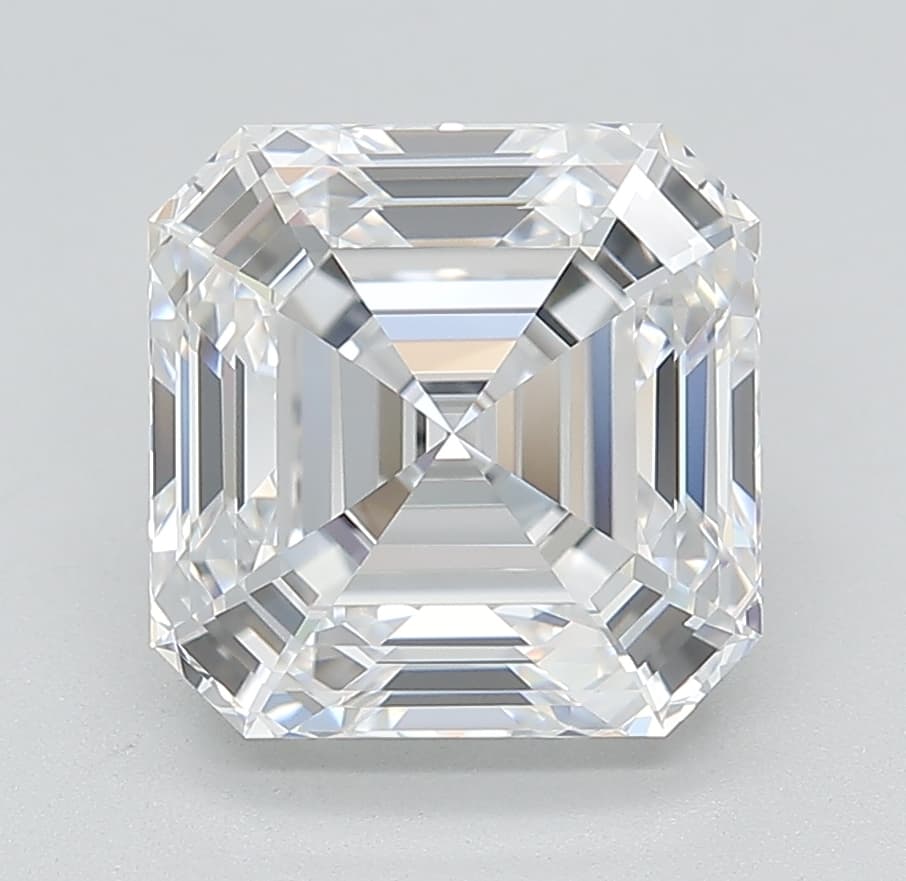
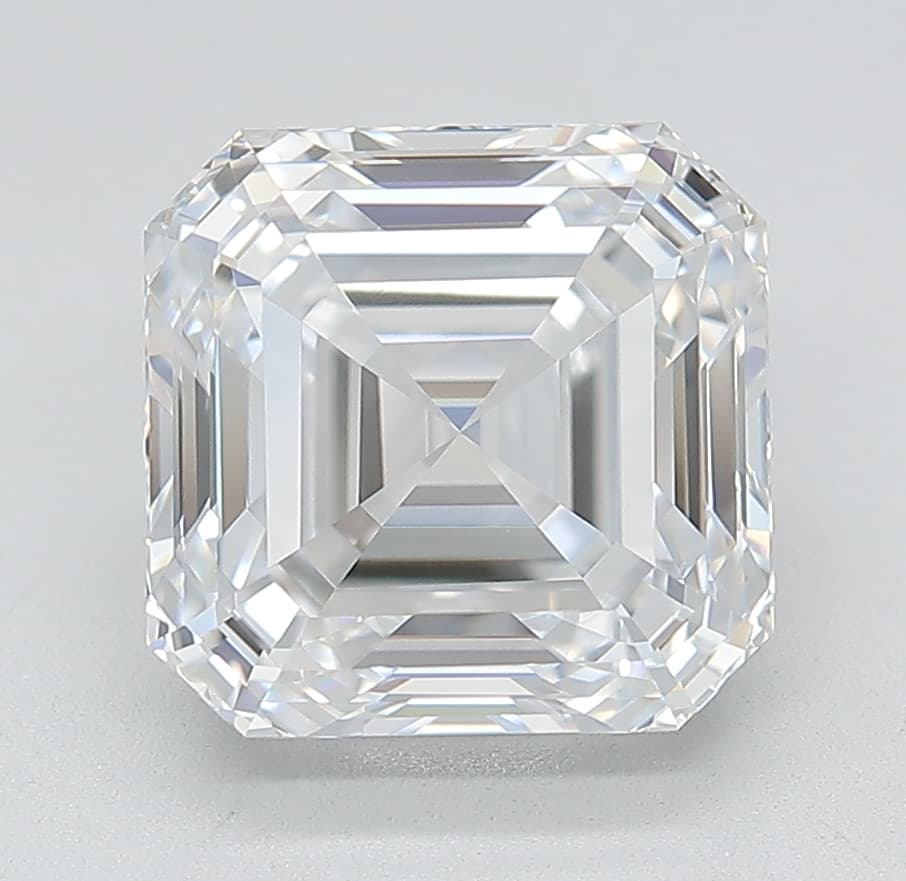
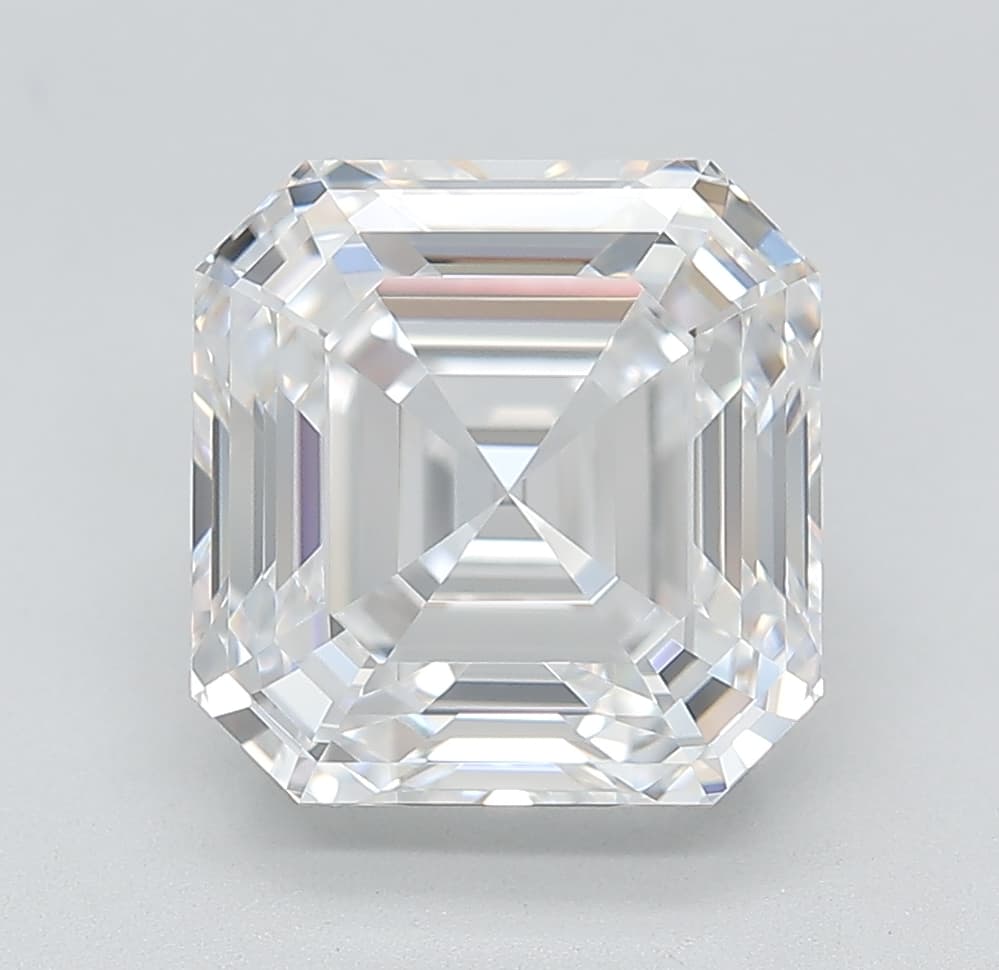
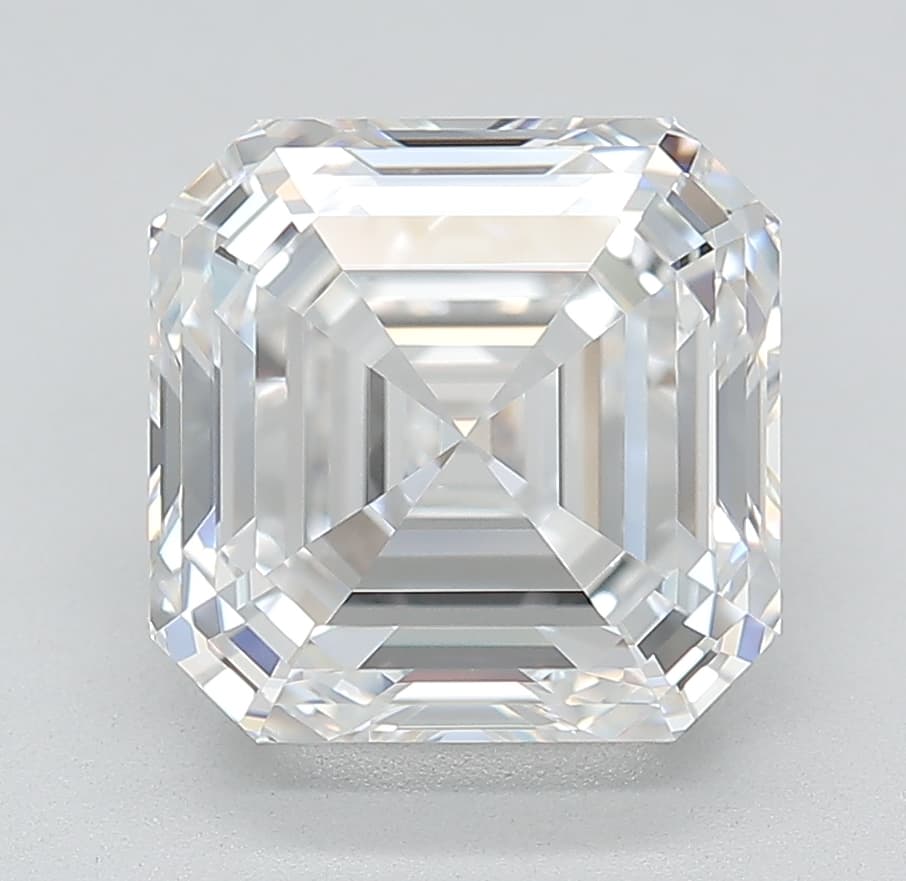
- An asscher is square, with a length-to-width ratio of about 1.00 to 1.05, and its cropped corners are large enough that it can look almost octagonal.
- An emerald is a rectangle, usually about 1.30 to 1.50, with smaller cropped corners.
Reports do not always use the word asscher. A square step cut may be described as a square emerald cut, and the name on a listing can vary from one seller to another. If the name is unclear, go by what you can check: the ratio in the measurements, the size of the cropped corners in the photos, and the pattern of facets in the video.
- Typical L/W1.00–1.05
- Typical L/W1.30–1.50
How an asscher looks
A well-cut asscher draws the eye to its center. Looking down through the top, the step facets and the cropped corners line up into a pattern of nested squares that seem to recede into the stone. Some people describe the reflections in the corners as a windmill or pinwheel.
Asschers are traditionally cut with a fairly high crown and a small table compared with many modern shapes, which gives that sense of depth. The overall feel is geometric and Art Deco: crisp, compact and symmetrical. Because the stone is square, it looks the same whichever way it faces in a ring.
One practical point: a deep, compact cut puts more of the weight below the surface, so an asscher often looks a little smaller face-up than a shallower shape of the same carat weight. Compare the measurements in millimeters on the report rather than carat alone. Our asscher guide covers the shape on its own.
How an emerald cut looks
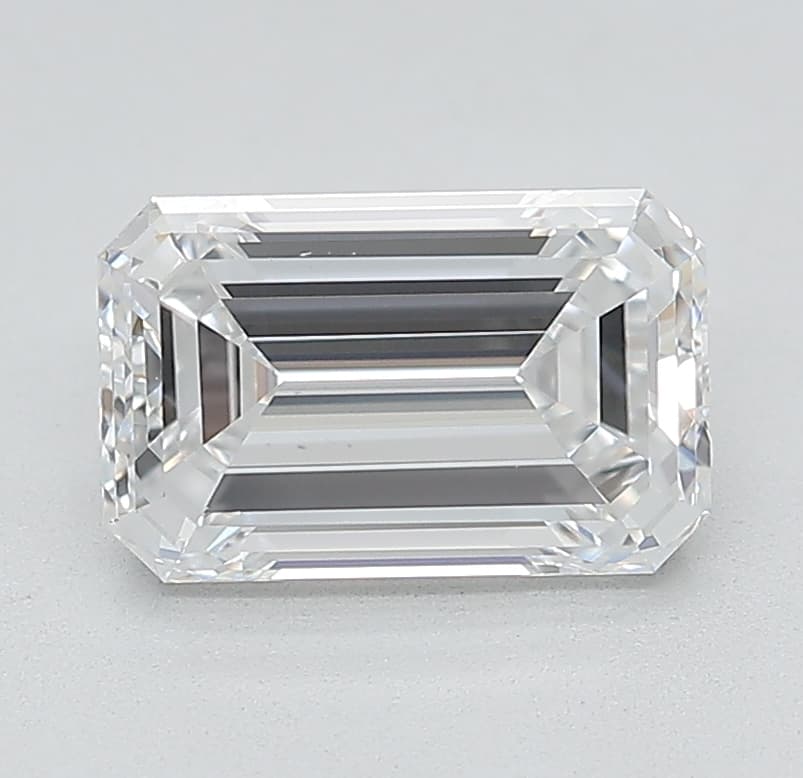
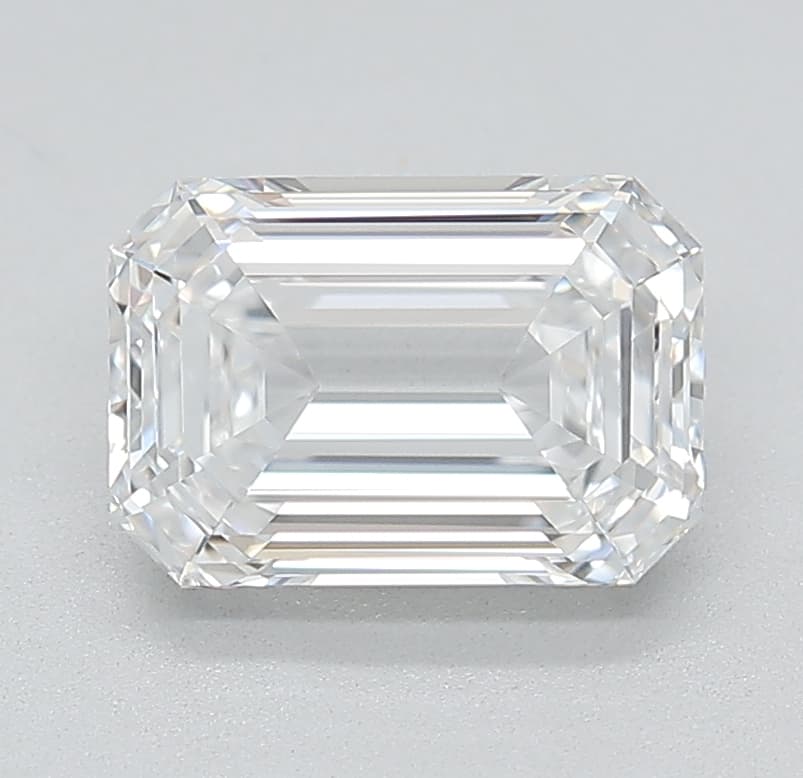
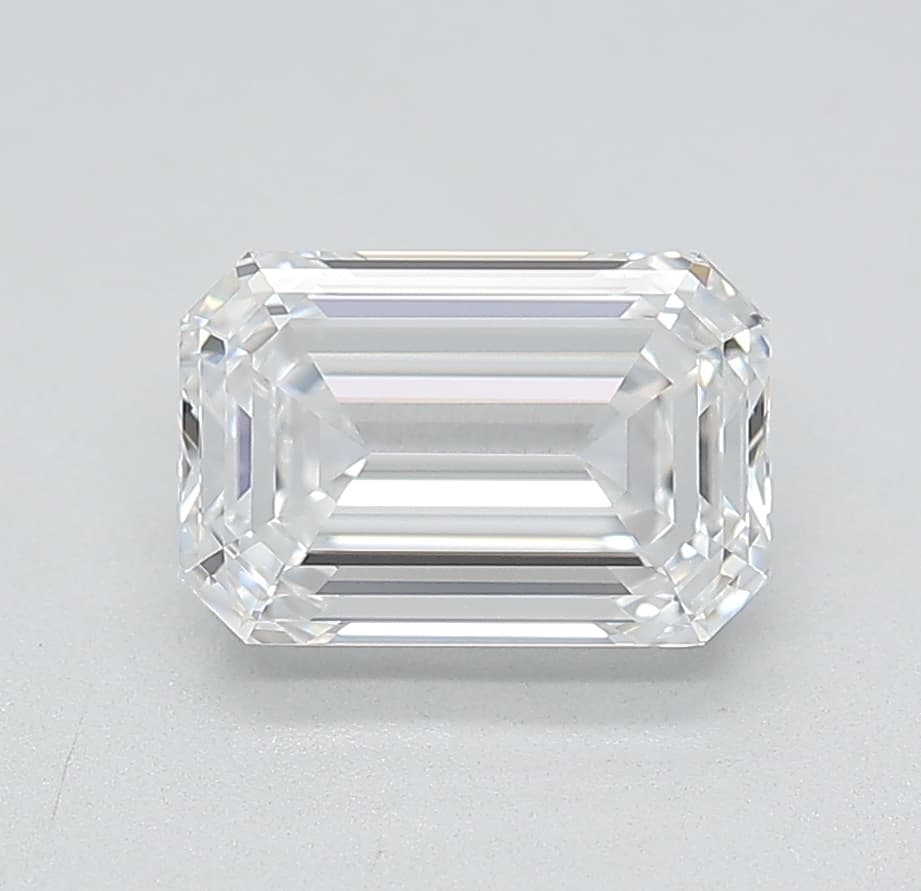
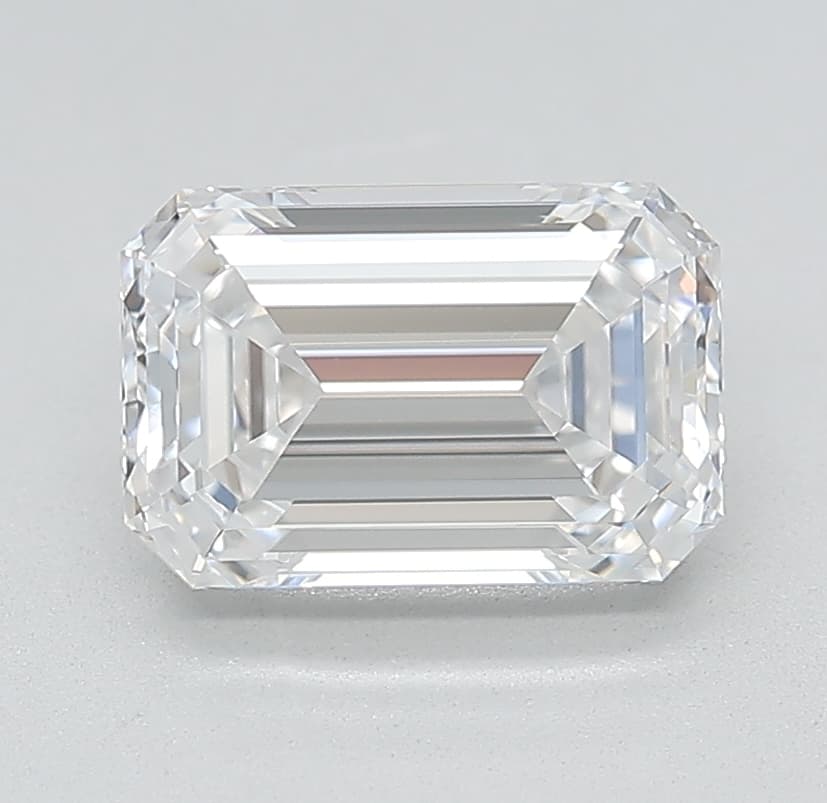
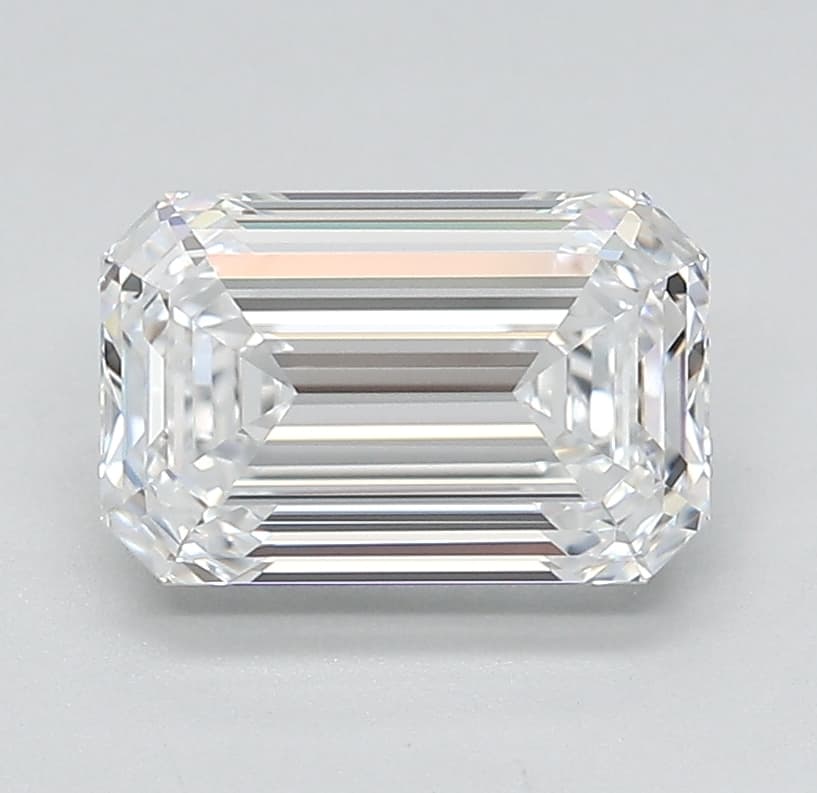
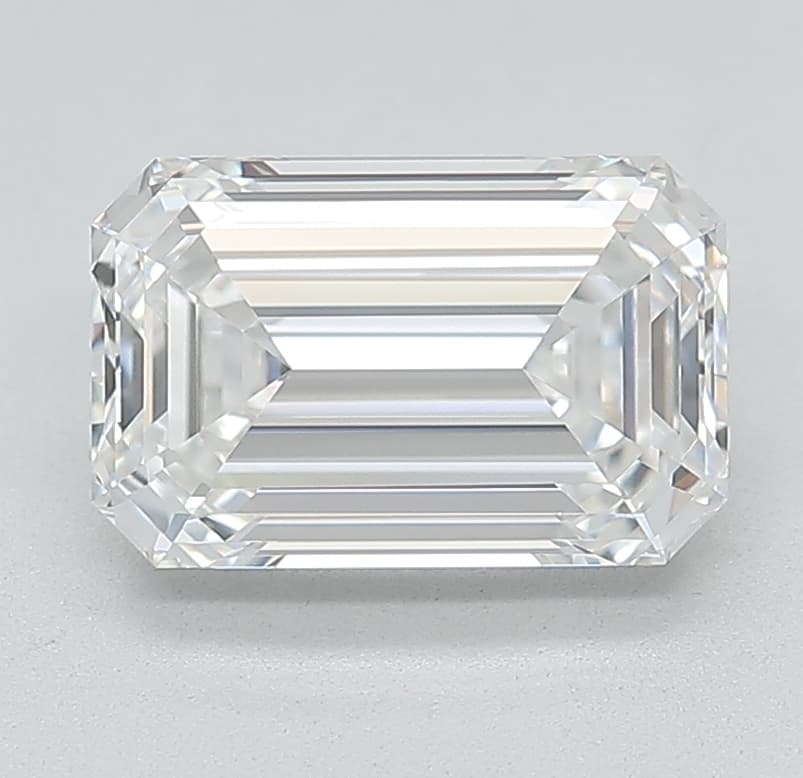
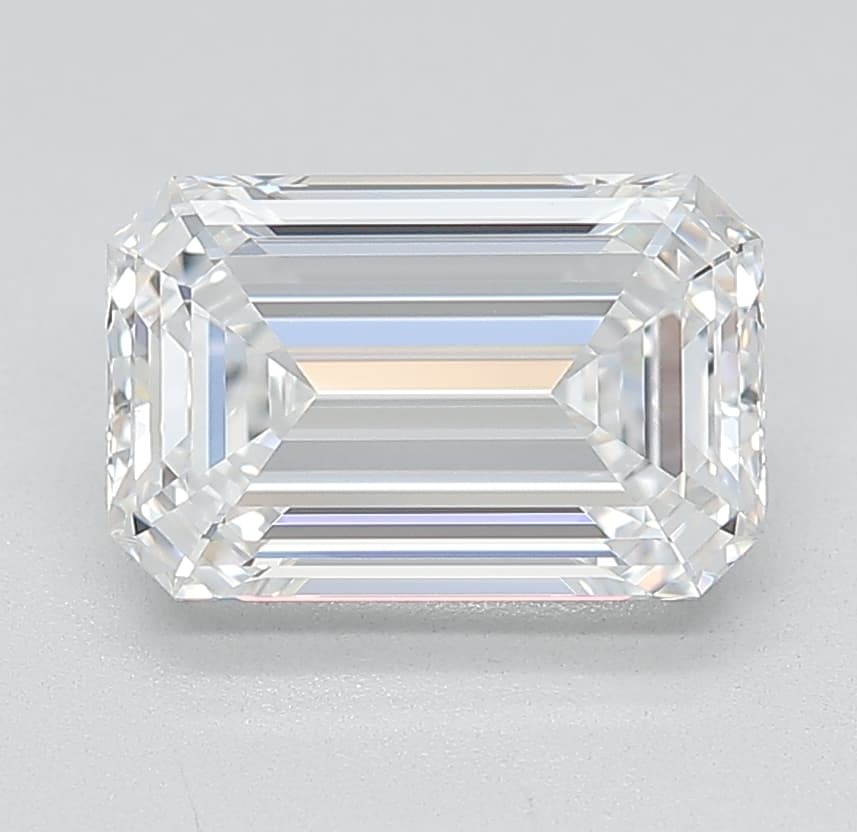
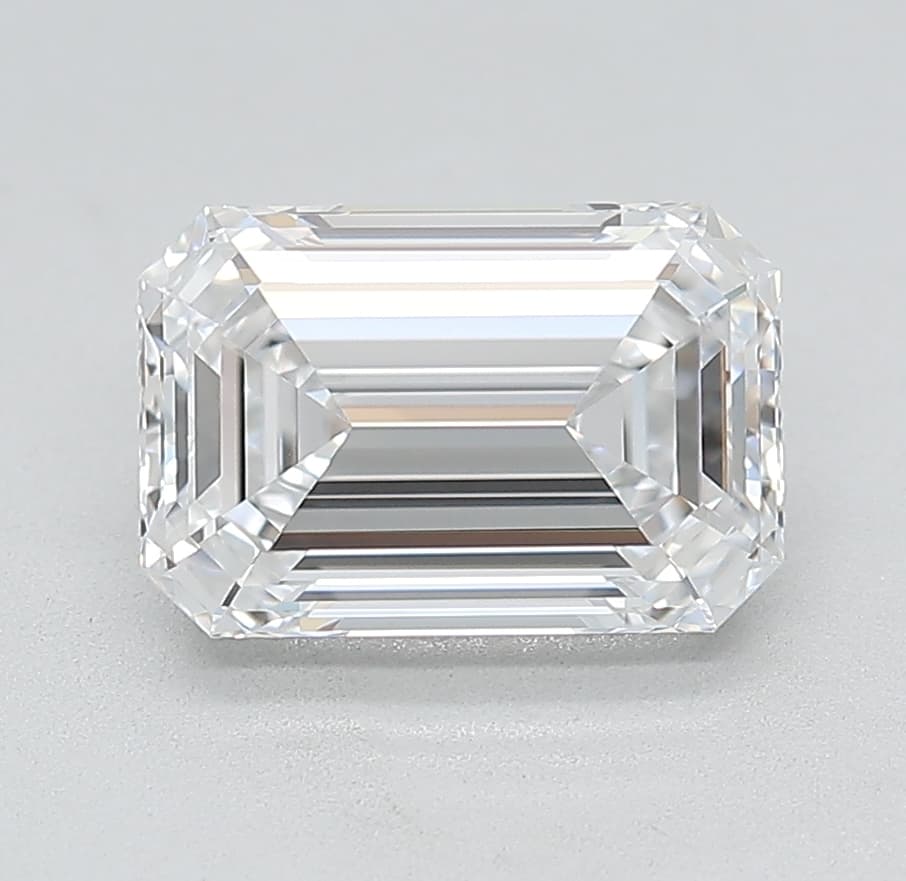
The emerald cut stretches the same idea into a rectangle. Its long facets run the length of the stone, so the flashes travel from end to end as it moves. The large, open table gives a clear view into the diamond, and the effect is calm, clean and elegant rather than busy.
On the hand, the length does a lot of work. An emerald cut covers more of the finger from knuckle toward the hand, which tends to make the finger look longer and the stone look generous for its weight. Within the usual range, a ratio near 1.30 looks closer to a classic rectangle and one near 1.50 looks slimmer and more dramatic; neither is better.
Our emerald guide and the post on radiant vs emerald cuts show how the emerald compares with the radiant, which shares its outline but sparkles instead of flashing.
Clarity and color: both are open windows
Step cuts show their inside openly. The long facets and wide table do not break up the view the way brilliant faceting does, so inclusions near the center are easier to see, and any warmth in the body color spreads evenly across the face.
That applies to both shapes, with a small twist:
- The asscher's smaller table and nested facets can make a single central inclusion stand out, because the pattern leads the eye straight to the middle.
- The emerald's large, open table shows the inside of the stone across a wide area, so it rewards a clean center and higher clarity.
As common guidance, many buyers choose VS1 or better for either step cut, and check the video to confirm the stone looks clean to the eye. For color, step cuts tend to show tone more than rounds of the same grade, so buyers often stay in the colorless to high near-colorless range. Our post on shapes that show more color explains why.
| Compared | Asscher | Emerald |
|---|---|---|
| Outline | Square, large cropped corners | Rectangle, cropped corners |
| Typical ratio | About 1.00–1.05 | About 1.30–1.50 |
| Look | Nested squares, compact and geometric | Long flashes, open and calm |
| Size face-up for its weight | Often a little smaller | Looks generous because of its length |
| Clarity and color | Shown openly; center matters most | Shown openly across a wide table |
Size, settings and everyday wear
On the hand. For the same carat weight, an emerald usually spans more of the finger than an asscher, simply because it is long. An asscher looks bolder in a compact, square way, while an emerald gives a longer, slimmer line; which suits your hand is a matter of taste.
Settings. Both are usually held by four prongs at the cropped corners, or by a bezel rim. Because the corners are already cut off, neither has the fragile sharp point of a princess cut. An emerald can also be set sideways, east to west; our post on east-west settings shows how.
Durability. Like every diamond, either can chip if a corner takes a hard knock, so it is worth having the prongs checked from time to time. The cropped corners help, but they do not make a stone immune to a direct blow.
How to choose between them
Start with the outline you love, then let the practical points refine the choice:
- Choose an asscher if you want a square, symmetrical stone with a vintage, geometric feel and a pattern that draws you into the center.
- Choose an emerald if you want length on the finger, a clean and open look, and a stone that reads as larger for its weight.
- Either way, set clarity and color a little higher than you would for a round, and judge each stone by its video: look for even flashes across the whole face and a clean center.
Compare the millimeter measurements, not just carat weight, and look at both shapes in the same lighting if you can. Browse emerald cut diamonds, or ask one of our diamond specialists to line up an asscher and an emerald of similar size for you before you buy.
In both step cuts the eye goes to the middle of the stone. Before anything else, check in the video that the center of the table is clean and that the flashes are even from edge to edge.
Frequently asked questions
What is the difference between an asscher and an emerald cut?
Both are step cuts with long, straight facets and cropped corners. The asscher is square, with a length-to-width ratio of about 1.00 to 1.05 and a pattern of nested squares. The emerald is a rectangle, usually about 1.30 to 1.50, with long flashes that run from end to end.
Does an asscher look smaller than an emerald cut of the same carat weight?
Often, yes. An asscher is compact and is traditionally cut fairly deep, so more of its weight sits below the surface, while an emerald spreads its weight along its length. Compare the measurements in millimeters on the report rather than carat weight alone.
What clarity should I choose for an asscher or emerald cut diamond?
Step cuts show inclusions more openly than brilliant cuts, so many buyers choose VS1 or better as a common guideline. The grade is only a starting point: check the video to make sure the center of the table looks clean to the eye.
Are asscher and emerald cut diamonds durable?
They are as hard as any diamond, and their cropped corners remove the sharp points that chip most easily. A hard knock on a corner can still chip any diamond, so prongs or a bezel that protect the corners, and an occasional check by a jeweler, are sensible.
Glossary terms in this article
More on Shapes & Cuts in the journal.