Shape guide
Round Lab-Grown Diamonds: Cut Grade, Proportions and Size
Last reviewed
Quick answer
A round brilliant is the classic circular diamond with 57 or 58 facets, and the only shape GIA gives a cut grade (IGI also grades fancy shapes). For a bright, lively stone, start with the top cut grade (Ideal on IGI, Excellent on GIA) plus Excellent polish and symmetry, then check that table and depth sit near commonly cited ranges. Brilliant faceting tends to hide small inclusions and slight body color well, so a round usually gives you more room on color and clarity than a step cut does.
What is a round brilliant diamond?
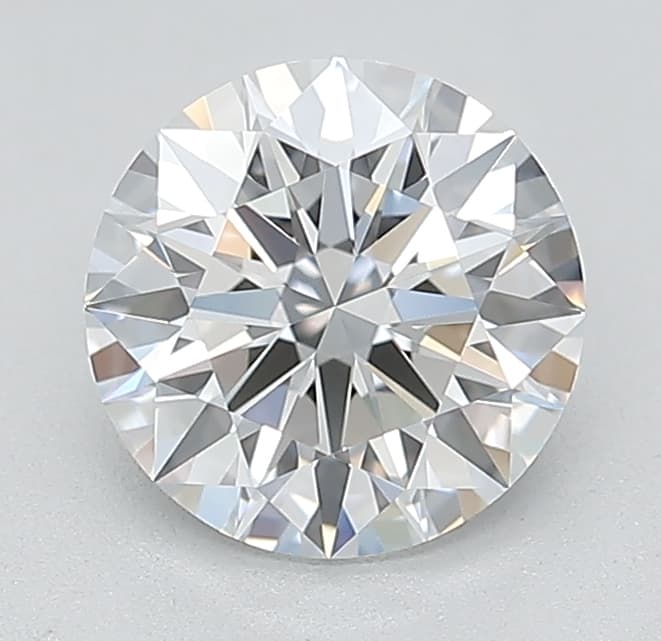
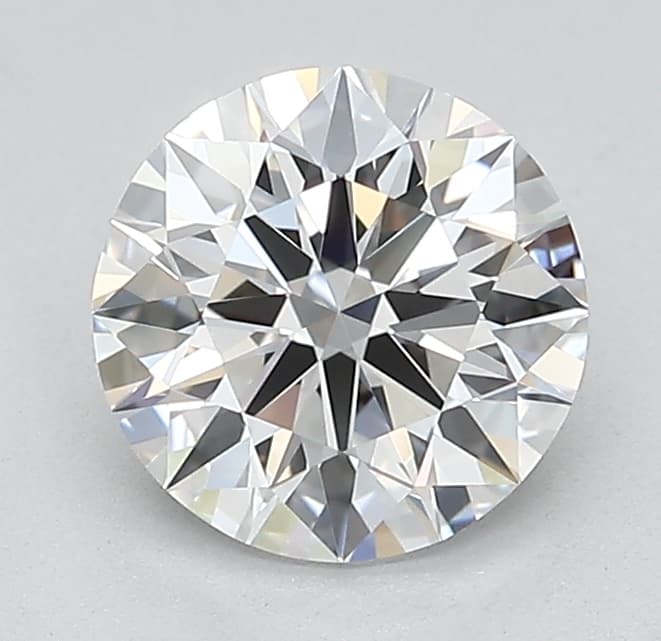
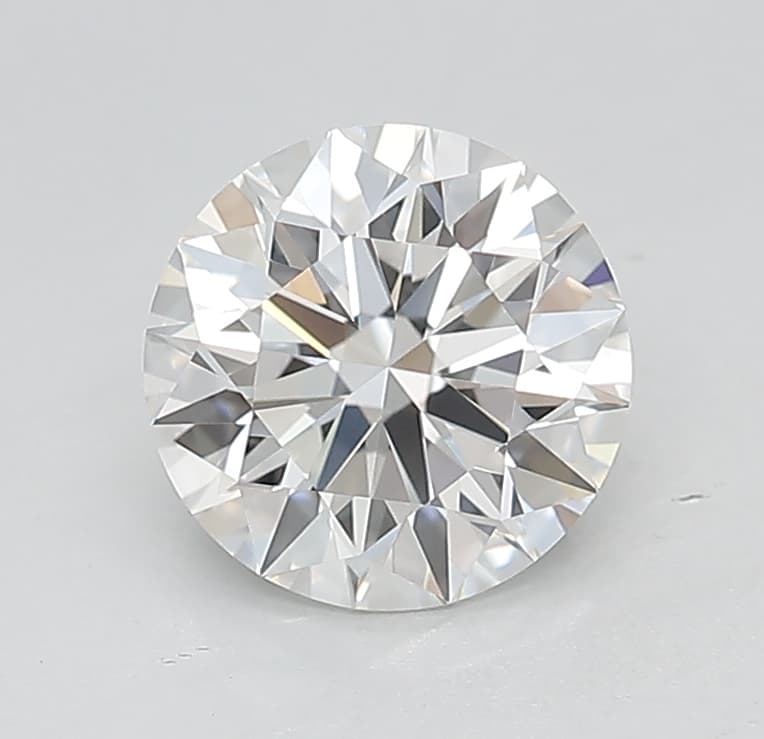
A round brilliant is a circular diamond faceted in the brilliant style: triangular and kite-shaped facets that radiate out from the center and break light into many small, bright flashes. A standard round brilliant has 57 facets, 33 on the crown (the top, including the large flat table) and 24 on the pavilion (the bottom). If the point at the bottom is polished into a tiny flat facet, called the culet, the count is 58.
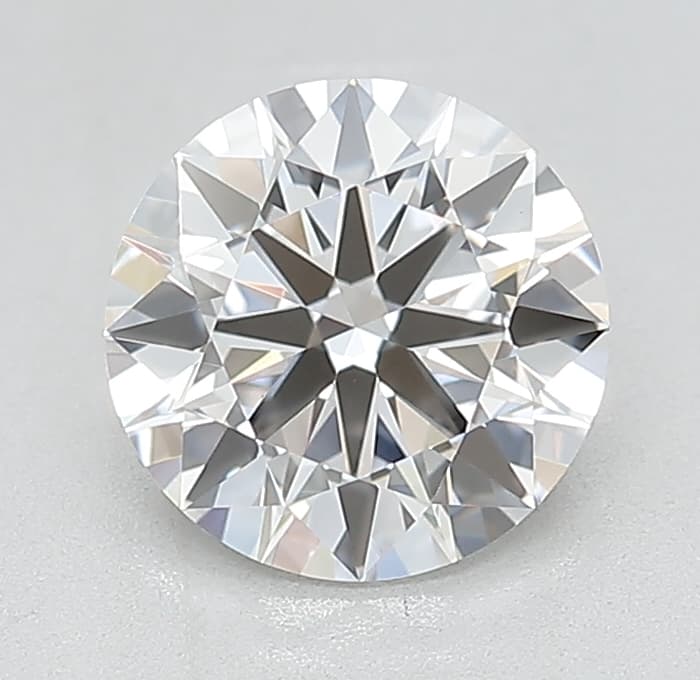
The facets are laid out in eight-fold symmetry, which is why a well-cut round shows an even, balanced pattern of light and dark when you look straight down at it. The round brilliant is the shape that cut research has focused on most, and that research is the basis for the cut grades labs give to rounds.
Laboratory-grown diamonds have the same optical properties as mined diamonds, so the same cut rules apply to a lab-grown round.
- RoundTypical L/WAbout 1.00
- Typical L/WAbout 1.00
- Typical L/W1.30–1.50
- Typical L/W1.00–1.05 square1.10–1.30 elongated
How does the cut grade work on a round diamond?
Rounds get an overall cut grade from both IGI and GIA. IGI has graded the cut of fancy shapes, from Excellent to Poor, since September 2022; GIA does not. Ideal, IGI’s top grade, is for rounds only. The round scales differ slightly between the two labs:
| Lab | Cut grades, best to lowest |
|---|---|
| IGI | Ideal, Excellent, Very Good, Good, Fair, Poor |
| GIA | Excellent, Very Good, Good, Fair, Poor |
A cut grade is not a single measurement. It reflects how the table, depth, crown and pavilion angles and girdle work together, along with the quality of the finish (polish and symmetry). Two stones with the same grade can still differ, which is why it is worth reading the proportions as well.
Since October 2025, new GIA reports for colorless and near-colorless lab-grown diamonds give a Premium or Standard classification instead of color and clarity grades. For round brilliants, Premium requires an Excellent cut grade and Standard requires Very Good or better. IGI reports, and GIA lab-grown reports issued from October 13, 2020 to September 30, 2025, list the full grades; earlier GIA lab-grown reports gave ranges. Our guide to diamond certificates explains both report types.
What proportions are commonly used for round diamonds?
The ranges below are common guidelines used by many buyers and cutters for round brilliants with strong light performance. Sources vary slightly, and they are not lab rules: a stone a little outside one range can still earn a top grade if its other measurements balance it.
| Measurement | Common guideline range |
|---|---|
| Table | 54% to 58% |
| Total depth | 59% to 62.5% |
| Crown angle | 34° to 35° |
| Pavilion angle | 40.6° to 41° |
| Girdle | Thin to slightly thick |
| Culet | None (pointed) |
The pavilion and crown angles have a large effect on how much light comes back to your eye, and they work as a pair. A pavilion that is too deep tends to darken the center of the stone. One that is too shallow lets light leak out, which can leave a washed-out center or a gray ring reflected from the girdle (often called a fish-eye). Read the angles together rather than one at a time.
What should you check before choosing a round?
- Cut, polish and symmetry: the top cut grade with Excellent polish and symmetry is a common starting point. On IGI reports, Ideal is the top cut grade.
- Table and depth: check that they sit near the ranges above. A depth well over the range carries hidden weight; one well under it can look glassy.
- Girdle: an extremely thin girdle is more prone to chipping, and an extremely thick one adds weight you cannot see from the top.
- Culet: "None" or "Pointed" is normal. A large culet can show as a small dark or open spot in the middle of the stone.
- The video: look for even sparkle across the stone, with no dark zones that stay dark as it moves and no milky or brownish haze, which the color grade may not capture (see tinge).
- Hearts and arrows (optional): very precise optical symmetry produces a pattern of eight arrows and eight hearts in a special viewer. It is not a GIA grade, but some buyers look for it; see hearts and arrows.
One of our specialists can go through the report, measurements and video with you before you buy.
How do color and clarity look in a round?
Brilliant faceting splits light into many small flashes. That busy pattern tends to mask small inclusions and slight body color better than the long, open facets of a step cut such as an emerald cut. It is one reason many buyers are comfortable with near-colorless grades (G to J) in a round.
For clarity, the practical goal for most people is an eye-clean stone: no inclusions visible without magnification at a normal viewing distance. Stones in the VS range usually are, and many SI1 rounds are as well, but it depends on the size, color and position of the inclusion. A dark crystal under the table is easier to spot than a small feather near the edge. The video and, where the report includes one, the clarity plot show you where the inclusions sit.
Fluorescence is listed separately on IGI reports (GIA’s lab-grown assessment since October 2025 does not show it). Lab-grown diamonds can fluoresce in colors other than blue; if a report shows medium or stronger fluorescence, ask to see the stone in a video under normal light.
How big does a round look for its weight, and how is it set?
Carat is weight, not size. As a rough guide, a well-cut round measures about these diameters:
| Carat weight | Approximate diameter |
|---|---|
| 0.50 ct | 5.1 to 5.2 mm |
| 1.00 ct | 6.4 to 6.5 mm |
| 1.50 ct | about 7.4 mm |
| 2.00 ct | 8.0 to 8.1 mm |
| 3.00 ct | 9.2 to 9.3 mm |
These figures are approximate, and the exact diameter depends on the cut. A round cut too deep faces up smaller than these sizes. Elongated shapes such as oval and pear tend to look larger than a round of the same weight, because the weight is spread over a longer outline. Compare the millimeter measurements, not only the carat weight; our carat weight guide explains more.
Rounds have no points or sharp corners, so they are straightforward to set. Four or six prongs or a bezel all work; the main thing to protect is the girdle edge, especially if it is graded thin.
| Weight | Stones | Median length (mm) | Median width (mm) |
|---|---|---|---|
| 1.00–1.09 ct | 19 | 6.46 | 6.48 |
| 1.50–1.64 ct | 8 | 7.51 | 7.56 |
| 2.00–2.19 ct | 17 | 8.20 | 8.26 |
| 3.00–3.29 ct | 50 | 9.39 | 9.43 |
Frequently asked questions
What is the best cut grade for a round lab-grown diamond?
The top grade is Ideal on IGI reports and Excellent on GIA reports. Most buyers looking for strong sparkle pair the top cut grade with Excellent polish and symmetry, then check that table and depth sit near commonly cited ranges.
What table and depth should a round diamond have?
Commonly cited guidelines are a table of about 54% to 58% and a total depth of about 59% to 62.5%, with crown angles near 34° to 35° and pavilion angles near 40.6° to 41°. Sources vary slightly and these are not lab rules, so a stone slightly outside one range can still be well cut.
How many facets does a round brilliant diamond have?
A standard round brilliant has 57 facets: 33 on the crown and 24 on the pavilion. If the bottom point is polished into a small culet facet, the count is 58.
Do I need a hearts and arrows round diamond?
No. Hearts and arrows is a pattern seen in a special viewer when a round has very precise optical symmetry. It is not a GIA grade, and a round with a top cut grade and Excellent symmetry can look bright and lively without it, so treat it as a preference rather than a requirement.
How big is a 1 carat round lab-grown diamond?
A well-cut 1 carat round measures about 6.4 to 6.5 mm across. The exact diameter depends on the cut, and a stone cut too deep faces up smaller. Lab-grown and natural diamonds have the same density, so a given weight gives the same size in both.