Shape guide
Old European Cut Lab-Grown Diamonds: Features and What to Check
Last reviewed
Quick answer
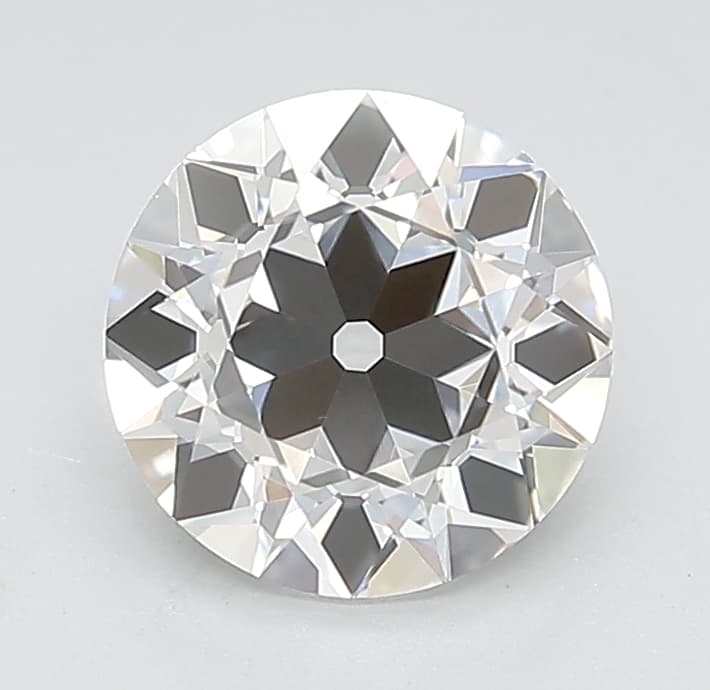
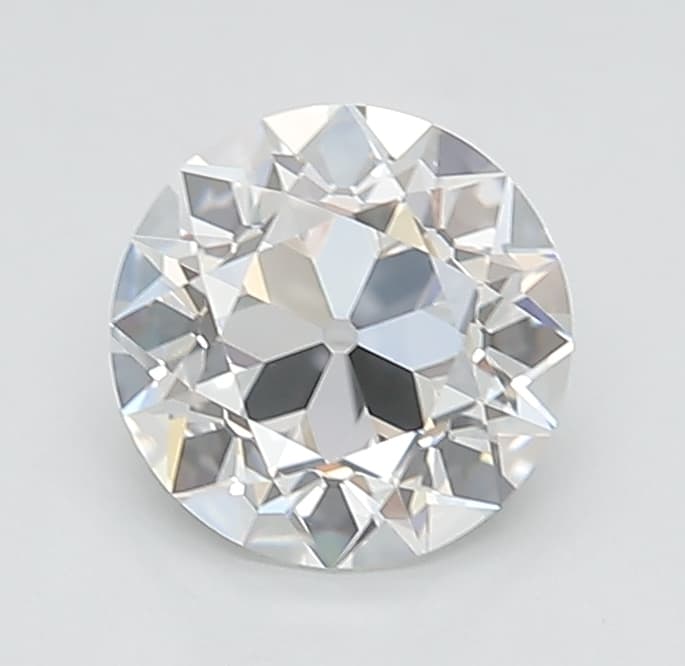
An old European cut is an antique cutting style with a round outline, a small table, a high crown, an open culet and broad, chunky facets. It predates the modern round brilliant, and a lab-grown old European is a modern laboratory-grown diamond cut to recreate that look, not an antique. There is no standard set of proportions, so judge each stone by its roundness, culet, spread and a video.
What is an old European cut diamond?
The old European cut is a historic round cutting style that predates the modern round brilliant. Diamonds in this style were cut largely by hand and by eye, so antique examples vary from stone to stone. It has a round outline like a modern brilliant, but its proportions give a different look: broad, chunky flashes of light and color instead of fine, even sparkle.
A lab-grown old European is a modern stone. It was grown in a laboratory and then cut to recreate the antique style; it is not an antique, and it is not a mined diamond. The grading report states that it is laboratory-grown, and you can verify the report number on igi.org or gia.edu.
How does an old European cut differ from a modern round?
| Feature | Old European cut | Modern round brilliant |
|---|---|---|
| Table | Small | Commonly 54% to 58% |
| Crown | High | Lower; crown angles of 34° to 35° are common |
| Culet | Open, often visible through the table | None or pointed |
| Facet look | Broad, chunky flashes | Many smaller, finer flashes |
| Cut grade on the report | None from GIA; check whether an IGI report gives one | Overall cut grade |
The figures for modern rounds are common guidelines that vary by source, not lab rules. The point of the comparison is the direction: an old European has a smaller table, a taller crown and a visible culet, and it is judged on its own terms rather than against round brilliant targets.
- Old EuropeanTypical L/WAbout 1.00
- Typical L/WAbout 1.00
- Typical L/WAbout 1.00–1.10
What proportions does an old European cut have?
There is no standard set of proportions for an old European cut, and modern makers who cut lab-grown stones in this style vary. Rather than chase numbers, look for the defining features:
- A round outline: if the report lists a minimum and maximum diameter, the closer the two are, the rounder the stone.
- A small table relative to the diameter.
- A high crown, so the stone sits taller above the girdle.
- An open culet that is centered and in proportion to the stone.
- Overall depth: old European cuts are often fairly deep, so compare the diameter with other stones of similar weight to see how large it will look.
Approximate size charts for modern round brilliants do not apply exactly to this style, because the proportions are different. Go by the millimeter measurements.
| Weight | Stones | Median length (mm) | Median width (mm) |
|---|---|---|---|
| 1.00–1.09 ct | 64 | 6.31 | 6.35 |
| 1.50–1.64 ct | 6 | 7.13 | 7.17 |
| 3.00–3.29 ct | 4 | 9.12 | 9.15 |
What should you check before choosing an old European cut?
The culet
In a video, the open culet shows as a small circle at the center of the stone. Check that it is centered: an off-center culet makes the facet pattern look lopsided. A very large culet can read as a dark or see-through spot. The culet description on the report tells you its size.
Symmetry and the light pattern
The pattern of flashes should look balanced around the center. Look for dark areas that stay dark as the stone moves, and if you can, compare videos taken in different lighting. Excellent or Very Good polish and symmetry are a sensible starting point.
Spread and height
The high crown makes the stone sit taller, and a thick girdle adds weight that does not show from the top. Check the total depth in millimeters as well as the diameter, especially if the stone is going into a low setting.
How do color and clarity show in an old European cut?
Broad facets and an open culet can make inclusions easier to see than in a modern round brilliant, where many small flashes help hide them. Use the clarity grade as a starting point and confirm in the video that the stone is eye-clean, especially in the center, where you look straight through the table toward the culet.
Color is partly a matter of style. Some buyers choose a near-colorless or faint grade on purpose for a warmer, vintage look; others prefer a colorless stone. Either way, check the video for a brown, gray or milky tinge, which the grade does not describe. Our color and clarity guides explain the scales.
How should an old European cut be set?
A round outline has no points or corners to protect, and the open culet means the bottom of the stone ends in a small flat facet rather than a fine point. Four or six prongs, or a bezel, are common choices. Allow for the high crown when you choose the setting's height. The girdle is the edge the prongs grip, so check its description on the report: an extremely thin girdle is more vulnerable to chipping, while a very thick one adds hidden weight.
If you like the antique character but prefer a squarish outline, the old miner shares the same small table, high crown and open culet. One of our specialists can review the report and video with you before you buy.
Frequently asked questions
Is a lab-grown old European cut diamond an antique?
No. It is a modern laboratory-grown diamond cut in the old European style. The grading report states that it is laboratory-grown, and you can verify the report number on the IGI or GIA website.
What is the difference between an old European cut and an old miner?
Both are antique cutting styles with a small table, a high crown, an open culet and chunky facets. The old European has a round outline, while the old miner has a cushion-like outline that is close to square.
Why can I see a small circle in the middle of an old European cut?
That is the open culet, a small flat facet at the bottom of the stone that shows through the table. It is a normal feature of the style. Check that it is centered and not so large that it looks like a hole.
Does an old European cut sparkle less than a modern round brilliant?
It sparkles differently. A modern round shows many small, even flashes, while an old European shows broader, chunkier flashes of light and color. Which you prefer is a matter of taste, so compare videos of both in similar lighting.
Do old European cut diamonds get a cut grade?
Not from GIA, which gives overall cut grades to modern round brilliants only. IGI grades modern round brilliants and, since September 2022, fancy shapes, so check whether the IGI report shows one. Either way, judge an old European cut from the measurements, the polish and symmetry grades and a video.