Shape guide
Old Miner Cut Lab-Grown Diamonds: Antique Style, Modern Stones
Last reviewed
Quick answer
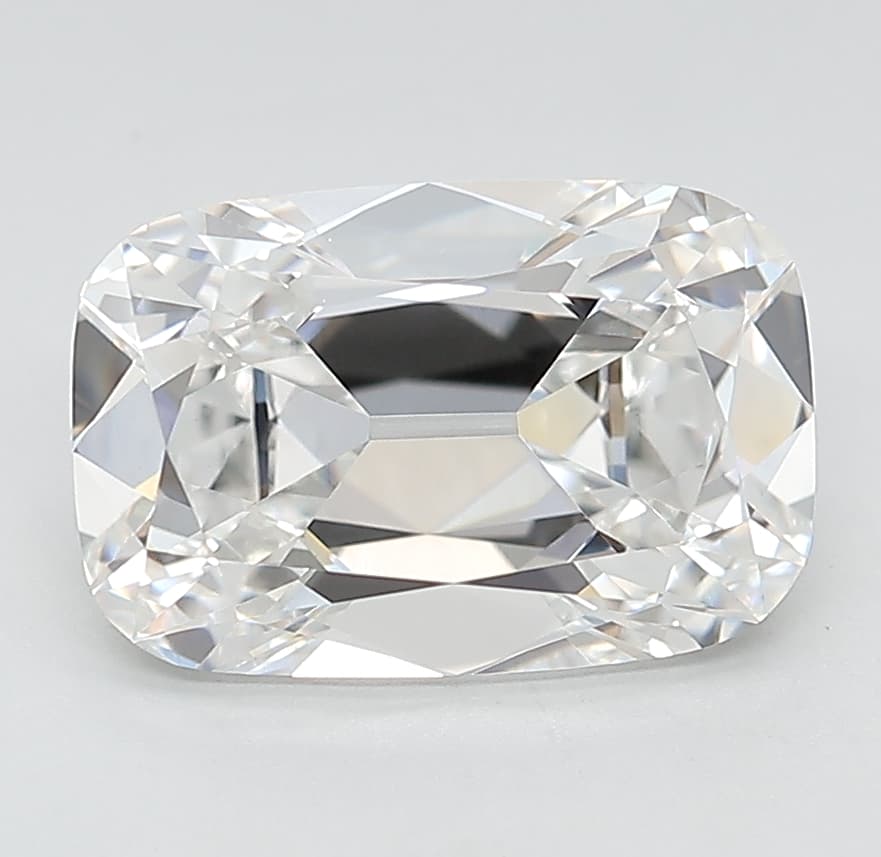
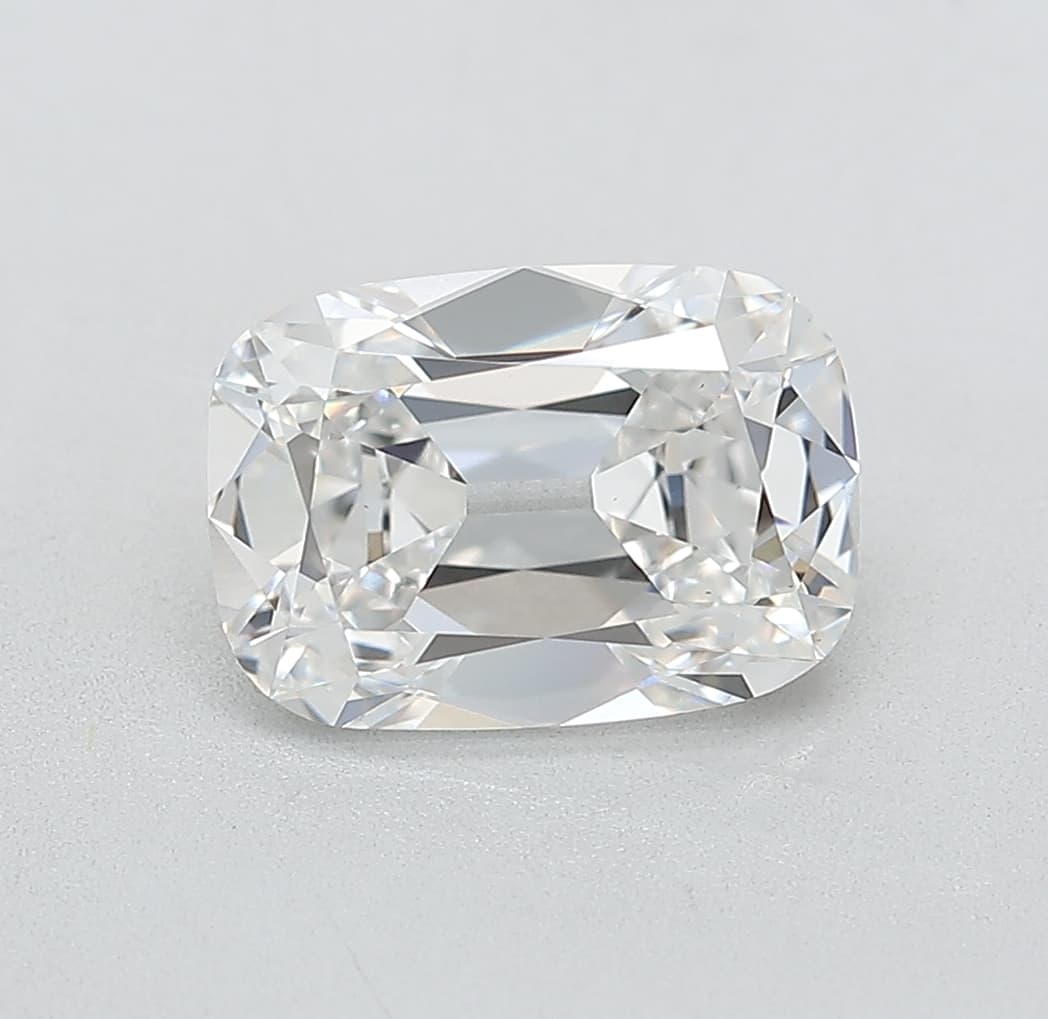
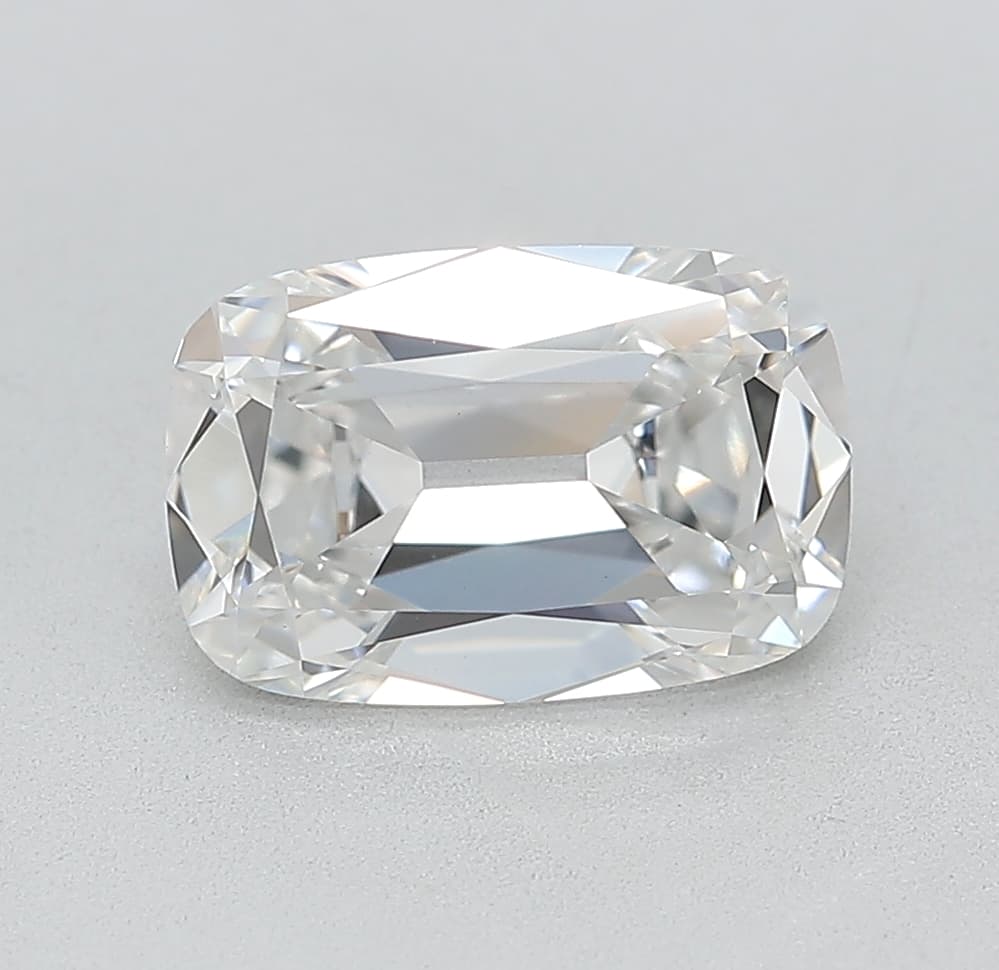
An old miner, also called an old mine cut, is an antique cutting style with a cushion-like outline close to square, a small table, a high crown, an open culet and broad, chunky facets. A lab-grown old miner is a modern laboratory-grown diamond cut in that style, not an antique. There is no standard set of proportions, so judge each stone by its outline, culet, spread and a video.
What is an old miner cut diamond?
The old miner is a historic cutting style that predates the modern round brilliant. Diamonds in this style were cut largely by hand and by eye, which is why the outline is a soft, slightly irregular square with rounded corners rather than a precise geometric shape.
Compared with a modern cushion or round, an old miner has:
- a small table, so the flat top facet is narrow relative to the stone;
- a high crown, so the stone sits taller above the girdle;
- an open culet, a small flat facet at the bottom that you can often see through the table as a small circle;
- chunky facets that show broad flashes of light and color rather than fine, pinpoint sparkle.
A lab-grown old miner is a modern stone. It was grown in a laboratory and then cut to recreate this antique look; it is not an antique, and it is not a mined diamond. The grading report states that it is laboratory-grown, and you can verify the report number on igi.org or gia.edu.
What proportions does an old miner have?
There is no standard set of proportions for an old miner. Antique stones varied from cutter to cutter, and modern makers who cut lab-grown diamonds in this style follow their own interpretation. Instead of target numbers, look for the features that define the style:
| Feature | What it looks like | What to check |
|---|---|---|
| Outline | Close to square, with rounded corners | Length-to-width ratio usually roughly 1.00 to 1.10, varying by maker |
| Table | Small relative to the stone | A large table loses the antique look |
| Crown | High, with broad crown facets | The stone sits taller, so allow for it in the setting |
| Culet | Open, visible through the table | Centered and in proportion to the stone |
| Facets | Broad and chunky | An even pattern in the video, without dead spots |
Old miners are often cut relatively deep overall, so a good part of their weight can sit below the top of the stone. Compare the millimeter measurements with other stones of similar weight so you know how large it will look.
| Weight | Stones | Median length (mm) | Median width (mm) |
|---|---|---|---|
| 2.00–2.19 ct | 4 | 9.44 | 6.57 |
| 3.00–3.29 ct | 19 | 11.01 | 7.59 |
What should you check before choosing an old miner?
The culet
The open culet is part of the character of the style. Check that it is centered: an off-center culet makes the whole facet pattern look lopsided. A very large culet can read as a dark or see-through spot in the middle of the stone, which is usually not the look you want. The culet description on the report tells you its size.
The outline
Look for even corners and sides. Some buyers like a slightly irregular, handmade look; others prefer a crisp, symmetrical outline. Either is valid, and the symmetry grade and the video tell you which you are getting.
Light and contrast
Antique-style cuts are about broad flashes and contrast rather than the even brightness of a modern round, so judge them on their own terms. In the video, look for dark areas that stay dark as the stone moves, and if you can, compare videos taken in different lighting.
Girdle and spread
A very thick girdle adds weight that does not show from the top. Check the girdle description and the millimeter measurements together.
How do color and clarity show in an old miner?
The broad facets and open culet can make inclusions easier to see than in a modern brilliant, where many small flashes help break them up. Treat the clarity grade as a starting point and check in the video that the stone is eye-clean, paying particular attention to the center, where you look straight through the table toward the culet.
For color, taste varies more than with most shapes. Some buyers choose a near-colorless or faint grade on purpose, because a slightly warm tone suits the vintage look; others want a colorless stone. Neither is wrong. Check the video for a brown, gray or milky tinge, which the color grade does not describe. Our color and clarity guides explain the grade scales.
How is an old miner different from a cushion or old European cut?
| Feature | Old miner | Modern cushion | Old European |
|---|---|---|---|
| Outline | Close to square, rounded corners | Square or rectangular, rounded corners | Round |
| Table | Small | Larger | Small |
| Crown | High | Usually lower | High |
| Culet | Open, often visible | Usually small or none | Open, often visible |
| Look | Broad, chunky flashes | Brilliant or "crushed ice" sparkle | Broad, chunky flashes |
The old miner and the old European share the same antique character; the main difference is the outline. A modern cushion has a similar squarish outline but a modern facet pattern and proportions.
- Old MinerTypical L/WAbout 1.00–1.10
- Typical L/W1.00–1.05 square1.10–1.30 elongated
- Typical L/WAbout 1.00
How should an old miner be set?
The rounded corners of an old miner are less exposed than the sharp corners of a princess cut, and the open culet means the bottom of the stone ends in a small flat facet rather than a fine point. Four prongs over the corners, or a bezel, are common choices. Because the high crown makes the stone sit taller, check that the setting's height suits it.
IGI has graded the cut of fancy shapes, from Excellent to Poor, since September 2022; GIA does not. So check whether an old miner’s IGI report shows one; either way, polish, symmetry, measurements and a video carry the weight. One of our specialists can review the report and video with you before you buy.
Frequently asked questions
Is a lab-grown old miner diamond an antique?
No. It is a modern laboratory-grown diamond that has been cut in the old miner style. The grading report states that it is laboratory-grown, and you can verify the report number on the IGI or GIA website.
What is an open culet?
The culet is the bottom tip of the pavilion. In an old miner it is polished into a small flat facet rather than a point, so you can often see it through the table as a small circle. It is a normal feature of the style; check that it is centered and not so large that it looks like a hole.
What length-to-width ratio does an old miner have?
There is no standard ratio, but the outline is usually close to square, roughly 1.00 to 1.10, varying by maker. Choose the outline you like from the photos, video and measurements.
How is an old miner different from a cushion cut?
Both have a squarish outline with rounded corners. An old miner has a smaller table, a higher crown, an open culet and broad, chunky facets, while a modern cushion usually has a larger table, a lower crown and a small or no visible culet.
Do old miner diamonds get a cut grade?
Not from GIA, which gives fancy shapes no cut grade. IGI has graded the cut of fancy shapes, from Excellent to Poor, since September 2022, so check whether the IGI report shows one. Either way, judge the cut from the polish and symmetry grades, the measurements and a video under even lighting.