Color & Carat
Green Lab-Grown Diamonds: A Bold, Unusual Choice
By the Vanora Diamond team
Published Last reviewed 5 min read

Quick answer
A saturated green in a lab-grown diamond usually comes from treatment after growth, most often irradiation, and the grading report discloses it in the comments. Green stones are graded on the fancy color scale by hue, tone and saturation, and they are less familiar than pink or blue, so the selection at any moment tends to be smaller. Pick a green you love on video, check the report, and tell any jeweler who works on the ring that the color is treated.
What makes a lab-grown diamond green
In lab-grown diamonds, green is usually produced after growth. The most common route is irradiation: high-energy particles knock carbon atoms out of their places in the crystal, and the empty sites left behind, called vacancies, absorb light at the red end of the spectrum. With red removed, the stone looks green to bluish green. Irradiation is sometimes combined with heating to fine-tune the result.
The crystal itself can have been grown by CVD or HPHT. The growth method and the color treatment are separate facts, and the report usually records both.
Read the comments
The comments section of the grading report usually states the growth process and what the lab found about post-growth treatment. A treated green is still a diamond, and its grades describe the stone as it is now. What matters is that the treatment is disclosed, and that you know about it when you choose and care for the stone. See as-grown vs post-growth treatment for the usual wording.
Caring for a treated green
Day-to-day care is the same as for any diamond: warm water, a mild soap and a soft brush keep it bright. The one thing to plan for is heat.
Color produced by irradiation can change if the stone is heated strongly, for example by a jeweler’s torch during resizing, retipping prongs or repairing the setting. Before any of that work:
- Tell the jeweler the diamond’s color is treated.
- Ask them to remove the stone or protect it before using a torch near it.
- Keep a copy of the grading report with the ring so the details are easy to share.
This is a simple habit, and it applies to treated colors in general, not just green.
Color produced by irradiation can change if the stone is heated strongly, for example by a jeweler’s torch. Before resizing or prong work, tell the jeweler the color is treated and ask them to remove or protect the stone.
Reading a green grade
Like other fancy colors, a green grade pairs an intensity word with the hue and, often, a modifier:
| Grade | What it tends to look like |
|---|---|
| Fancy Light Green | Pale, minty green |
| Fancy Green | Clear, moderate green |
| Fancy Intense Green | Strong, obvious green |
| Fancy Vivid Green | The most saturated, brightest greens |
| Fancy Deep Green | Strong green with a darker, forest-like tone |
Modifiers come before the main hue and change the character:
- Bluish green: cooler, toward teal.
- Yellowish green: warmer, toward lime or chartreuse.
- Grayish green: softer and more muted, sometimes called sage.
Each grade covers a range, so two stones with the same words can look different. The Fancy Vivid vs Fancy Intense post explains how the top grades are separated.
Green and lighting
Green shifts with the light more than you might expect. Daylight and neutral white light show it most truly; warm indoor light can push it toward yellowish green, and cool light toward bluish green. When you compare stones on video, watch them on the same screen at the same brightness, and look for color that stays even across the face rather than pooling in one area.
Green diamond or emerald?
If you love green, you may be weighing a green diamond against an emerald. They are different materials, and the practical differences are real:
| Green lab-grown diamond | Emerald | |
|---|---|---|
| Mineral | Diamond (carbon) | Beryl |
| Mohs hardness | 10 | About 7.5 to 8 |
| Look | Bright sparkle and fire | Soft, velvety glow; inclusions are typical |
| Everyday wear | Very durable | Needs more care against knocks |
Emeralds are often treated with oils or resins to improve clarity, and they can chip if knocked. A green diamond gives you diamond’s hardness and sparkle in a green color, which makes it a practical choice for a ring worn every day. Note that "emerald" is also the name of a diamond shape; see the emerald cut guide if that is what you had in mind.
Shape, size and clarity
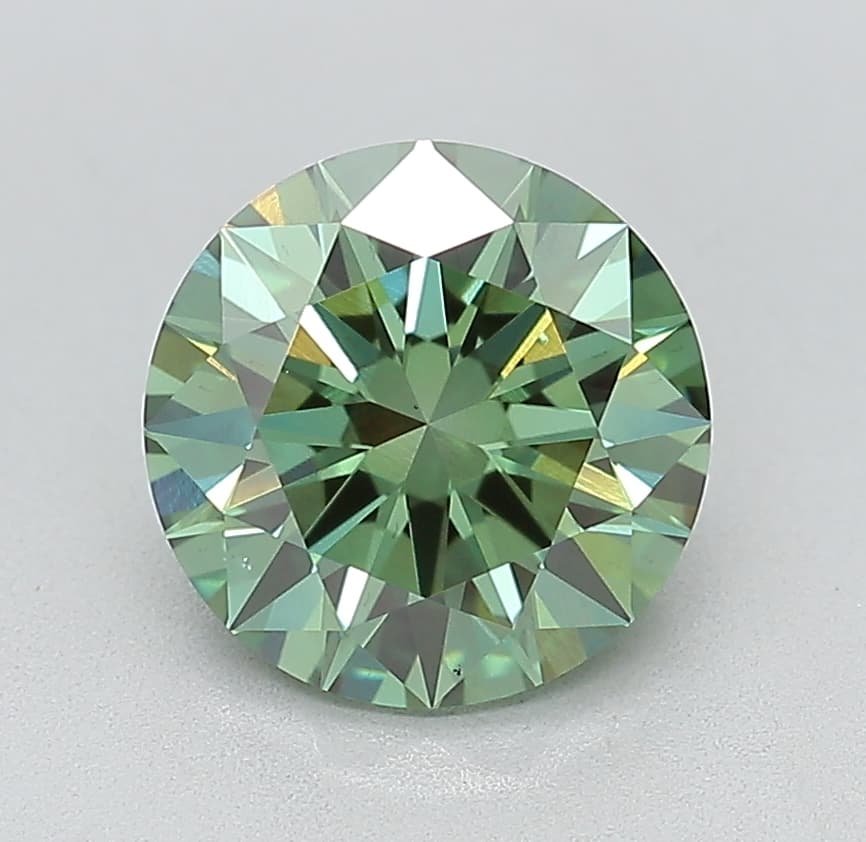
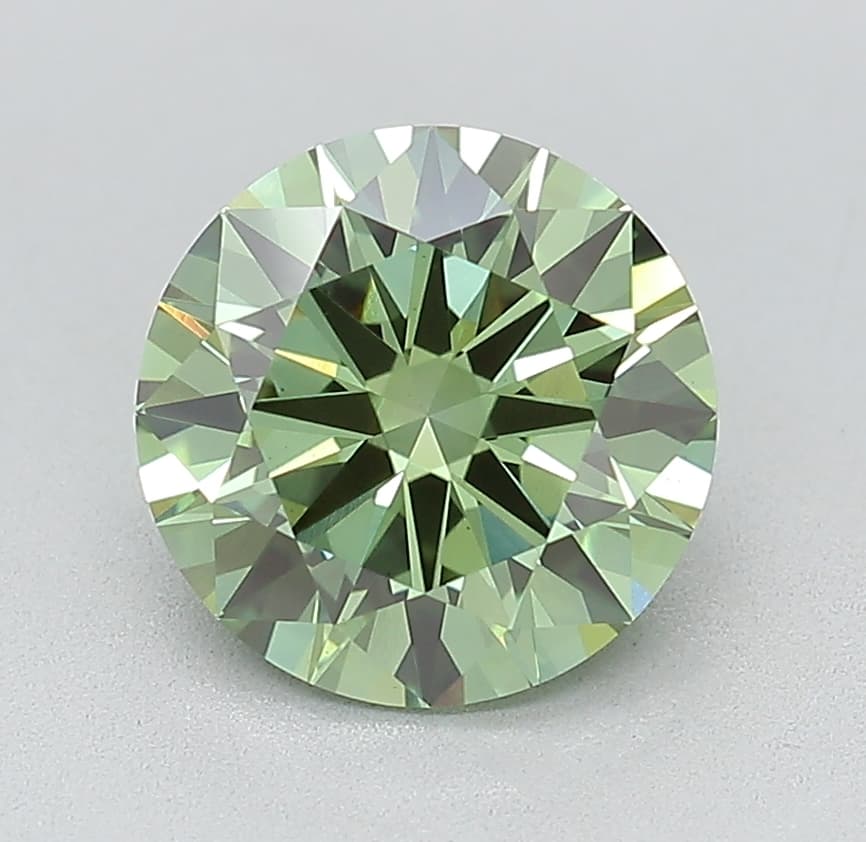
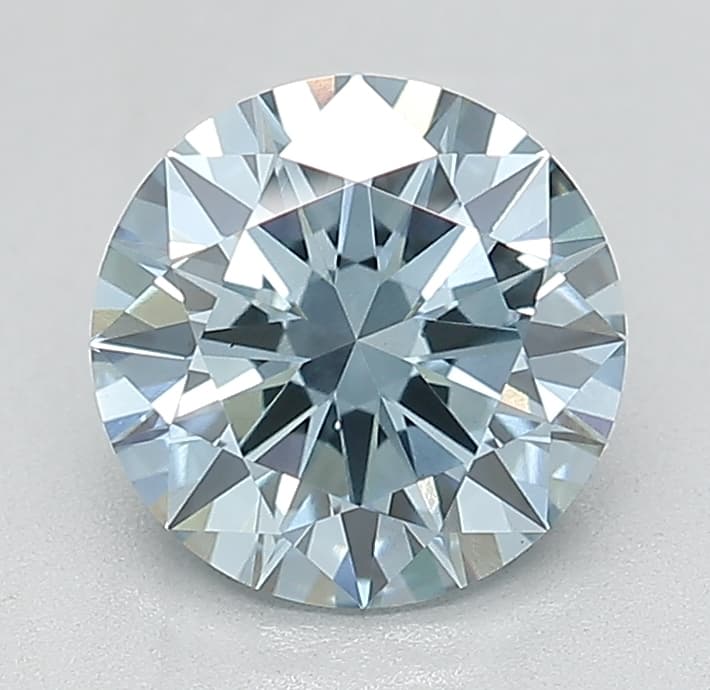
- Round: a green round shows plenty of sparkle, and the color can look a little lighter face-up than in a radiant of the same grade.
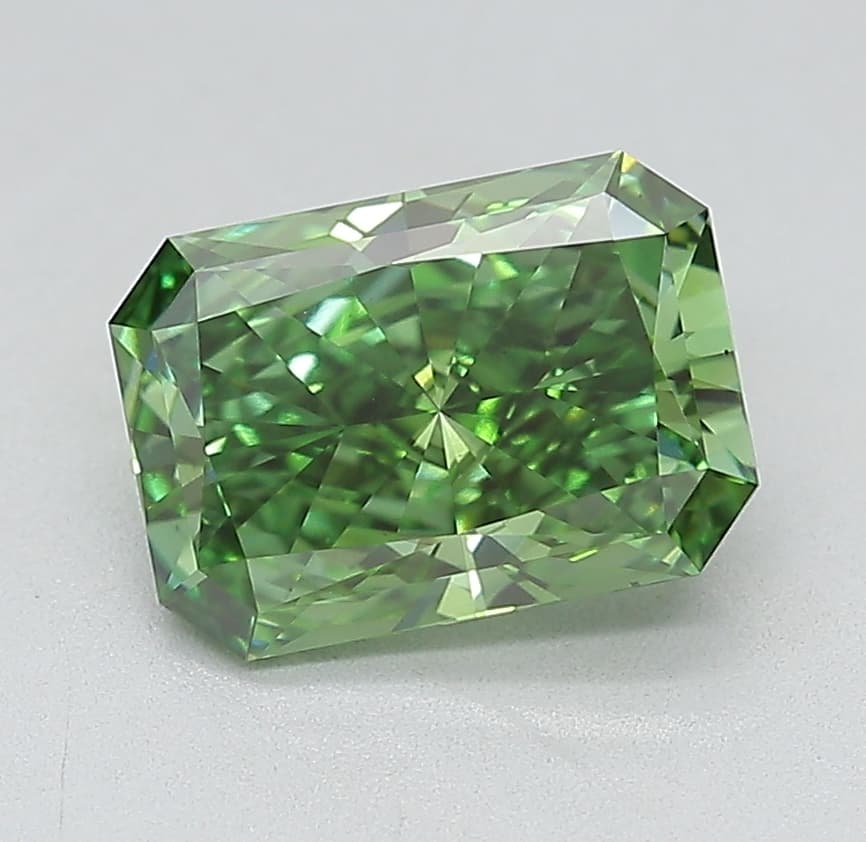
- Radiant and cushion: their faceting tends to concentrate color, so they often show green at its strongest.
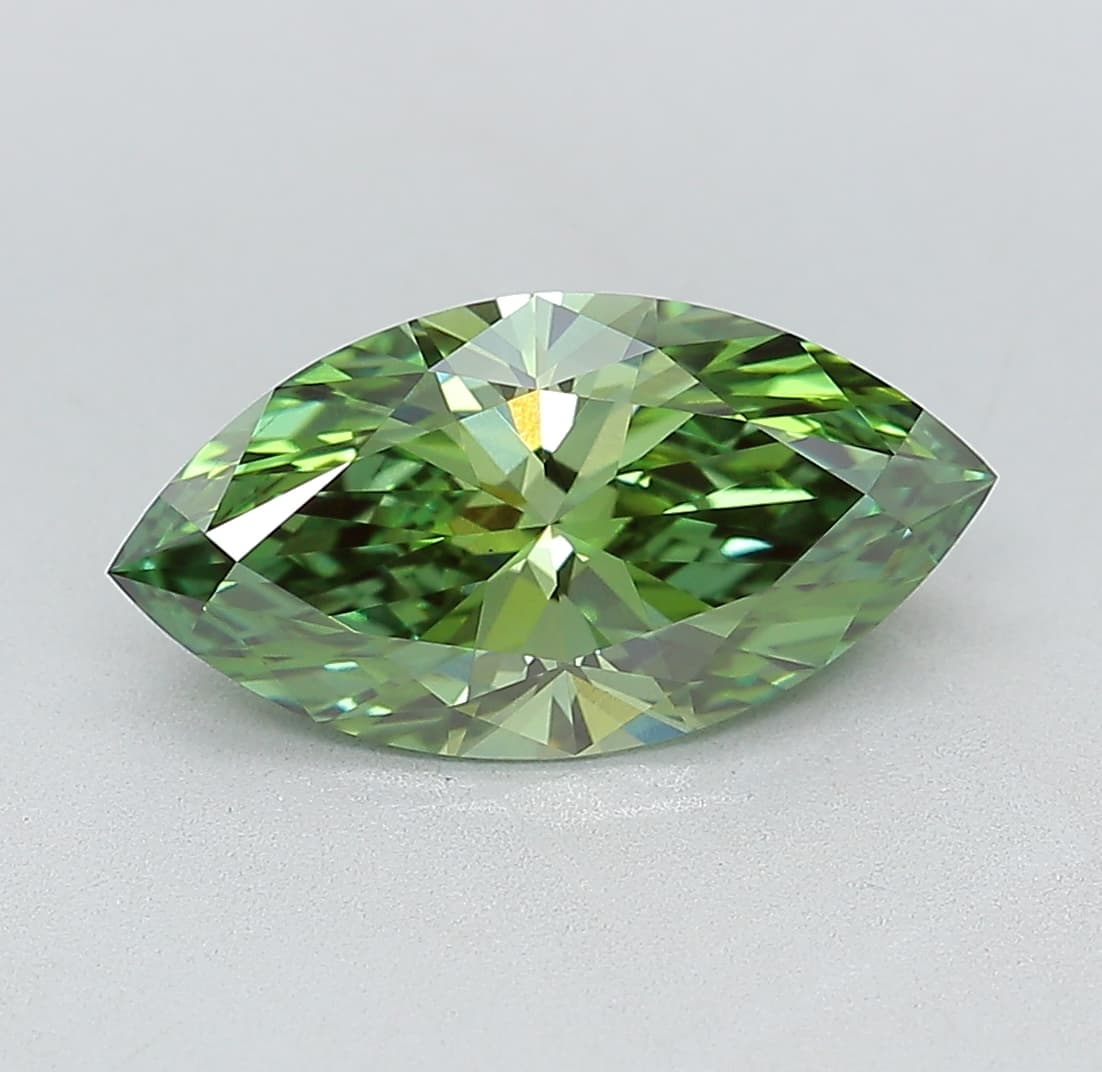
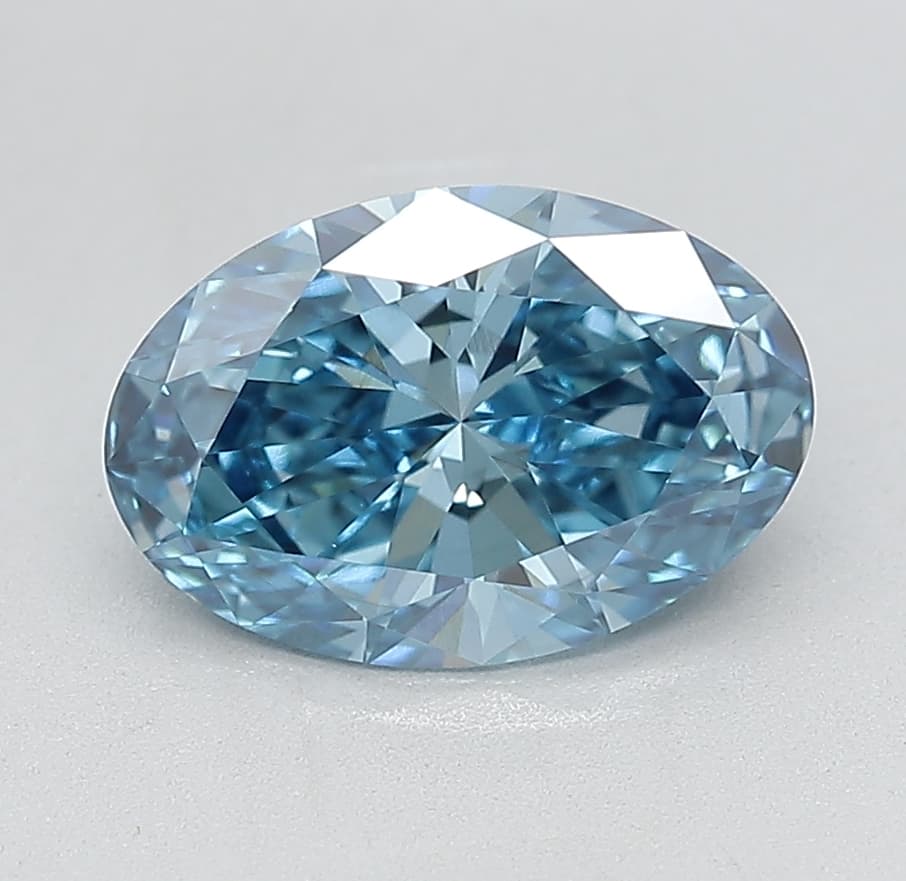
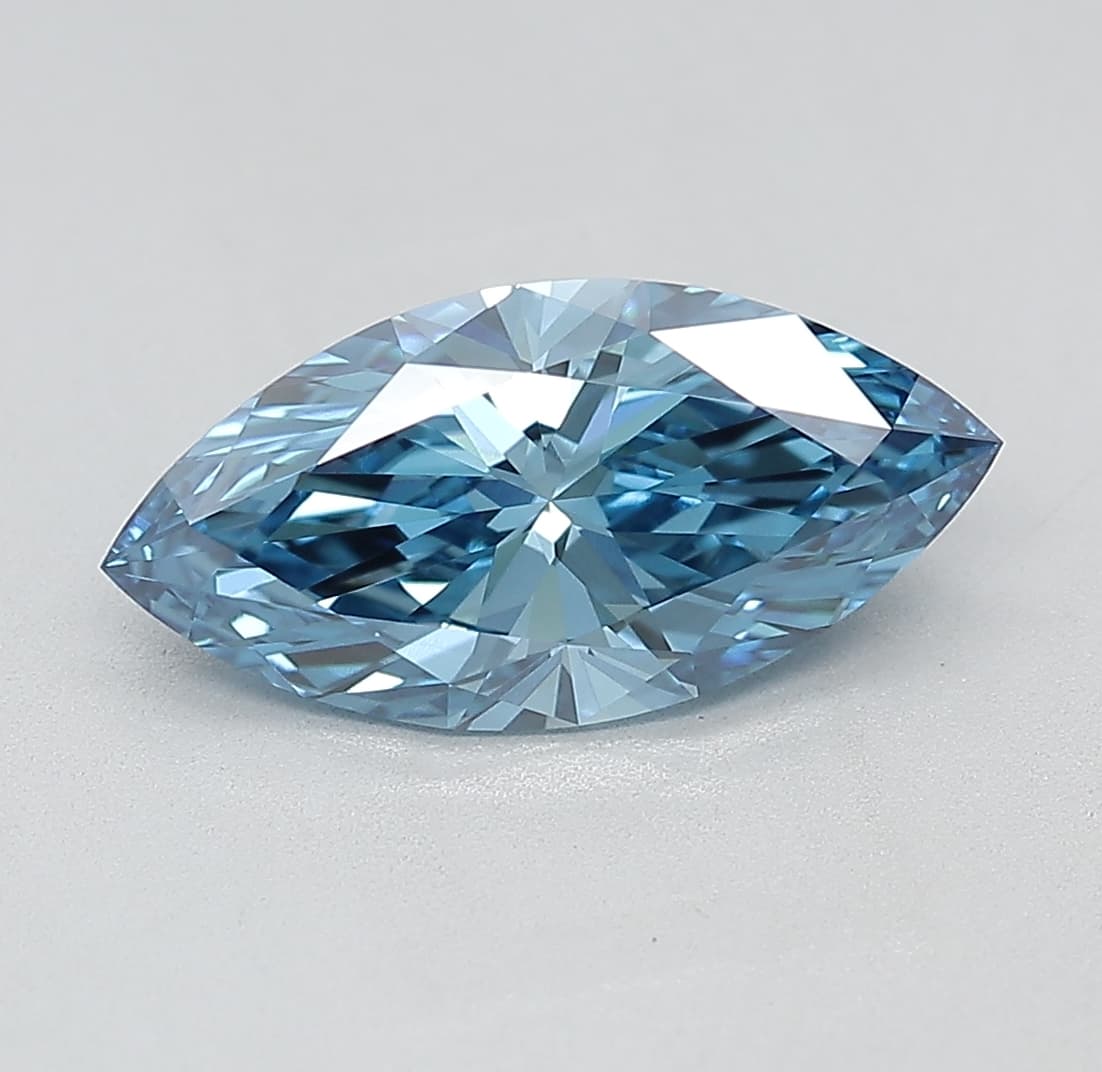
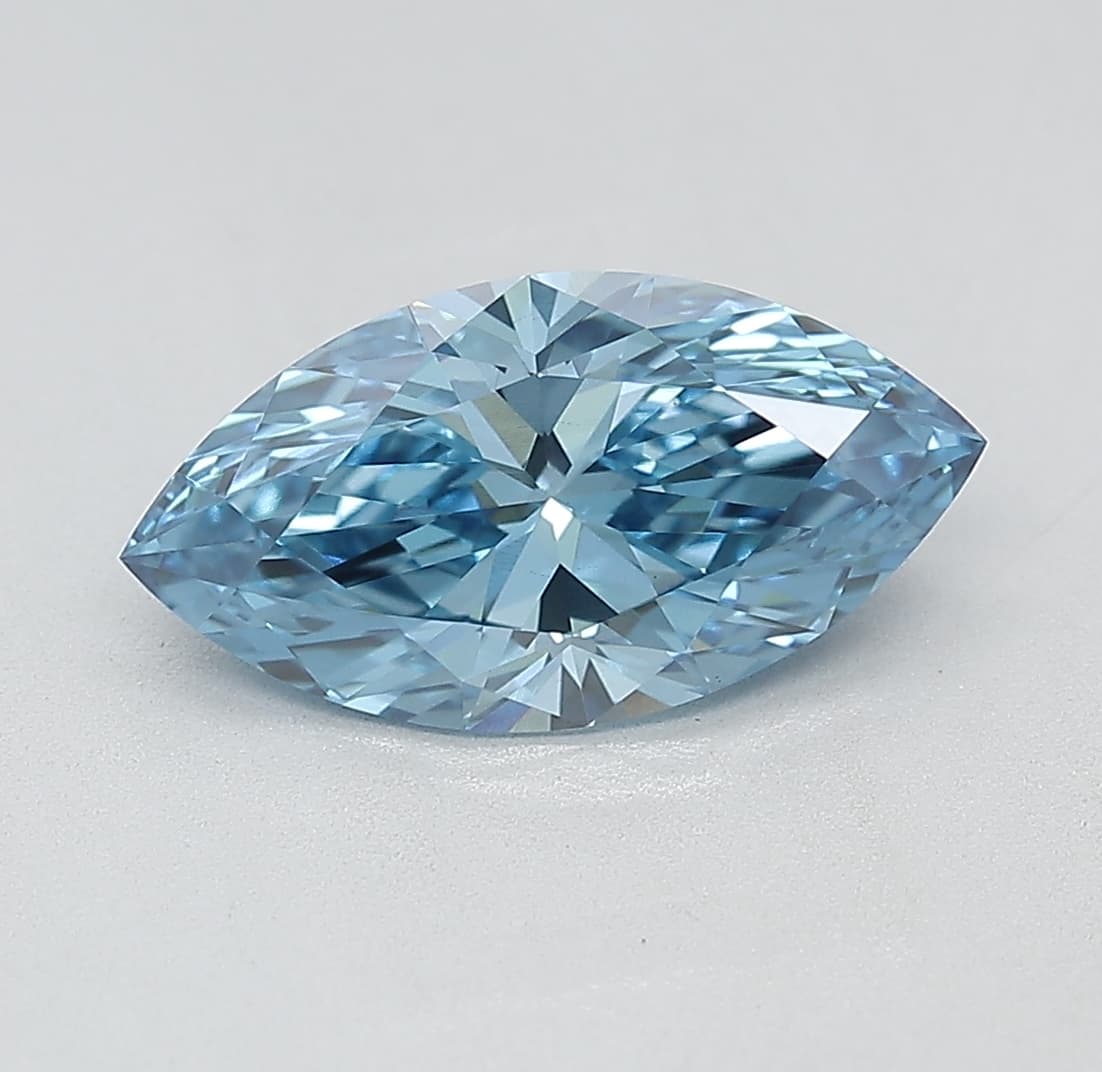
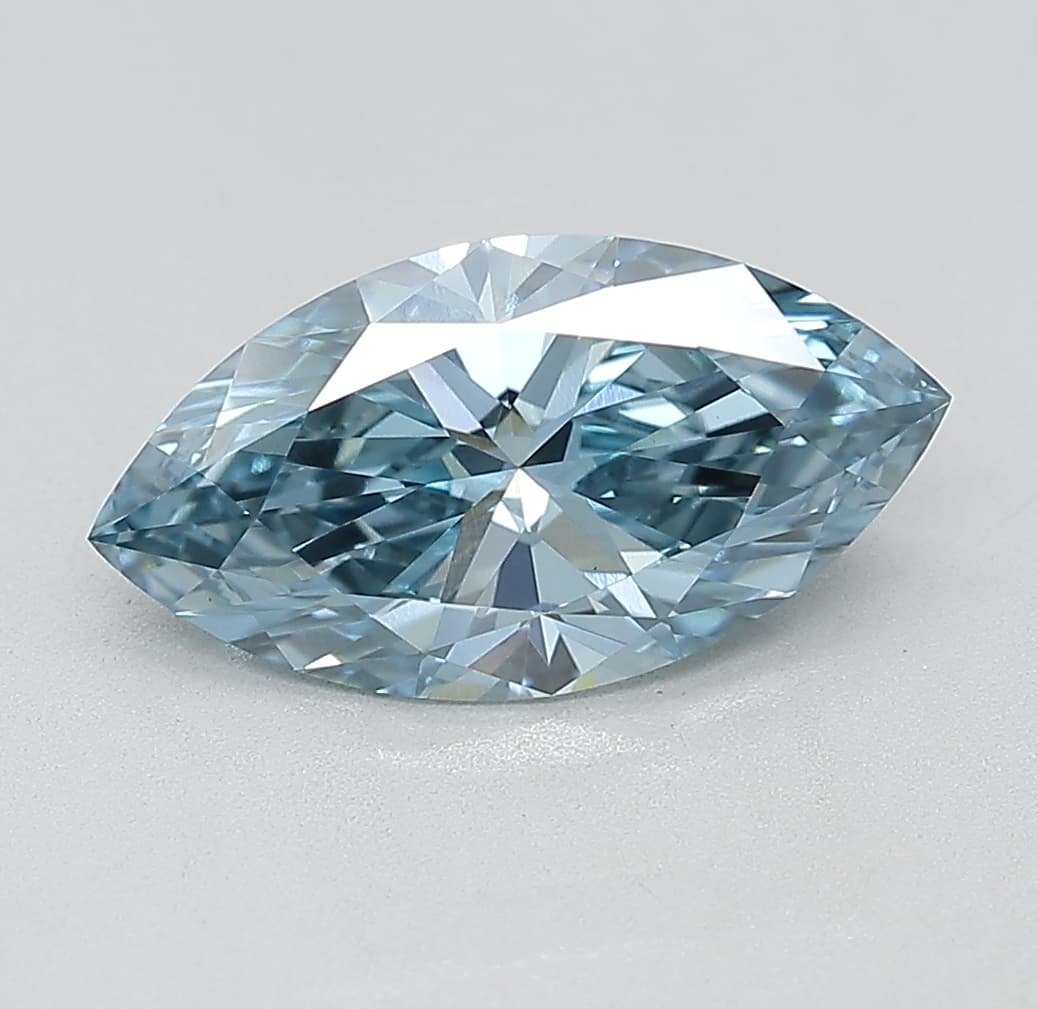
- Oval and marquise: elongated outlines that look large for their weight, with color often deepest toward the ends.
Color tends to look stronger in larger stones, because light travels further through them. A 1 carat green and a 2 carat green with the same grade will not look identical.
For clarity, saturated color can mask small inclusions, so a VS grade is often all a green stone needs. The real test is whether the stone looks eye-clean on video at normal viewing distance.
| Grade | Name | At 10× magnification | To the unaided eye |
|---|---|---|---|
| FL | Flawless | No inclusions or blemishes | Clean |
| IF | Internally Flawless | No inclusions; only minor surface blemishes | Clean |
| VVS1 | Very, Very Slightly Included 1 | Inclusions so slight they are very hard to find | Eye-clean |
| VVS2 | Very, Very Slightly Included 2 | Inclusions so slight they are very hard to find | Eye-clean |
| VS1 | Very Slightly Included 1 | Minor inclusions, difficult to somewhat easy to find | Usually eye-clean in brilliant shapes |
| VS2 | Very Slightly Included 2 | Minor inclusions, difficult to somewhat easy to find | Usually eye-clean in brilliant shapes |
| SI1 | Slightly Included 1 | Noticeable inclusions | Varies: some are eye-clean, some show an inclusion |
| SI2 | Slightly Included 2 | Noticeable inclusions | Varies: inclusions are more often visible |
| I1 | Included 1 | Obvious inclusions that may affect transparency and brilliance | Often visible |
| I2 | Included 2 | Obvious inclusions that may affect transparency and brilliance | Often visible |
| I3 | Included 3 | Obvious inclusions that may affect transparency and brilliance | Often visible |
Wearing green: settings and metals
Green is a confident color, and it suits several styles:
- Solitaire: lets the color speak for itself.
- Three-stone: a green center flanked by white diamonds makes the green look richer by contrast.
- Right-hand or cocktail ring: an obvious home for a bold color.
- Pendant: keeps the stone away from knocks and heat from ring repairs.
For metal, yellow gold gives a warm, vintage feel, platinum and white gold keep the green crisp and cool, and rose gold sets up a soft contrast.
You can see our current selection on the green lab-grown diamonds page, or start with the live suggestions below. Because the choice of green stones is smaller than for white, it can help to ask a diamond specialist to watch for a shape or size you have in mind.
Frequently asked questions
Is the color of a green lab-grown diamond treated?
Usually. A saturated green in a lab-grown diamond most often comes from irradiation after growth, sometimes combined with heating. The comments on the grading report usually state the growth process and what the lab found about treatment.
Is a green diamond the same as an emerald?
No. An emerald is a variety of beryl, with a hardness of about 7.5 to 8 on the Mohs scale, while a green lab-grown diamond is diamond, with a hardness of 10. The diamond is more resistant to scratches and knocks and shows more sparkle.
Can a ring with a green lab-grown diamond be resized?
Yes, but tell the jeweler the stone’s color is treated before any work that uses a torch. Strong heat can affect color produced by irradiation, so the jeweler should remove the stone or protect it first.
Is a green diamond a good choice for an engagement ring?
It can be. Diamond is the hardest gem material, so it stands up well to daily wear, and green gives a ring a distinctive look. Choose a color you love on video, check the report, and plan for the jeweler to protect the stone during any repairs.
Glossary terms in this article
More on Color & Carat in the journal.