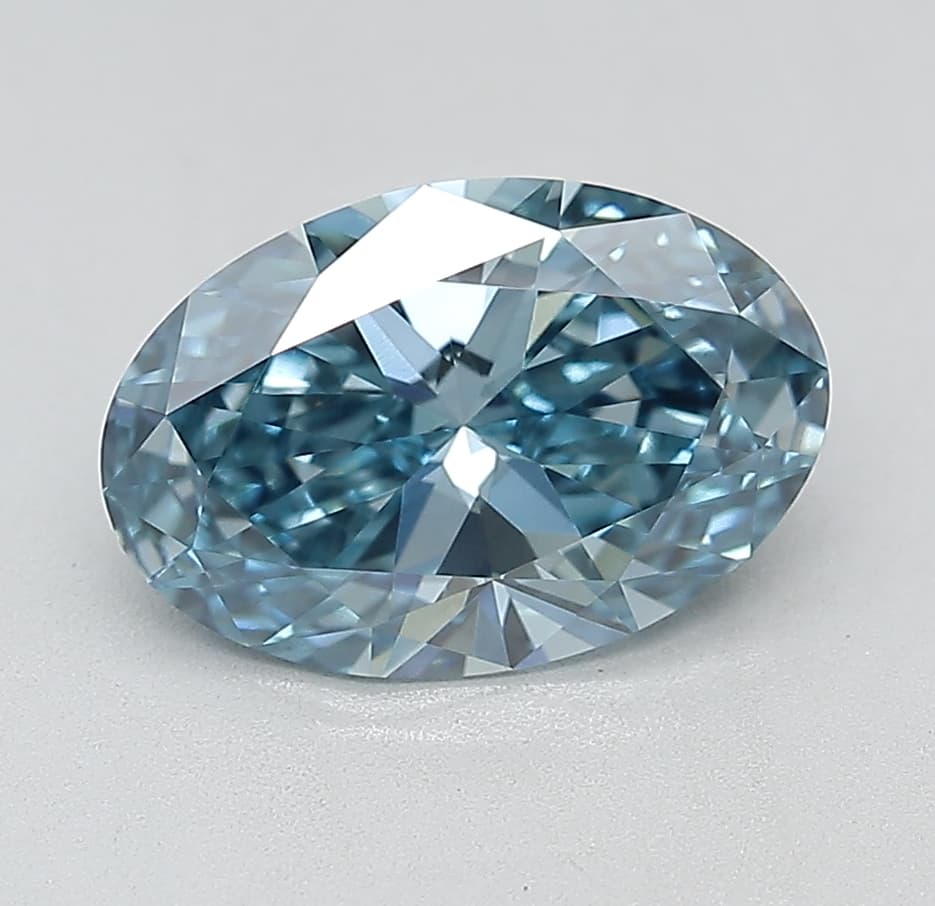
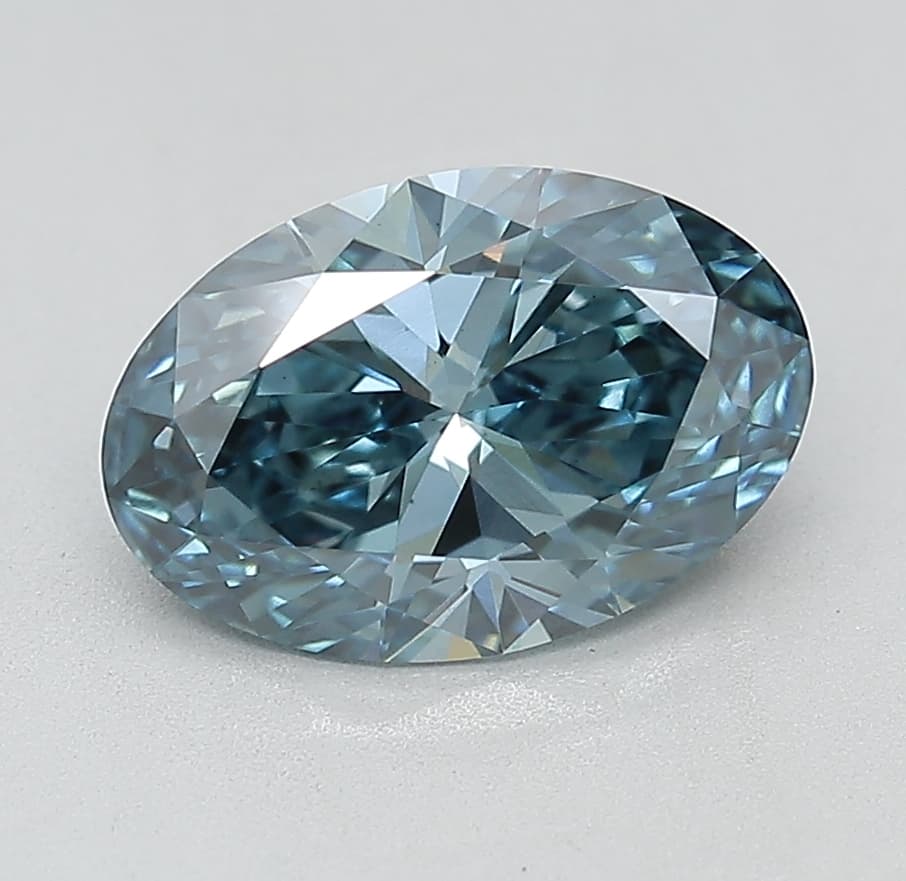
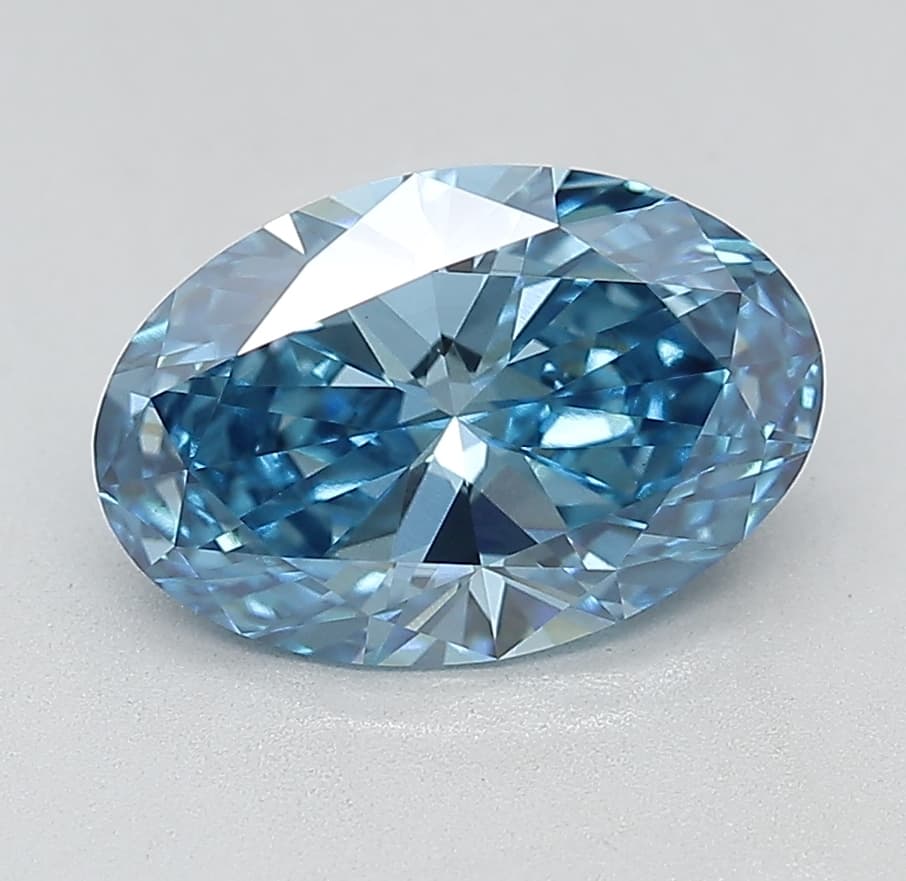
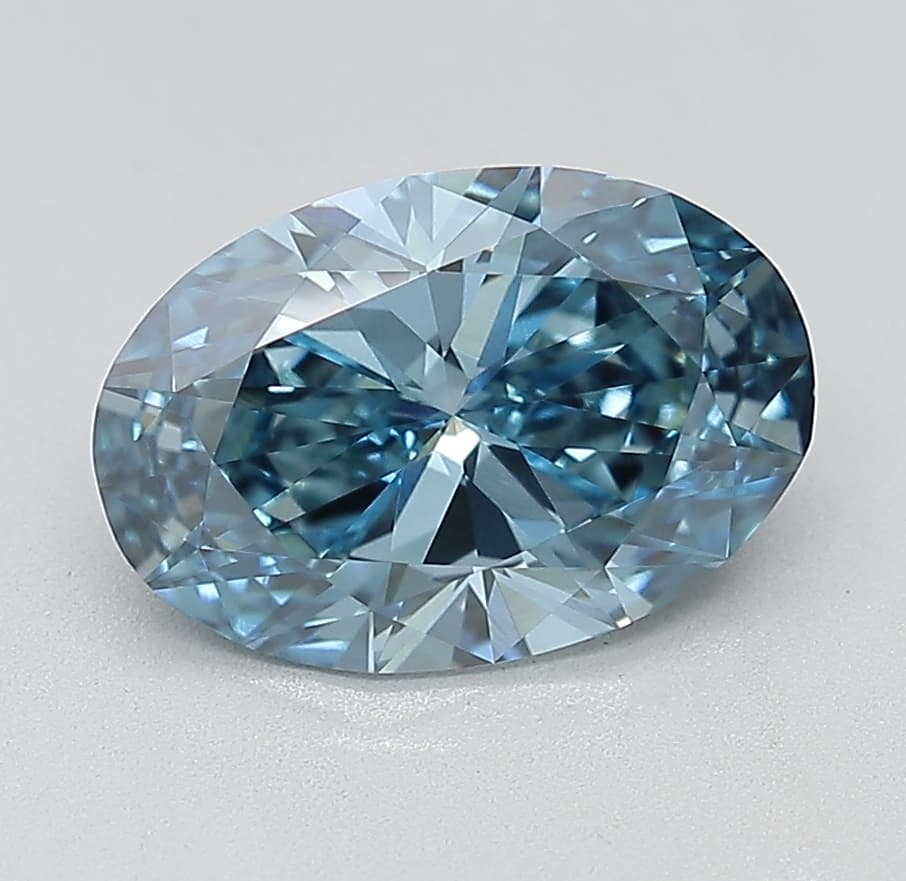
Color & Carat
Blue Lab-Grown Diamonds: How the Color Arises and How to Choose
By the Vanora Diamond team
Published Last reviewed 4 min read

Quick answer
Blue in a lab-grown diamond usually comes from boron taken up during growth, which makes the stone a type IIb diamond; blue can also be produced after growth by irradiation. Either way, the grading report’s comments usually state how the stone was grown and what the lab found about treatment. Choose the strength and tone of blue you like, then a shape and metal that suit it.
Where blue comes from: boron and type IIb
Boron is the classic cause of blue in diamond. When boron atoms take the place of some carbon atoms in the crystal, they absorb light toward the red end of the spectrum, and the light that is left looks blue. Diamonds colored this way are classed as type IIb, and boron gives them an unusual property for a diamond: they conduct electricity. The type IIa entry in our glossary explains how diamond types are sorted.
In a laboratory, boron can be introduced during growth by either method:
- HPHT: boron in the growth cell is taken up as the crystal forms.
- CVD: a boron-containing gas can be added to the gas mixture so boron is built into the layers as they grow.
The amount matters. Traces of boron can give a near-colorless HPHT diamond a faint blue cast, while larger amounts produce a clearly blue stone graded on the fancy color scale.
- 1A gas mixture, typically methane and hydrogen, flows into a low-pressure chamber.
- 2Energy turns the gas into a plasma.
- 3Carbon from the gas settles on thin, flat diamond seed plates and builds the crystal up layer by layer.
- 4The flat, tabular rough is then cut and polished.
- 1A large press creates roughly 5 to 6 gigapascals and 1,300 to 1,600 °C.
- 2Inside the growth cell, a molten metal such as iron, nickel or cobalt dissolves a carbon source.
- 3The carbon crystallizes on a small diamond seed, typically as a cuboctahedron.
- 4The rough is then cut and polished.
Blue from treatment after growth
Blue can also be created after a diamond has grown. Irradiation knocks carbon atoms out of their places in the crystal, and the vacancies left behind absorb red light. Depending on the stone and any further treatment, the result can range from blue to greenish blue.
A stone colored this way is not type IIb and does not conduct electricity, but to the eye it can look similar. That is why the report, not the color alone, tells you which you have:
- The comments usually state the growth process, for example CVD.
- They state what the lab found about post-growth treatment; see as-grown vs post-growth treatment.
- Some reports also note the diamond type.
Both routes give a laboratory-grown diamond, and the grades describe the stone as it is now. Some buyers prefer color that arose during growth; others are comfortable with disclosed treatment. If the color is treated, tell any jeweler who works on the ring, because strong torch heat can affect some treated colors.
| Compared | Boron during growth | Treatment after growth |
|---|---|---|
| Cause | Boron in the crystal absorbs light at the red end | Vacancies left by irradiation absorb red light |
| Diamond type | Type IIb | Not type IIb |
| Conducts electricity | Yes | No |
Reading a blue grade
A blue grade combines an intensity word with the hue, and sometimes a modifier. The common intensity terms run from light to strong, with Fancy Deep set apart as darker, not stronger:
| Grade | What it tends to look like |
|---|---|
| Faint, Very Light or Light Blue | A hint of blue, often only noticeable beside a white stone |
| Fancy Light Blue | Pale, icy blue |
| Fancy Blue | Clear, moderate blue |
| Fancy Intense Blue | Strong, obvious blue |
| Fancy Vivid Blue | The most saturated, brightest blues |
| Fancy Deep Blue | Darker, not stronger: blue with an inkier tone |
Modifiers come before the main hue. Greenish blue leans toward teal or aqua, and grayish blue looks steelier and softer. A pure "Blue" has no modifier. As with any fancy color, each grade covers a range, so compare videos rather than relying on the words alone. The difference between the top two grades is covered in Fancy Vivid vs Fancy Intense.
Light, bright or deep: choosing a tone
Two blue stones with similar saturation can still differ in tone, meaning how light or dark the color is. It is worth deciding which you prefer:
- Lighter blues look icy and let more sparkle through. They suit people who want color that is noticeable but not dominant.
- Bright, saturated blues read as blue from a distance and are the usual choice for a statement center stone.
- Deeper blues look rich in daylight but can look dark in dim light or in a deep setting.
Lighting shifts blue more than most colors. Daylight and cool white light flatter it; warm indoor light can make it look less vivid. Watch the video under neutral light, and if you are comparing two stones, compare them on the same screen at the same brightness.
Lighting shifts blue more than most colors: daylight and cool white light flatter it, while warm indoor light can make it look less vivid. Compare stones on the same screen, at the same brightness.
Shapes and metals for a blue diamond
Shape
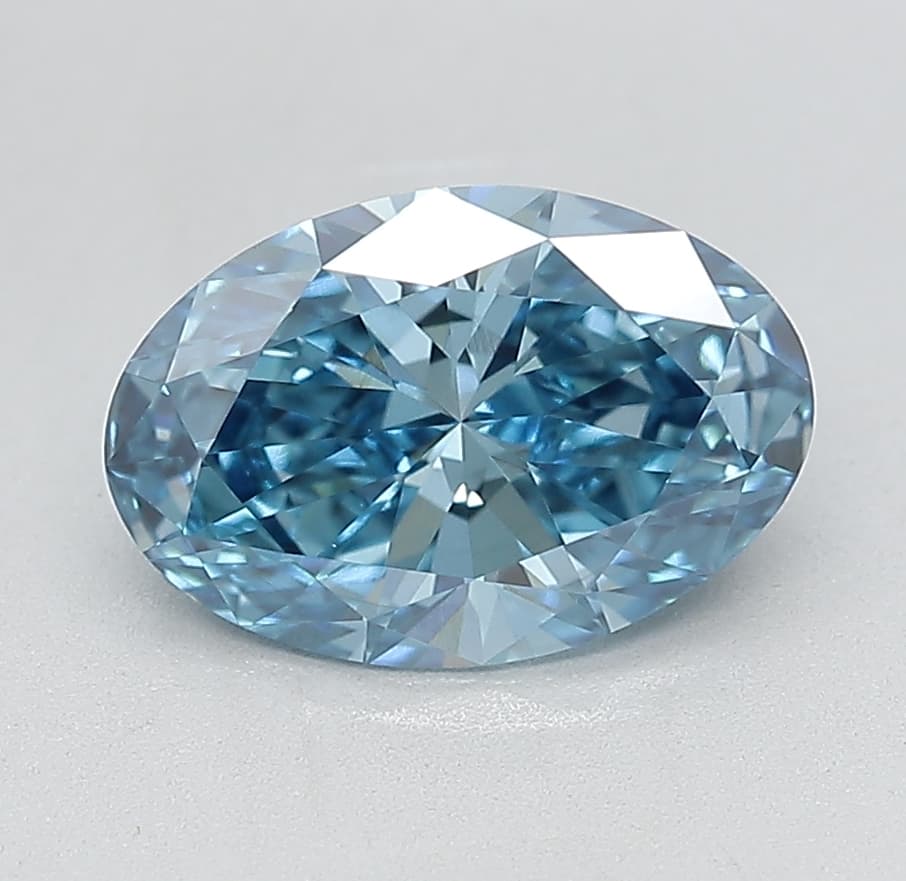
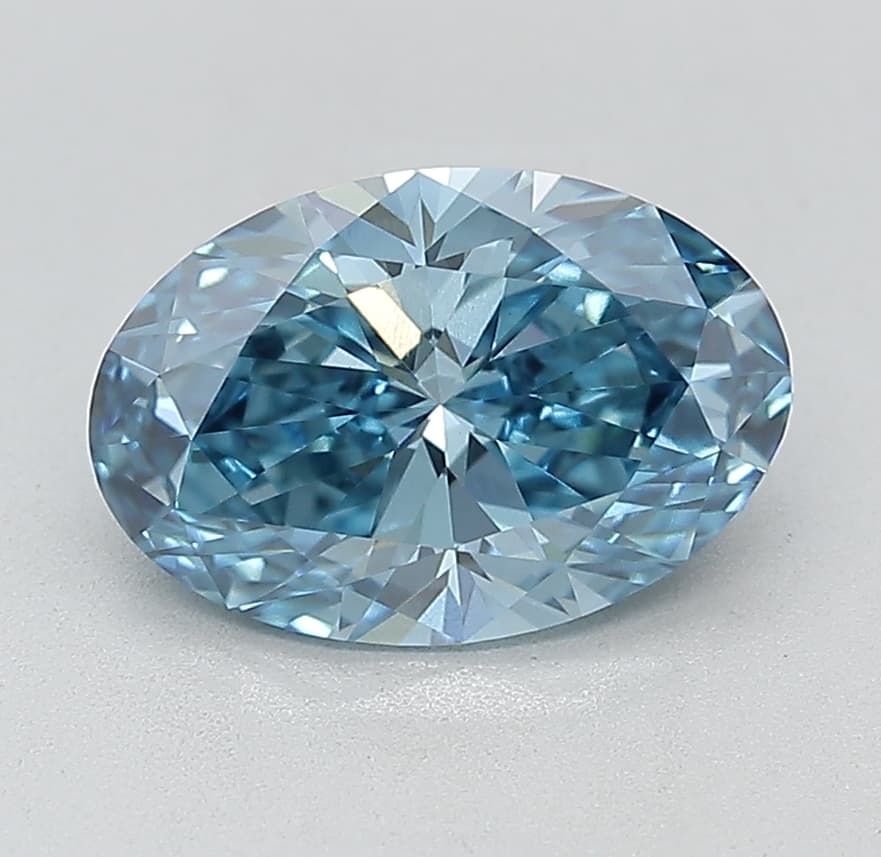
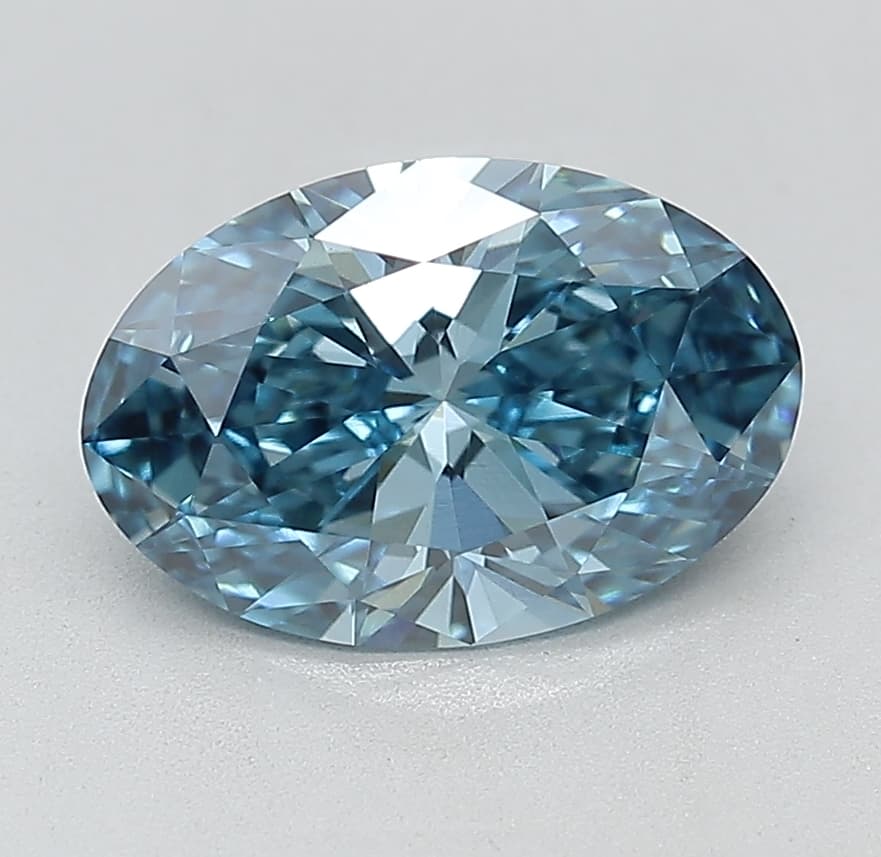
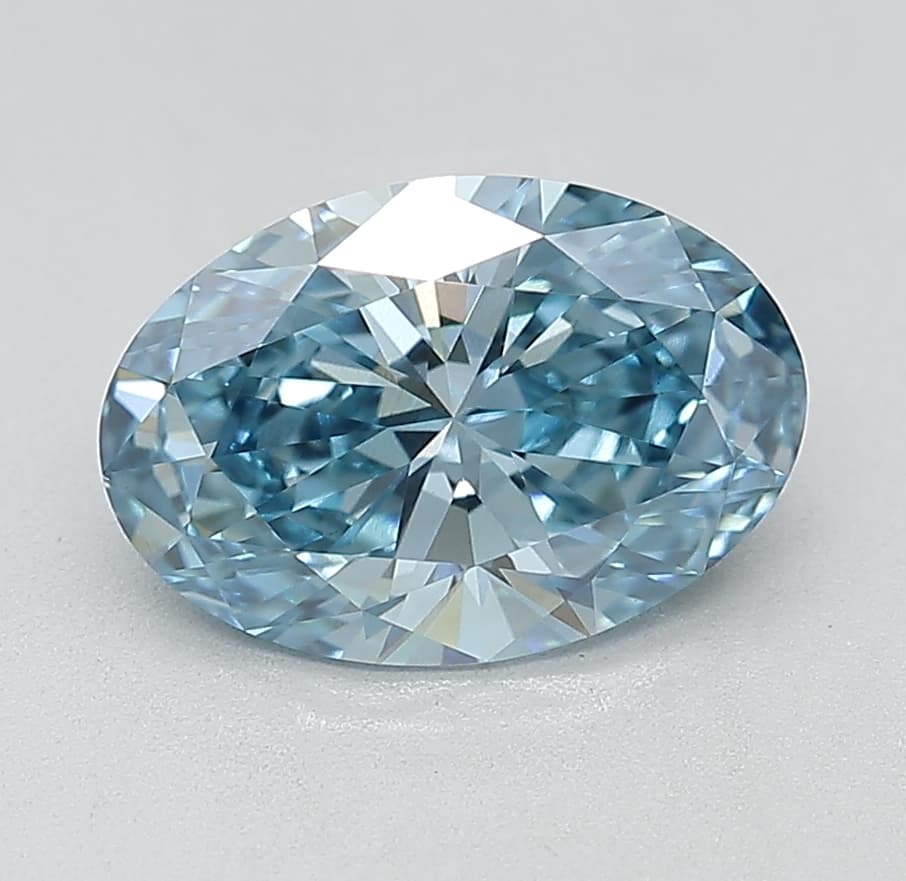
- Oval: a soft, elongated outline with lively sparkle; it looks large for its weight.
- Radiant: its faceting tends to concentrate color, so a radiant often looks a little more saturated than a round of the same grade.
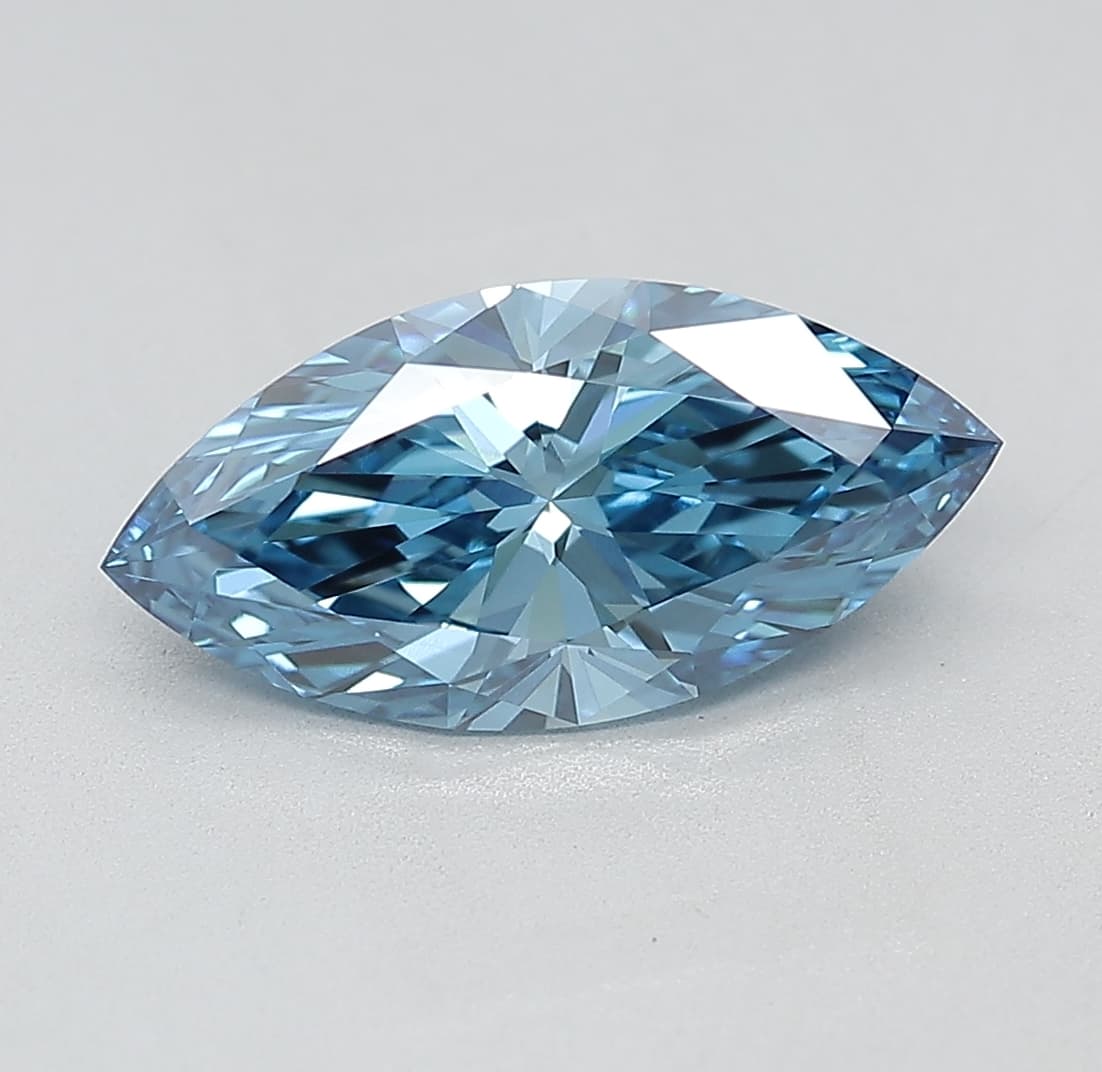
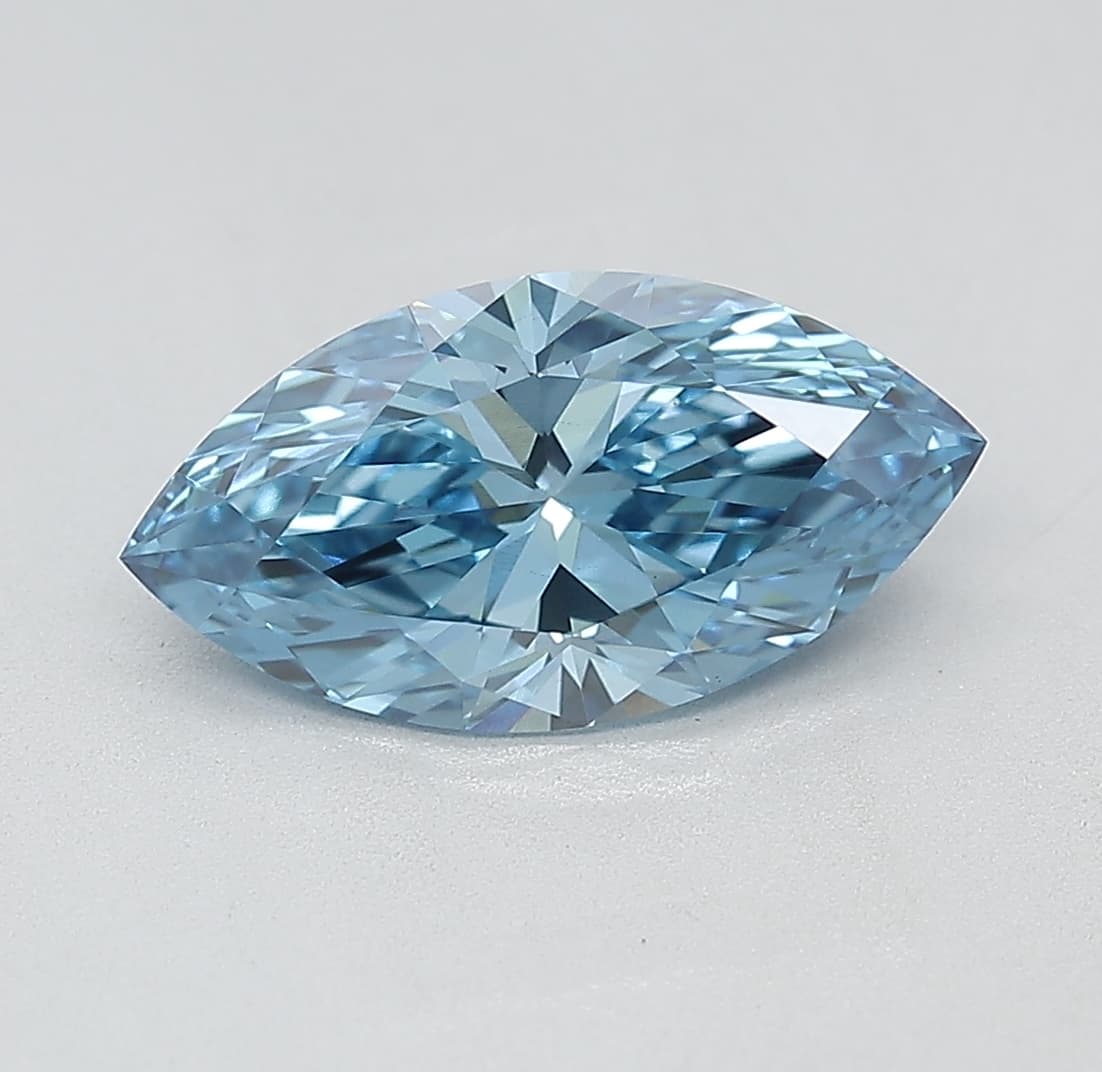
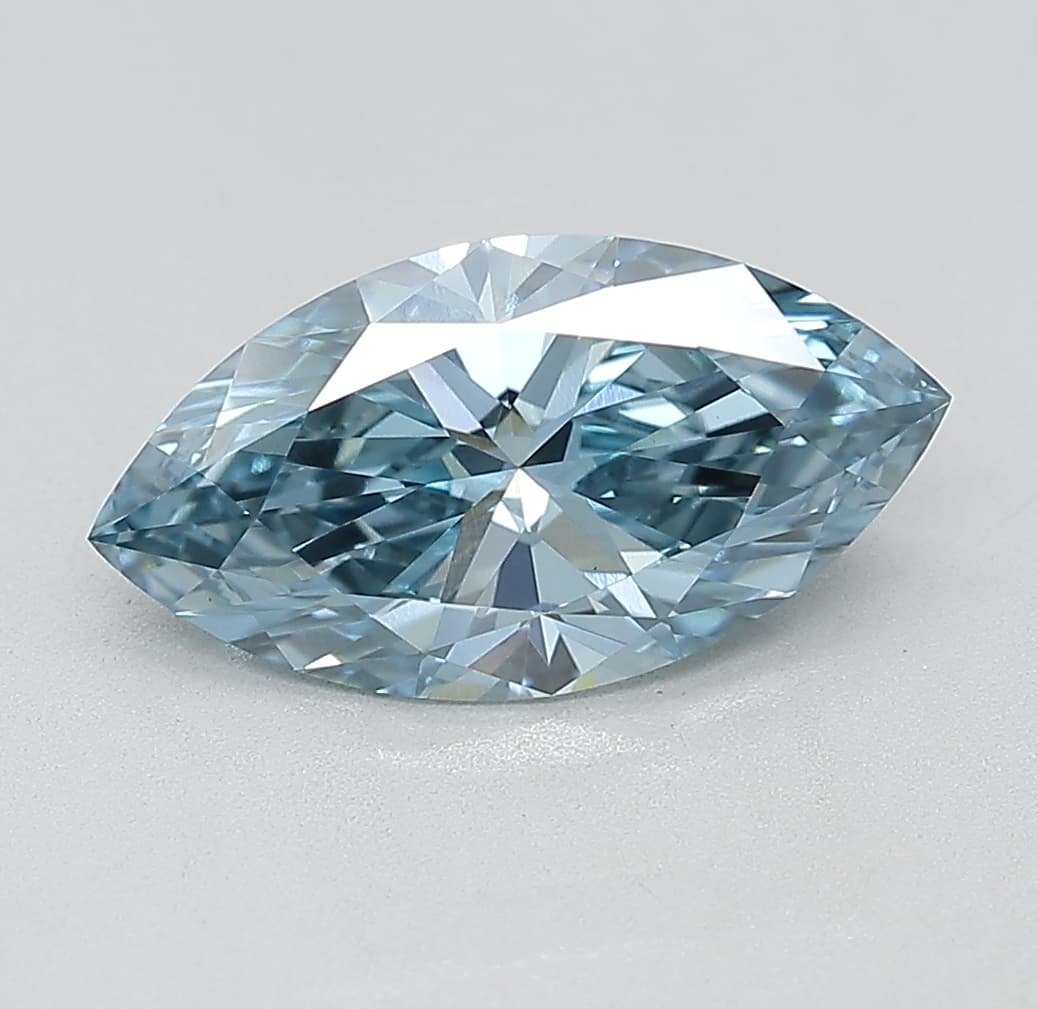
- Marquise: long and dramatic, with color often deepest toward the points; protect the points with V-prongs.
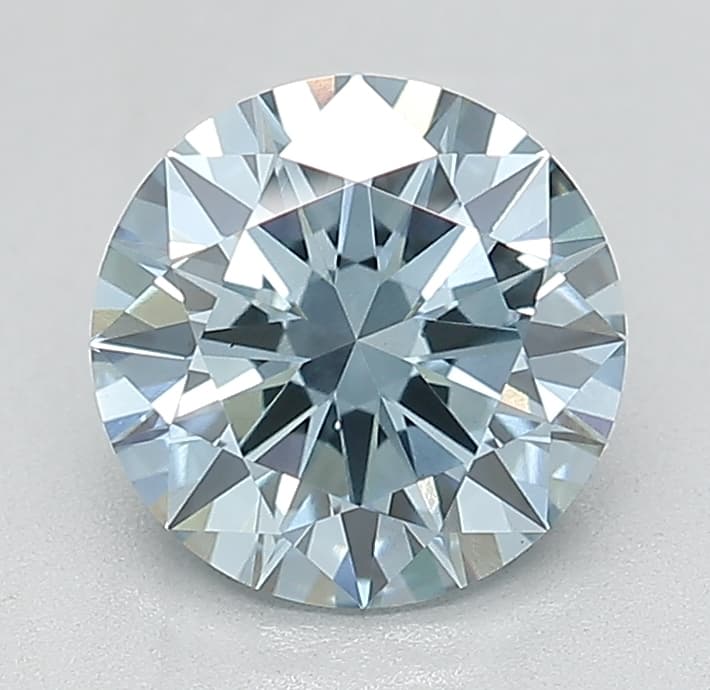
- Round: the most sparkle, with color that can look a little lighter face-up.
Metal
- Platinum and white gold suit the cool tone of blue and keep it looking crisp.
- Yellow gold sets up a warm-cool contrast that some people love; to some eyes it can nudge a blue slightly toward green.
- Rose gold gives a softer, romantic contrast.
White diamond side stones or a halo make blue look more saturated by contrast.
What to check before you buy
- The grade: intensity, hue and any modifier such as greenish or grayish.
- The comments: growth process, any treatment statement and, where given, the diamond type. Verify the report on the lab’s website (see IGI for how).
- The video or 360° view: look for even color across the face and a tone you like.
- Clarity: saturated color can mask small inclusions, but check the stone is eye-clean at normal viewing distance.
- Measurements: compare length and width in millimeters, not only carat weight.
You can browse all our blue lab-grown diamonds, or start with the live suggestions below. If you would like a second opinion on tone or a report comment, a diamond specialist is happy to look at the stones with you.
Frequently asked questions
Why are some lab-grown diamonds blue?
Usually because boron was taken up during growth. Boron absorbs light toward the red end of the spectrum, so the stone looks blue, and diamonds colored this way are type IIb. Blue can also be produced after growth by irradiation, which the grading report discloses.
Are blue lab-grown diamonds treated?
Some are and some are not. Blue from boron arises during growth, while blue from irradiation is a post-growth treatment. The comments on the grading report usually state the growth process and what the lab found about treatment, so check them for each stone.
Is a blue lab-grown diamond the same as a sapphire?
No. A sapphire is corundum, a different mineral, while a blue lab-grown diamond is diamond: pure carbon, rating 10 on the Mohs hardness scale against 9 for sapphire. Diamond also shows more fire, the flashes of spectral color, than sapphire does.
What metal looks best with a blue diamond?
It is a matter of taste. Platinum and white gold suit the cool tone of blue and keep it crisp, yellow gold gives a warm-cool contrast, and rose gold a softer one. White diamond side stones make the blue look stronger by contrast.
Glossary terms in this article
More on Color & Carat in the journal.