Shapes & Cuts
Heart-Shaped Diamonds: Why Size and Symmetry Shape the Silhouette
By the Vanora Diamond team
Published Last reviewed 5 min read

Quick answer
A heart-shaped diamond only reads as a heart when its outline is clear, and that depends on two things: enough size for the lobes, cleft and point to show once prongs cover the edges, and close symmetry between the two halves. Small hearts, roughly under half a carat, can blur into a rounded triangle, so choose a size and a setting that keep the outline visible. Judge it by the millimeter width, the ratio and a face-up photo rather than by carat weight alone.
Why does size matter more for a heart than for other shapes?
A round diamond is recognizable at any size: a circle is a circle. A heart is defined by details: two rounded lobes, the cleft that dips between them and a single point at the bottom. Those details are small parts of an already small object, and three things work against them as the stone gets smaller:
- Prongs cover part of each lobe and the point, taking a bigger share of a small outline.
- Sparkle from the brilliant-style faceting can overwhelm the edges, so the eye sees a bright shape rather than a crisp outline.
- Viewing distance: rings, pendants and earrings are usually seen from a little way off, where fine details disappear first.
The result is that a small heart can read as a rounded triangle. As the stone grows, the cleft and lobes become easier to see and the shape speaks for itself. Our heart guide covers the proportions; this article is about getting the silhouette right.
How big should a heart-shaped diamond be?
There is no rule, but the outline becomes harder to read in stones under about half a carat, especially once prongs are added. Rather than thinking in carats, think in millimeters, because the width is what you actually see. For example, a hypothetical 2 carat heart measuring 8.6 × 8.9 mm (length × width) is close to 9 mm across, a size at which the lobes and cleft read clearly in a ring.
| Where it is worn | What helps the shape read |
|---|---|
| Engagement or dress ring | Enough width for the cleft to show between the prongs |
| Pendant | A slightly larger stone, since it is seen from further away |
| Earrings | A bezel or fine prongs, and a matched pair |
Carat weight and size are not the same thing. Depth and girdle thickness affect how much of the weight shows face-up, so compare the length and width on the reports. Our carat weight guide explains the difference.
| Weight | Stones | Median length (mm) | Median width (mm) |
|---|---|---|---|
| 2.00–2.19 ct | 12 | 7.66 | 8.87 |
| 3.00–3.29 ct | 4 | 9.13 | 10.00 |
What does good symmetry look like in a heart?
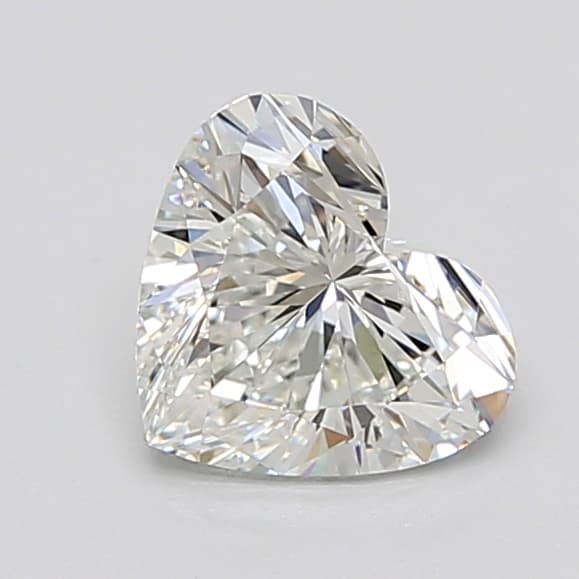
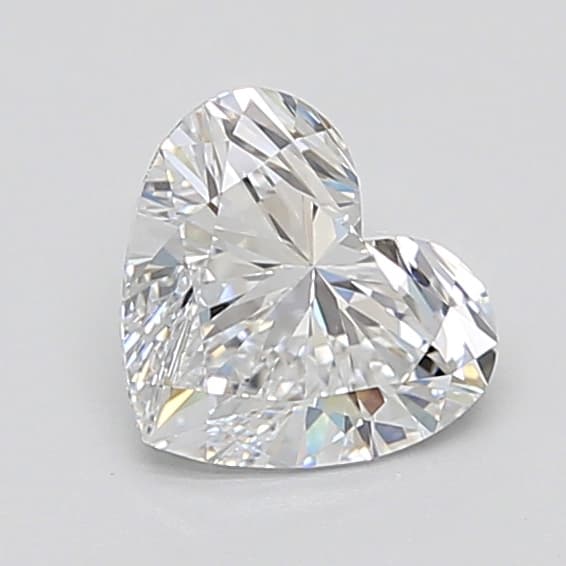
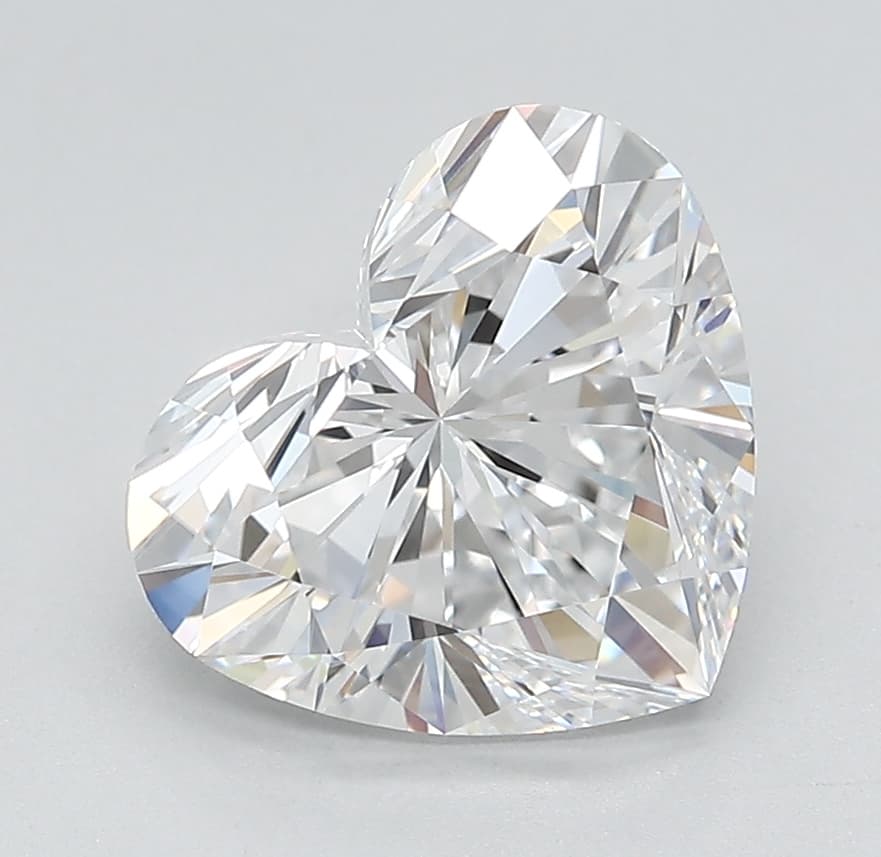
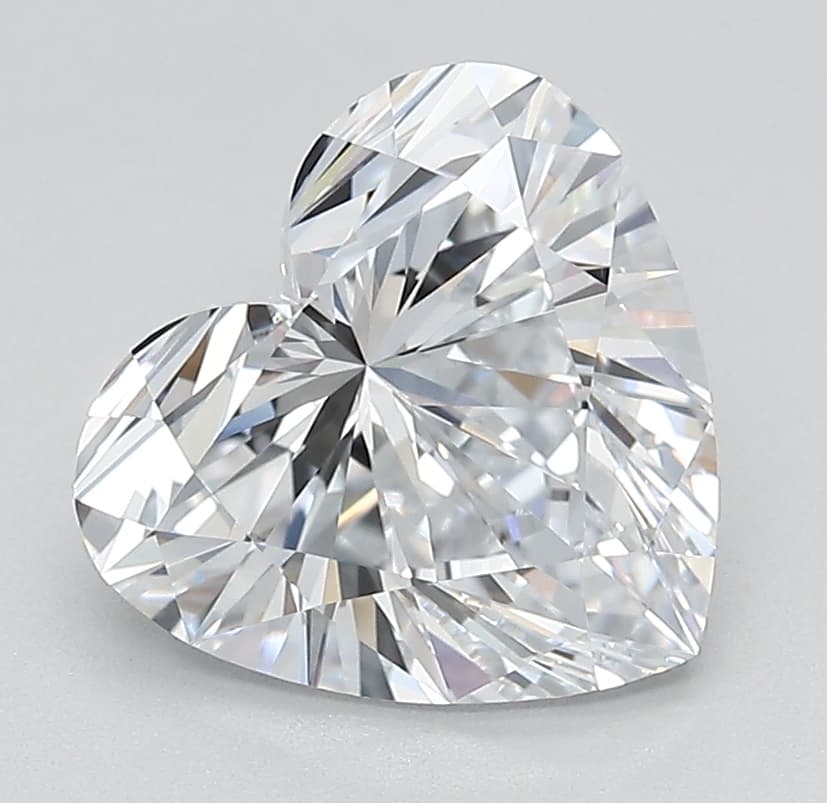
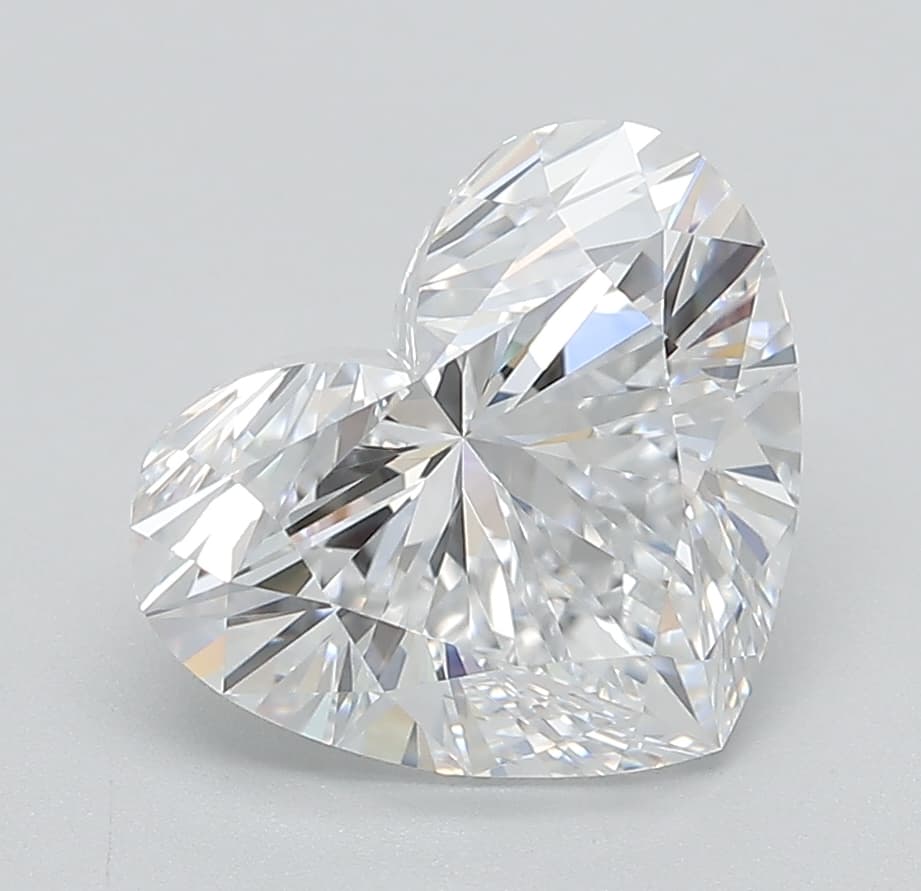
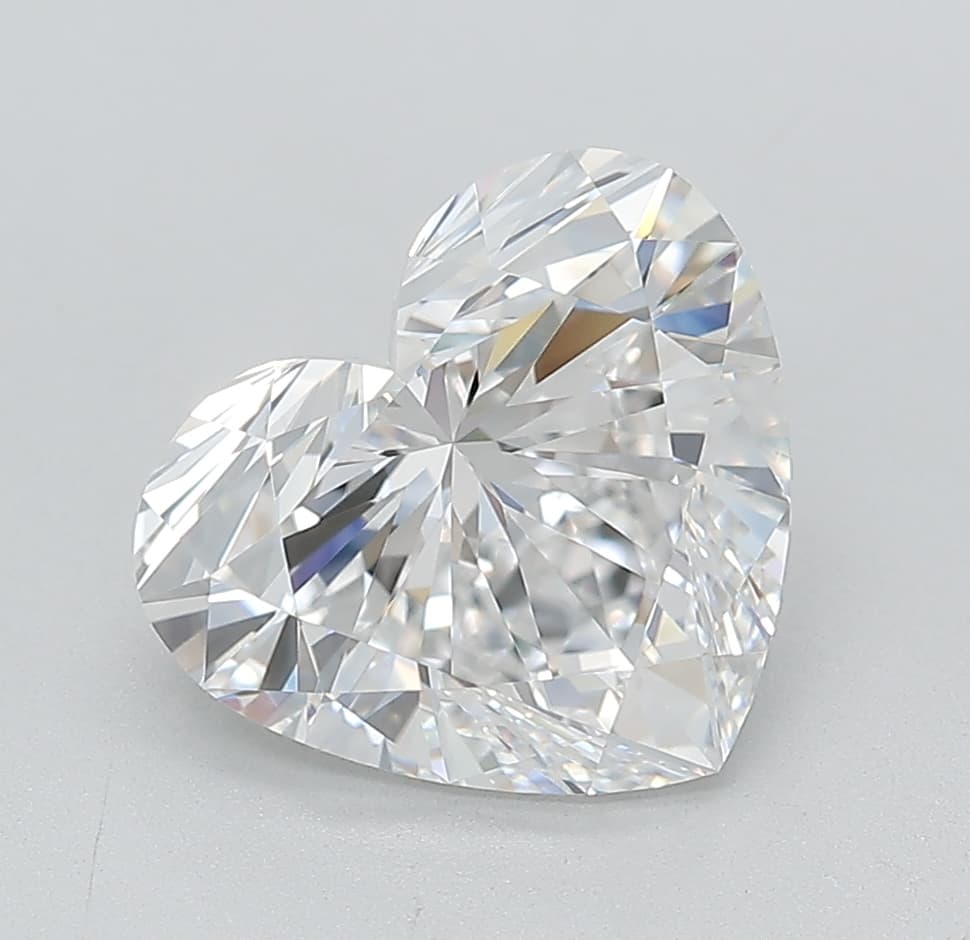
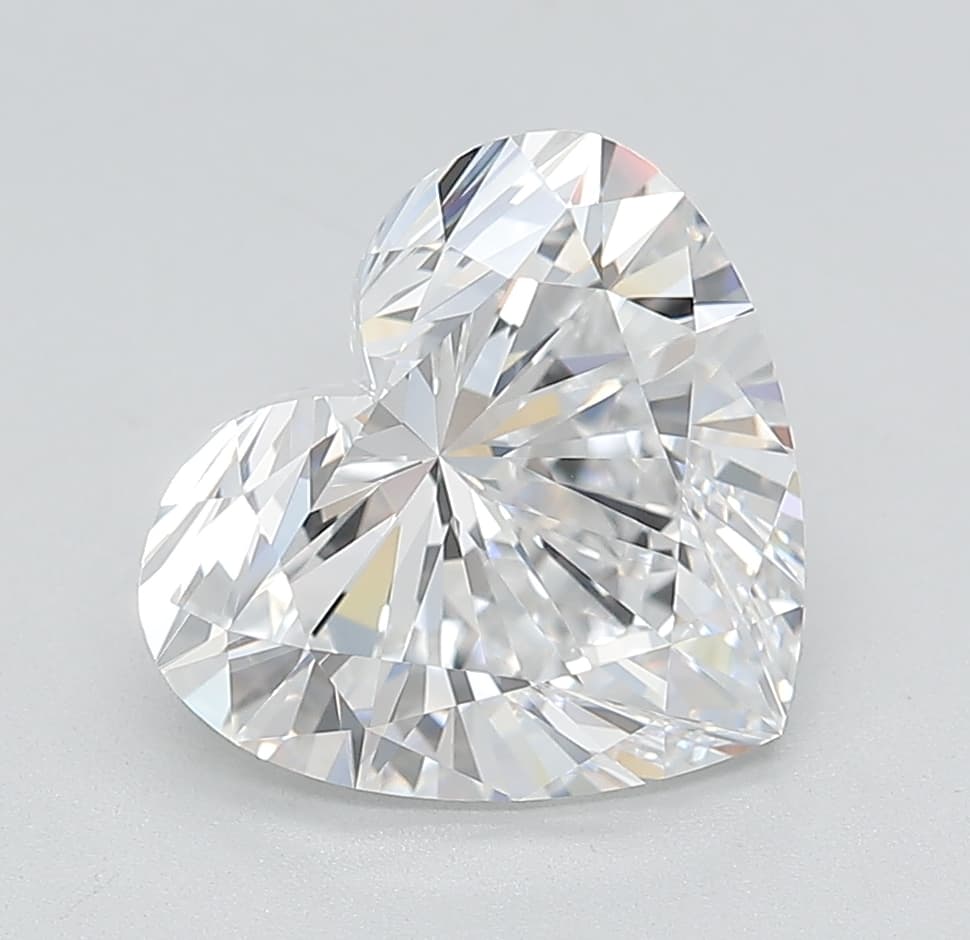
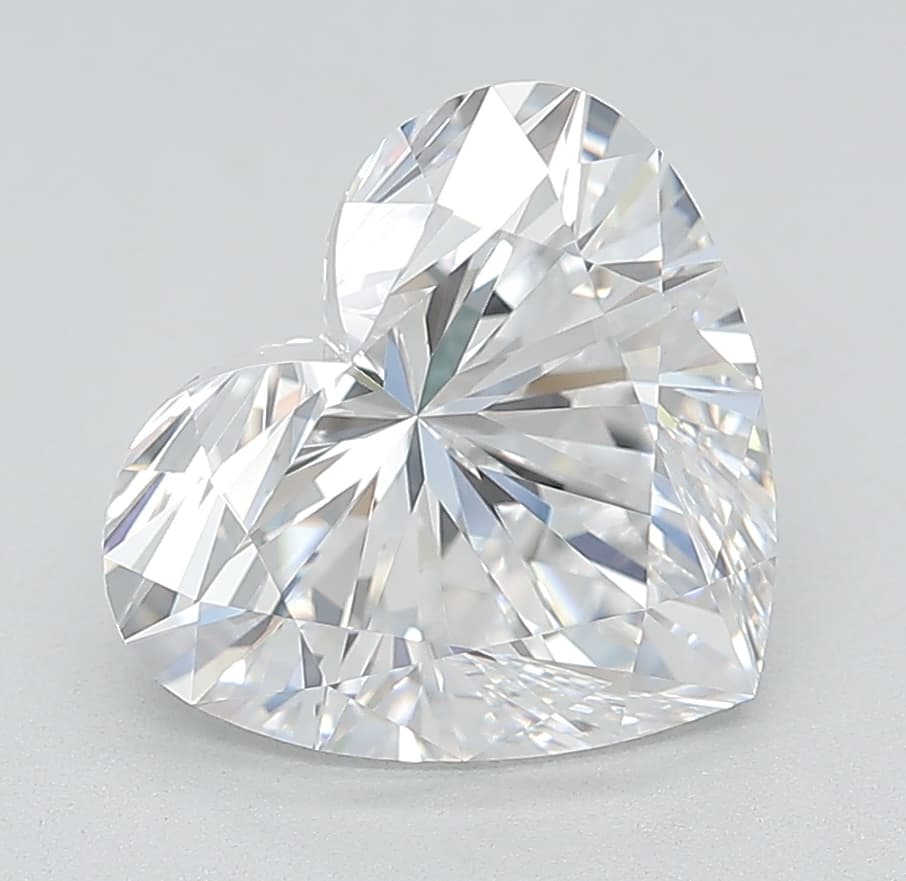
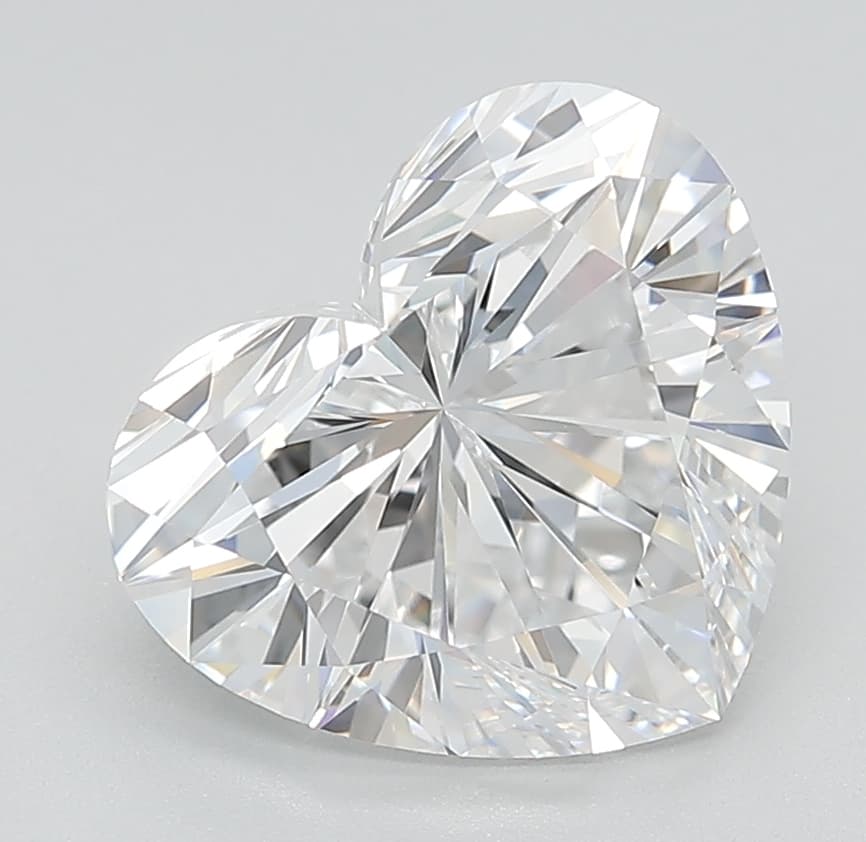
A heart has one axis of symmetry, running from the bottom of the cleft to the tip of the point. Because the shape is so familiar, even small imbalances are easy to see. Use a face-up photo or the 360° view on our stone pages and check:
The lobes
Both lobes should be the same size, the same height and evenly rounded. One lobe that is larger or higher than the other is the most common fault in heart shapes.
The cleft
The cleft should be clearly defined and centered between the lobes. A shallow, vague cleft is one of the main reasons a heart reads as a triangle or a rounded blob.
The point
The point should be crisp and sit exactly on the central axis, not twisted to one side.
The wings
The sides running from the lobes to the point should curve gently and evenly. Bulging wings make the heart look chubby; flat ones make it look thin and angular.
The symmetry grade on the report is a good filter, but your eye on the outline matters more. Many stones also have an ASET image, which shows how evenly the stone returns light across both halves.
Fuller or slimmer: choosing a ratio
For a heart, the length-to-width ratio is the length (from the top of the lobes to the point) divided by the width. Commonly cited guidelines put it at about 0.90 to 1.10, though sources vary.
| Ratio | How it tends to look |
|---|---|
| Below about 0.90 | Wide and generous |
| About 0.90 to 1.00 | Full and balanced |
| About 1.00 to 1.10 | Slightly longer and slimmer |
| Above about 1.10 | Long and narrow |
A slightly wide heart can look soft and generous, and some people prefer it. Just check that it still reads as a heart rather than a triangle: a wide outline needs a well-defined cleft to keep its shape. A narrow heart can look elegant, but at the far end of the range it starts to look stretched.
Which settings keep the outline clear?
The setting can sharpen or blur the silhouette:
- Three prongs: a V-prong over the point and one prong at each lobe. This leaves the cleft and most of the outline visible, and protects the point.
- Five prongs: adds prongs along the sides for security, at the cost of covering more of the edge.
- A prong in the cleft: some designs add one; it secures the stone but can hide the very feature that defines the shape, so look at a photo of the finished design first.
- Bezel: a rim of metal that follows the whole outline. It protects every edge and draws the heart shape in metal, which helps small stones read clearly.
- Halo: a ring of small stones around the heart repeats the outline and can make a smaller center stone read more clearly as a heart.
Whatever the design, the point is the most exposed part of the stone and needs a V-prong or bezel.
Some designs add a prong in the cleft. It secures the stone but can hide the very feature that defines the shape, so look at a photo of the finished design first.
Color, clarity and matched pairs
Like other shapes with a point, a heart can show body color a little more at the point and along the edges than in the center. In the colorless range this is rarely noticeable. For clarity, aim for an eye-clean stone, and look closely at anything near the cleft or the point, where an inclusion matters for durability as well as looks.
For earrings, the two hearts need to match in outline, ratio, size and color, which is harder with a heart than with simpler shapes because any difference in the lobes or cleft shows when the two are seen side by side. If you are looking for a pair, one of our diamond specialists can look for a matched pair in our stock.
Choosing a heart-shaped diamond
- Start with the width in millimeters, keeping in mind where the stone will be worn.
- Check the outline: even lobes, a crisp, centered cleft and a point on the axis.
- Pick a ratio that reads as a heart to you.
- Choose a setting that protects the point without hiding the cleft.
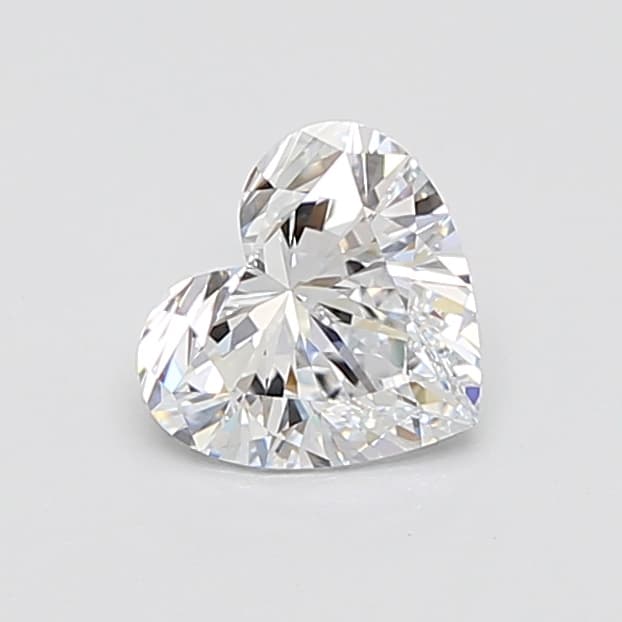
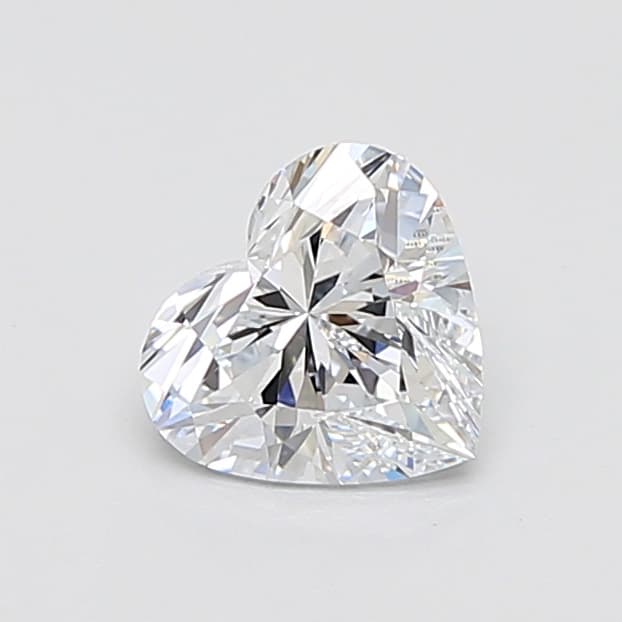
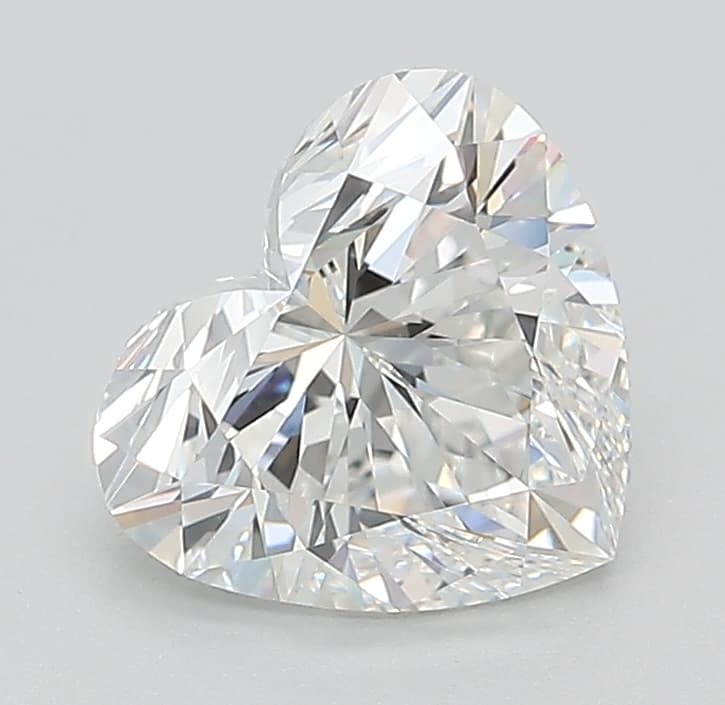
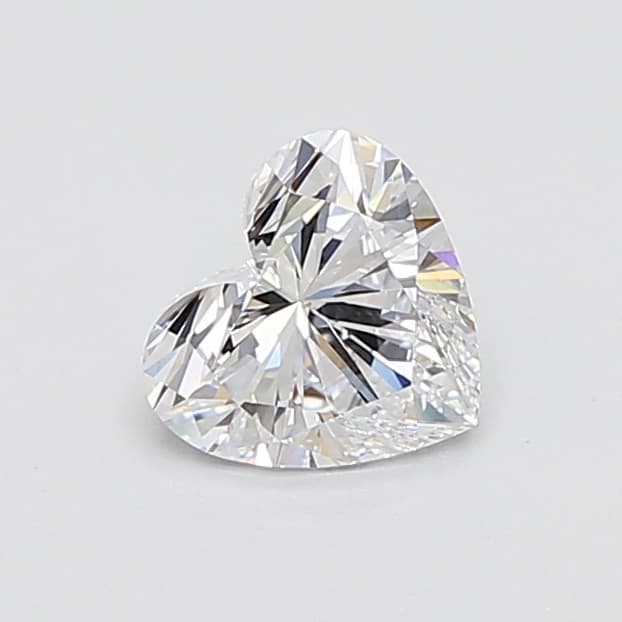
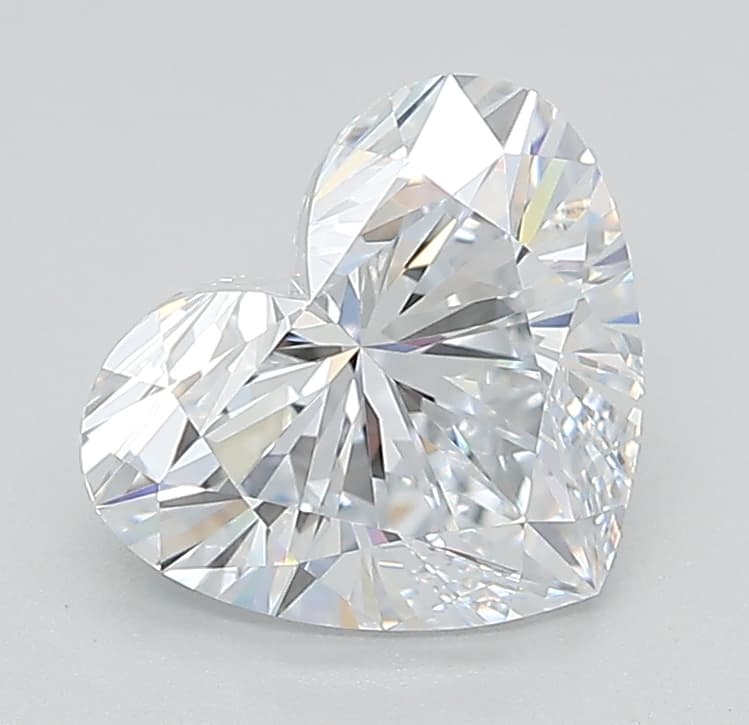
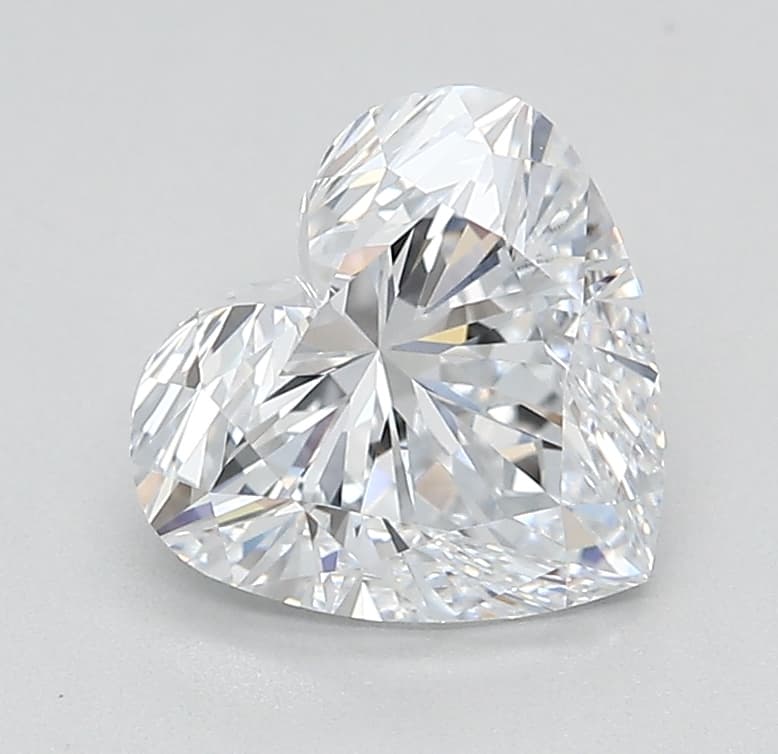
The suggestions below show live heart-shaped lab-grown diamonds in two size bands, from 1 to 3 carats and from 3 carats up, all at sizes where the outline reads clearly. If you would like a second pair of eyes on the symmetry, a specialist can review stones with you.
Frequently asked questions
What is the smallest size that still looks like a heart?
There is no fixed size, but the outline becomes harder to read in stones under about half a carat, especially once prongs cover the lobes and point. Compare the width in millimeters and choose a setting, such as a bezel, that keeps the edges visible.
Why do some heart-shaped diamonds look like triangles?
Usually because the cleft is shallow or poorly defined, the stone is small, or prongs cover too much of the lobes. A very wide outline can add to the effect. A crisp, centered cleft and even lobes keep the heart shape clear.
What setting is best for a small heart-shaped diamond?
A bezel that follows the outline, or three fine prongs with a V-prong over the point, keeps the shape visible. A halo of small stones around the heart can also help the outline read clearly.
Can I find a matched pair of heart-shaped diamonds for earrings?
Yes, but matching takes care: the two stones should agree in outline, ratio, size and color. A specialist can look for a matched pair in our stock.
Glossary terms in this article
More on Shapes & Cuts in the journal.