Shape guide
Heart-Shaped Lab-Grown Diamonds: Ratio, Lobes and What to Check
Last reviewed
Quick answer
A heart-shaped diamond is a modified brilliant with two rounded lobes, a cleft between them and a single point at the bottom. Commonly cited guidelines put its length-to-width ratio at about 0.90 to 1.10, depth at 56% to 62% and table at 53% to 63%, though sources vary. Look for even lobes, a crisp cleft, a moderate bow-tie and a well-protected point.
What is a heart-shaped diamond?
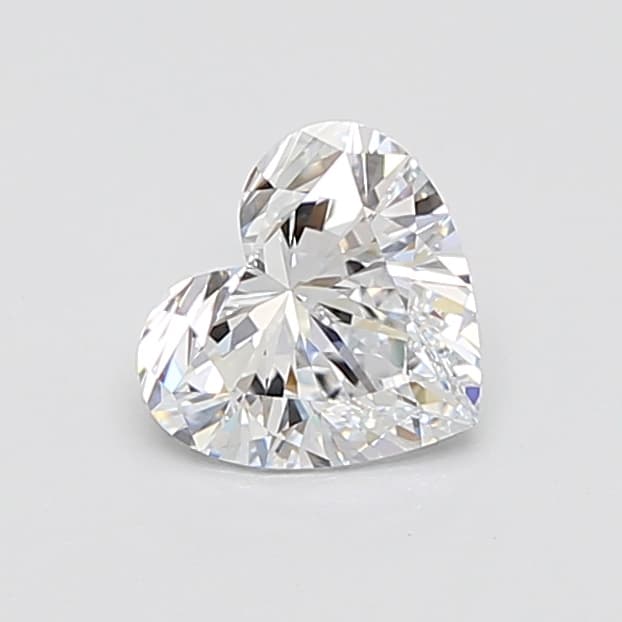
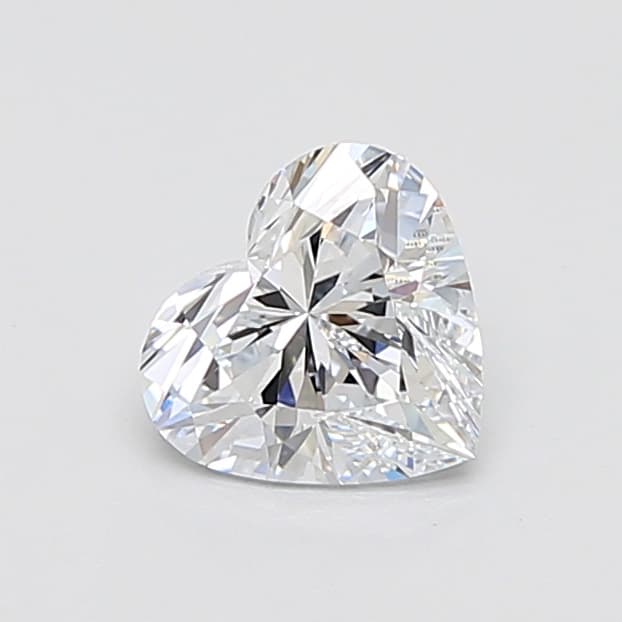
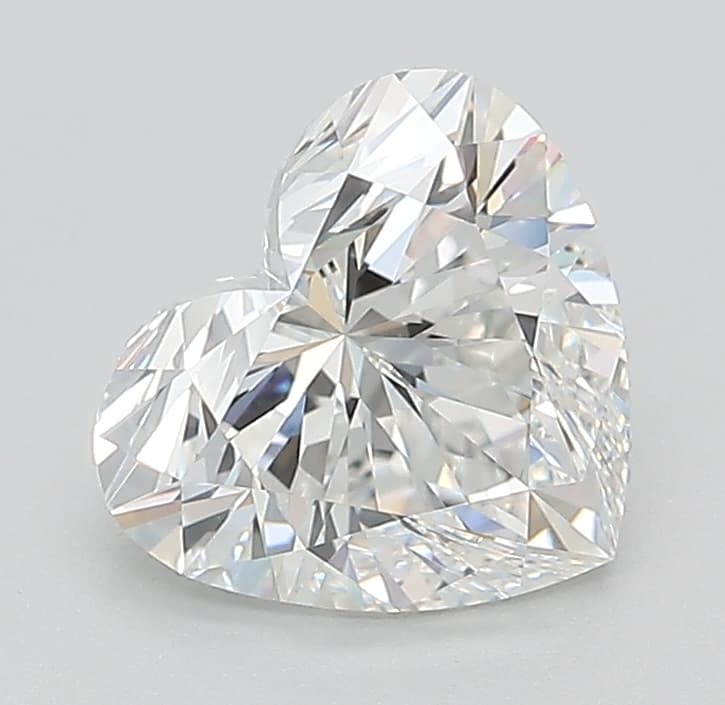
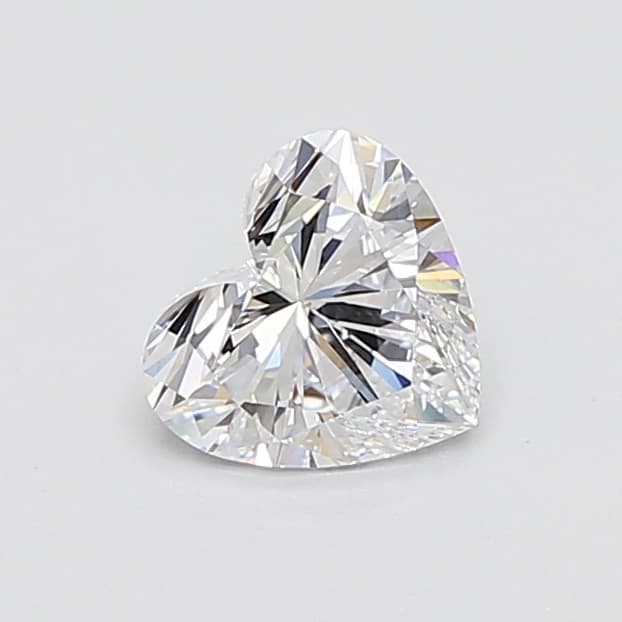
A heart is a modified brilliant cut: its facets are arranged for sparkle, like a round or an oval, but shaped into a heart outline. The outline has three parts to judge: two rounded lobes at the top, the cleft that dips between them, and a single point at the bottom. The curved sides running from the lobes down to the point are often called the shoulders or wings.
It is a demanding shape to cut, because the two halves have to mirror each other closely for the outline to read clearly as a heart. Small differences that would go unnoticed in a round or an oval can make a heart look lopsided.
Lab-grown heart-shaped diamonds have the same optical properties as mined ones and are cut the same way. IGI has graded the cut of fancy shapes, from Excellent to Poor, since September 2022; GIA does not. With or without a cut grade, you judge a heart from the measurements, the polish and symmetry grades and a video.
What proportions are common for a heart?
These are common guidelines, not lab rules, and sources vary slightly:
| Measurement | Common guideline range |
|---|---|
| Length-to-width ratio | 0.90 to 1.10 |
| Depth | 56% to 62% |
| Table | 53% to 63% |
Divide the length on the report by the width to get the ratio. Close to 1.00 the heart looks balanced. Toward the low end it looks wider and fuller; toward the high end it looks longer and slimmer. Outside the range, a heart can start to look squat or stretched. Within it, the choice is a matter of taste.
As with other brilliant shapes, a heart cut too shallow can look glassy in the middle (windowing), and one cut too deep faces up smaller than its carat weight suggests. Compare the millimeter measurements of stones of similar weight.
- HeartTypical L/W0.90–1.10
- Typical L/W1.45–1.75
- Typical L/W1.75–2.25
What should you check before choosing a heart?
Lobe symmetry
Picture a line from the bottom of the cleft to the point. The two lobes on either side should be the same size, the same height and evenly rounded, and the point should sit on that line. Uneven lobes are a common fault in heart shapes and are easy to see once the stone is set.
The cleft
A clean, clearly defined cleft is what makes the outline read as a heart. A shallow, vague cleft makes the stone look rounded or blurry. Check the cleft area for chips or inclusions.
The point
The point should be crisp and centered, not blunted or twisted to one side. Look for chips in the video and photos.
The bow-tie
Like ovals, pears and marquises, hearts can show a bow-tie: a darker band across the middle. A light one that shifts as the stone moves is normal; a wide band that stays dark is the thing to avoid.
Size
In small sizes, under about 0.50 ct, the heart outline is harder to read, especially once prongs cover the lobes and the point. If the shape matters most to you, compare millimeter measurements and look at the stone in a video.
| Weight | Stones | Median length (mm) | Median width (mm) |
|---|---|---|---|
| 1.50–1.64 ct | 3 | 7.17 | 7.96 |
| 2.00–2.19 ct | 12 | 7.66 | 8.87 |
How do color and clarity show in a heart?
Like other brilliant shapes with a point, a heart tends to show body color a little more at the point and along the edges than in the center. Some buyers choose a slightly higher color grade to keep it looking white; others are comfortable in the near-colorless range, especially in yellow or rose gold. Check a video for a brown, gray or milky tinge, which the grade does not capture.
Brilliant faceting hides small inclusions well, so an eye-clean heart does not always need a very high clarity grade. Check where the inclusions sit: near the cleft or the point, they deserve a closer look for durability as well as looks. Our clarity guide explains the grades.
How should a heart-shaped diamond be set?
The point is the most exposed part of a heart and the most likely to chip from a knock. A V-prong that wraps the point is the usual protection. The lobes are typically held by a prong each, and some settings add a prong in the cleft. A bezel that surrounds the whole outline protects every edge, though it covers a little of the stone.
Prongs also change how the shape reads. Large prongs on a small heart can hide much of the lobes and point, so for smaller stones a fine setting, or a bezel that follows the outline, helps keep the shape clear.
How to choose a heart-shaped lab-grown diamond
- Choose a size where the shape reads: check the millimeter measurements, not just the carat weight.
- Pick a ratio you like within the common range, from fuller to slimmer.
- Filter on finish: Excellent or Very Good polish and symmetry; symmetry matters especially in a heart.
- Watch the video: check the lobes, the cleft, the point and the bow-tie.
- Verify and ask: look up the report number on igi.org or gia.edu, and ask a specialist to review the report and video with you.
Frequently asked questions
What is a good length-to-width ratio for a heart-shaped diamond?
Commonly cited guidelines put it between about 0.90 and 1.10. Below that range a heart can look wide and squat, and above it long and narrow. These are common preferences that vary by source, not lab rules.
What size should a heart-shaped diamond be?
There is no required size, but the heart outline is harder to read in small stones, roughly under half a carat, especially once prongs cover the lobes and point. If the shape matters to you, compare the millimeter measurements and look at the stone in a video.
Why does the cleft matter in a heart-shaped diamond?
The cleft is the dip between the two lobes, and it is what makes the outline read as a heart. A shallow or uneven cleft can make the stone look rounded or lopsided. Look for a clearly defined cleft centered between two even lobes.
Do heart-shaped diamonds have a bow-tie?
Many do. Like ovals, pears and marquises, hearts can show a darker band across the middle. A light or moderate bow-tie is normal; a wide band that stays dark as the stone moves is the thing to avoid, and a video is the best way to judge it.
How should the point of a heart-shaped diamond be protected?
The point is the most exposed part of the stone and can chip from a knock. A V-prong that wraps the point is the usual choice, and a bezel setting protects the whole edge.