Rings & Jewelry
Will My Wedding Band Sit Flush? Engagement Rings and Gaps
By the Vanora Diamond team
Published Last reviewed 5 min read

Quick answer
A straight wedding band sits flush against an engagement ring only when nothing on the engagement ring sticks out below the head: no low basket, halo or wide bezel in the way. Higher and cathedral settings often leave room for a straight band; low settings and halos often need a curved or notched band instead. Plan the two rings together, around the exact measurements of the center diamond.
What "sitting flush" means
Two rings sit flush when their bands touch along their whole length, with no gap between them, when you look at your hand from above. Many people want this look for their wedding set: the rings read as one piece and do not twist against each other.
A gap appears when part of the engagement ring sticks out sideways, low down near the finger. A straight wedding band then meets that part first and is held away from the rest of the engagement ring. The gap is not a fault in either ring. It is simply geometry, and it is far easier to plan around before the rings are made than to fix afterwards.
Nothing about the diamond itself changes. A lab-grown diamond and a mined one of the same size and shape sit in a setting in exactly the same way.
Why some engagement rings leave a gap
The usual causes are parts of the head, the structure that holds the diamond, that sit low and wide:
- A low head. When the diamond is set close to the finger, its pavilion (the pointed lower half) and the metal around it come down to the level of the band. A straight band bumps into them. Our post on high and low settings shows why.
- A halo. A ring of small diamonds around the center stone is wider than the stone, so it often overhangs the band on both sides. See halo or no halo for the look itself.
- A basket. Rails of metal joining the prongs below the girdle can stick out past the band, especially on larger stones.
- A wide bezel. A rim of metal around the whole stone protects it well, but on a low ring it can overhang the band. Our bezel settings post covers which shapes suit one.
- A large center stone. The wider the diamond, the more the head overhangs a slim band.
A hidden halo, set under the girdle, can sit flush or not depending on how far it reaches out and how high the head sits.
Which designs usually sit flush
Every ring is made differently, so treat this as a guide, not a rule. Your jeweler can tell you for a specific design.
| Compared | Flush with a straight band? | Notes |
|---|---|---|
| High or cathedral solitaire | Often yes | The head sits above the band, so a straight band can slide under it |
| Low solitaire | Sometimes | Depends on the stone’s depth and how low the head sits |
| Halo | Often no | The halo overhangs the band; a curved band is common |
| Wide bezel, set low | Often no | The metal rim can overhang; a notched band can help |
| Hidden halo | It can | Depends on how far the small stones reach out and the head height |
Your options if a gap appears
If you love an engagement ring that does not sit flush with a straight band, there are good answers:
- A contoured (curved) band. The wedding band dips around the head and hugs the engagement ring. Many people choose this for halos.
- A notched band. A small cut-out in the band makes room for the head.
- Accept a small gap. Some people like the slight space between the rings; it can even protect the diamond's sides.
- Raise the head. A slightly higher or cathedral setting can make room for a straight band. This changes the ring's profile, so look at it from the side first.
- Wear the bands apart. Some wear the wedding band alone day to day and the engagement ring for occasions, or the two on different fingers.
Changing a finished ring is possible but takes a jeweler's time, and resizing or altering one ring can change how the pair fits. Our post on resizing a diamond ring explains what is involved.
How the center diamond plays in
The diamond's measurements decide how much head the ring needs. Three numbers on the IGI report or our stone page matter:
- Width (the second measurement): a wider stone needs a wider head, which is more likely to overhang a slim band.
- Depth (the third measurement): a deeper stone needs a taller head, so the pavilion clears the finger. That can help a straight band slide underneath, or, in a low setting, push the head down into the band's path. The depth percentage tells you how deep a stone is for its size.
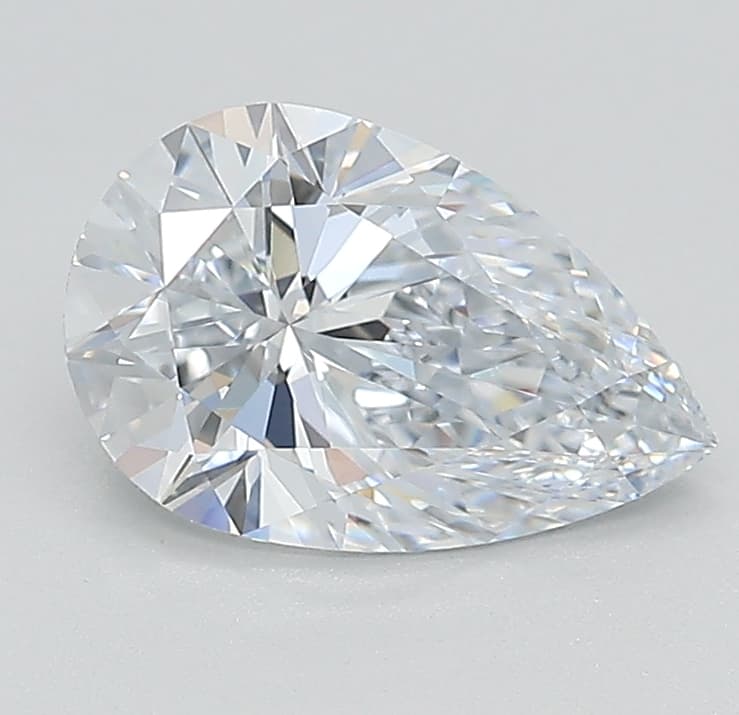
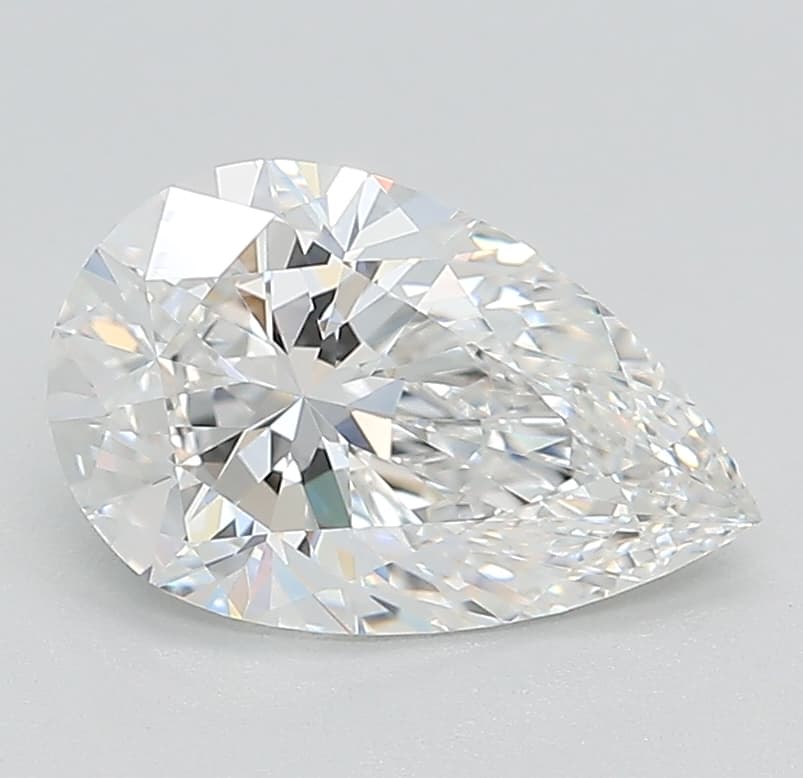
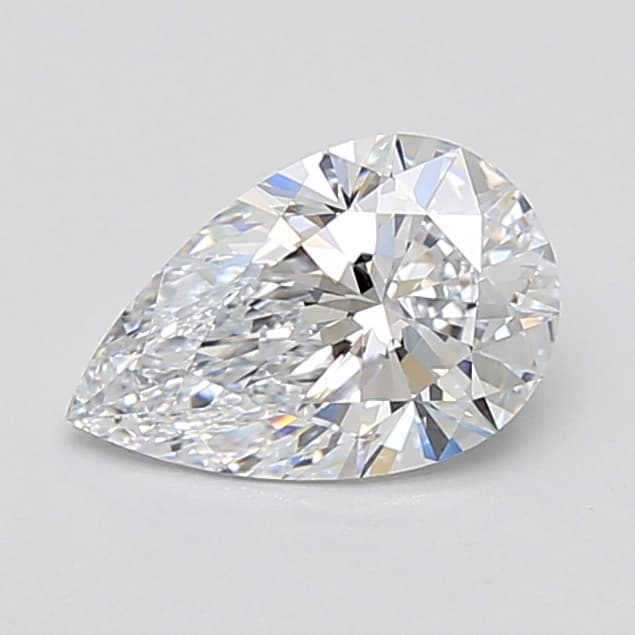
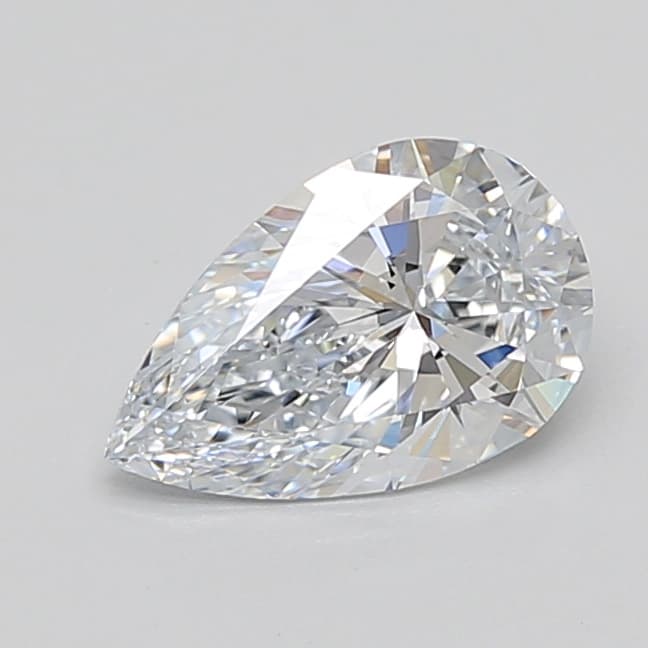
- Shape: elongated shapes such as ovals and pears are narrow across the finger when set north-south, so they overhang less than a round of the same weight.
Every single stone page in our catalog of lab-grown diamonds lists these measurements (mix parcels are sold by the parcel, without individual measurements), so your jeweler can check the fit before anything is made.
Band width, metal and wear over time
A flush fit is about more than the head. A few details decide whether the pair looks right and wears well for years:
- Width. Bands of a similar width usually look balanced side by side. A wedding band much wider than the engagement ring's band can make the center stone look smaller, and a much narrower one can look lost.
- Profile. Bands come flat, rounded (domed) or "comfort fit", which is rounded on the inside. Two flat edges meet neatly; two domed bands touch along a thinner line and can leave a small visible seam, which some people like.
- Metal. Rings worn together rub against each other every day. When both are the same metal they wear at the same rate. Mixing metals, for example platinum with gold, is popular, but the softer metal can wear faster where they touch. Ask your jeweler about the pair you have in mind.
- Stones in the band. A wedding band set with small diamonds along its edge can rub against the engagement ring's prongs. A jeweler can check that nothing catches.
Rings that sit flush also tend to stay aligned on the finger, while a pair with a gap can spin against each other. Either way, both rings deserve a check-up, for example once a year, so worn prongs or thin spots are found early.
Plan both rings together
The simplest way to avoid a surprise is to decide on the wedding band when you design the engagement ring, even if you buy the band later. Jewelers sometimes call a pair designed together a bridal set, but you do not need to buy them as one: you only need to know, before the engagement ring is made, which kind of band will sit next to it.
If the engagement ring already exists, take it with you when you choose the wedding band. Trying bands against the real ring is the only reliable test, because small differences in how a head was made can open or close a gap.
- Step 1: Choose the diamondSettle the stone first and note its length, width and depth from the report.
- Step 2: Say what band you wantTell your jeweler whether you want a straight band to sit flush, or are happy with a curved one.
- Step 3: Ask about the headAsk how high it sits and whether any part overhangs the band.
- Step 4: Try the pairIf possible, try a sample band against the engagement ring, or see a drawing of both from the side.
- Step 5: Match the widthsBands of similar width usually look best together and wear evenly.
Whether a straight wedding band will sit flush is far easier to design in than to fix later. Ask before the engagement ring is made, with the center diamond’s measurements in hand.
Frequently asked questions
Why does my wedding band not sit flush with my engagement ring?
Usually because part of the engagement ring sits low and wide: a low head, a halo, a basket or a wide bezel. A straight wedding band touches that part first and is held away from the rest. A curved or notched band, or a slightly higher head, can solve it.
Do halo engagement rings need a curved wedding band?
Often, yes. A halo is wider than the center stone and tends to overhang the band, so a straight band leaves a gap. A contoured band that curves around the halo is the usual answer, though some people are happy with a small gap.
Does a bigger diamond make it harder for bands to sit flush?
It can. A wider stone needs a wider head, which is more likely to overhang a slim band, and a deeper stone needs a taller head. Elongated shapes set north-south are narrower across the finger than a round of the same weight.
Can a jeweler change an engagement ring so a band sits flush?
Sometimes, for example by raising the head or reshaping a basket, but it means reworking a finished ring. Notching or contouring the wedding band is usually simpler. The easiest route is to plan both rings together before the engagement ring is made.
Glossary terms in this article
More on Rings & Jewelry in the journal.