Shapes & Cuts
Marquise Diamonds: Ratio, Symmetry and Protecting the Points
By the Vanora Diamond team
Published Last reviewed 5 min read

Quick answer
Three things decide whether a marquise looks and wears well: a ratio that suits your hand (commonly about 1.75 to 2.25, with many people choosing 1.85 to 2.10), two halves that mirror each other with both points on the same axis, and a setting that covers the points. Before you choose, check the girdle and any inclusions near the tips on the report and in the video, then protect each point with a V-prong or a bezel.
Why does a marquise reward a careful choice?
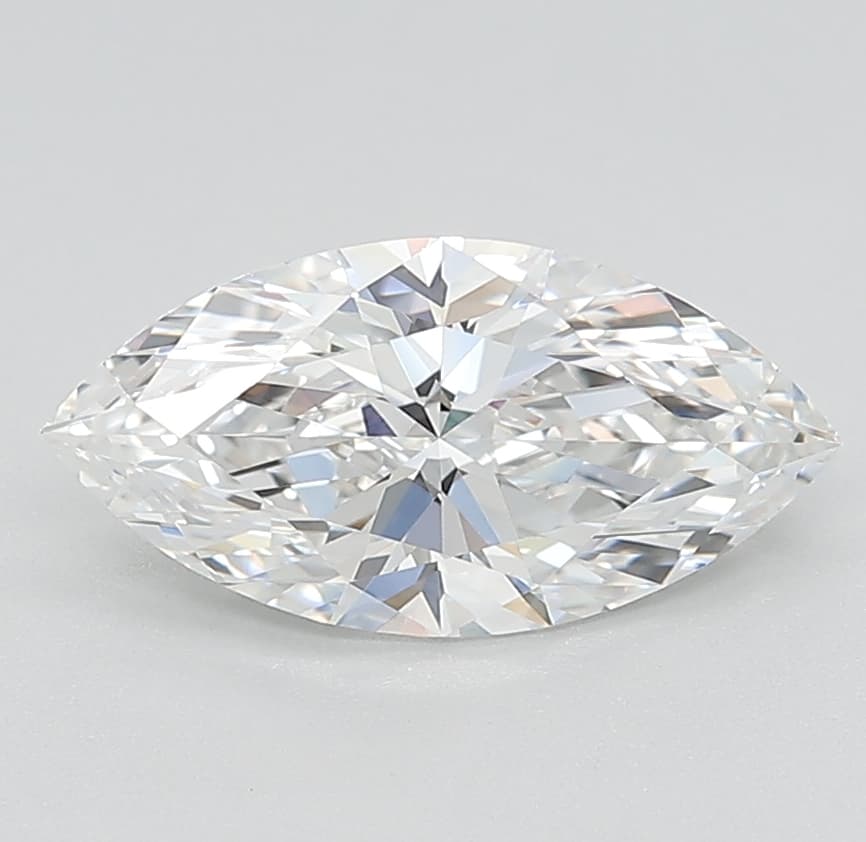
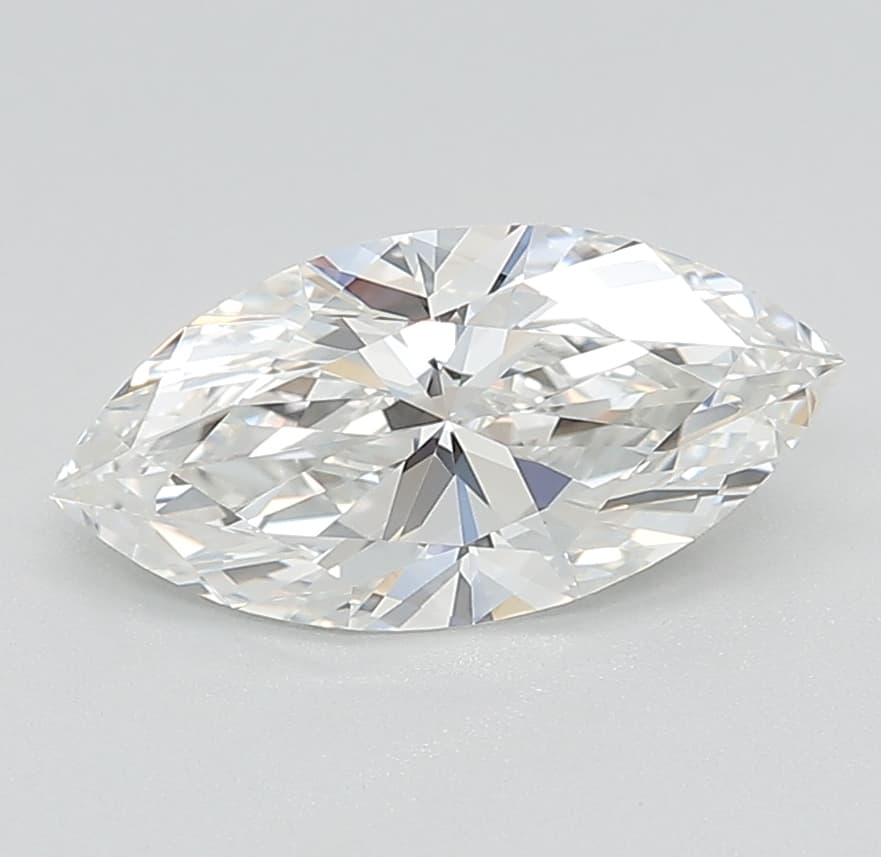
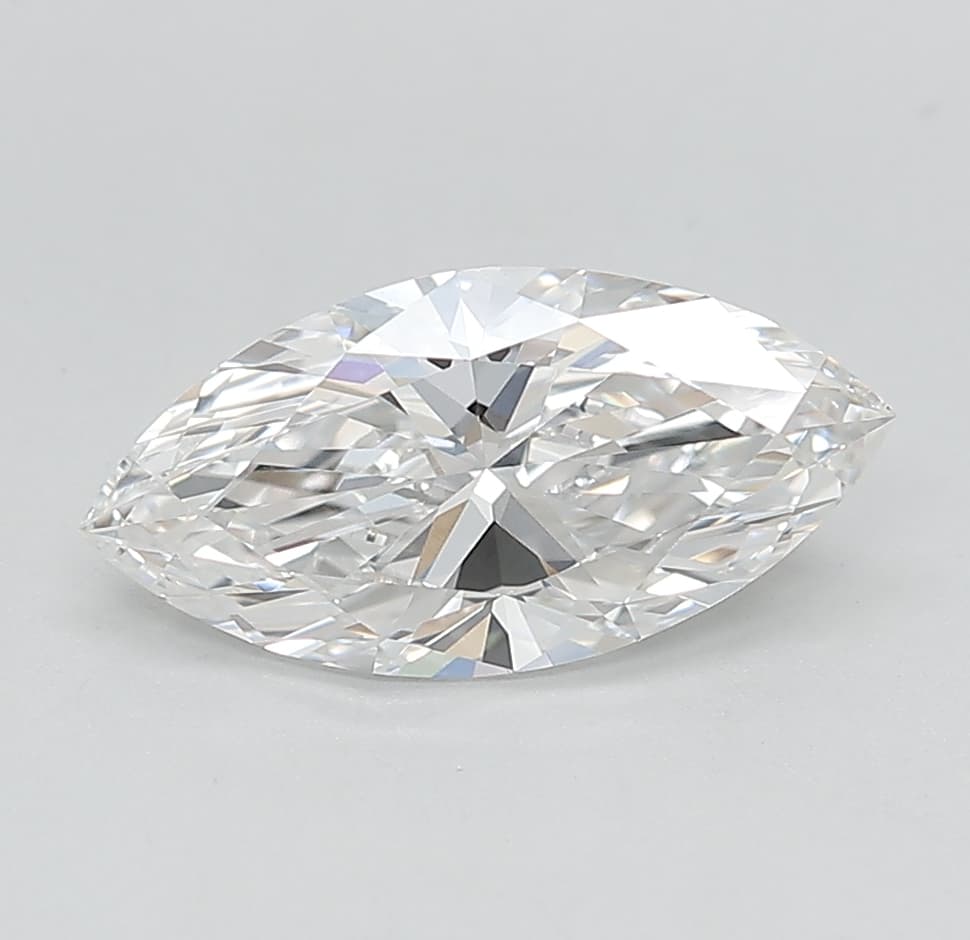
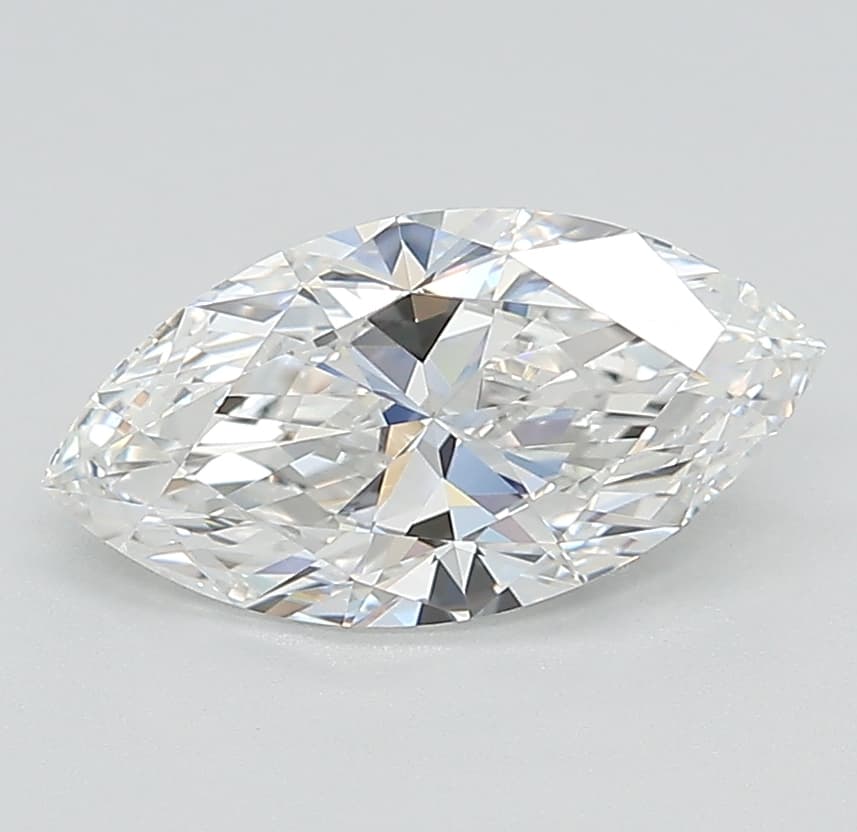
A marquise, also called a navette (French for "little boat"), is a long brilliant-style diamond with curved sides that meet in a point at each end. Its weight is spread along its length, so it often looks larger from the top than a round of the same carat weight, and set lengthwise it can make the finger look longer and slimmer.
The same features make it demanding. With two points and one long axis, any imbalance is visible at a glance, and the points are the most fragile parts of the stone. A well-chosen marquise is striking; a poorly chosen one looks crooked or wears badly. Our marquise guide covers the proportions; this article goes into the practical choices: ratio, symmetry, durability and setting.
A lab-grown marquise has the same optical and physical properties as any diamond of its cut, so all of the advice below applies equally.
Which ratio suits your hand?
| Ratio | How it tends to look |
|---|---|
| About 1.75 to 1.85 | Fuller and softer, with a wider middle |
| About 1.85 to 2.10 | Balanced, the range many people choose |
| About 2.10 to 2.25 | Long and slender, very elongating |
These are common guidelines, not lab rules. They are compiled from widely published trade guidelines, and sources vary. The ratio decides how much of the stone’s weight goes into length. For example, a hypothetical 2 carat marquise measuring 13.1 × 6.8 mm has a ratio of about 1.93: long enough to read as a marquise from across a room, but with enough width to hold its shape on the finger.
Two practical checks help. First, the width decides how much of the finger the stone covers; you can compare it with your ring size using our ring size to mm guide. Second, the length decides how far the stone runs along the finger. A long marquise on a short finger can reach toward the knuckle, so cut a paper outline at the real size and try it on.
| US size | Inner diameter (mm) | Inner circumference (mm) | UK / AU | EU / ISO |
|---|---|---|---|---|
| 4 | 14.9 | 46.8 | H½ | 47 |
| 5 | 15.7 | 49.3 | J½ | 49 |
| 6 | 16.5 | 51.9 | L½ | 52 |
| 7 | 17.3 | 54.4 | N½ | 54 |
| 8 | 18.1 | 57.0 | P½ | 57 |
| 9 | 18.9 | 59.5 | R½ | 60 |
| 10 | 19.8 | 62.1 | T½ | 62 |
| 11 | 20.6 | 64.6 | V½ | 65 |
| 12 | 21.4 | 67.2 | X½ | 67 |
How do you judge symmetry from a photo?
You do not need a loupe for this; a clear face-up photo or the 360° view on our stone pages is enough.
The fold test
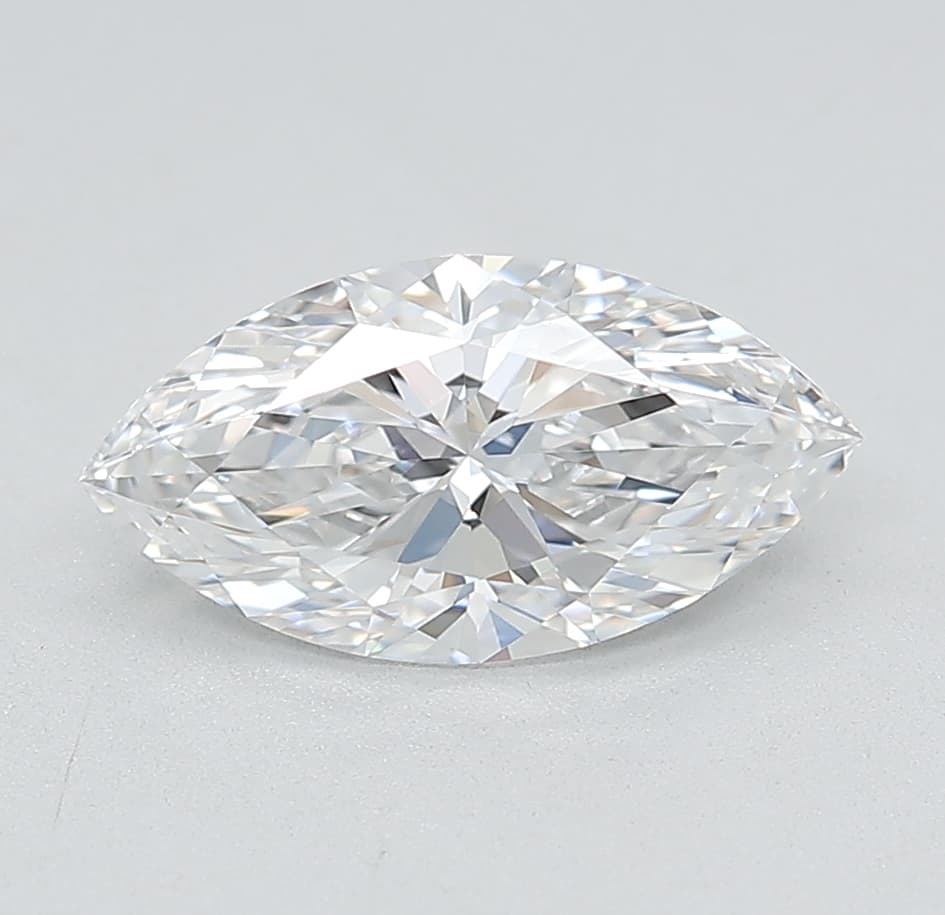
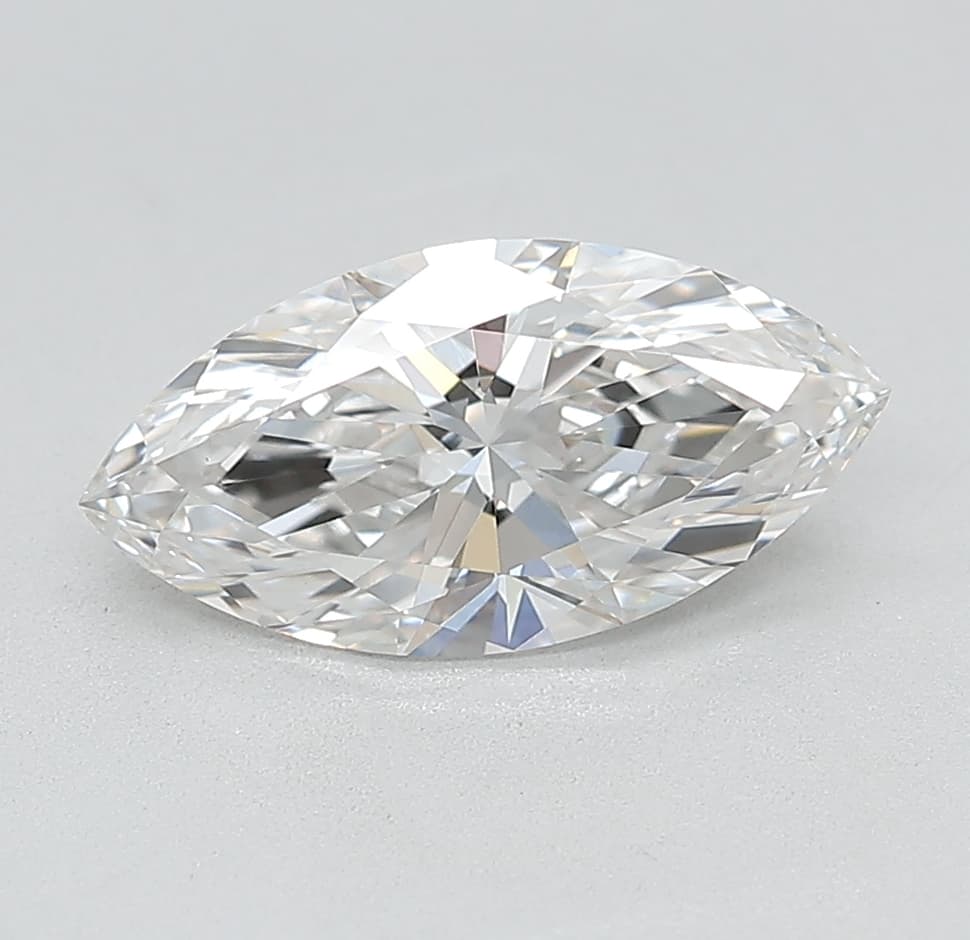
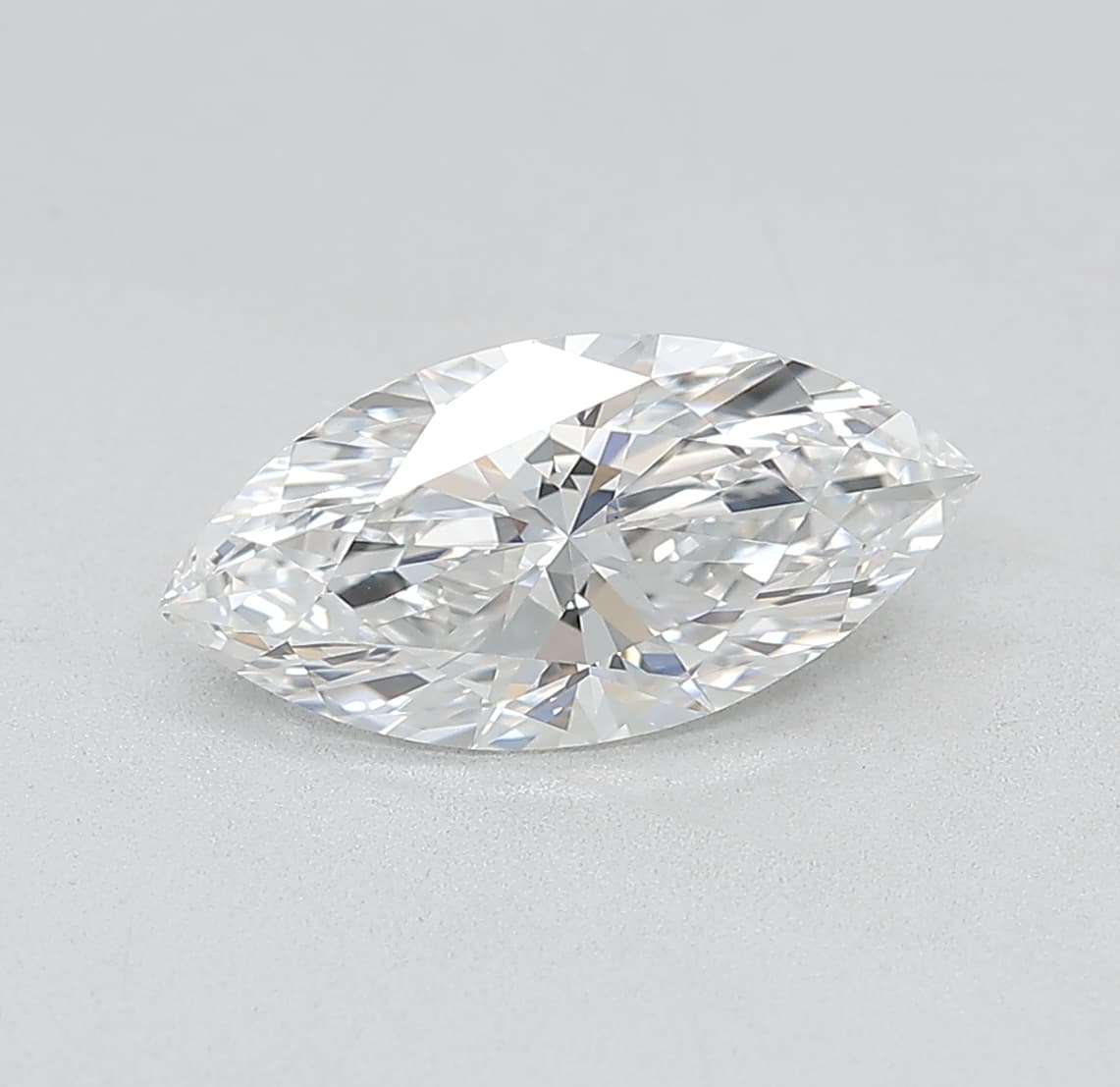
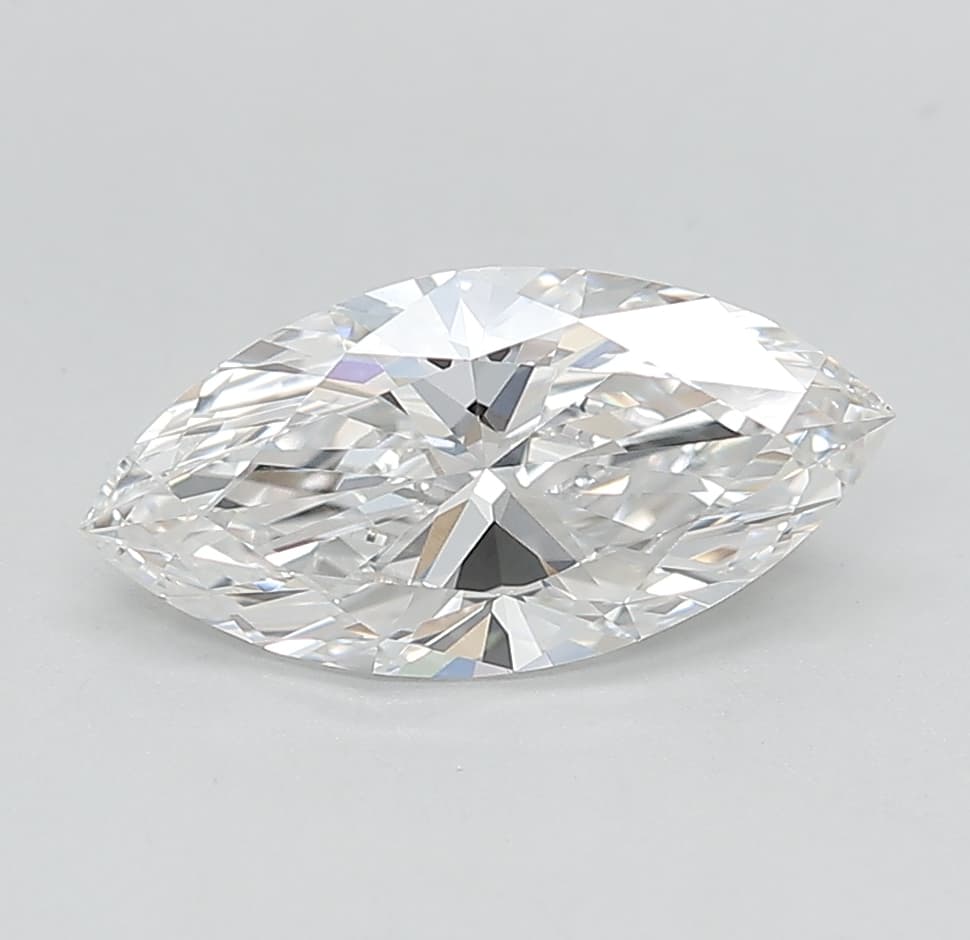
Imagine folding the stone along the line from point to point. The two halves should match. Then fold it across the middle: the two ends should match as well, with neither point longer or sharper than the other.
The points
Both points should sit exactly on the central axis. A point that tips to one side makes the whole ring look twisted once it is set.
The wings
The curved sides should be evenly rounded. Flat sides make the stone look stiff and narrow; very full sides make it look stubby. Both sides should reach their widest point at the same place.
The bow-tie
Almost every marquise shows a darker band across the middle. A moderate bow-tie that moves with the stone adds contrast; a wide band that stays dark is the thing to avoid. Many stones also have an ASET image on the stone page, which shows how evenly light is returned along the length.
The symmetry grade on the report is a useful filter, but with this shape your own eye on the outline counts for more.
What on the report matters for durability?
- Girdle: the girdle description shows its thickness range. An extremely thin girdle is more fragile at the points; a very thick one adds weight that does not show from the top. A range within thin to slightly thick is a common target.
- Inclusions near the points: a feather (a small fracture) close to a tip deserves a closer look, because the tips take the knocks. The clarity plot, where the report has one, shows where inclusions sit.
- Depth: commonly cited guidelines put a marquise at about 58% to 62%. A shallow stone can look glassy; a deep one faces up smaller than its weight suggests.
- Polish and symmetry: Excellent or Very Good is a sensible starting point.
If anything on the report is unclear, ask before you buy; a specialist can read the report and video with you.
Which settings protect the points?
The standard protection is a V-prong (or chevron prong) at each end, which wraps the tip instead of gripping it from the side. A common layout is six prongs: a V-prong at each point and two prongs along each side. Other options:
- Bezel or half-bezel: a rim of metal around the stone, or around just the ends, gives the most protection and a clean, modern look.
- East-west: setting the marquise across the finger moves the points away from the band and gives a distinctive horizontal line. The points then face the neighboring fingers, so they still need V-prongs.
- Lower profile: a setting that holds the stone closer to the finger is less likely to catch on clothing or knock against surfaces.
Avoid settings that leave the points bare. Think about the wedding band too: in a lengthwise setting one point faces the band, so a straight band either leaves a gap or presses on the tip. A contoured or notched band curves around it.
The points are the most fragile parts of a marquise. A V-prong at each end wraps the tip, and in a lengthwise setting one point faces the wedding band, so a contoured or notched band curves around it.
Living with a marquise
Diamond is very hard, but it can chip if a thin point takes a sharp knock. A few habits help any pointed shape last:
- Take the ring off for heavy work, sport and moving furniture.
- Have a jeweler check the prongs from time to time, especially the V-prongs over the tips.
- Store it on its own, since a diamond can scratch other jewelry and other diamonds.
- Clean it gently with warm water, mild soap and a soft brush to keep the sparkle bright.
If you like the marquise but want a more angular, modern outline, read our article on the Dutch marquise, which keeps the points but straightens the sides.
Shortlisting a marquise
- Choose a ratio from the table above and check width and length against your finger.
- Do the fold test on the photo of each stone.
- Read the girdle and clarity for anything near the points.
- Watch the video for a moderate, moving bow-tie.
- Plan the setting and the band together.
The live suggestions below show marquise lab-grown diamonds in the balanced ratio range and colorless marquises from 1 to 2 carats. If you would like a second opinion on symmetry or the points, one of our diamond specialists can review a shortlist with you.
Frequently asked questions
Is a 2.00 ratio marquise too long?
No. A ratio around 2.00 sits in the middle of the commonly cited 1.75 to 2.25 range and gives a classic, elongated marquise. If you prefer a fuller look, choose nearer 1.80; for a slimmer one, nearer 2.15.
How can I tell if a marquise diamond is symmetrical?
Look at a face-up photo and imagine folding the stone lengthwise and across the middle. Both halves should match each time, both points should sit on the central axis, and the curved sides should be evenly rounded.
What is the best setting for a marquise diamond?
Any setting that covers both points. A V-prong at each end, often with two prongs on each side, is the most common choice, and a bezel or half-bezel offers the most protection.
Can a marquise diamond chip?
Yes, if a point takes a sharp knock. Diamond is very hard but can chip at thin edges. V-prongs or a bezel over the points, a girdle that is not extremely thin and a little care in daily wear reduce the risk.
Glossary terms in this article
More on Shapes & Cuts in the journal.