Grading, Explained
How Diamond Color Is Graded, and Why It Is Done Face-Down
By the Vanora Diamond team
Published Last reviewed 5 min read

Quick answer
Labs grade the color of white diamonds with the stone upside down in a white tray, looking through the side, and compare it with reference stones of known color under controlled, daylight-like light. Face-down, the sparkle that hides body color is out of the way, so small differences show. Face-up you see less color than the grade suggests, which is why near-colorless grades can look white in a ring.
What a color grade measures
For white diamonds, color means the absence of color. The D-to-Z scale runs from D, colorless, through near-colorless grades such as G and H, to stones with a noticeable yellow or brown tint further down. Each letter covers a small range rather than a single exact shade. Our diamond color guide explains the scale in full.
The grade describes the body color, the faint tint of the crystal itself. It is a separate question from fluorescence, the glow some diamonds show under ultraviolet light, which has its own line on an IGI report, and from a tinge such as the faint blue some lab-grown diamonds show; see blue tinge in lab-grown diamonds.
| Grade | Group | What it means |
|---|---|---|
| D | Colorless | No color, or traces a grader detects only against master stones |
| E | Colorless | No color, or traces a grader detects only against master stones |
| F | Colorless | No color, or traces a grader detects only against master stones |
| G | Near colorless | Slight color when compared face-down; often hard to see face-up |
| H | Near colorless | Slight color when compared face-down; often hard to see face-up |
| I | Near colorless | Slight color when compared face-down; often hard to see face-up |
| J | Near colorless | Slight color when compared face-down; often hard to see face-up |
| K | Faint | A faint warm tint that many people can see face-up |
| L | Faint | A faint warm tint that many people can see face-up |
| M | Faint | A faint warm tint that many people can see face-up |
Why the stone is turned face-down
Look at a diamond face-up and you mostly see light: reflections, flashes and sparkle bouncing off the facets. That light is wonderful to wear but it hides the faint tint of the crystal.
So graders turn the stone over. With the table down in a white, folded tray, they look at it through the side of the pavilion, the lower part of the stone. From that angle there is less sparkle in the way, light travels through more of the diamond, and the body color is easier to judge. Even small differences between neighboring grades become visible to a trained eye.
Reference stones and controlled light
Color grading is a comparison, not a guess. Graders place the diamond next to a set of reference stones, often called master stones, whose colors are known. They decide where the diamond falls among them.
The light is controlled too. Grading is typically done in a booth or under a lamp that imitates neutral daylight, against a white background, with other light kept out. Ordinary room light, which is often warm or uneven, would shift how a stone looks.
Labs often have more than one grader assess each stone, and they keep conditions the same day after day, so that a G graded this week means the same as a G graded last year. Some labs also rest certain lab-grown diamonds under standard light before grading, because a few stones can change color temporarily after strong ultraviolet light; our post on whether lab-grown diamonds change color explains that rare effect.
Why you see less color face-up
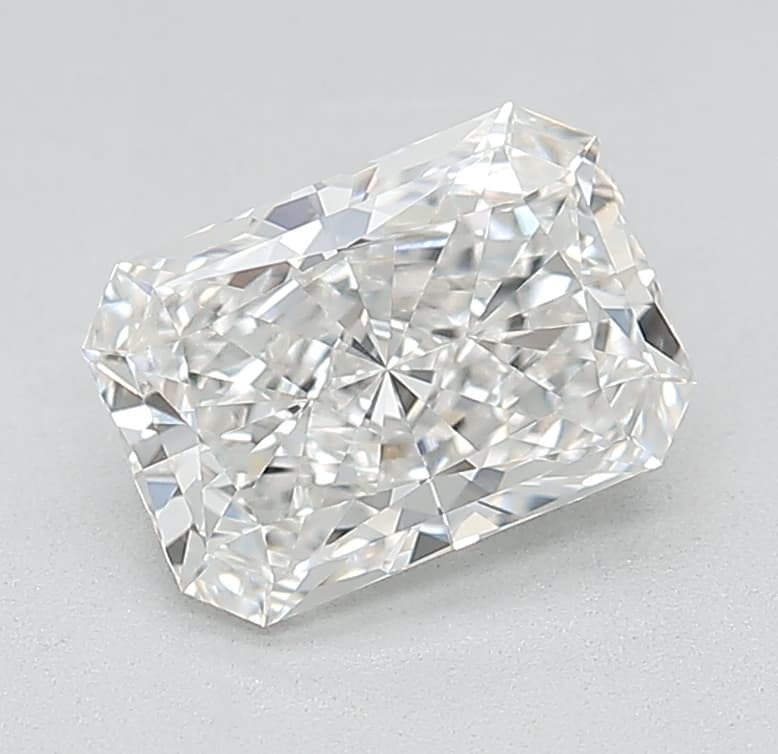
Because the grade is set face-down, where color shows most, a diamond usually looks whiter face-up in a ring than its letter suggests. How much whiter depends on:
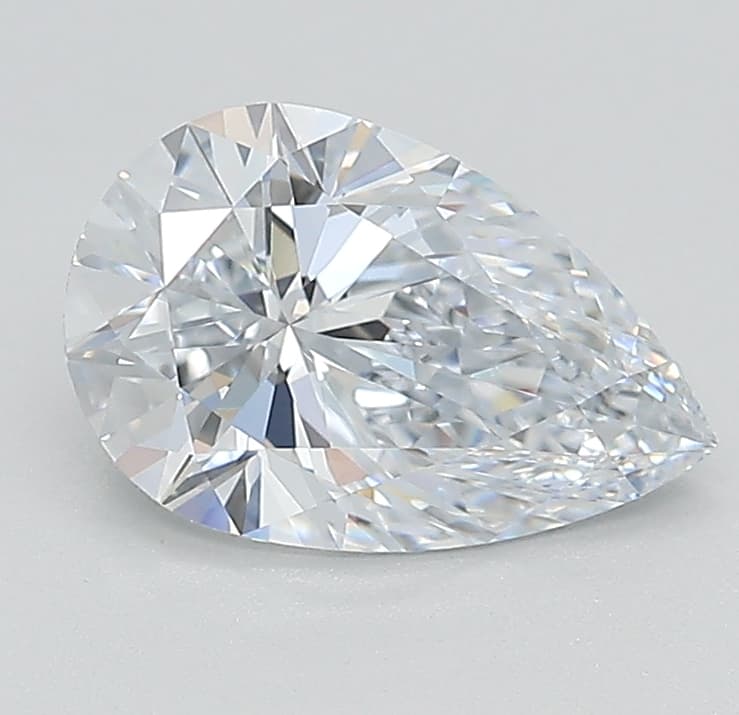
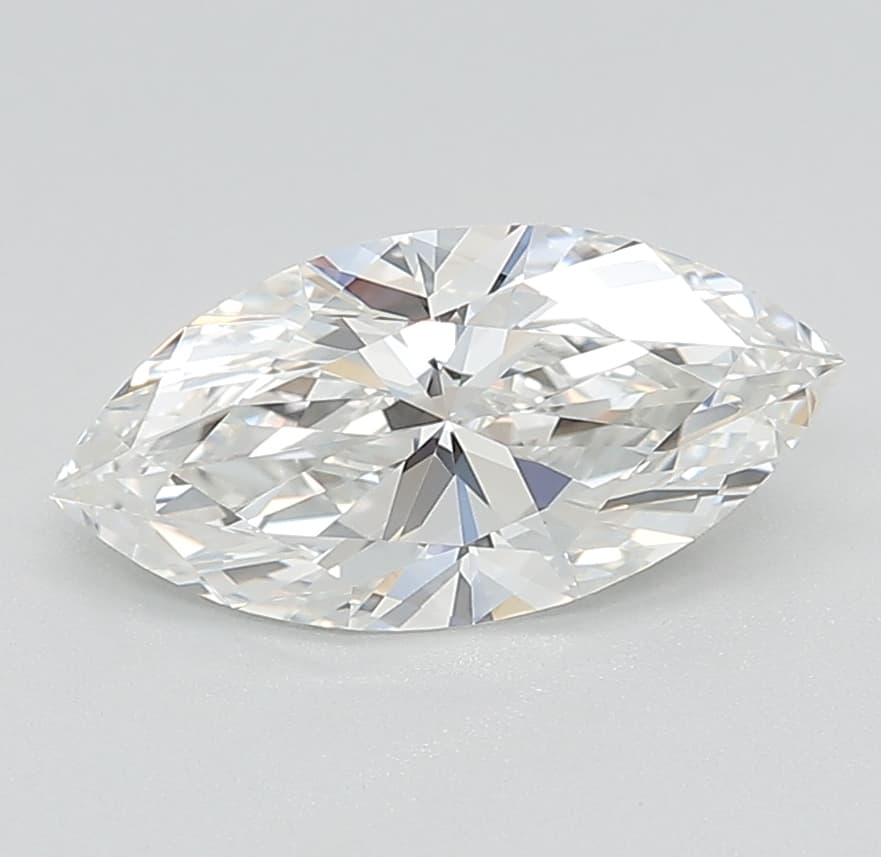
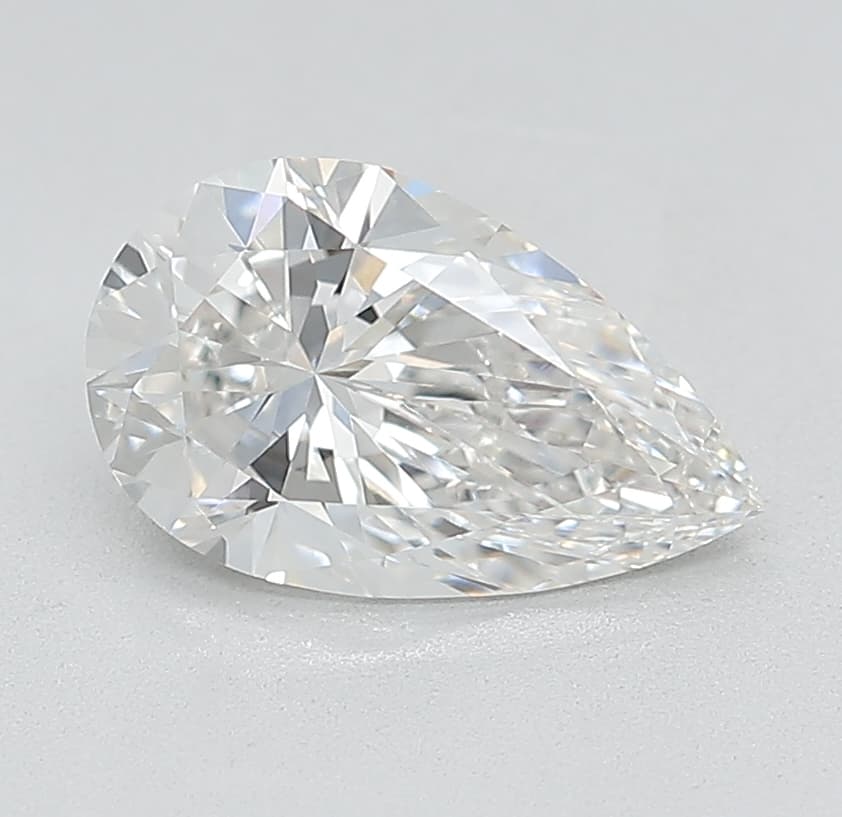
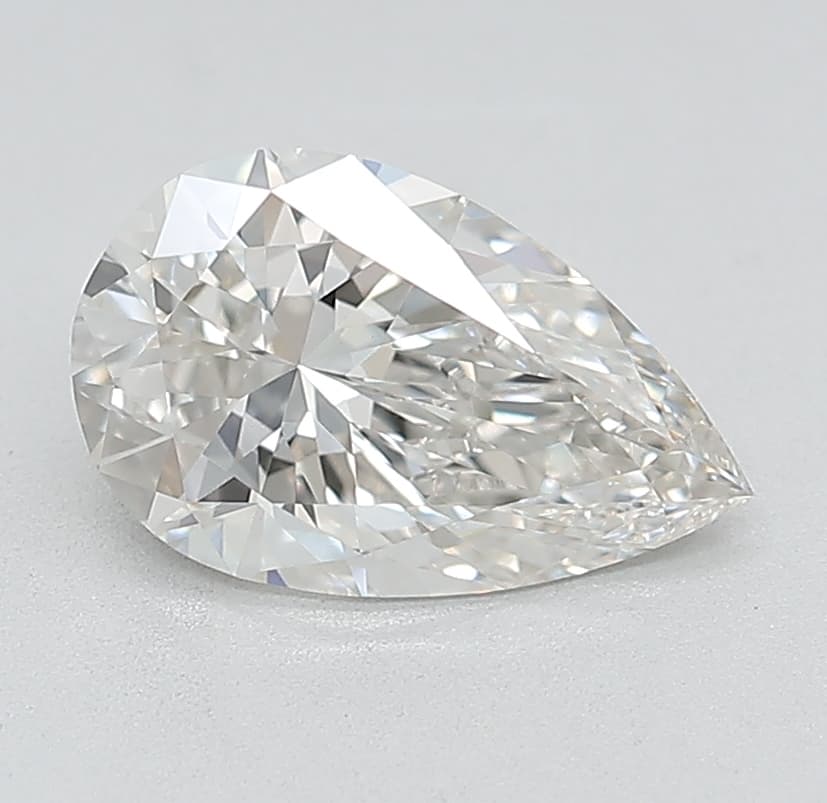
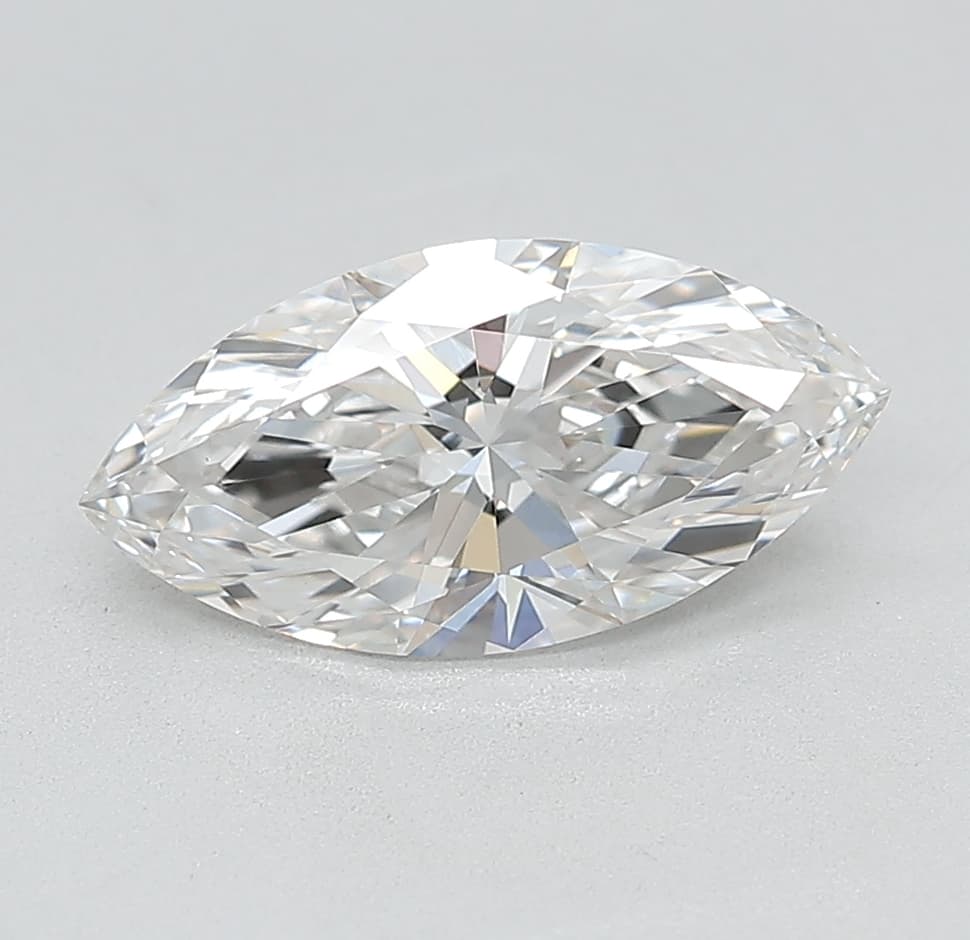
- The shape. Round brilliants and other brilliant cuts hide color best. Step cuts such as emeralds, and the tips of elongated shapes such as pears and marquises, show it a little more. Our post on shapes that show color compares them.
- The size. Larger stones have more crystal to look through, so color shows more.
- The metal. White metal next to the stone makes faint warmth more noticeable; yellow and rose gold make it less so.
- The light. Warm indoor light flatters warmer stones; daylight is less forgiving.
This is why many buyers find near-colorless grades look white in a ring. Our post on G, H and I color shows where that is most true.
Color in lab-grown diamonds
Lab-grown diamonds are graded for color on the same D-to-Z scale and by the same face-down comparison at IGI. Both growth methods, CVD and HPHT, can produce colorless stones, and many lab-grown diamonds are graded in the D to F range.
The tint you might notice in a lab-grown diamond is not always yellow. Some stones show a faint cool tone, a slight gray or a hint of brown instead. Graders still place them on the D-to-Z scale by how much color they show, and our stone pages have a separate Tinge line, so you can see it at a glance.
Two practical points follow. First, compare stones of the same grade side by side when you can, in a video or in person, because the character of a faint tint can differ even when the letter is the same. Second, remember that a color grade says nothing about brightness: a well-cut F will often look livelier than a poorly cut D. Our post on whether D color is worth it weighs the top grades against each other.
Fancy colors are graded face-up
Fancy colored diamonds, such as pink, blue and green lab-grown diamonds, are graded differently. Their color is the point, so labs judge it face-up, the way you see it worn, and describe it by hue and strength with terms such as Fancy, Fancy Intense and Fancy Vivid. Our post on Fancy Vivid vs Fancy Intense explains those terms.
For a white diamond, less color moves the grade up the scale. For a fancy colored diamond it is the opposite: a stronger, purer color is the more sought-after description. The two systems answer different questions, which is why the same report never uses both for one stone.
What this means when you choose
- Treat a grade as a range. Two stones with the same letter can differ very slightly, and a stone near the top of one grade can look much like one at the bottom of the grade above.
- Choose the grade for the shape, size and metal. A round in yellow gold can wear a warmer grade than a large emerald cut in platinum.
- Check the report date for GIA stones. Since October 2025, GIA classifies colorless to near-colorless lab-grown diamonds as Premium or Standard instead of giving a letter; see GIA vs IGI reports.
- Look at the stone face-up. A video, or a viewing in person, shows how it will actually look worn. One of our diamond specialists can compare two stones for you; just contact us.
The color grade is set where color shows most. In a ring, seen face-up, most diamonds look a little whiter than their letter, especially round brilliants and stones set in yellow or rose gold.
Frequently asked questions
Why is diamond color graded upside down?
Face-up, the reflections and sparkle of the facets hide the faint body color of a diamond. Turned face-down in a white tray and viewed through the side, the stone shows its tint more clearly, so graders can compare it accurately with reference stones.
What are master stones in color grading?
Master stones, or reference stones, are diamonds of known color that graders compare a stone against under controlled light. The grade depends on where the stone falls among them. Using the same references and conditions keeps grades consistent over time.
Does a diamond look whiter face-up than its color grade?
Usually, yes. The grade is set face-down, where color shows most. Face-up, a diamond’s sparkle masks some of its tint, especially in round brilliants. Larger stones, step cuts and white metal settings show color a little more.
Is lab-grown diamond color graded the same way as mined diamond color?
At IGI, yes: lab-grown diamonds receive D-to-Z color grades by the same face-down comparison. Since October 2025, GIA classifies colorless to near-colorless lab-grown diamonds as Premium or Standard instead of giving a color letter. Fancy colors are graded face-up at both.
Glossary terms in this article
More on Grading, Explained in the journal.