Grading, Explained
G, H and I Color Diamonds: What Near-Colorless Really Looks Like
By the Vanora Diamond team
Published Last reviewed 5 min read

Quick answer
G, H and I are near-colorless grades: under lab conditions they show a faint trace of warmth, but face-up and set in a ring most G and H stones look white, and many I stones do too. The warmth is easiest to see in large stones, step cuts, the tips of elongated shapes and next to bright white metal. In yellow or rose gold, near-colorless stones look right at home.
Where G, H and I sit on the color scale
Diamond color for white stones is graded on a scale from D to Z. D is completely colorless; each letter after it shows a little more warmth, usually a faint yellow or brown. The scale is divided into groups:
- D, E and F: colorless.
- G, H, I and J: near-colorless.
- K to M: faint color, and so on down the scale.
The steps between neighboring grades are tiny. A grader compares each stone with reference stones under controlled light to decide which side of a boundary it falls on. That precision matters for pricing and description, but it is far finer than what most people notice in daily life. Our diamond color guide explains the full scale.
| Grade | Group | What it means |
|---|---|---|
| D | Colorless | No color, or traces a grader detects only against master stones |
| E | Colorless | No color, or traces a grader detects only against master stones |
| F | Colorless | No color, or traces a grader detects only against master stones |
| G | Near colorless | Slight color when compared face-down; often hard to see face-up |
| H | Near colorless | Slight color when compared face-down; often hard to see face-up |
| I | Near colorless | Slight color when compared face-down; often hard to see face-up |
| J | Near colorless | Slight color when compared face-down; often hard to see face-up |
| K | Faint | A faint warm tint that many people can see face-up |
| L | Faint | A faint warm tint that many people can see face-up |
| M | Faint | A faint warm tint that many people can see face-up |
Graded face-down, worn face-up
Labs grade color with the diamond upside down on a white tray, looking through its side. In that position the facets do not sparkle much, so the body color is as easy to see as it will ever be.
In a ring the stone faces up. Light enters the top, bounces around inside and comes back out as brilliance and sparkle, and that play of light masks a faint body color. This is why a G or H stone that shows a trace of warmth on the grading tray usually looks white on the hand.
The same effect explains why cut matters for color. A well-cut stone returns more white light and looks whiter face-up than a poorly cut stone with the same color grade. Our post on ideal vs excellent cut explains what the top cut grades mean.
When the warmth shows
Near-colorless grades are most likely to reveal a little warmth in four situations:
- Larger stones. More diamond means a longer path for light and more body color to see. A G that looks icy at 1 carat can show a hint of warmth at 4 carats.
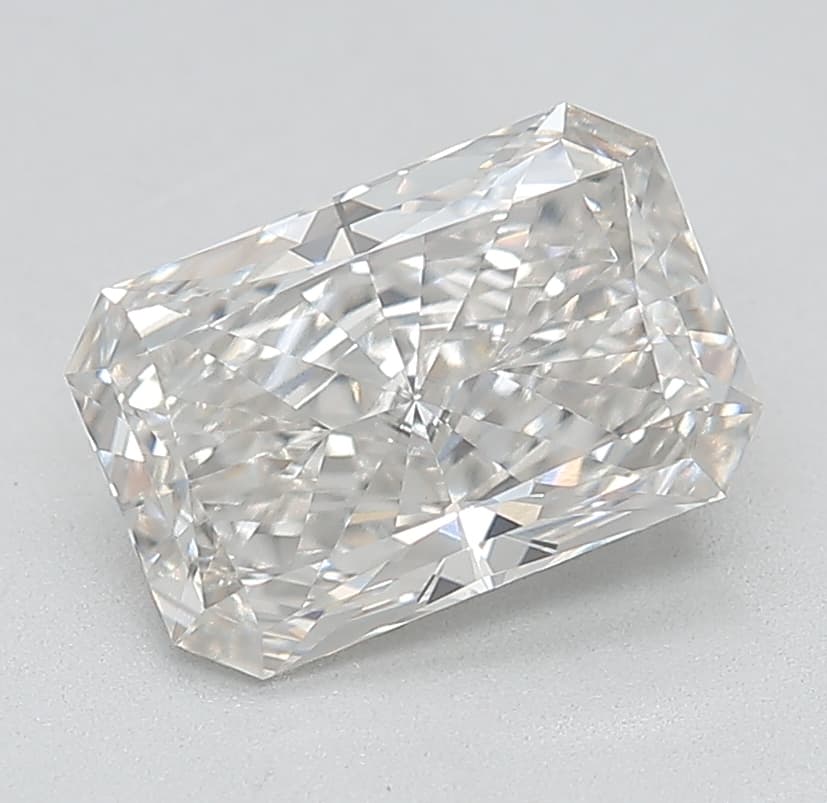
- Step cuts. Emerald and asscher cuts have broad, open facets and less sparkle to hide color. Our post on shapes that show more color compares them.
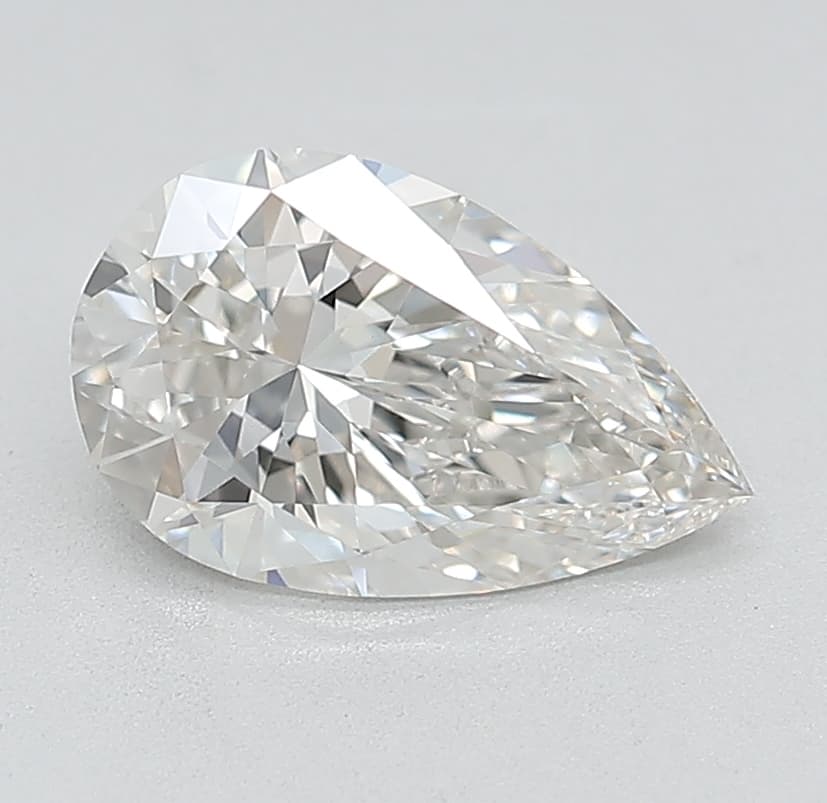
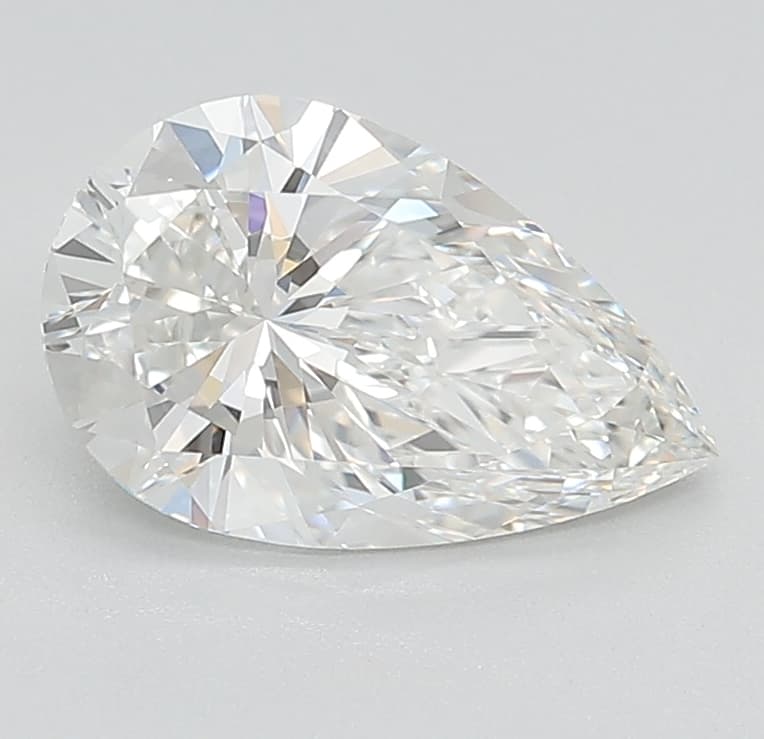
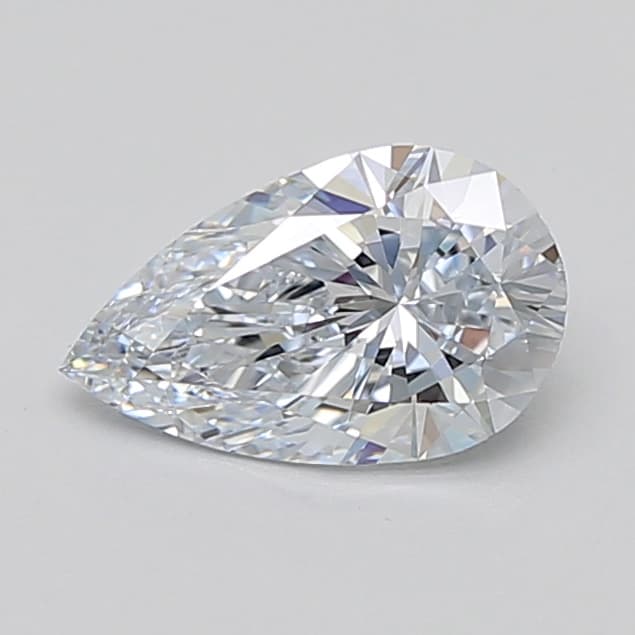
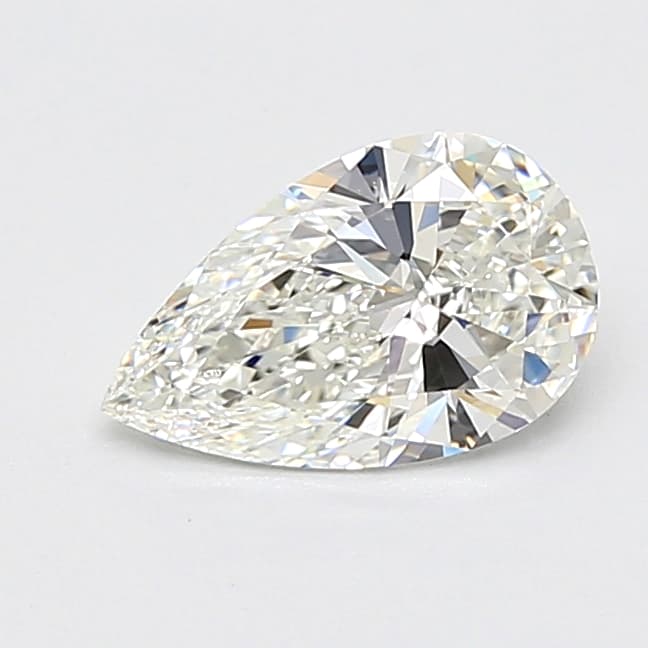
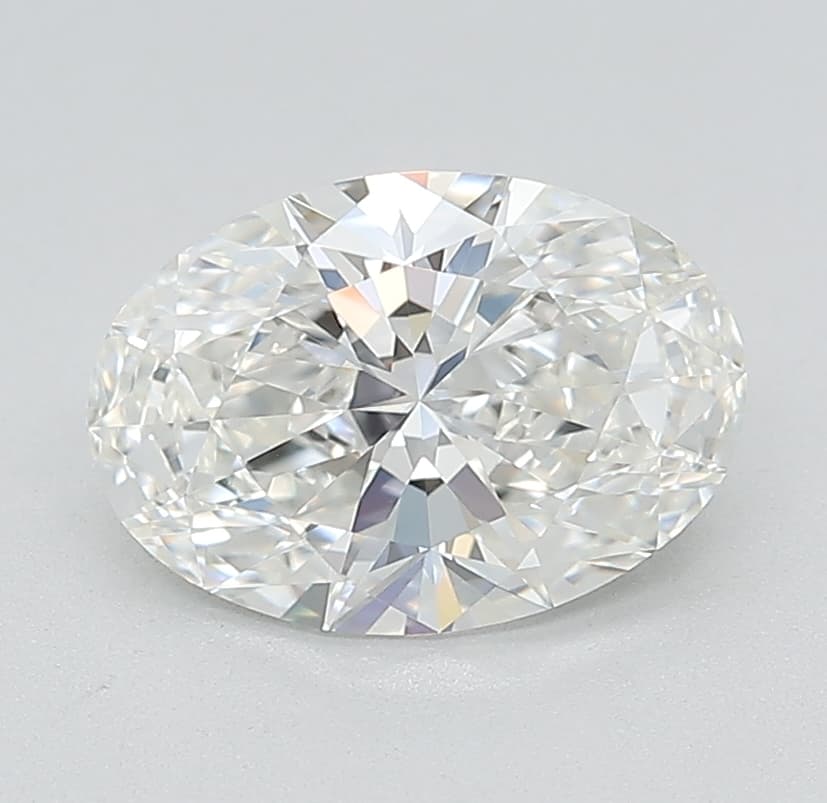
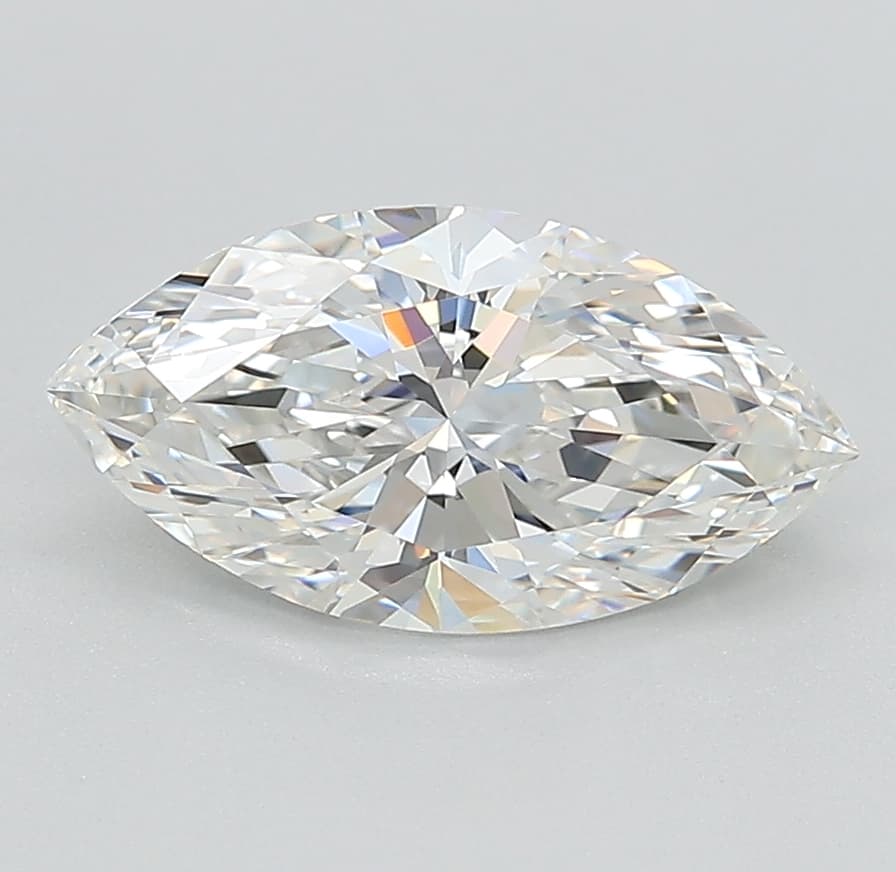
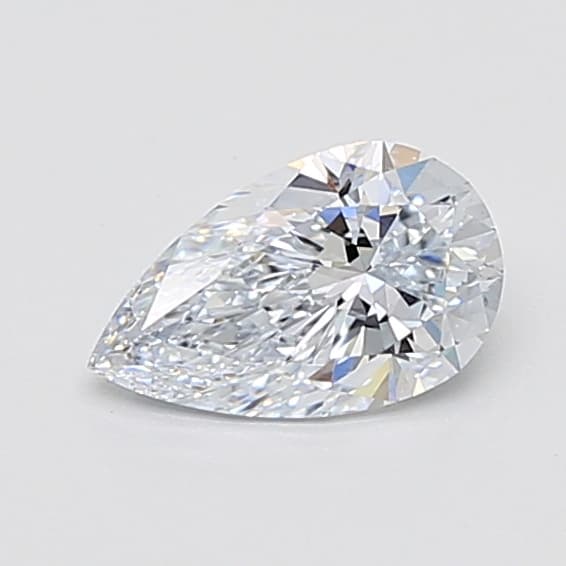
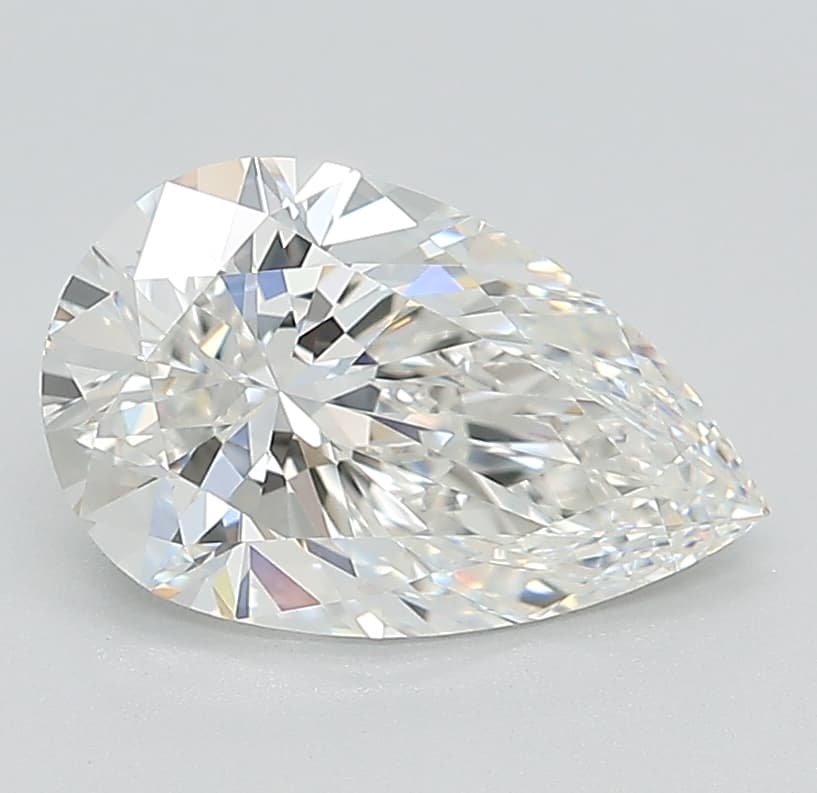
- Tips and corners. In ovals, pears and marquises, color tends to collect at the narrow ends, where light travels a longer path.
- Bright white metal. A platinum or white gold setting right next to the stone gives your eye a pure white reference, which can make warmth easier to notice.
Comparisons matter too. Side by side with a D stone, a G may look slightly warmer. On its own, in a ring, nobody is comparing.
G, H or I: common guidelines
These are common guidelines, not rules. A video in neutral light always outranks them.
| Grade | Brilliant shapes (round, oval, cushion) | Step cuts and larger stones |
|---|---|---|
| G | Looks white face-up in most sizes | Usually white; check large stones |
| H | Looks white face-up in most sizes | May show slight warmth; check the video |
| I | Often white face-up; faint warmth possible | Warmth more likely; suits warm metals |
Many buyers see G as the point where a stone looks white in almost any setting, with H close behind for brilliant shapes. I suits buyers who prefer a softer, warmer look or who are setting in yellow or rose gold.
Why near-colorless suits yellow and rose gold
Metal color reflects into a diamond. In yellow or rose gold, the warm metal around the stone adds a little warmth of its own, so a near-colorless stone simply blends in. A very white D stone in yellow gold can even pick up a touch of the metal's color, which is why some buyers save the colorless grades for white metal.
So match the grade to the setting:
- Platinum or white gold: G and H are the usual near-colorless choices; check I stones on video.
- Yellow or rose gold: G, H and I all look at home.
Our post on diamond color and metal goes into each pairing.
A near-colorless stone in yellow or rose gold looks right at home, because the warm metal reflects into it. In white metal, G and H usually look white; check an I stone on video first.
How to judge a near-colorless stone on video
Color is harder to judge on a screen than clarity, because lighting and screens shift it. A few habits help:
- Look at the background. A video filmed against a white or neutral background shows body color most honestly. Colored or very bright lighting can hide warmth or add it.
- Watch the edges and tips. In elongated shapes, look at the ends of the stone as it turns; that is where warmth appears first.
- Compare within the same video setup. Two stones filmed the same way can be compared fairly. Two stones filmed in different light cannot.
- Check a side view if there is one. Seen from the side, as labs grade it, body color is easier to see than face-up. It is a useful check, even though you will wear the stone face-up.
If you would rather not rely on a screen, a viewing settles it. You can arrange one or ask one of our diamond specialists to compare two stones' videos with you.
Fluorescence and tinge are separate questions
You may read that blue fluorescence can make a warm stone look whiter. That advice comes from mined diamonds, and a lab-grown diamond's glow may be a different color, so do not choose a near-colorless lab-grown stone expecting that effect. Our post on fluorescence in lab-grown diamonds explains why.
A tinge is also separate from the color grade. It describes a faint cast, such as blue, that a stone shows in ordinary light, and our stone pages list it on its own line. Read the color grade, the fluorescence and the tinge together.
Near-colorless stones in our catalog
Most of the lab-grown diamonds we list are D to F, the colorless grades, and we also list near-colorless G stones. Browse G color lab-grown diamonds or compare them with F color stones, the grade just above.
If you are unsure how a particular stone will look in your setting, one of our diamond specialists can compare its video with a colorless stone for you before you buy.
Frequently asked questions
Is a G color diamond white enough?
For most buyers, yes. G is the top near-colorless grade, and face-up in a ring it looks white in most shapes and sizes. A faint trace of warmth is more likely to show in large stones, step cuts and the tips of elongated shapes, or right next to platinum.
Can you see the difference between G and H color?
Rarely, once the stone is set and seen on its own. The difference is clearest when the two stones sit side by side, face-down on a white surface, which is how labs grade them. Larger stones and step cuts make small differences easier to notice.
Is I color good for an engagement ring?
It can be, especially in yellow or rose gold and in brilliant shapes such as round, oval or cushion, where sparkle masks body color. In platinum, in step cuts or in large stones, a faint warmth is more likely to show, so check the video first.
Which metal suits G, H and I color diamonds?
All three blend in with yellow and rose gold, because the warm metal reflects into the stone. In platinum or white gold, G and H usually look white; an I stone may show slight warmth against the bright white metal.
Glossary terms in this article
More on Grading, Explained in the journal.