Color & Carat
Five Carats and Up: What Changes With a Statement Diamond
By the Vanora Diamond team
Published Last reviewed 5 min read

Quick answer
From about 5 carats, a diamond is large enough that the setting, the proportions and the color all matter more than they do at 1 or 2 carats. A well-cut 5 carat round is about 11 mm across, so it needs a secure, well-built setting, a cut that spreads its weight without windowing, and a color and clarity that still look clean across a large table.
How big are 5, 6 and 7 carats?
Approximate face-up sizes for well-proportioned stones, estimated from common weight formulas and typical depths for each shape. Actual stones vary with their cut:
| Shape (ratio used) | 5 ct | 6 ct | 7 ct |
|---|---|---|---|
| Round | 11.0 mm | 11.7 mm | 12.3 mm |
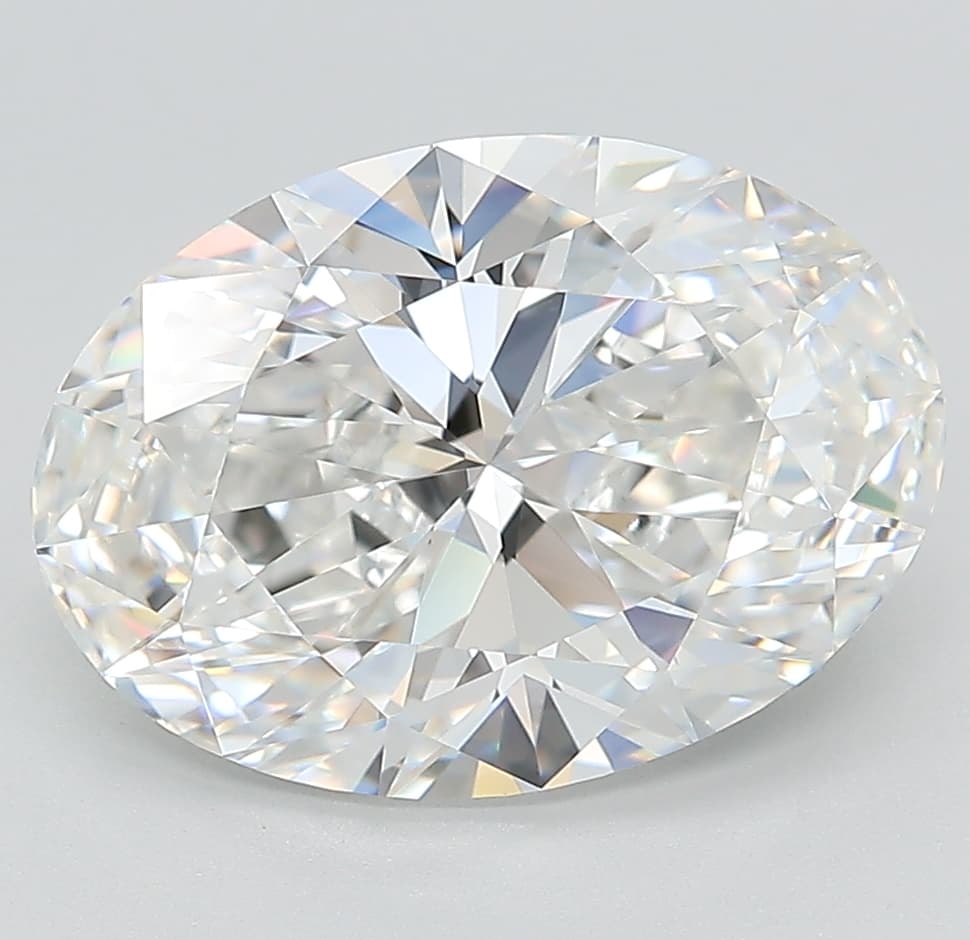
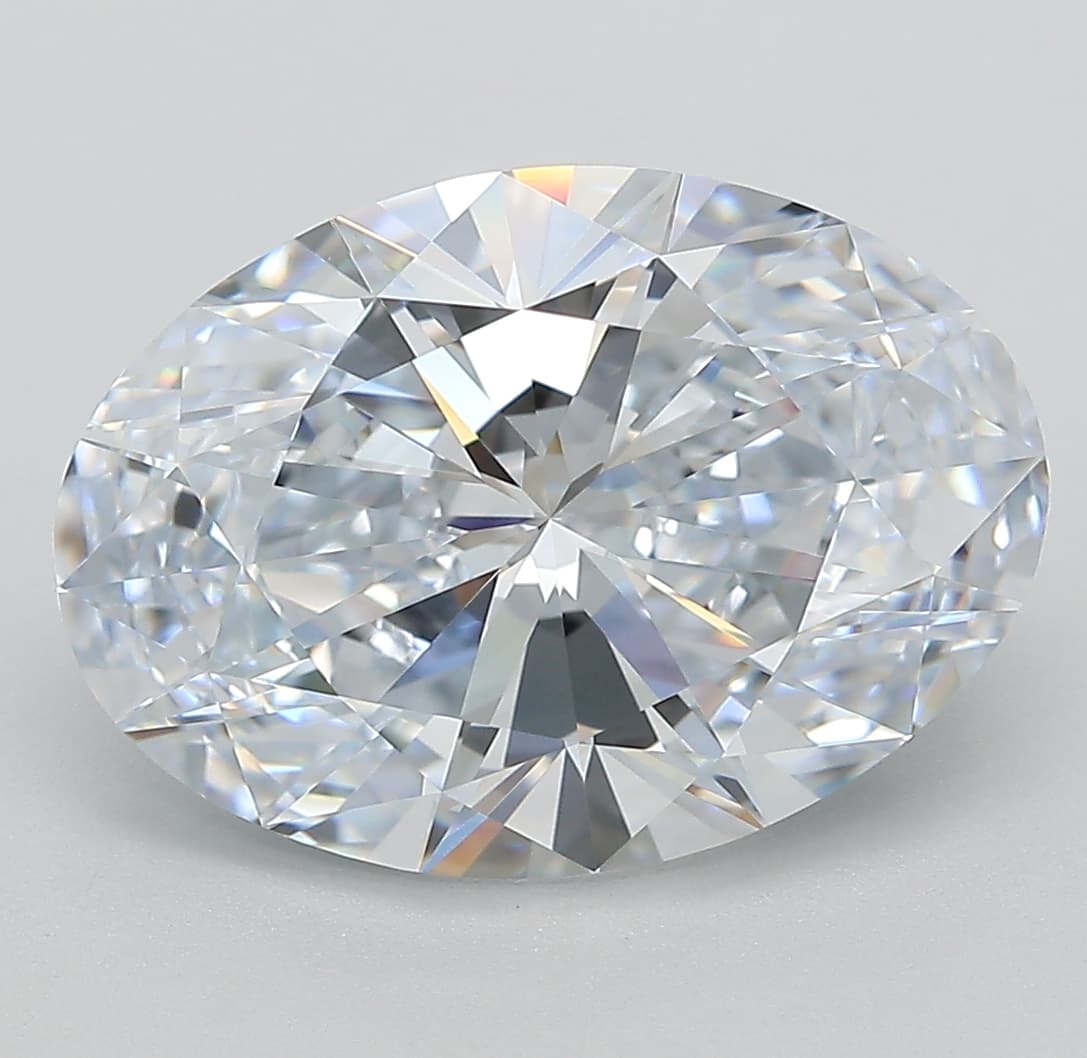
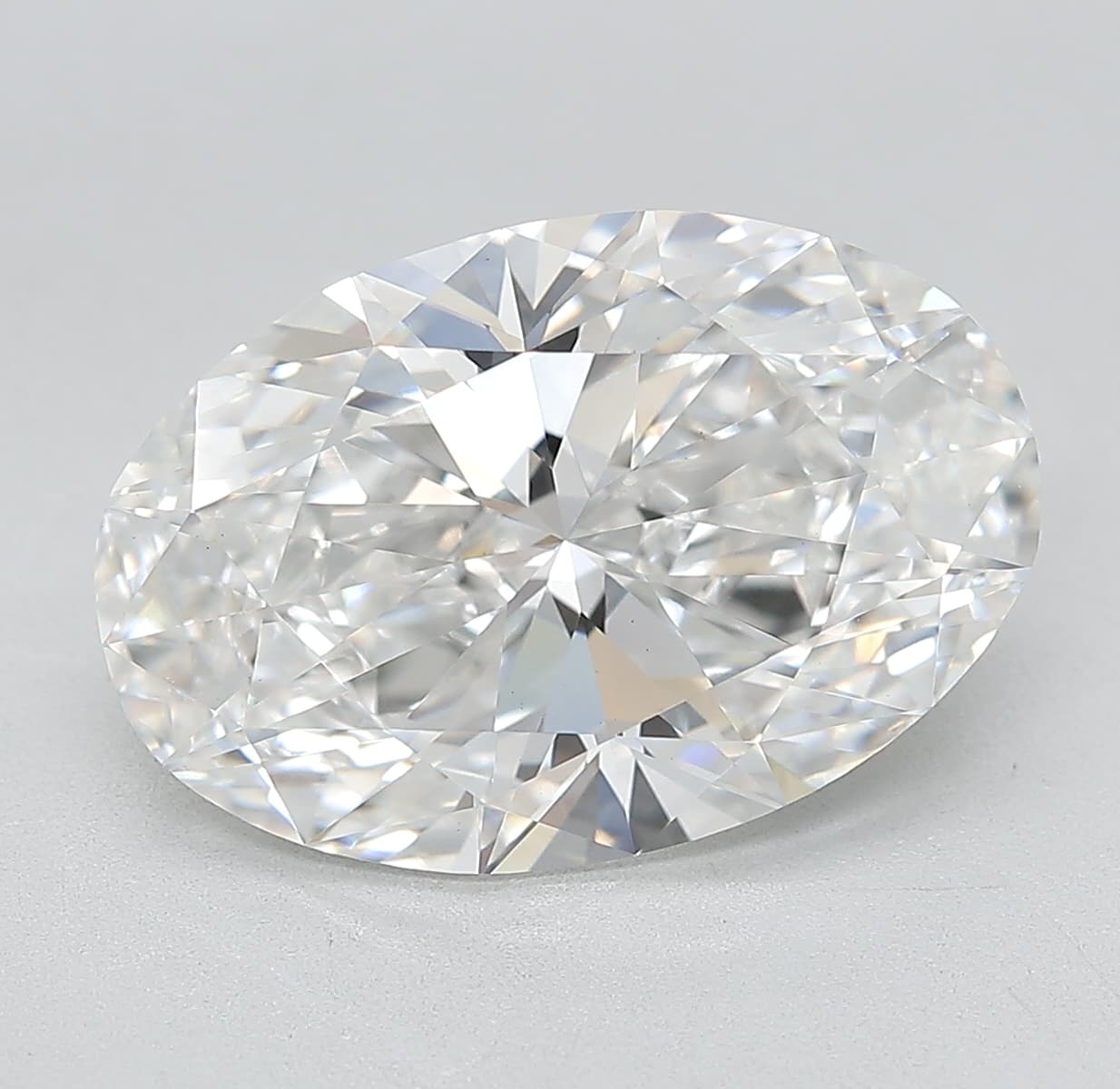
| Oval (about 1.45) | 14.1 × 9.7 mm | 14.9 × 10.3 mm | 15.7 × 10.8 mm |
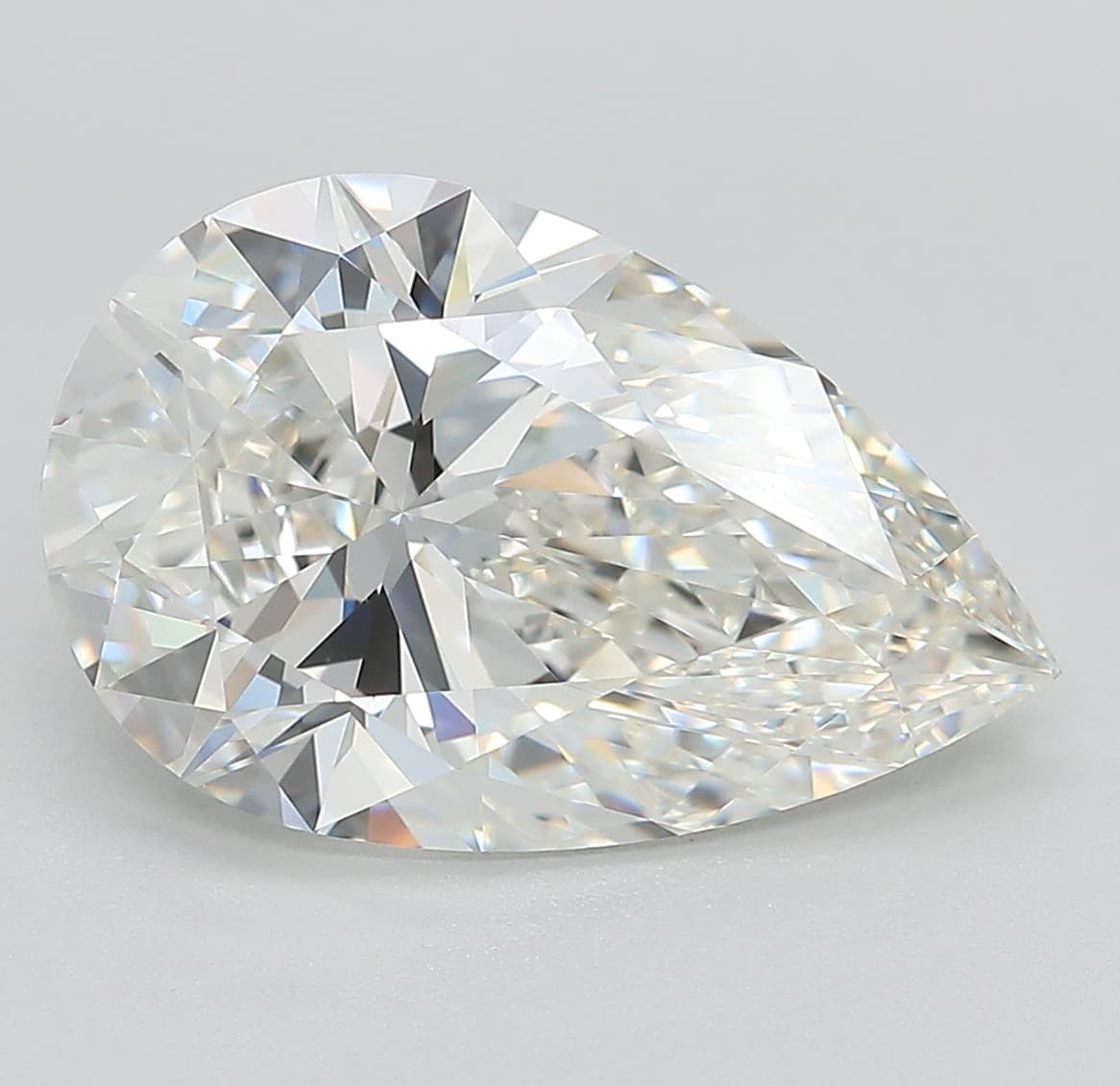
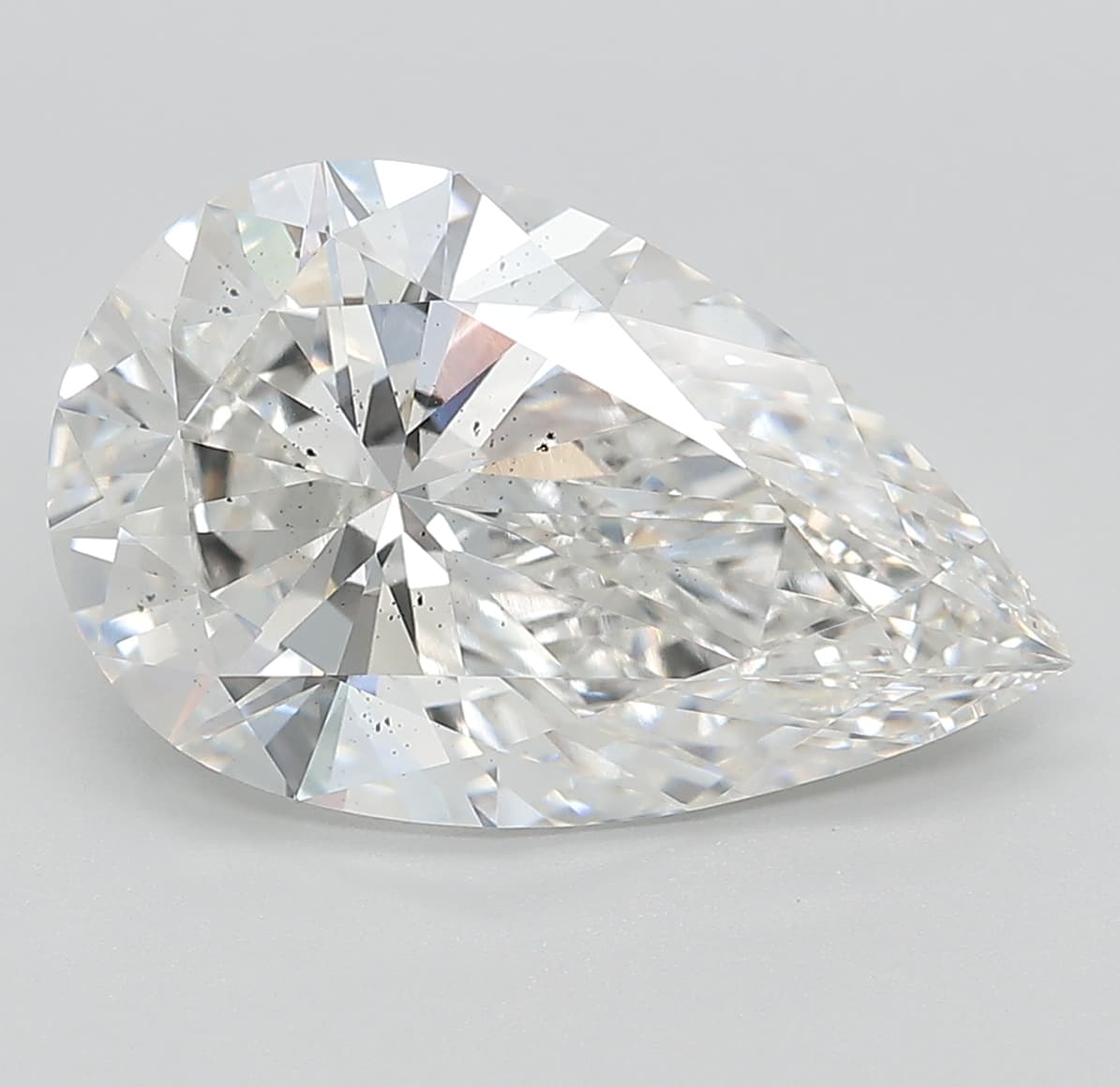
| Pear (about 1.60) | 15.2 × 9.5 mm | 16.2 × 10.1 mm | 17.0 × 10.6 mm |
| Cushion, elongated (about 1.40) | 12.5 × 8.9 mm | 13.3 × 9.5 mm | 14.0 × 10.0 mm |
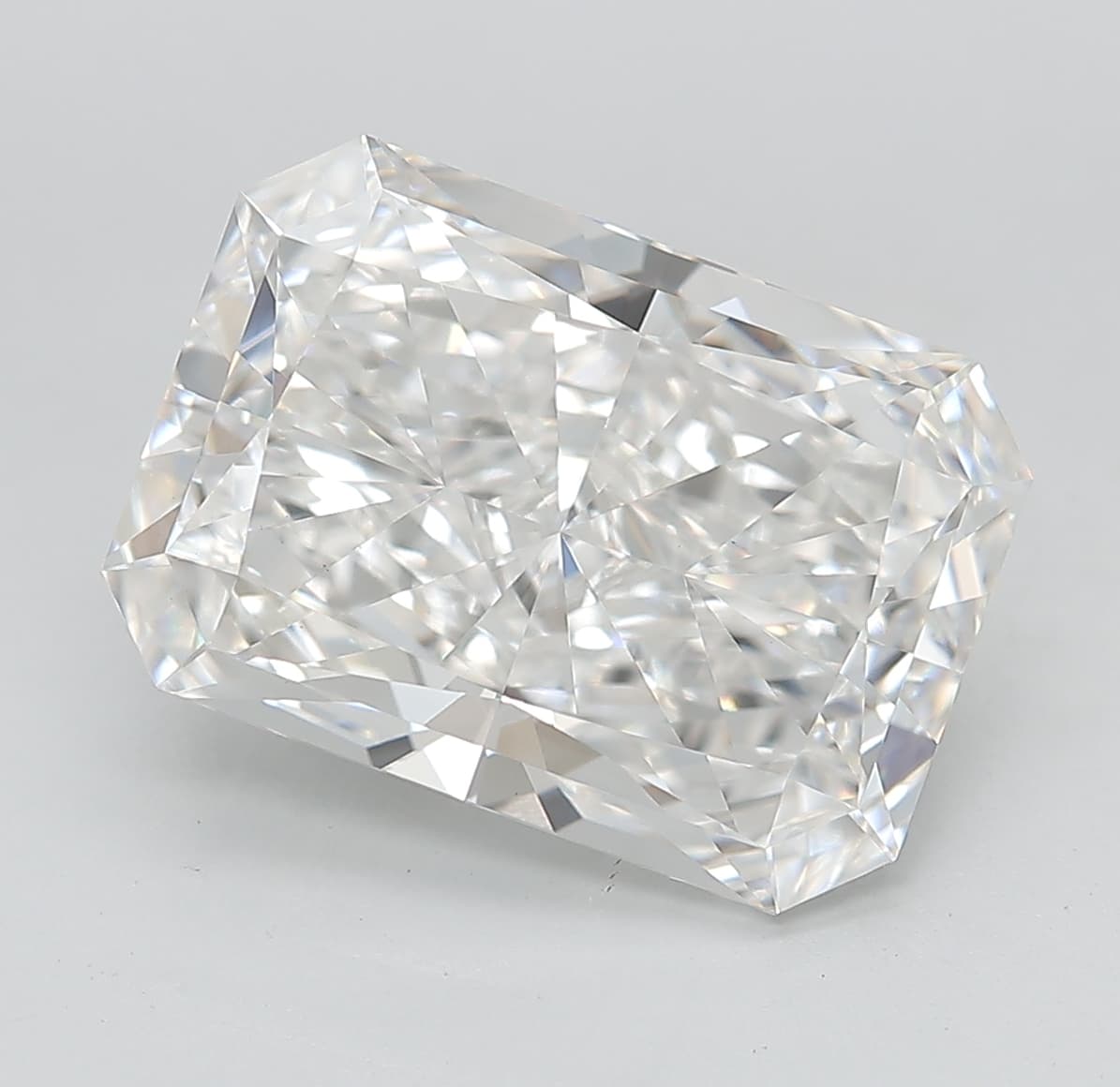
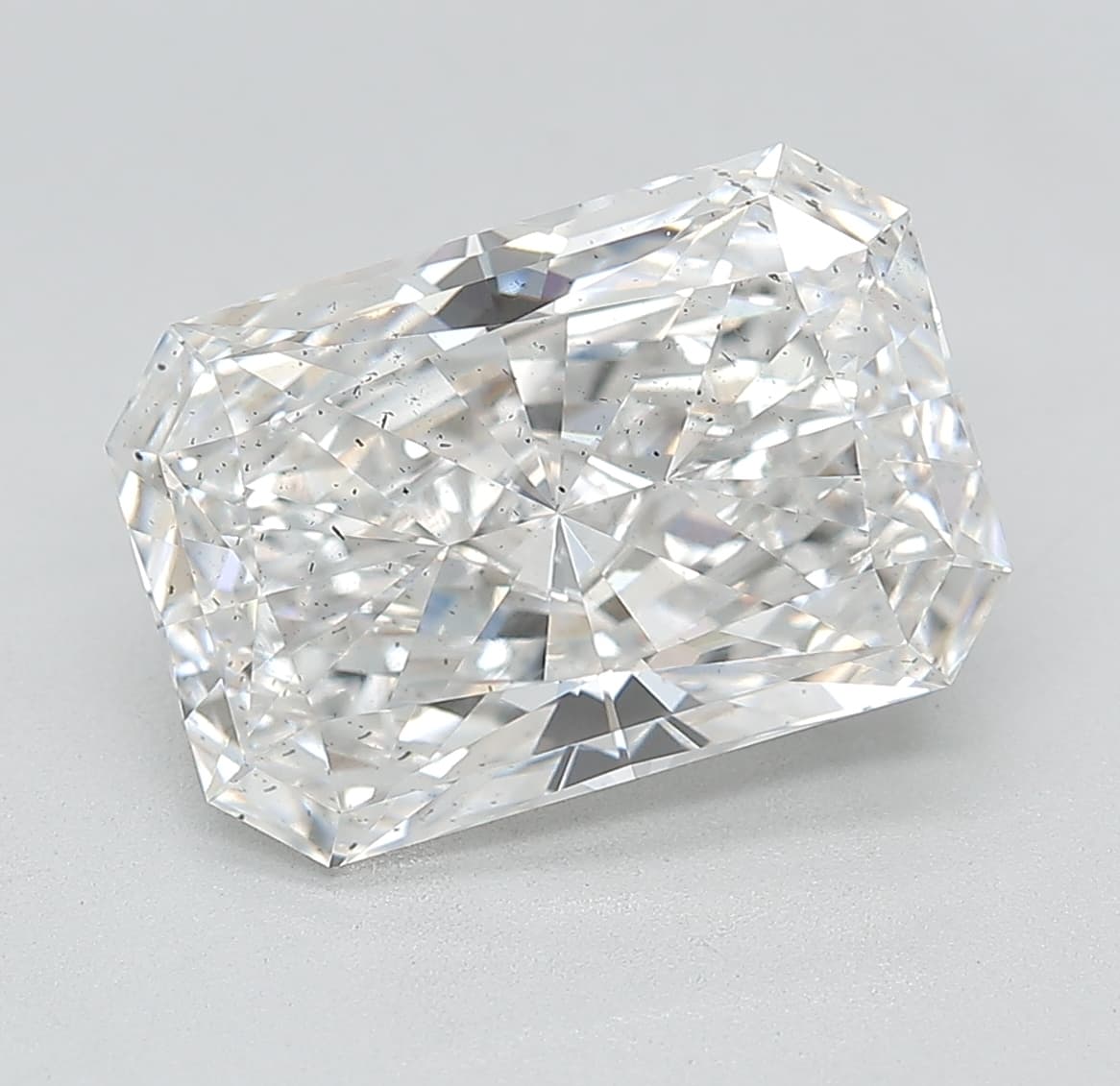
| Radiant, rectangular (about 1.45) | 12.5 × 8.6 mm | 13.2 × 9.1 mm | 13.9 × 9.6 mm |
| Emerald (about 1.45) | 11.9 × 8.2 mm | 12.6 × 8.7 mm | 13.3 × 9.2 mm |
On a US size 6 finger, with an inner ring diameter of about 16.5 mm, an 11 mm round covers about two-thirds of the finger’s width. A 5 carat stone weighs exactly 1 gram, so the stone itself is light; what changes is how far it sits from the finger and how much it stands out. Browse 5 carat and 6 carat lab-grown diamonds to compare real measurements.
| Weight | Stones | Median length (mm) | Median width (mm) |
|---|---|---|---|
| 1.00–1.09 ct | 19 | 6.46 | 6.48 |
| 5.00–5.49 ct | 54 | 11.02 | 11.07 |
| 7.00–7.69 ct | 13 | 12.45 | 12.50 |
Setting security
A large stone sits higher above the finger, so knocks reach it first and act with more leverage on the prongs. The setting needs to be built for that:
- More or heavier prongs. Six prongs, or four double-claw prongs, are common on large rounds; sturdy prongs matter more than their number.
- Protect the weak points. Pears and marquises need V-prongs at their tips; princess corners need covering. Radiants, cushions and ovals have no sharp points, which makes them practical at this size.
- Consider a bezel or half-bezel. A metal rim protects the whole edge or the sides, and suits an active life.
- A solid gallery and basket. The metal structure under the stone should be strong enough not to flex if the ring is knocked.
Prongs wear over time. Having a jeweler check them periodically is sensible for any ring, and especially so for a large center stone.
Proportions matter more at this size
Every cutting choice is magnified in a large stone. A dark bow-tie that is barely noticeable in a 1 carat oval can look like a shadow in a 5 carat one. Things to check:
- Windowing: a shallow stone can show a see-through, washed-out center, which is easy to spot across a large table.
- Hidden weight: a deep pavilion or a thick girdle adds carats without adding face-up size. Compare the measurements on the IGI report or stone page, not just the weight.
- Outline symmetry: lopsided shoulders on a pear or uneven ends on an oval are more obvious when the outline is 14 mm long.
- Depth and table: compare them with the common ranges in our shape guides, such as oval and cushion, and see depth percentage.
For rounds, the top cut grade with Excellent polish and symmetry remains the best starting point; for fancy shapes, an IGI cut grade (Excellent to Poor) helps, and the video shows what no grade can. The diamond cut guide explains what to look for.
Color is easier to see
Light travels further through a larger stone, so body color becomes easier to see as weight goes up. A grade that looks white at 1 carat can look faintly warm at 5:
- In white metals, many buyers choose D to F at this size, especially for step cuts.
- In yellow or rose gold, the warm surround hides a slight tint, so G can still look white.
- Watch for tinge. A brown, green or milky tinge is not part of the color grade and is easier to notice in a big stone. Check the video in neutral light.
For fancy colors the effect works in your favor: a pink or blue looks more saturated in a large stone than in a small one of the same grade. The diamond color guide covers the scale in detail.
Clarity: bigger facets, bigger windows
A large diamond has large facets, and large facets are easy to look into. Brilliant shapes still hide small inclusions well, while emerald and asscher cuts show their interiors clearly, which is part of their appeal.
- Brilliant shapes: VS1 or above is a common floor at this size, chosen with the video.
- Step cuts: many buyers prefer VVS2 or above.
- Either way: the stone should look eye-clean at normal viewing distance. Be wary of a feather (a small internal crack) close to a prong or a point, where a knock could make it worse.
Be wary of a feather, a small internal crack, close to a prong or a point, where a knock could make it worse. At this size the stone should still look eye-clean at normal viewing distance.
Comfort, wear and care
- Height and snagging: a large stone is deep, so the setting sits taller. A lower profile catches less on gloves and knitwear.
- Top-heaviness: a heavy head on a thin band tends to rotate on the finger. A slightly wider or heavier band, or a snug fit, helps keep the stone upright.
- Cleaning: skin oils and lotion dull a large table quickly. Warm water, mild soap and a soft brush bring it back.
- Paperwork: keep the grading report safe. If you insure the ring, your insurer may ask for it, along with a current appraisal.
Seeing the stone before you decide
A statement stone deserves a careful look. Every single stone page shows the IGI or GIA report, measurements and a photo and 360° view where available (mix parcels are sold by the parcel, without individual reports). When you have decided, add the stone to your cart and check out: we re-check its availability and price live at checkout, and nothing is charged until a diamond specialist confirms the order. Approved trade accounts can hold a stone or ask for it on memo.
The suggestions below show live 5 to 7 carat rounds and fancy shapes. A diamond specialist can go through the report and video of any of them with you, or arrange a viewing where that is possible.
Frequently asked questions
How big is a 5 carat diamond?
A well-cut 5 carat round brilliant is about 11.0 mm across. A 5 carat oval at a ratio of about 1.45 is roughly 14.1 × 9.7 mm, and a 5 carat emerald cut about 11.9 × 8.2 mm. The exact size depends on the cut, so check the measurements on the IGI report or our stone page.
Is a 5 carat lab-grown diamond practical for everyday wear?
It can be, with the right setting. Diamond is very hard, but a large stone sits higher and takes knocks first, so choose sturdy prongs or a bezel, a lower profile if you work with your hands, and have the prongs checked from time to time.
How many prongs should a 5 carat diamond have?
Six prongs, or four double-claw prongs, are common for large rounds, and four sturdy prongs can work well too. Shapes with points or sharp corners need those protected with V-prongs or corner prongs. The strength of each prong matters as much as the count.
Do bigger diamonds need a higher color grade?
Larger stones show body color more, so many buyers choose a higher grade as the weight rises, often D to F in white metal for a 5 carat stone. In yellow or rose gold, a slightly lower grade can still look white once set.
Glossary terms in this article
More on Color & Carat in the journal.