Grading, Explained
Polish and Symmetry Grades: When Very Good Is Good Enough
By the Vanora Diamond team
Published Last reviewed 5 min read

Quick answer
Polish grades how smooth and clean a diamond’s facet surfaces are, and symmetry grades how precisely its facets, outline and proportions line up; both run from Excellent to Poor and are judged at 10x magnification. Excellent and Very Good look the same to the unaided eye in nearly every lab-grown diamond. For round brilliants, weaker polish or symmetry can hold back the overall cut grade, so most buyers of rounds look for Excellent in both.
Two grades about finish, not shape
A diamond's cut has two sides. One is its proportions: the angles and percentages that decide how light travels through it. The other is its finish: how well the cutter carried those proportions out. Every IGI report, and GIA's reports for natural diamonds, grade the finish with two separate lines, polish and symmetry. GIA's lab-grown assessment, issued since October 2025, prints neither: it uses them only to decide between Premium and Standard.
Both are graded by trained graders at 10x magnification, the same power used for clarity, and both use the same five words: Excellent, Very Good, Good, Fair and Poor. They apply in the same way to lab-grown and mined diamonds, and to every shape, which makes them two of the few grades you can compare directly between a round and an oval. On our stone pages they sit next to fluorescence in the grading section, and the catalog lets you filter by each.
What polish measures
Polish describes the condition of the facet surfaces after the stone has been polished on the wheel. A grader looks for small marks left by the process, such as:
- Polish lines: fine parallel grooves on a facet.
- Burn marks: a hazy patch from heat during polishing.
- Abrasions and nicks: tiny scuffs along the facet edges.
- Pits: minute holes in the surface.
- Lizard skin: a slightly wavy texture where a facet was polished close to the direction of the crystal's grain.
At Excellent, such marks are absent or extremely hard to find even under magnification. As the grade falls, they become easier to see at 10x. Only at the lowest grades can poor polish dull a stone's surface enough to notice without a loupe.
What symmetry measures
Symmetry describes precision: whether every facet has the right shape, sits in the right place and meets its neighbors where it should. Common faults include:
- An off-center table or culet, so the stone looks slightly lopsided from above or below.
- Misaligned crown and pavilion facets, where facets above and below the girdle do not line up.
- An out-of-round or uneven outline, or a wavy girdle.
- A tilted table, not parallel to the girdle.
- Extra facets, small additional facets added to remove a blemish.
Symmetry is closely tied to how evenly light returns across the stone. Very precise symmetry in a round is what makes the hearts and arrows pattern possible.
| Compared | Polish | Symmetry |
|---|---|---|
| What it grades | The smoothness of the facet surfaces | The precision of facets and outline |
| Typical faults | Polish lines, burn marks, nicks, pits | Off-center table or culet, misaligned facets, uneven outline |
| How it is judged | At 10x magnification | At 10x and by measurement |
| When you might notice it | Only at the lowest grades, as dullness | In fancy shapes, as an uneven outline |
The scale, and how it feeds the cut grade
For round brilliants, IGI reports, and GIA's reports for natural diamonds, give an overall cut grade on top of polish and symmetry. The cut grade looks at the proportions, and the lab's system also takes polish and symmetry into account, so a weaker finish can hold back an otherwise well-proportioned stone. That is why a round with a top cut grade almost always has Excellent or Very Good polish and symmetry.
You will often see the shorthand triple Excellent (or 3EX): Excellent cut, Excellent polish and Excellent symmetry. On IGI reports, where the top cut grade for rounds is Ideal, the equivalent is an Ideal cut with Excellent polish and symmetry. Our post on Ideal vs Excellent cut explains the difference between the two top grades.
Fancy shapes such as ovals, pears and emeralds never get IGI's Ideal grade, and on a report without a cut grade, polish and symmetry are the only finish grades. IGI has graded the cut of fancy shapes, from Excellent to Poor, since September 2022; GIA does not. Our post on judging cut in fancy shapes covers what else to check.
- Ideal
- Excellent
- Very Good
- Good
- Fair
- Poor
- Excellent
- Very Good
- Good
- Fair
- Poor
- ProportionsTable, depth, crown and pavilion angles, and the girdle
- FinishPolish of the facet surfaces and the symmetry of their placement
- The result: lightBrightness, fire and scintillation, the sparkle you see as the stone moves
Can you see the difference?
Between Excellent and Very Good, almost never. Both grades describe features that a trained grader finds with magnification, and in a ring they are invisible at normal viewing distance. Good is usually invisible too. Fair and Poor are uncommon in well-made lab-grown diamonds.
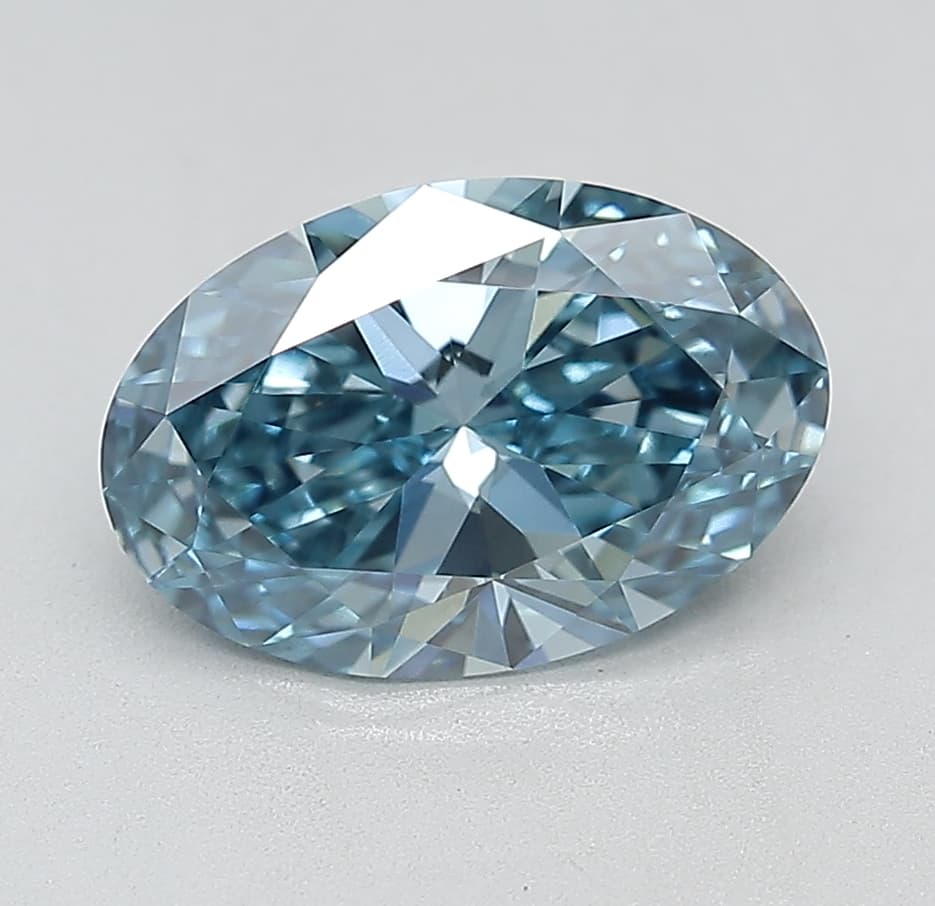
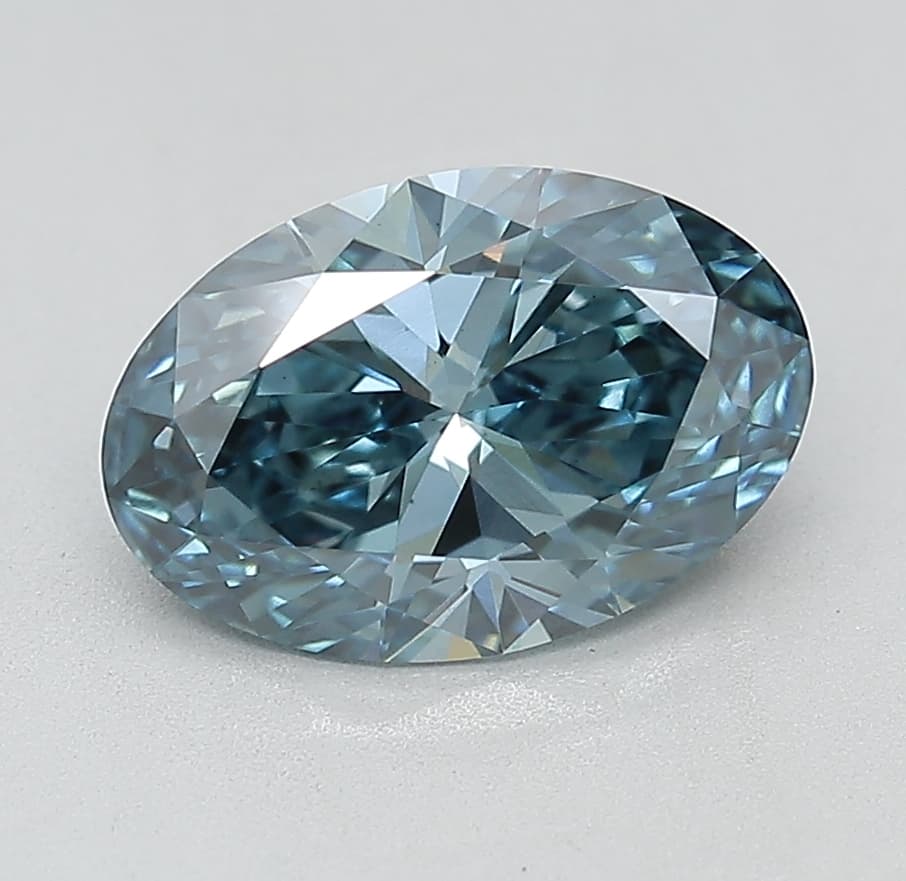
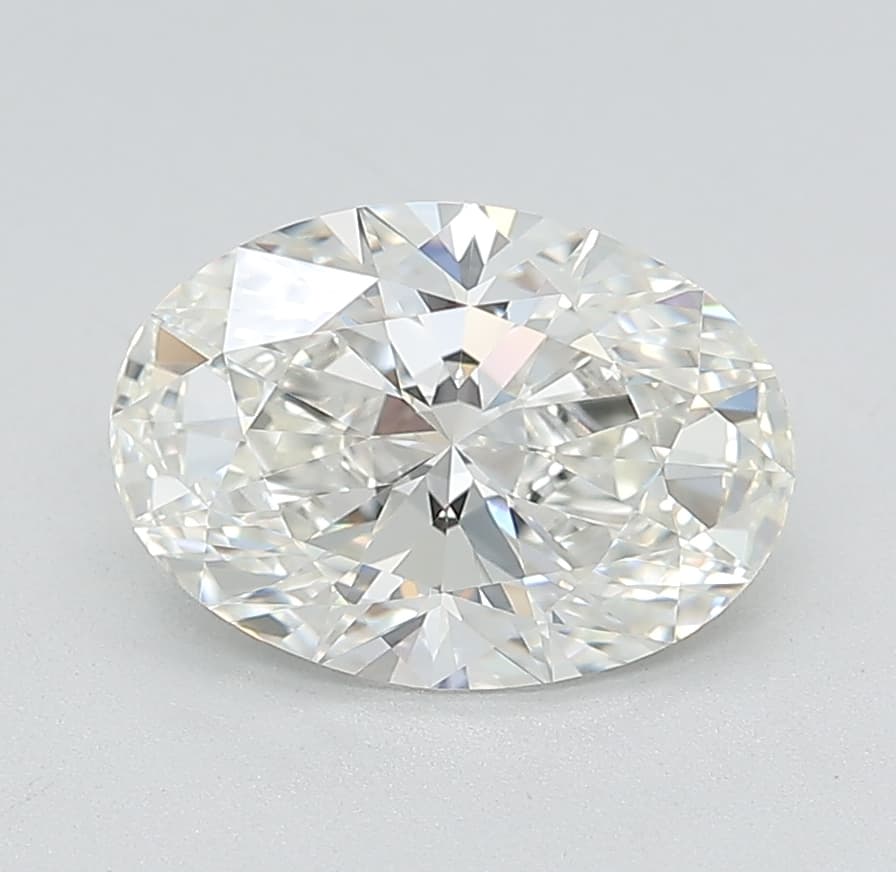
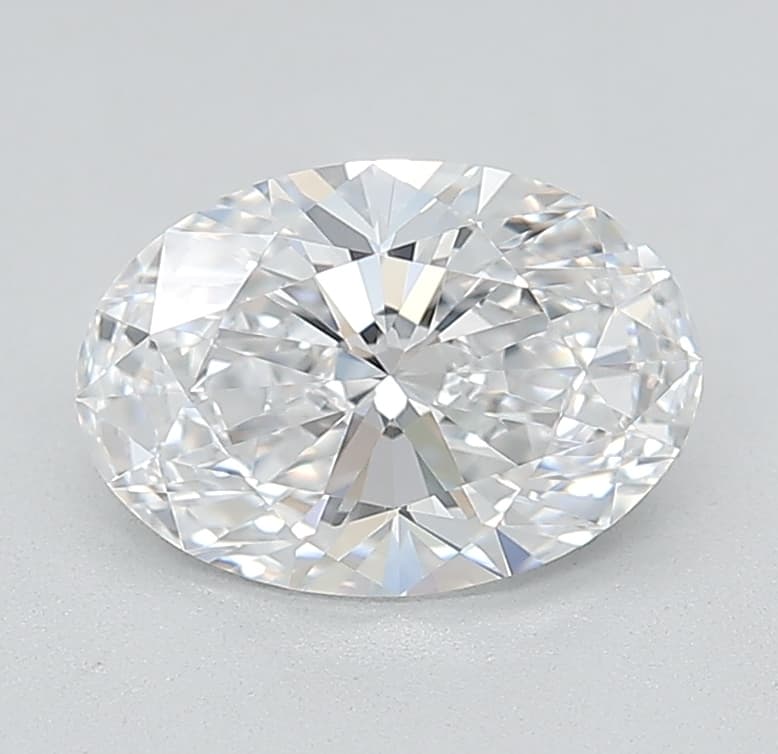
Symmetry is the one to watch in fancy shapes, because some symmetry faults are about the outline you see. A pear with uneven shoulders, a heart with one lobe larger than the other or an oval that is slightly egg-shaped can catch the eye, and the symmetry grade does not always capture how the outline looks to you. Our post on heart-shaped diamonds shows why outline balance matters so much in that shape.
A symmetry grade is a summary. In a pear, heart, marquise or oval, look at the face-up photo or video and ask whether the two halves mirror each other. That is the symmetry you will notice on the hand.
When a lower grade deserves a closer look
A single Good among otherwise top grades is not a problem in itself, but it is a prompt to look a little harder at the stone.
- Good or lower symmetry in a round. Check the face-up photo for a table that looks off center, and the 360° view for patches that stay darker than the rest as the stone turns.
- Good or lower symmetry in a fancy shape. Check that the outline is even: matching shoulders on a pear, equal lobes on a heart, ends of the same shape on an oval or marquise.
- Good or lower polish. Look at the stone's surface in the video. In most cases you will see nothing; if the facets look slightly soft or less crisp than a comparable stone, that is the finish showing.
Finish grades can also explain small price differences between stones that look alike on paper. Two stones with the same carat, color and clarity are not always priced the same, and polish and symmetry are among the details that account for it; our post on why the same 4Cs can carry different prices lists the others.
What to choose
- Round brilliants: look for the top cut grade with Excellent polish and symmetry. It is the simplest route to a well-finished stone, and our diamond cut guide explains the scales.
- Fancy shapes: Excellent or Very Good in both is fine. Spend your attention on the outline, the length-to-width ratio and the video instead.
- Very Good polish or symmetry on a stone you love: it is not a reason to pass, unless the video shows something the grade does not explain.
On our stone pages you will mostly see Excellent for both polish and symmetry, and now and then Very Good. You can filter by either in the catalog, for example to browse oval lab-grown diamonds with Excellent polish and symmetry. Our certificates guide walks through IGI and GIA lab-grown reports.
Frequently asked questions
Is Very Good polish bad on a diamond?
No. Very Good polish means minor surface marks that a grader finds at 10x magnification; they are invisible in normal wear. For a round with a top cut grade, many buyers still prefer Excellent, but Very Good is not a reason to rule out a stone you like.
What does triple Excellent mean?
Triple Excellent (3EX) means a diamond graded Excellent for cut, polish and symmetry, a common shorthand for round brilliants on GIA natural-diamond reports (GIA’s lab-grown assessment, issued since October 2025, prints no cut, polish or symmetry grade). On IGI reports, where the top cut grade is Ideal, the equivalent is an Ideal cut with Excellent polish and symmetry.
Does symmetry affect how much a diamond sparkles?
It can, but mostly at the lower grades. Precise symmetry helps light return evenly across the stone, and very precise symmetry in a round is what allows a hearts and arrows pattern. Between Excellent and Very Good, any difference in sparkle is very hard to see.
Should I choose Excellent symmetry for an oval?
Excellent or Very Good are both fine for an oval. What matters more is how the outline looks: both halves should mirror each other, with even shoulders and ends. Check the face-up photo and video, along with the length-to-width ratio and any bow-tie.
Glossary terms in this article
More on Grading, Explained in the journal.