Grading, Explained
Crown and Pavilion Angles, Explained Without the Math
By the Vanora Diamond team
Published Last reviewed 5 min read

Quick answer
The crown angle is the slope of the facets above a diamond’s girdle and the pavilion angle is the slope of the facets below it; together they decide how much light comes back to your eye. For round brilliants, common guidelines are a pavilion angle of about 40.6–41° and a crown angle of about 34–35°. The pavilion angle matters most for brightness, and the two are best judged as a pair, which is what a round’s cut grade does.
Where the two angles are
Seen from the side, a round brilliant has two sloping halves joined at the girdle, the thin band around its widest point.
- The crown is the top half, from the girdle up to the flat table. The crown angle is the slope of its main facets, measured from the plane of the girdle.
- The pavilion is the bottom half, from the girdle down to the culet. The pavilion angle is the slope of its main facets, measured the same way.
A steeper slope means a larger angle. Labs measure both with optical scanners, and IGI prints them in the proportions section of the report (GIA's lab-grown assessment, issued since October 2025, does not list the angles). Our stone pages show them as "Crown angle / height" and "Pavilion angle / depth": the same slopes, also expressed as heights in percent of the diameter.
The pavilion angle: the brightness setting
Light enters a diamond mostly through the top. To come back out toward your eye, it has to reflect off the pavilion facets inside the stone, usually off one side and then the other. Diamond only reflects light internally when it meets a facet at a glancing angle (more than about 24.4° from straight on). Meet a facet more directly, and the light passes out through it.
The pavilion angle decides which of those happens. The diagram traces one ray through three rounds:
- About 40.75°, well proportioned. The ray reflects off both sides of the pavilion and leaves through the top, toward you.
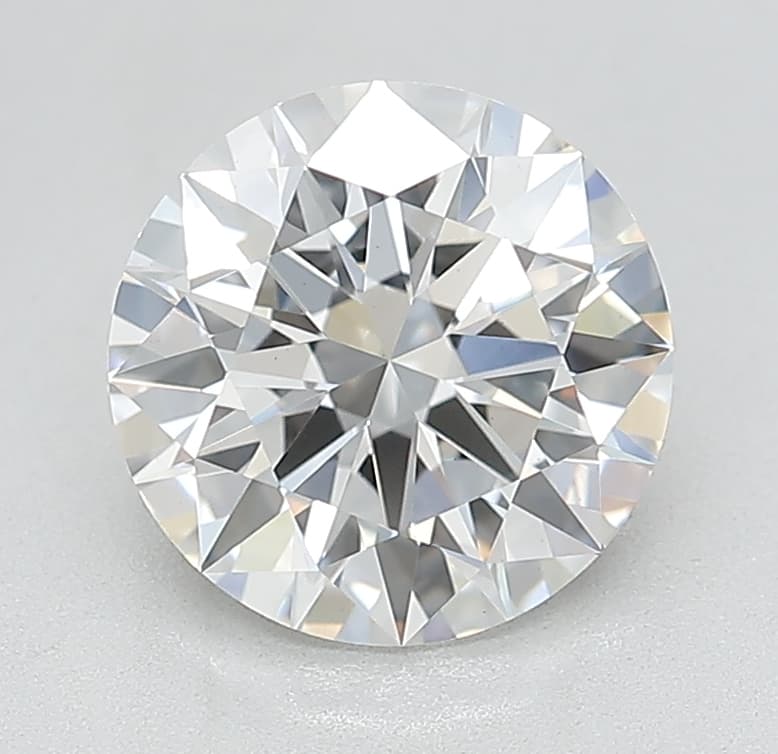
- About 36.5°, too shallow. The ray meets the flatter pavilion too directly and passes out through the bottom. Many rays doing this create a washed-out "window".
- About 48°, too deep. The ray reflects once, then meets the far side too directly and escapes, which can leave the center looking dark.
This is why a common guideline for top rounds is a pavilion angle of about 40.6–41°. A difference of a degree or so is enough to change how a stone looks.
The crown angle: balancing brightness and fire
Once light is heading back up, the crown shapes how it leaves. Its sloping facets bend the light as it exits, and that bending spreads white light into flashes of color, called fire.
A common guideline for rounds is a crown angle of about 34–35°. Within that band, a slightly steeper crown tends to show a little more fire and a slightly flatter one a little more white brightness. Outside it, both suffer: a very flat crown can look glassy and lifeless, while a very steep one, especially on a deep pavilion, can darken parts of the stone.
The crown angle also sets the crown height (about 15% of the diameter on a classic round), which is why the two numbers appear together on our stone pages. Our post on brilliance, fire and scintillation explains the three kinds of sparkle.
Why the two angles work as a pair
Neither angle tells the full story alone. A slightly steeper pavilion can be balanced by a slightly flatter crown, and the reverse, within limits. Cut-grading systems for round brilliants look at the combination for this reason, along with the table size.
Two combinations to be wary of:
- Steep and deep. A steep crown on a deep pavilion tends to send light out of the sides and darken the center.
- Shallow and shallow. A flat crown on a shallow pavilion leaks light through the bottom and gives little fire.
This is also why depth percentage alone can mislead. The same total depth can hide very different angles, as our post on table and depth percentage explains. On a classic round, a pavilion angle of about 40.75° works out to a pavilion depth of about 43% of the diameter.
Hearts and arrows, and what the angles add
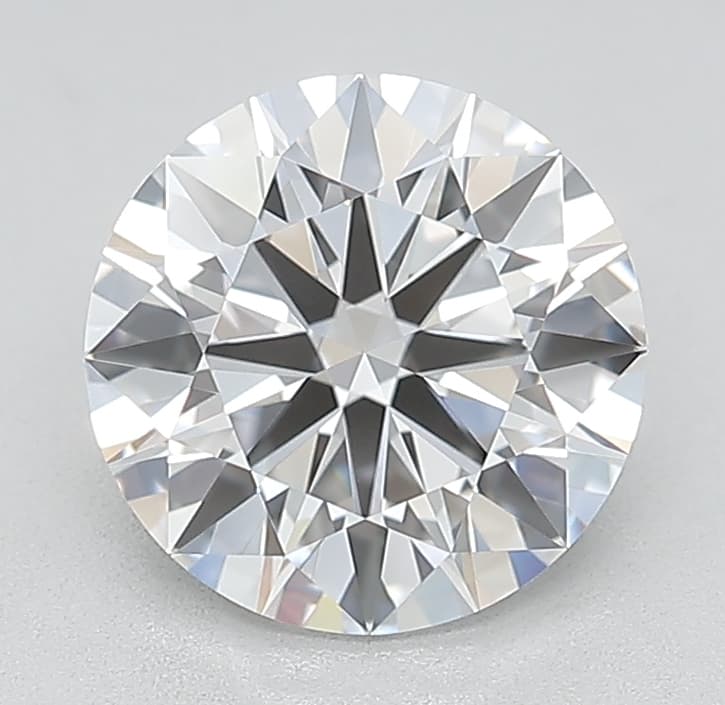
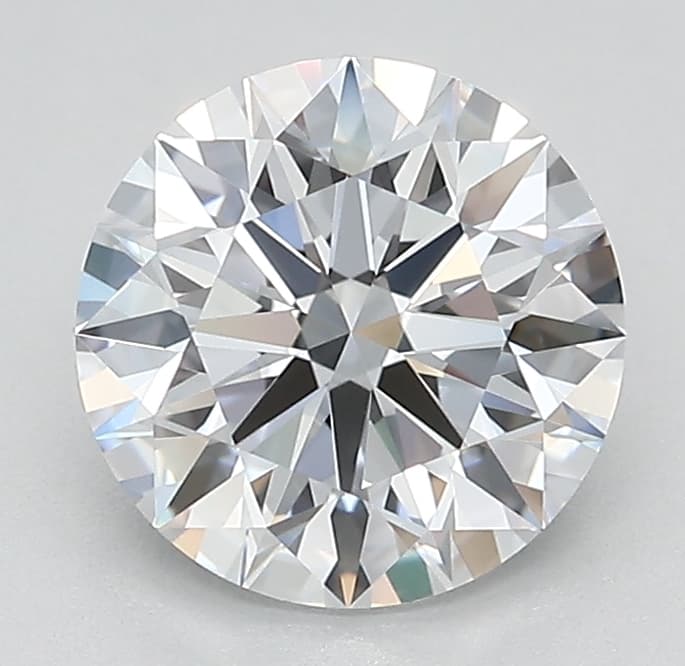
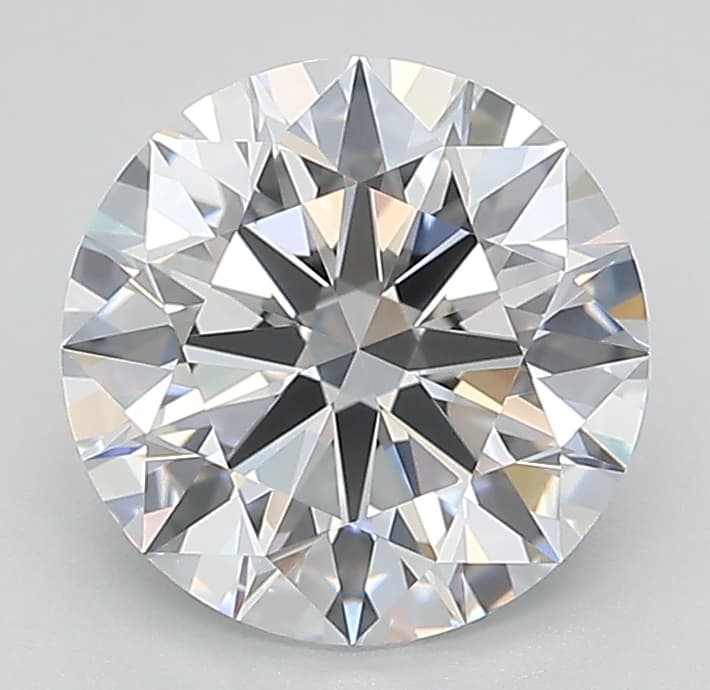
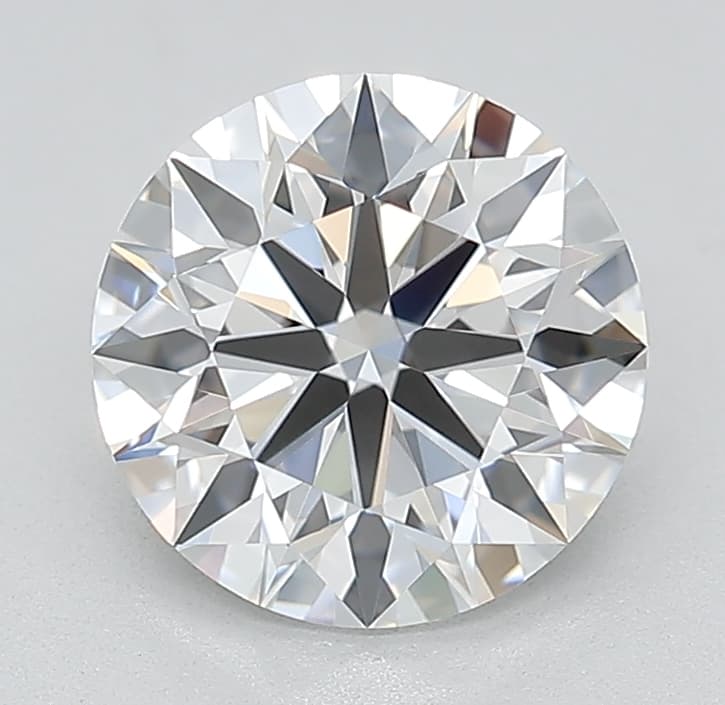
A round cut with angles in the guideline bands and very precise facet alignment shows a pattern of eight arrows from above and eight hearts from below in a special viewer. It is a sign of careful cutting, and our stone pages show it on a "Hearts & arrows" line.
The pattern does not replace the angles, though. It shows precision of alignment; the angles show whether the proportions are the right ones to begin with. A stone can have good angles without a recorded pattern. Our post on what hearts and arrows really tells you and the hearts and arrows glossary entry cover it in more detail.
Do lab-grown diamonds follow the same angles?
Yes. A lab-grown diamond has the same refractive index and the same internal optics as a mined one, so light behaves in exactly the same way inside it. The guideline angles, the cut grades and the light diagram above apply equally to both. Our lab-grown vs natural guide covers what the two share.
What can differ is how a particular stone was planned. Every cutter balances the finished look against the weight kept from the rough, for mined and lab-grown diamonds alike, and a stone cut to keep weight may end up with a steeper pavilion or a thicker girdle than one cut purely for light. That is not a feature of lab-grown diamonds; it is a feature of the individual stone, and it is exactly what the angles on the report reveal.
How to read the angles on a stone page
- Start with the cut grade for rounds. IGI's top grade is Ideal; GIA's is Excellent on reports that print a cut grade (its lab-grown assessment since October 2025 does not). A top grade means the lab has already judged the angles as a combination. Our diamond cut guide explains the scales.
- Then glance at the two angles. A pavilion near 40.6–41° and a crown near 34–35° confirm a classic, bright profile.
- Outside the bands, watch the video. Look for a dark center (often a steep pavilion) or a see-through patch (often a shallow one).
- For fancy shapes, rely on the video. Ovals, pears and other fancy shapes have angles that change around the outline, and there is no widely agreed ideal for them, so the ratio, the depth and the video tell you more.
You can browse round lab-grown diamonds and filter by cut grade, or ask one of our diamond specialists to read a stone's angles with you.
If you only check one angle, check the pavilion. It does the most to decide whether light returns to your eye or leaks out of the bottom. Then make sure the crown is in a sensible range.
Frequently asked questions
What is the best pavilion angle for a round diamond?
A common guideline for round brilliants is about 40.6–41°. In that range, light entering through the top reflects off both sides of the pavilion and comes back out toward you. Much shallower angles leak light through the bottom; much steeper ones can darken the center.
What crown angle gives the most fire?
Within the common guideline range of about 34–35°, a slightly steeper crown tends to show a little more fire and a slightly flatter one a little more white brightness. The crown angle works together with the pavilion angle, so judge the pair rather than chasing one number.
Do crown and pavilion angles matter for fancy shapes?
They still shape how light behaves, but in ovals, pears and other fancy shapes the angles vary around the outline and there is no widely agreed ideal. For fancy shapes, the length-to-width ratio, the depth, any bow-tie and a video of the stone are more useful guides.
Where can I find a diamond’s crown and pavilion angles?
On an IGI report, usually in the proportions diagram, and on our stone pages as Crown angle / height and Pavilion angle / depth (a GIA lab-grown assessment issued since October 2025 does not list them). For lab-grown rounds, an IGI report’s cut grade also summarizes how well the angles work together.
Glossary terms in this article
More on Grading, Explained in the journal.