Buying & Care
Lab-Grown Diamond vs Cubic Zirconia: How to Tell Them Apart
By the Vanora Diamond team
Published Last reviewed 5 min read

Quick answer
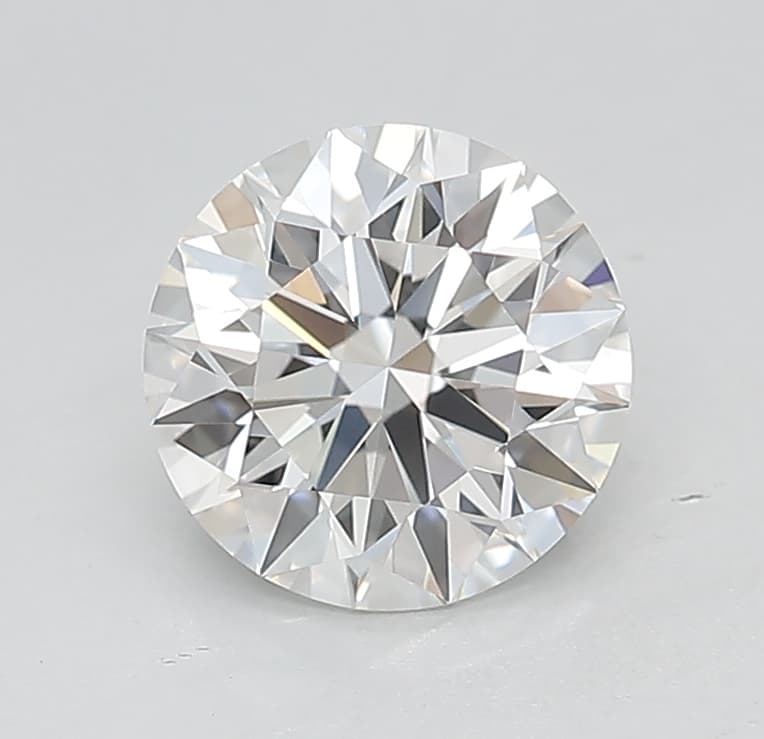
A lab-grown diamond is diamond, while cubic zirconia (CZ) is a different, softer material made to imitate it. CZ is heavier for its size, throws more rainbow color, scratches and clouds with wear, and never comes with a diamond grading report. The surest way to tell them apart is the report and the laser inscription on the stone, with a thermal tester as a quick check.
Two materials that are often confused
Both are made by people, both are colorless and both can be cut into the same shapes, so it is easy to see why they get mixed up. The difference is the material.
- A lab-grown diamond is carbon in diamond's cubic crystal structure: the same material as a mined diamond, grown in a laboratory instead of the earth. Our post is a lab-grown diamond a diamond? explains why it counts as a diamond.
- Cubic zirconia, usually shortened to CZ, is zirconium dioxide. It is a different material, made in large quantities as an inexpensive diamond look-alike. In the trade it is called a simulant: a stone that imitates diamond without being diamond.
Because CZ is not diamond, no diamond lab will grade it with the diamond color and clarity scales, and under the FTC Jewelry Guides it cannot be sold as any kind of diamond. If a listing says "lab diamond" but the price or the paperwork seems off, ask exactly what the stone is.
Side by side: hardness, sparkle and weight
The numbers below come from the materials themselves, and each one shows up in how the stone looks and wears.
- Hardness. Diamond is 10 on the Mohs scale, the hardest gem material. CZ is about 8 to 8.5. That sounds close, but the scale is not even: diamond is far harder, and everyday dust contains particles hard enough to scratch CZ over time, but not diamond.
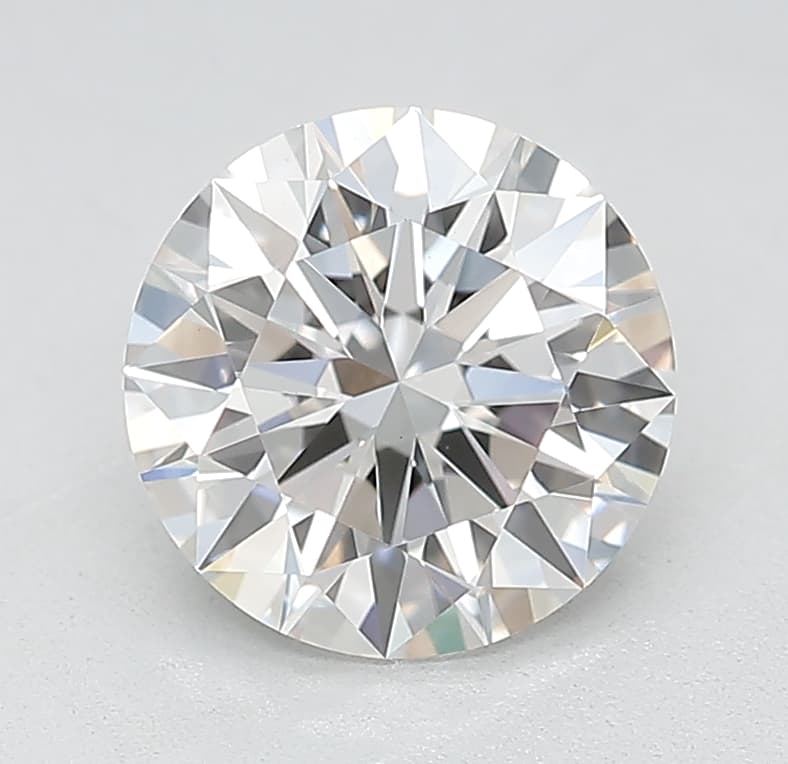
- Brilliance. Diamond's refractive index is about 2.42; CZ's is about 2.15 to 2.18. Light bends less in CZ, so a CZ returns less of the crisp white sparkle that a well-cut diamond shows.
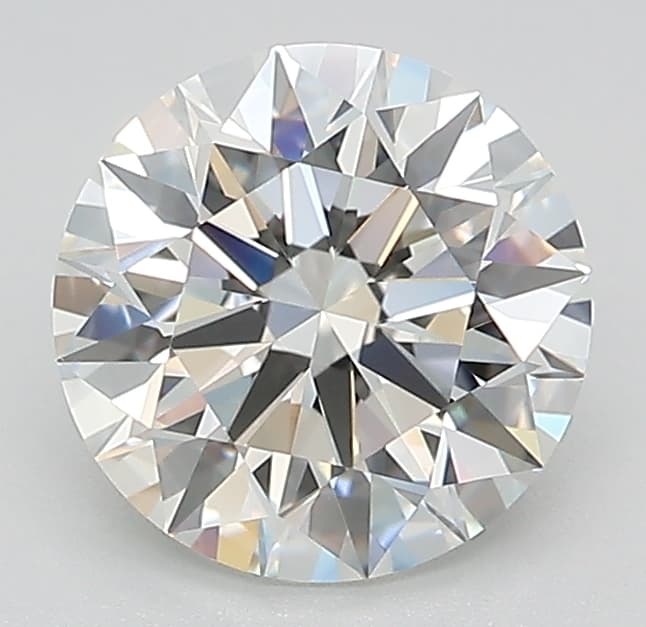
- Fire. CZ has more dispersion than diamond, so it splits light into more rainbow colors. In bright light a CZ can look almost too colorful, which is one of the things a trained eye notices.
- Weight. CZ is much denser than diamond (a specific gravity of roughly 5.6 to 6.0, against diamond's 3.52). A CZ the same size as a 1 carat diamond weighs roughly 1.6 to 1.7 carats. That is why CZ is usually sold by millimeter size rather than by carat.
Our diamond cut guide explains how a well-proportioned diamond balances white brilliance with colored fire.
| Compared | Lab-grown diamond | Cubic zirconia |
|---|---|---|
| Material | Carbon (diamond) | Zirconium dioxide |
| Hardness (Mohs) | 10 | About 8 to 8.5 |
| Refractive index | About 2.42 | About 2.15 to 2.18 |
| Rainbow fire | Balanced with white light | More colorful |
| Weight for the same size | Lighter | Much heavier |
| Diamond grading report | Yes, from labs such as IGI and GIA | No |
How each one wears over the years
The real difference often appears after a few years of wear.
A CZ's facet edges gradually round off and pick up tiny scratches. The surface loses its crisp polish, and the stone can start to look cloudy or dull even after cleaning. Many people replace a CZ for this reason.
A diamond's surface keeps its polish for a lifetime of normal wear, because almost nothing it meets day to day is hard enough to scratch it. A diamond can still look cloudy, but that is nearly always a film of soap, lotion and skin oil, and it cleans off; see how to clean a diamond ring.
One thing they share: hardness is not toughness. Both a diamond and a CZ can chip if they are struck hard on a thin edge or a sharp point, so a protective setting matters for both.
How to tell a lab-grown diamond from CZ
You do not need a laboratory to separate diamond from CZ. A few checks, in order of reliability:
- The grading report. A lab-grown diamond can come with a report from IGI or GIA that you can look up on the lab's own website. CZ has no diamond report.
- The laser inscription. Most graded lab-grown diamonds carry their report number on the girdle, the thin edge around the stone. A jeweler can read it under magnification and match it to the report; our post on laser inscriptions shows how.
- A thermal tester. Diamond carries heat away very quickly and CZ does not, so a basic "diamond tester" separates the two easily. It will read a lab-grown diamond as diamond. See do lab-grown diamonds pass a diamond tester?
- Weight against size. For loose stones, a jeweler can weigh the stone and measure it. A CZ is far heavier than a diamond of the same measurements.
- Wear on the facet edges. Under a loupe, an older CZ often shows rounded, scratched facet junctions; a diamond's stay sharp.
You may hear of the "fog test" (breathing on the stone and watching how fast the mist clears). It is not reliable: a dirty diamond can stay fogged, and the result depends on the room. Treat it as a curiosity, not a test.
- Step 1: Ask for the reportA lab-grown diamond can be graded by IGI or GIA. CZ has no diamond report.
- Step 2: Look up the numberCheck the report number on the lab’s own website and confirm the details match.
- Step 3: Read the inscriptionA jeweler can find the report number on the girdle under magnification.
- Step 4: Use a thermal testerIt reads diamond, lab-grown or mined, as diamond and CZ as not diamond.
- Step 5: Compare weight and sizeA loose CZ weighs much more than a diamond with the same measurements.
Common situations, and what to do in each
Most questions about diamond and CZ come up in a handful of everyday situations.
- An inherited or older ring with no paperwork. Ask a jeweler to test the stone with a thermal tester and look at it under a loupe. If it tests as diamond and you want to know more, a grading lab can identify it and say whether it is lab-grown or mined.
- A ring bought on vacation or online "with a certificate". Check who issued the certificate. A seller's own card is not a grading report. Look the report number up on the lab's website; if there is no number to look up, treat the stone as unidentified.
- A stone that looks dull after a few years. Clean it first. If it still looks foggy and the facet edges look rounded under a loupe, it may be CZ; a diamond's edges stay sharp.
- A "lab diamond" at a price that seems too good. Ask the seller to name the material in writing. A lab-grown diamond should come with a diamond grading report, and the invoice should say lab-grown diamond, not just "lab stone".
Which one should you choose?
CZ has a place: it is an inexpensive way to wear the look of diamond for costume jewelry, travel pieces, or to try a ring style before deciding. If you choose it, just know that it is CZ and expect it to need replacing over time.
A lab-grown diamond suits you if you want an actual diamond, graded by an independent lab, with diamond's hardness and its balance of brilliance and fire, in a stone meant to be worn for many years. Its price sits between a CZ and a mined diamond of similar grades.
Whatever you choose, the paperwork should name the stone plainly. Every stone we offer is a laboratory-grown diamond, and every single stone has an IGI or GIA report (mix parcels are sold by the parcel, without individual reports); we do not offer CZ or other simulants. If you are comparing a stone from elsewhere, our diamond specialists can help you read its paperwork. Browse round lab-grown diamonds to see how each stone page lists its report and inscription.
A new CZ can look like diamond from across a room. The differences show up close, in bright light and over years of wear, and the report settles the question either way.
Frequently asked questions
Is a lab-grown diamond the same as cubic zirconia?
No. A lab-grown diamond is diamond: carbon with a hardness of 10, graded by labs such as IGI and GIA. Cubic zirconia is zirconium dioxide, a softer material made to imitate diamond. Both are made by people, but only one is a diamond.
Will a diamond tester tell CZ from a lab-grown diamond?
Yes. A standard thermal tester reads a lab-grown diamond as diamond, because diamond conducts heat extremely well, and reads cubic zirconia as not diamond. It cannot tell a lab-grown diamond from a mined one, though; that needs a grading laboratory.
Does cubic zirconia get cloudy?
Over time, often yes. CZ is softer than diamond, so its surface collects fine scratches and its facet edges wear, which can leave it looking dull or cloudy even after cleaning. A diamond keeps its polish; when it looks cloudy, it usually just needs a clean.
Why does cubic zirconia sparkle with more color than diamond?
CZ has higher dispersion than diamond, so it splits white light into more rainbow colors. Diamond has a higher refractive index, so a well-cut diamond returns more crisp white light. The mix of both is what makes diamond look like diamond.
Glossary terms in this article
More on Buying & Care in the journal.